
Paysage — History & Facts
Can paint confess what words never could? In Paysage, an exquisite balance unfolds between the wild and the serene, coaxing us into a world where nature whispers its secrets. Focus your gaze at the gentle undulations of the landscape, where lush greens intermingle with soft blues. Notice how the horizon line draws the eye across the canvas, leading us from foreground to background. Dappled light filters through the trees, creating a delicate interplay of shadow and illumination that invites contemplation.
Each brushstroke reveals the artist's mastery in capturing the subtleties of the natural world. Delving deeper, we find a tension that exists between chaos and harmony—a fleeting moment frozen in time. Wildflowers bloom vibrantly, yet they seem to exist on the cusp of fading, embodying the transient beauty of life. The expansive sky, heavy with clouds, adds a poignant reminder of nature's unpredictable temperament.
Here, Troyon captures not just scenery, but the emotional heartbeat that pulses beneath the stillness. Working in the mid-19th century, the artist painted this piece during a time when realism was gaining prominence, moving away from romantic idealism. Constant Troyon, known for his landscapes, was immersed in the Barbizon School, where he sought to embrace the beauty of nature with authenticity. In this context, Paysage emerges as a testament to both personal vision and the broader artistic movement, solidifying Troyon's legacy as a master of serene, evocative landscapes.
More Artworks by Constant Troyon
Browse all →
Landscape with Painter at Easel
Constant Troyon

The Marsh
Constant Troyon
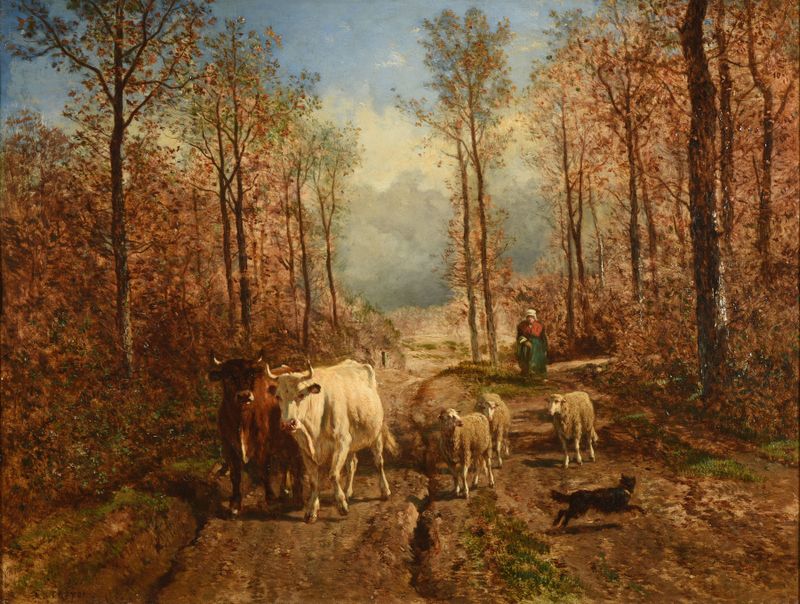
Rentrée de troupeau
Constant Troyon

Vaches sous bois
Constant Troyon

La gardeuse d’oies
Constant Troyon

Mill Stream with Fishermen
Constant Troyon
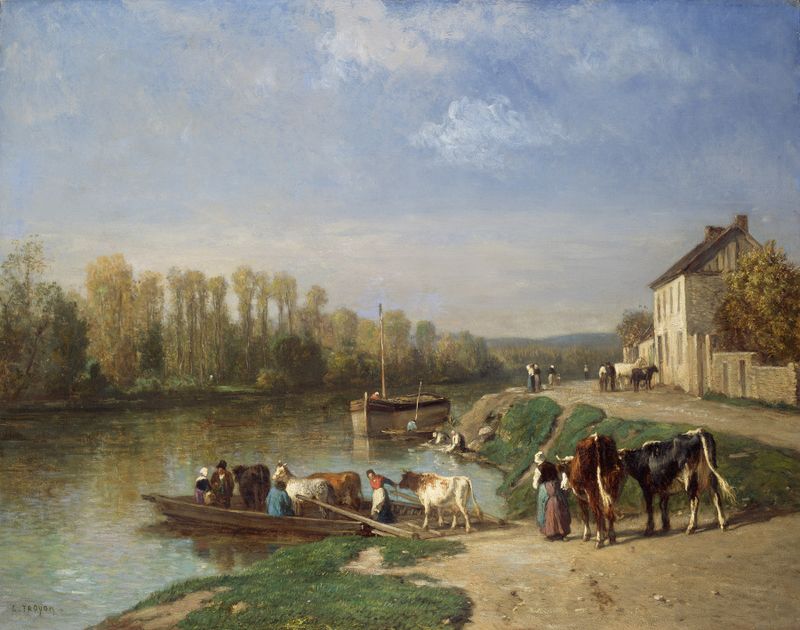
The Ferry Crossing
Constant Troyon

Landscape
Constant Troyon

Pasture in Normandy
Constant Troyon

The Road to Market
Constant Troyon





