
The Marsh — History & Facts
Is this a mirror — or a memory? A tranquil marsh, rendered with such delicate brushwork, invites reflection on the beauty of nature, yet echoes a subtle tension beneath its serene surface. Look to the left at the quiet water, the way it reflects the sky and the gentle hues of the landscape. The soft greens and browns create a harmonious palette, yet the muted colors also cloak an unsettling stillness. Notice how the clouds hang low, their weight pressed against the horizon, casting shadows that flicker like whispers of unrest.
The composition draws you in, leading your gaze along the water's edge, where a sense of anticipation hangs palpably in the air. Yet, beneath this idyllic scene, hidden layers of meaning reveal themselves. The stillness invites contemplation, but the presence of darkened water hints at a deeper, perhaps even violent, subtext. Is it peace that reigns here, or an uneasy calm before a storm? The juxtaposition of light and shadow denotes a tension that feels both ominous and compelling, compelling the viewer to ponder the unseen narratives lurking beneath the surface. In 1840, Constant Troyon was painting in France during a time of artistic transition, as Romanticism began to give way to realism.
This period saw an exploration of nature's duality, reflecting both its beauty and the underlying chaos of life. As he captured the marshlands, Troyon was influenced by the burgeoning interest in landscape painting, focusing on the interplay of light and atmosphere, while hinting at the complex emotions that resonate within such scenes.
More Artworks by Constant Troyon
Browse all →
Landscape with Painter at Easel
Constant Troyon
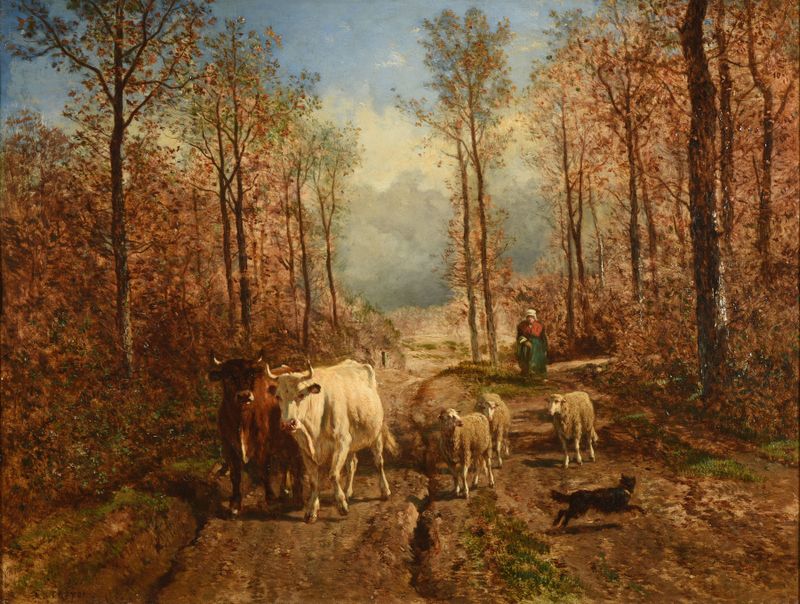
Rentrée de troupeau
Constant Troyon

Vaches sous bois
Constant Troyon

La gardeuse d’oies
Constant Troyon

Mill Stream with Fishermen
Constant Troyon
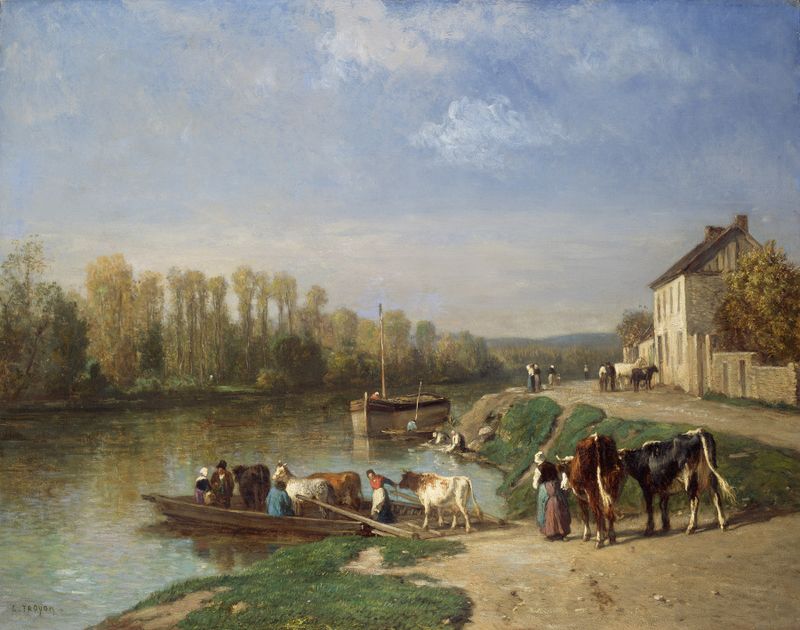
The Ferry Crossing
Constant Troyon

Landscape
Constant Troyon

Pasture in Normandy
Constant Troyon

Paysage
Constant Troyon

The Road to Market
Constant Troyon





