
Pasture in Normandy — History & Facts
The essence of mortality lingers in the expansive fields that breathe life yet conceal the inevitable passage of time. In Pasture in Normandy, tranquility is draped over nature's tender embrace, inviting viewers to reflect on the duality of existence. Look to the foreground, where gentle hills roll beneath a sky brushed with soft, muted hues. The grazing cattle, rendered with exquisite detail, create a serene rhythm against the wildflowers dancing in the gentle breeze.
Notice how the light cascades over the landscape, painting the myriad shades of green and gold, revealing Troyon's adept ability to capture the essence of rural life while simultaneously drawing attention to fleeting moments of beauty. The contrast between the placid scene and the underlying current of mortality speaks volumes. Each blade of grass and each contented animal stands as a reminder of life’s ephemeral nature, where serenity belies the passage of time. The vibrant colors evoke warmth, yet they also hint at the inevitability of decay, urging viewers to ponder what is lost and what remains.
There’s a subtle tension in the stillness, as if the pastoral charm is a fleeting glimpse of something profoundly transient. Constant Troyon painted Pasture in Normandy in 1852, during a period when Romanticism was giving way to Realism. Living in France, he was part of a movement seeking to capture the authenticity of everyday life and nature. At this time, artists were increasingly drawn to rural scenes, reflecting a societal yearning for simplicity amid the rapid changes of the industrial age.
This work embodies that transition, merging beauty with the poignant truth of mortality.
More Artworks by Constant Troyon
Browse all →
Landscape with Painter at Easel
Constant Troyon

The Marsh
Constant Troyon
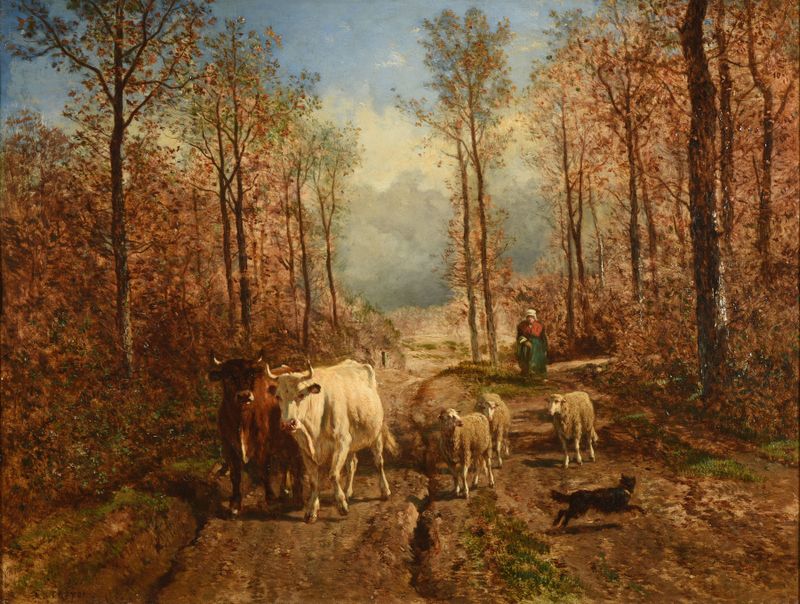
Rentrée de troupeau
Constant Troyon

Vaches sous bois
Constant Troyon

La gardeuse d’oies
Constant Troyon

Mill Stream with Fishermen
Constant Troyon
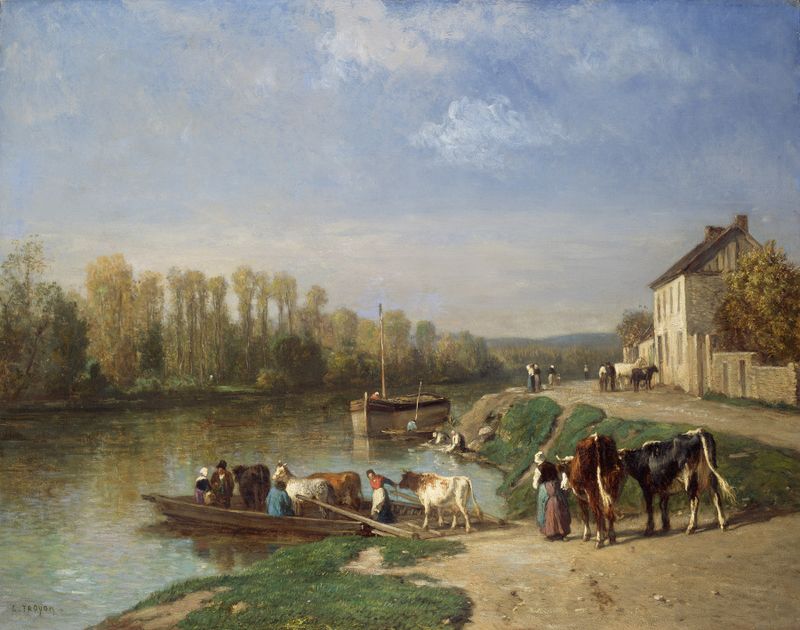
The Ferry Crossing
Constant Troyon

Landscape
Constant Troyon

Paysage
Constant Troyon

The Road to Market
Constant Troyon





