
A Wooded Landscape with a Herdsman on a Path and a Lone Goat — History & Facts
A shaft of late sunlight slices through the forest, catching on the silver bark of a birch and guiding the viewer’s eye to a solitary goat pausing at the edge of a shadowed path. The sense of hush is almost tangible: the herdsman, distant and half-swallowed by the gloom, seems less a master of his flock than a quiet participant in the slow turning of the day. Every element in A Wooded Landscape with a Herdsman on a Path and a Lone Goat by Adam Pijnacker is placed to draw us into the layered silence of the woods—the thick trunks in the foreground, the tangled branches, the sudden opening to sky and distant hills, all orchestrated to create a play of concealment and revelation.
The goat, small but bright against the darkness, becomes a kind of punctuation mark in the painting’s visual sentence, its presence both humble and oddly commanding. This kind of landscape, with its careful attention to the drama of light and the poetry of the forest, belongs to the world of seventeenth-century Dutch painting, when artists like Pijnacker responded to a growing appetite for scenes of nature among the urban elite. Such works were not mere records of the countryside but invitations to linger, to imagine oneself wandering these shadowed paths. The genre flourished in an era of economic expansion and domestic pride, when paintings like this would have hung in prosperous homes, offering a window onto a world both familiar and idealized.
Though little is recorded about this specific painting beyond its appearance in a modern collection, its quiet authority and subtle play of light and shadow invite us to look again, and to lose ourselves in the forest’s depths.
More Artworks by Adam Pijnacker

Italianate River Landscape
Adam Pijnacker
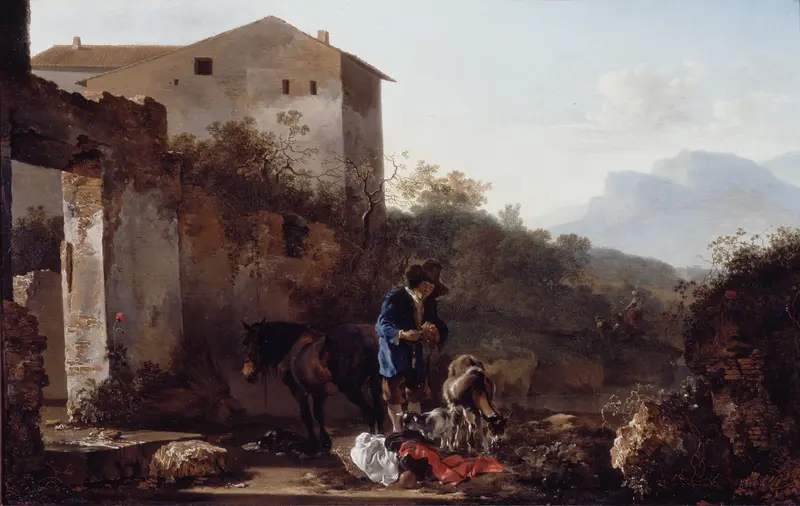
Landscape with a Goatherd
Adam Pijnacker
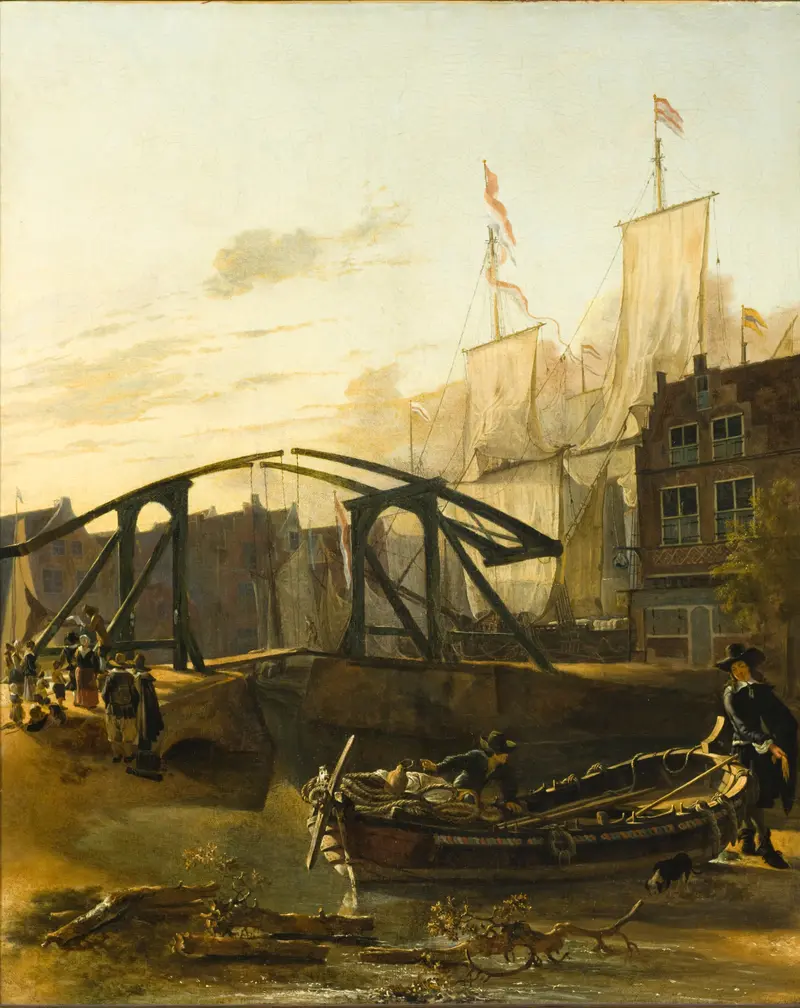
View of a Harbor in Schiedam
Adam Pijnacker
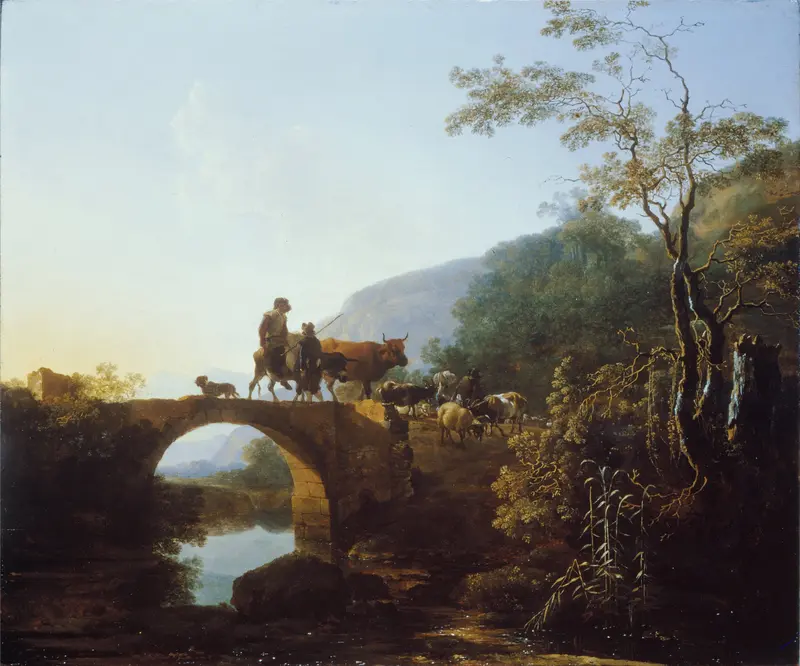
Bridge in an Italian Landscape
Adam Pijnacker
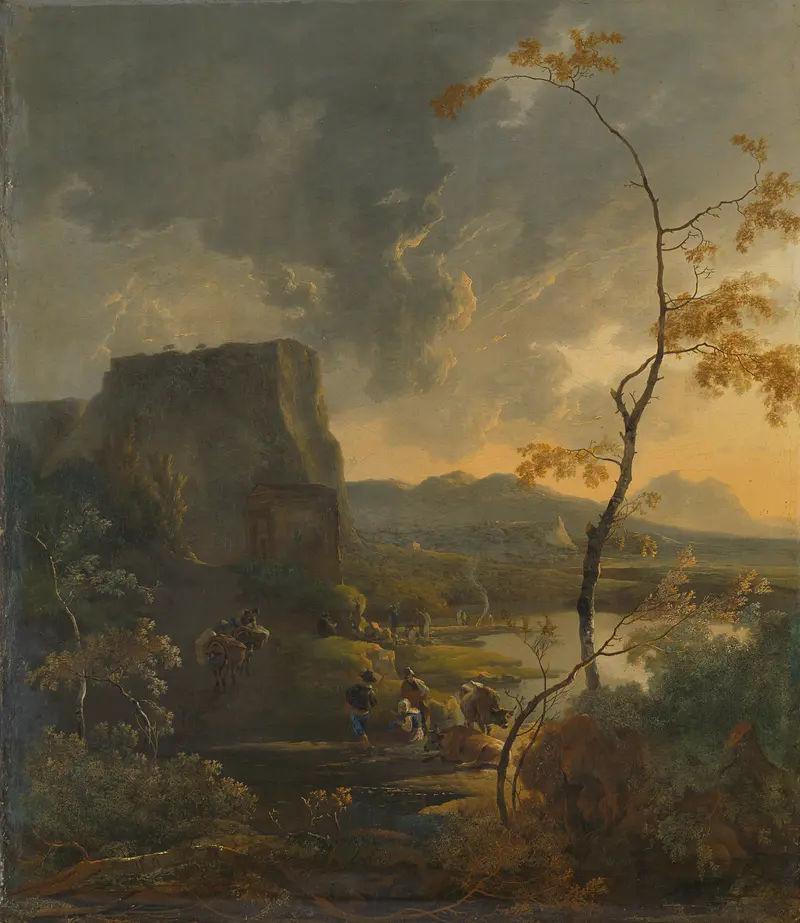
Italian Landscape with Ancient Tempietto
Adam Pijnacker
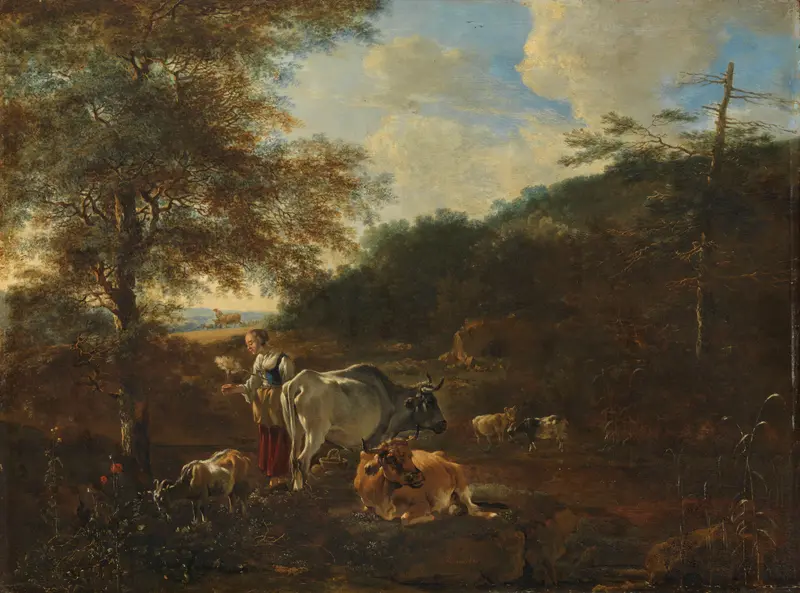
Landscape with cattle
Adam Pijnacker
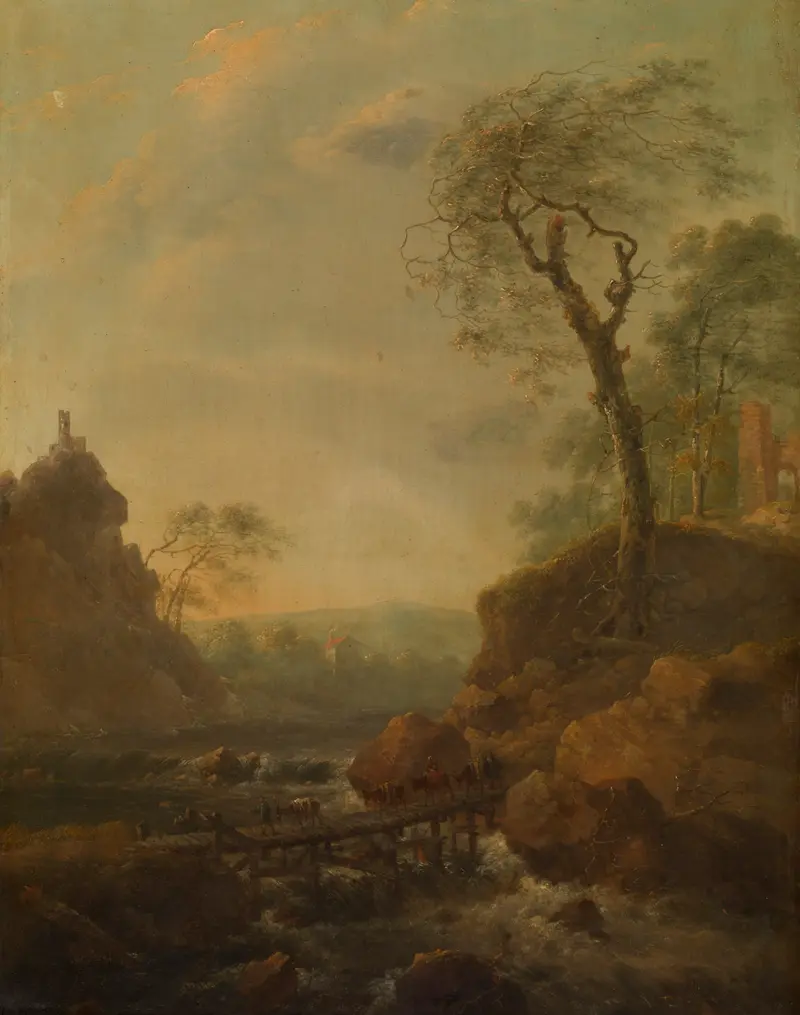
Landscape
Adam Pijnacker
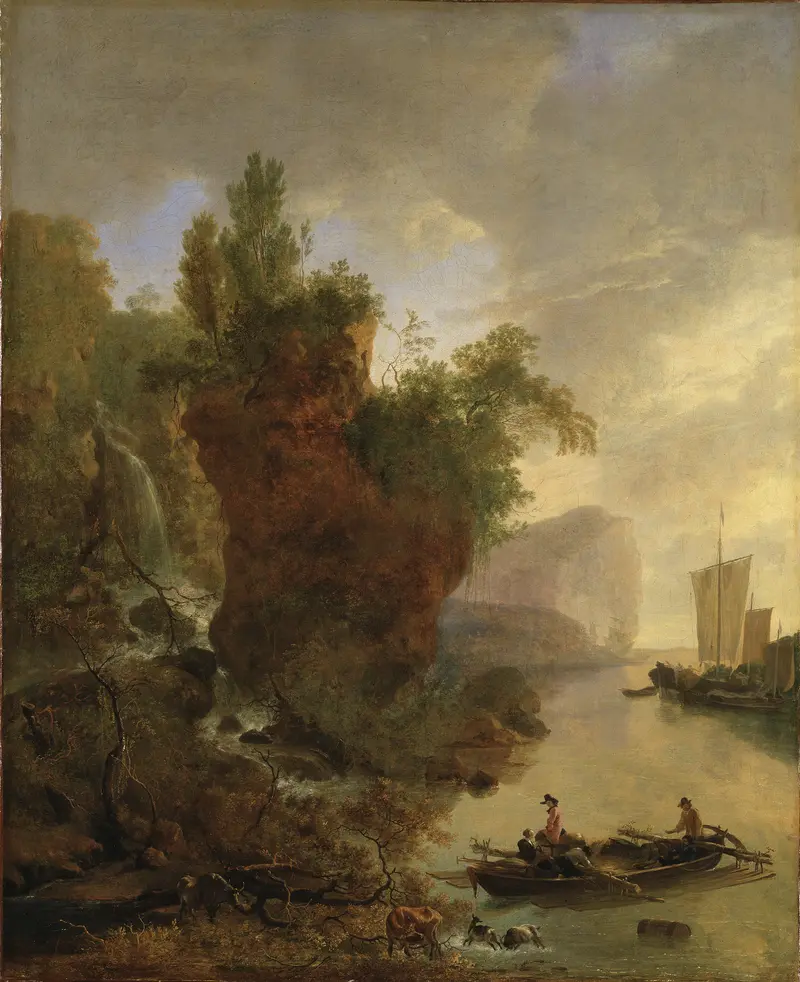
Bay with a Rocky Coast
Adam Pijnacker
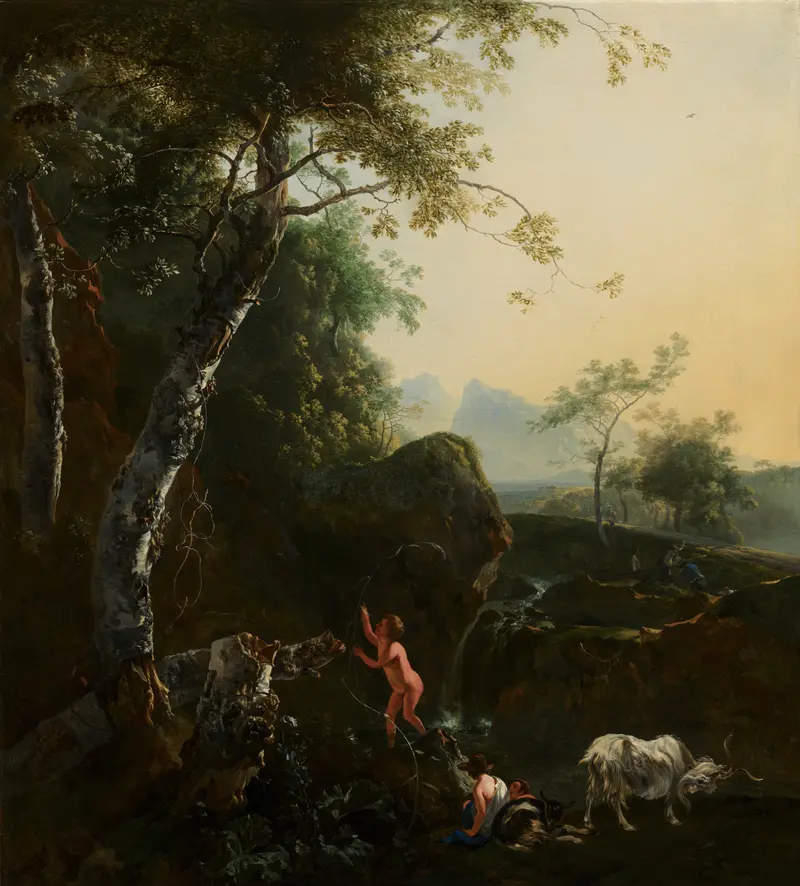
Mountainous Landscape with Waterfall
Adam Pijnacker
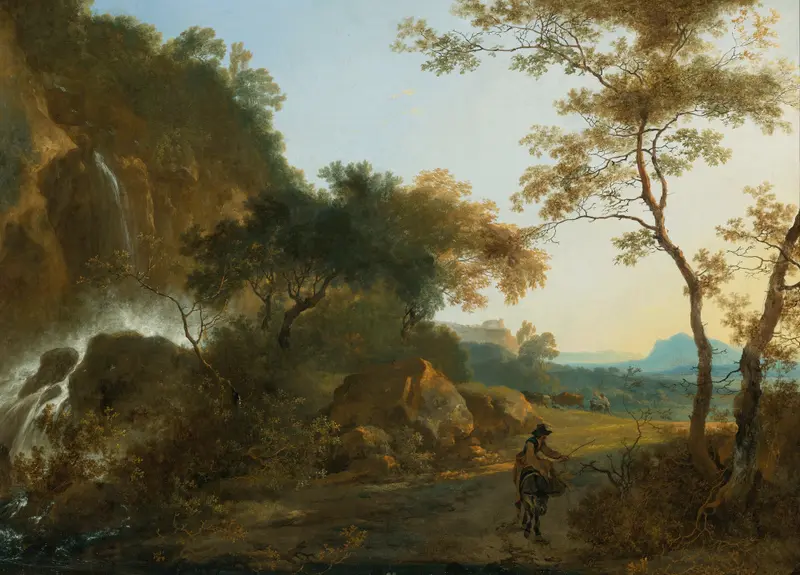
An Italianate Landscape With A Traveller On A Path By A Waterfall
Adam Pijnacker
More Landscape Art

The Starry Night
Vincent van Gogh

View of Delft
Johannes Vermeer

Water Lilies
Claude Monet

The Grand Canal, Venice, looking north-west from the Ca' Corner to the Ca' Contarini degli Scrigni, with the campanile of Santa Maria della Carità
Canaletto

Windsor Castle
Canaletto

The Grand Canal looking North-East from the Palazzo Dolfin-Manin to the Rialto Bridge
Canaletto