
A Woodland Scene at Dusk — History & Facts
Did the painter know this moment would outlive them? In the gentle embrace of twilight, as the sun bows beneath the horizon, the woodland breathes with a soft sigh of decay — a reminder of the impermanence wrapped within nature’s splendor. Look to the left at the interplay of light filtering through the swaying branches, casting intricate shadows upon the forest floor. The earthy tones of greens and browns are enlivened by hints of warm amber, drawing the eye towards the delicate brushstrokes that define the foliage. Notice how the horizon melds into an ethereal haze, blurring the line between earth and sky, suggesting that dusk is both an end and a beginning. The painting reveals a tension between life and decay, where the vibrant colors of the leaves hint at the vitality of the present moment while simultaneously foreshadowing the inevitable retreat into darkness.
Small details, like the curling edges of the leaves, whisper of the passage of time, while the serene stillness captures a fleeting tranquility, inviting viewers to ponder what lies beyond this ephemeral scene. Müller’s composition balances beauty with a poignant reminder of nature's cycle, evoking a bittersweet sense of nostalgia. During the years 1833 to 1845, Müller created this work at a time when the Romantic movement was blossoming in England, emphasizing emotion and the sublime aspects of nature. The artist, deeply influenced by the landscapes surrounding him, sought to capture the intersection of light and shadow as a metaphor for human experience.
His dedication to depicting the natural world was a testament to the prevailing sentiment of the time, reflecting both admiration for nature’s grandeur and a somber recognition of its fleeting beauty.
More Artworks by William James Müller
Browse all →
Cleeve, Somerset, with Bridgewater Bay in the Distance
William James Müller

The Bridge at Llangollen
William James Müller

Cairo Bazaar
William James Müller
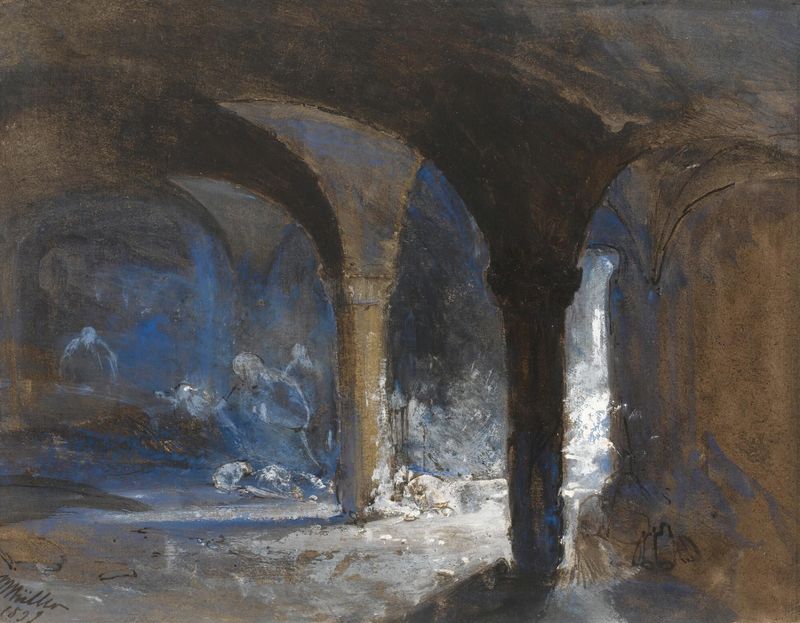
Crypt of the bishop’s palace during the Bristol riots
William James Müller

Near the Caravan Bridge, Smyrna
William James Müller
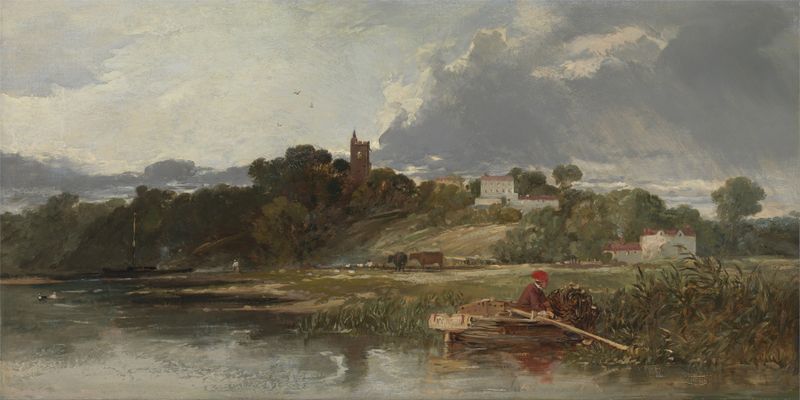
Gillingham on the Medway
William James Müller

The Church of the Holy Sepulchre
William James Müller

A View of Eton and the Fellows Eyot
William James Müller

Tripoli
William James Müller

A Mountain Torrent
William James Müller





