A young woman with a parrot — History & Facts
What draws the eye first in A young woman with a parrot is the poised exchange between woman and bird: a single grape, held delicately aloft, becomes a moment of silent communication. The young woman sits beneath a tree, her gaze turned not to the viewer but to her feathered companion, the lines of her arm guiding us from the basket of fruit in her lap to the outstretched hand. The parrot, perched attentively, leans forward, its beak nearly touching the offered fruit.
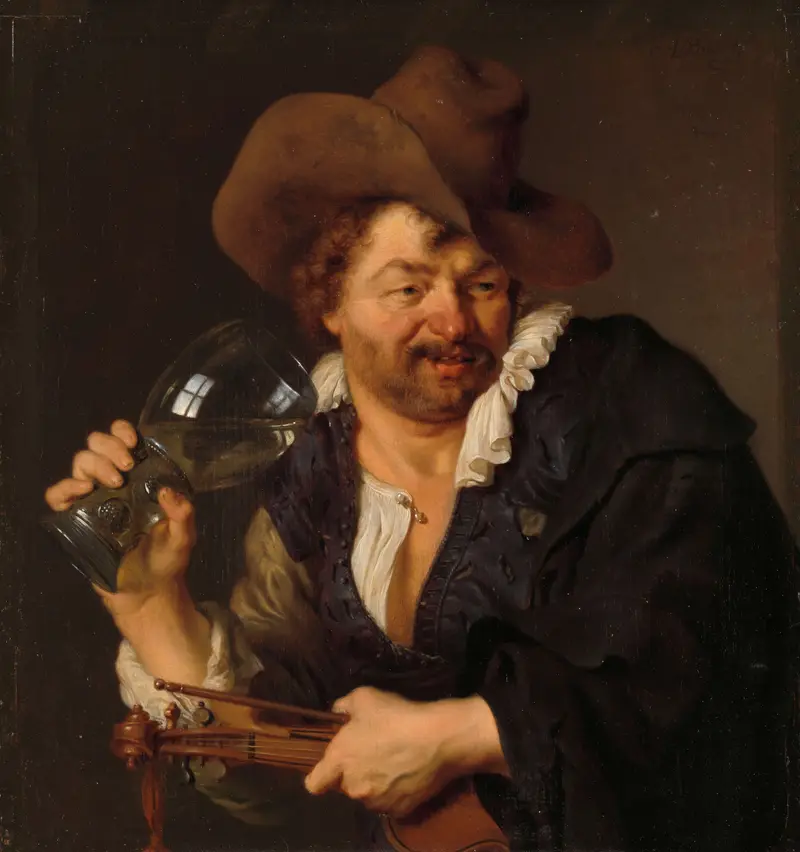
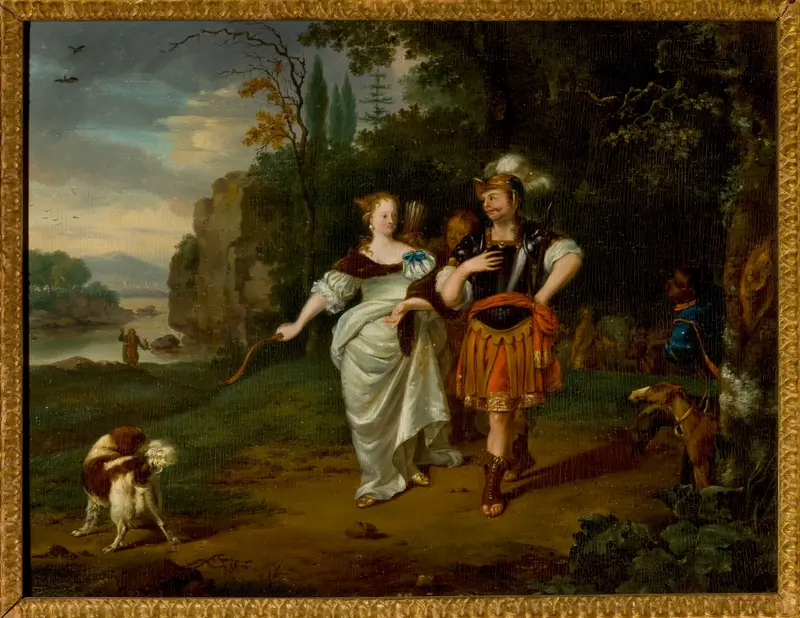
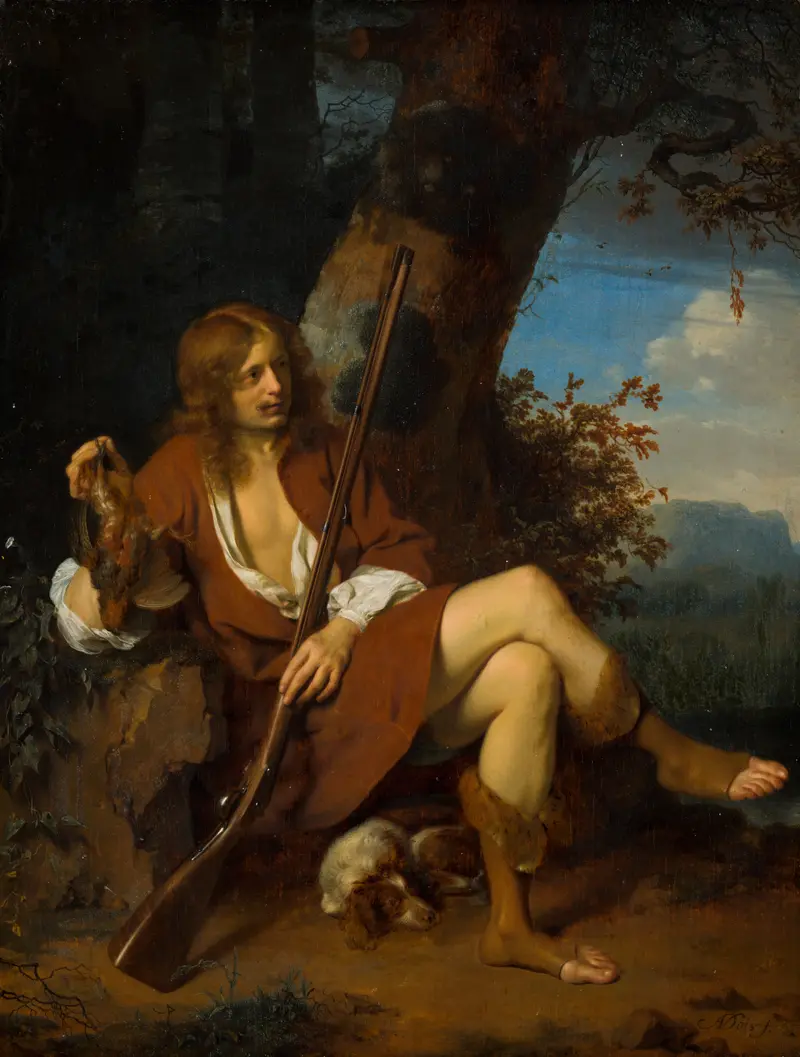
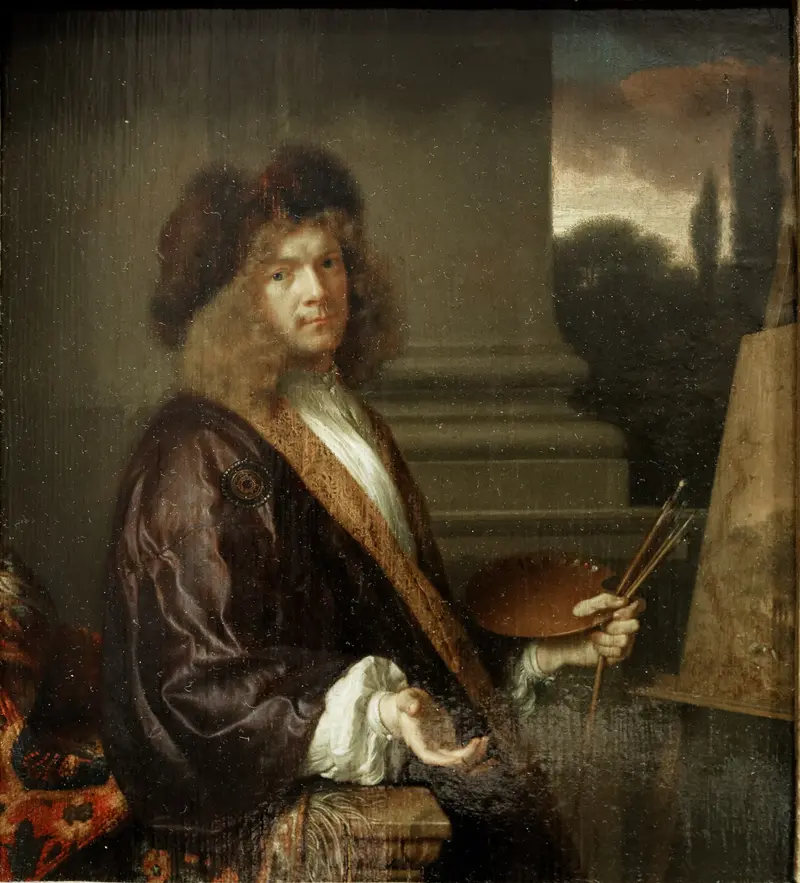
Ary de Vois bathes the scene in gentle light, picking out the sheen of the woman's dress, the flush of her cheeks, and the glossy skin of apples and grapes—each detail signaling abundance, leisure, and the pleasures of cultivated company. Painted between 1660 and 1680, this work belongs to the world of the Dutch Golden Age, when artists delighted in scenes of domestic ease and subtle symbolism. Such paintings often graced the homes of prosperous burghers, celebrating not only material wealth but also the refinement of manners and taste. The presence of the parrot, an exotic and intelligent bird, hints at global trade and the fascination with the wider world, while the fruit basket suggests both bounty and fleeting pleasure.
Though history has kept few traces of this particular painting’s journey, it now resides in the Rijksmuseum, inviting viewers to linger over its quiet drama and the skill with which Ary de Vois captures a fleeting, intimate exchange.