Jeune fumeur — History & Facts
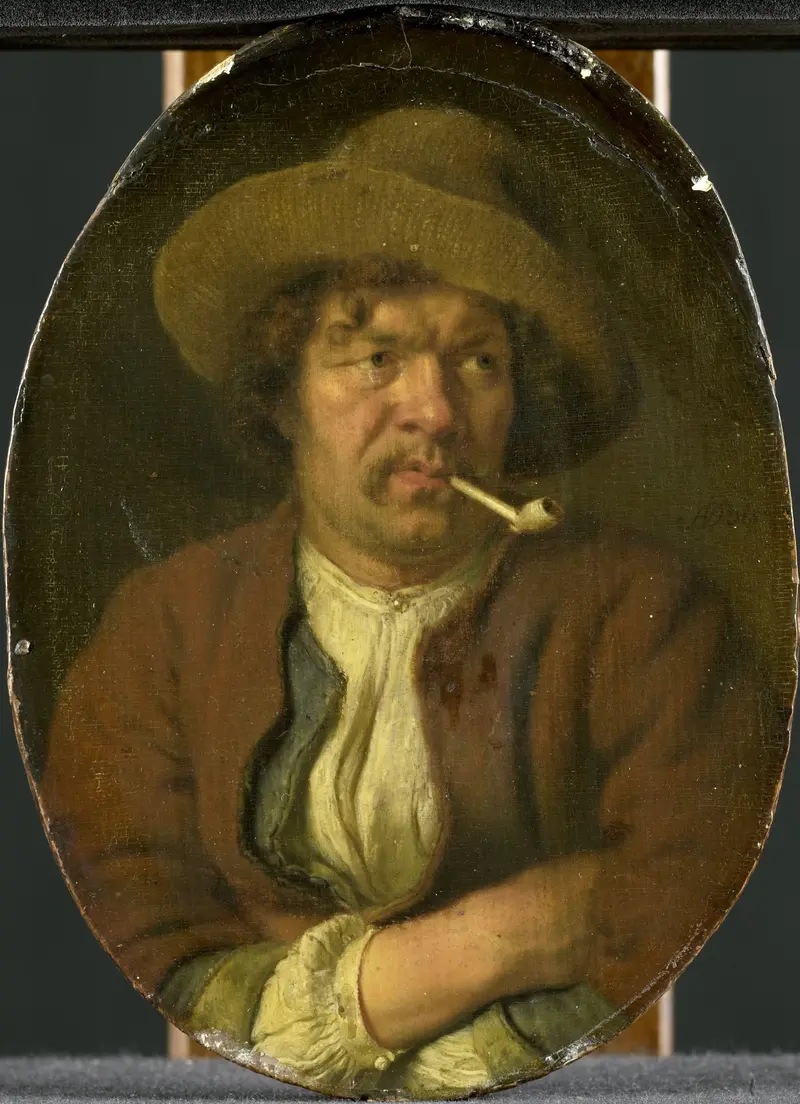
What first catches the eye in Jeune fumeur is the direct, almost conspiratorial gaze of the young man, his lips parted as if he is about to share a secret or a joke. The fur toque, crowned with a dramatic plume, sets him apart from the everyday, while the long, loose hair and the soft shadow across his face lend a sense of immediacy and intimacy. His hands are busy: one cradles a tankard, the other a long clay pipe, and he seems caught in the act of either filling or lighting it, drawing the viewer into a private, almost ritual moment.
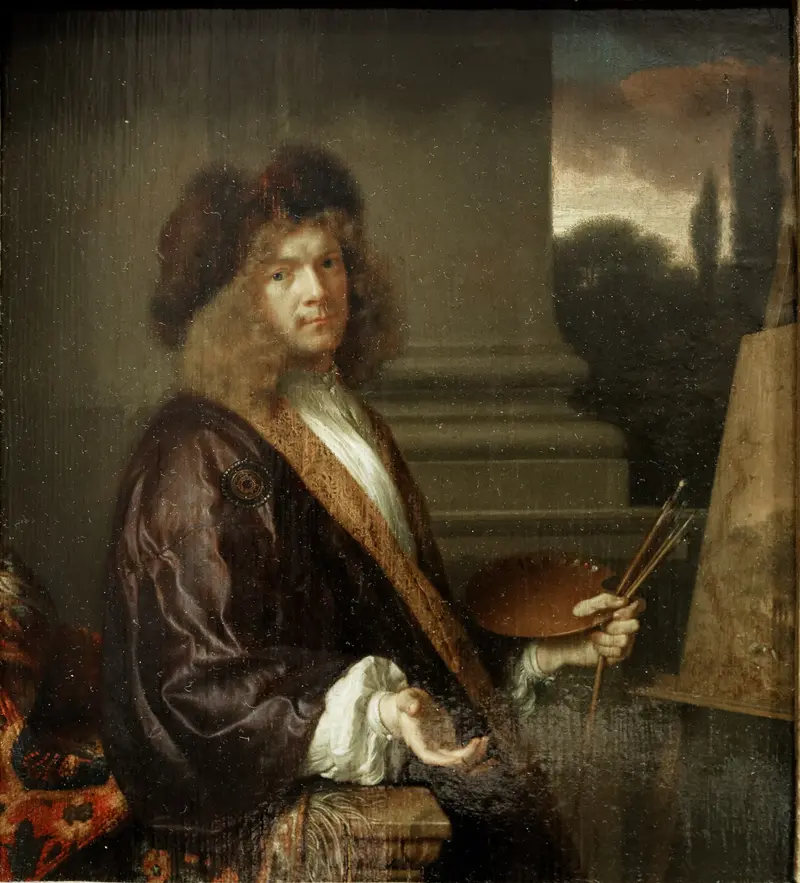
The light falls with precision, illuminating his fingers and the objects they hold, while the background recedes into darkness, focusing all attention on the youth’s intent expression and the tactile reality of his tools. The palette is warm and earthy, reinforcing the sense of a quiet, interior world. Painted in the second half of the seventeenth century, this work belongs to a moment when Dutch and Flemish artists delighted in scenes of everyday life, often imbuing them with subtle lessons or humor. The genre of the single-figure “tronie”—a study of character and expression—was especially popular, allowing painters like Ary de Vois to explore personality through costume, gesture, and gaze rather than through grand narrative.
Such works were often collected by prosperous burghers eager to display both their taste and their moral discernment. Today, Jeune fumeur resides in the Musée des Beaux-Arts in Reims, a reminder of an era when even the most ordinary pleasures—like the lighting of a pipe—could become the subject of close, affectionate scrutiny. The young smoker’s steady look invites us to linger, searching for the story behind his half-smile.