Dido and Aeneas hunting — History & Facts
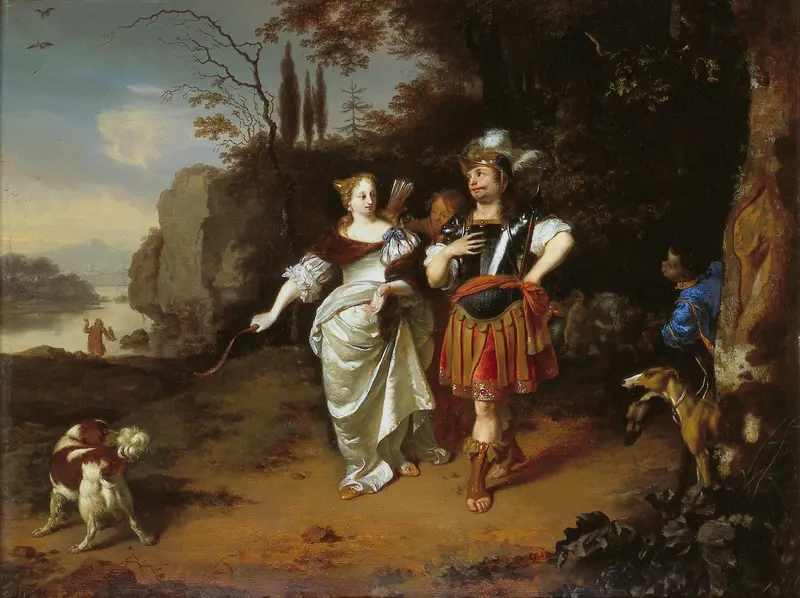
A moment of poised conversation draws the viewer in, as a woman in white—her bow still angled from the hunt—meets the gaze of a man in Roman armor. The painter, Ary de Vois, chooses not the climax of chase or battle, but the charged pause between two mythic figures: Dido and Aeneas, their story suspended in the dappled light of a wooded glade. The dogs, alert yet calm, echo the tension between action and restraint, while the gentle sweep of the woman’s dress and the man’s poised hand hint at the undercurrents of courtship and fate. This is a world where myth and mannered civility blend.
The landscape opens to a river and distant figures, drawing the eye from the intimacy of the foreground to the broader world these characters inhabit. De Vois’s palette is warm and clear, the light falling gently on bare shoulders and polished armor, casting the pair as both actors and audience in their own legend. The scene is not one of triumph or despair, but of possibility—a rare, quiet interval before destiny asserts itself.
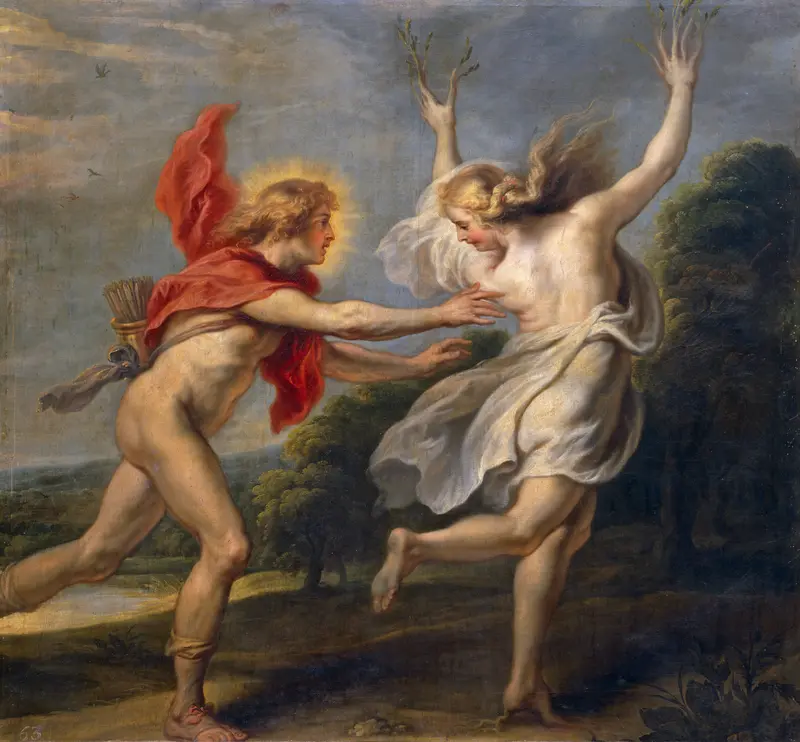
In this, it stands apart from the stormier, more dramatic renditions by artists like Rubens, favoring instead a mood of reflective anticipation. Painted at a time when Dutch artists delighted in classical subjects reimagined for a sophisticated audience, works like this were often destined for private collectors who prized both myth and technical finesse. Today, Dido and Aeneas hunting resides in the National Museum in Warsaw, its origins and early history largely unrecorded—a reminder of how many such treasures slipped quietly through the centuries. The painting invites us to linger in its stillness, to wonder what words might have passed between these legendary lovers as the sun set on their hunt.