
Aanlegsteiger bij Honfleur — History & Facts
This poignant transformation speaks to the fragility of existence, where fleeting moments linger like whispers of mortality, captured forever on canvas. Look to the left at the serene docks, where boats rest gently upon the water’s surface, their reflections a shimmering dance of blues and whites. The brushwork is both soft and deliberate, evoking a sense of tranquility yet hinting at the impermanence of the scene. Notice how the light bathes the masts in a golden glow, creating a warm contrast against the cool palette of the harbor.
Each stroke conveys not just a physical space but also an emotional landscape, inviting contemplation of life’s transitory nature. Delve deeper into the painting, and you'll find subtle contrasts that underscore its themes. The juxtaposition of the calm harbor against the distant, brooding sky suggests a tension between peace and the inevitable passage of time. The boats, lifeless without crew, echo the quiet of a world on the verge of change, evoking a sense of longing that resonates with viewers.
Each element, from the rippling water to the distant horizon, speaks to the fragility of life, reminding us that every moment is both beautiful and ephemeral. In 1865, Aanlegsteiger bij Honfleur emerged from Jongkind's brush during a period of personal exploration and artistic evolution, as he sought to refine his style in a rapidly changing art world. Living in France, he was at the nexus of Impressionism, influenced by the light and atmosphere that characterized the work of his contemporaries. This painting reflects not just his mastery of light and color but also an introspective reflection on mortality, encapsulating a time when art began to embrace the fleeting essence of life.
More Artworks by Johan Barthold Jongkind
Browse all →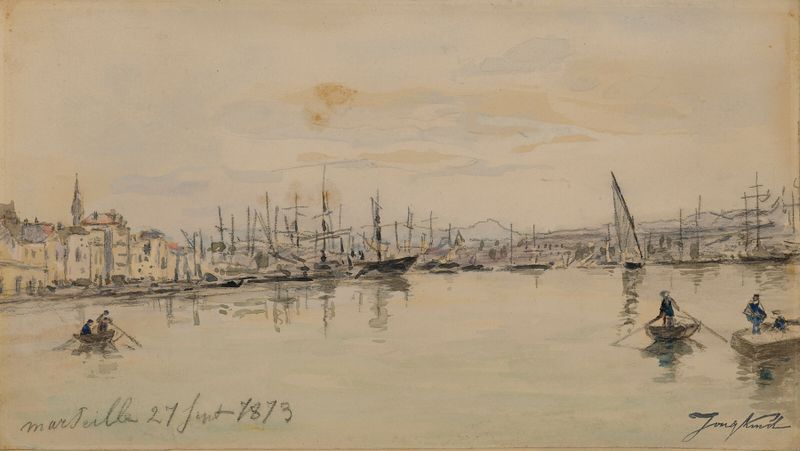
Le Port de Marseille
Johan Barthold Jongkind

Canal Saint-Martin
Johan Barthold Jongkind

Countryside near Brezins, between Grenoble and Vienne
Johan Barthold Jongkind

Notre-Dame vue du quai de la Tournelle
Johan Barthold Jongkind

Environs de Grenoble
Johan Barthold Jongkind

Clair de lune à Overschie (environs de Rotterdam)
Johan Barthold Jongkind

Port de Honfleur
Johan Barthold Jongkind
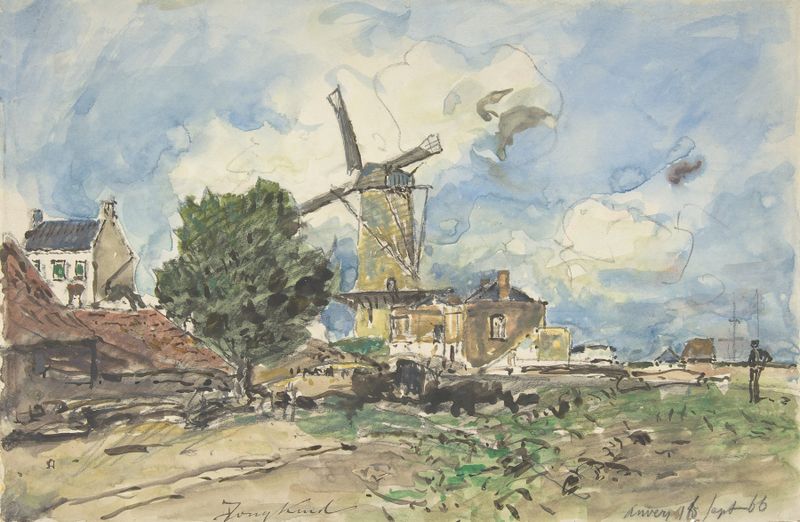
Wind Mill at Antwerp
Johan Barthold Jongkind

Le Havre
Johan Barthold Jongkind

The Church of Overschie
Johan Barthold Jongkind





