
Abraham en de drie engelen — History & Facts
Can beauty exist without sorrow? In the heart of Georg Pencz's Abraham en de drie engelen, the interplay of divine presence and human vulnerability unfolds in a moment that resonates deeply with our shared experience of faith and uncertainty. Look to the left at the serene figure of Abraham, his gaze both reverent and vulnerable as he converses with the ethereal visitors. The rich palette of muted earth tones contrasts with the heavenly blues and whites of the angels, emphasizing their otherworldly nature. Observe how the light plays across Abraham’s face, illuminating his features and hinting at the gravity of his encounter.
The composition draws the viewer’s eye through a tapestry of gestures, weaving a narrative of hospitality and destiny. Yet, beneath this divine visit lies a tension between the sacred and the mundane. The ground on which Abraham stands is both firm and fragile, symbolizing the weight of human responsibility amid divine intentions. The angels, with their graceful poses and flowing garments, represent hope and promise, but their presence also silently echoes the impending trials awaiting Abraham.
Each fold in their robes seems to whisper secrets of faith, duty, and the pain of future sacrifice—a reminder that divinity often intertwines with sorrow. Created between 1541 and 1545, this work emerged during a time of religious upheaval in Europe, as the Protestant Reformation challenged established beliefs. Pencz, rooted in the Northern Renaissance, was influenced by the shifting dynamics of faith and artistry in Nuremberg, where he sought to convey profound narratives through masterful craftsmanship and emotional depth. This painting stands as a testament to the artist’s exploration of faith, reflecting a world grappling with the coexistence of joy and sorrow at its core.
More Artworks by Georg Pencz
Browse all →
Parabel van de zaaier
Georg Pencz

Parabel van de arbeiders in de wijngaard
Georg Pencz
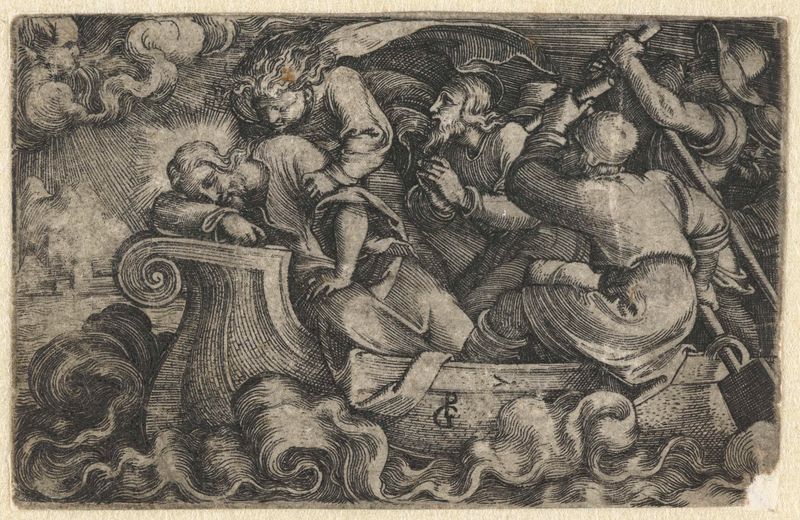
Discipelen wekken slapende Christus tijdens storm op Meer van Galilea
Georg Pencz

Afgunst (Invidia)
Georg Pencz
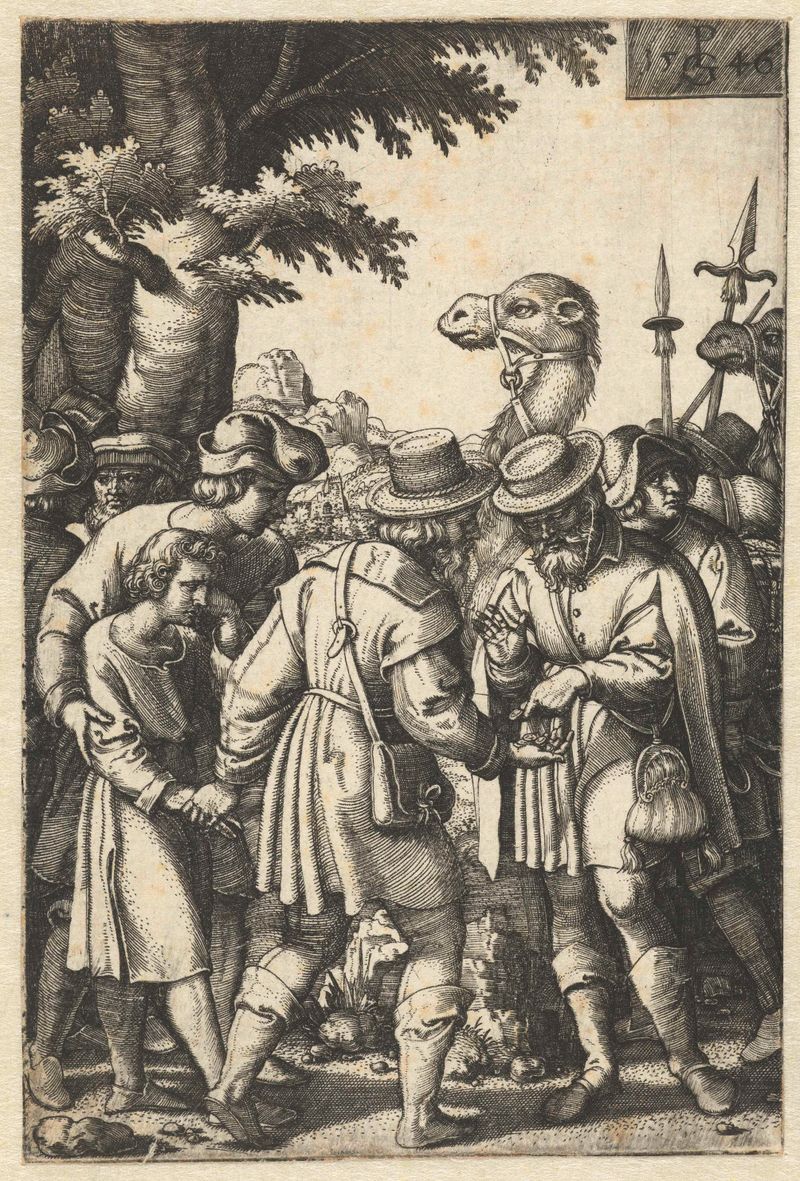
Jozef wordt verkocht aan kooplieden op weg naar Egypte
Georg Pencz

Aanbidding der koningen
Georg Pencz
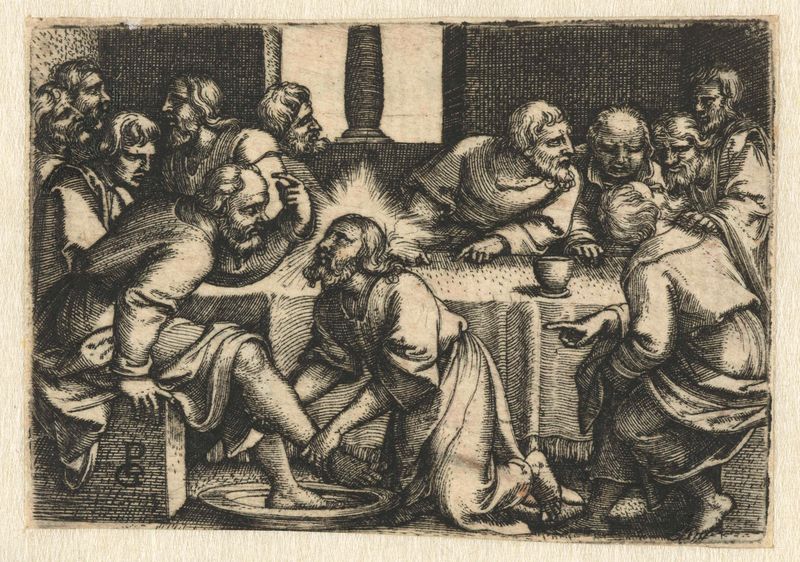
Petrus protesteert als Christus zijn voeten wast
Georg Pencz
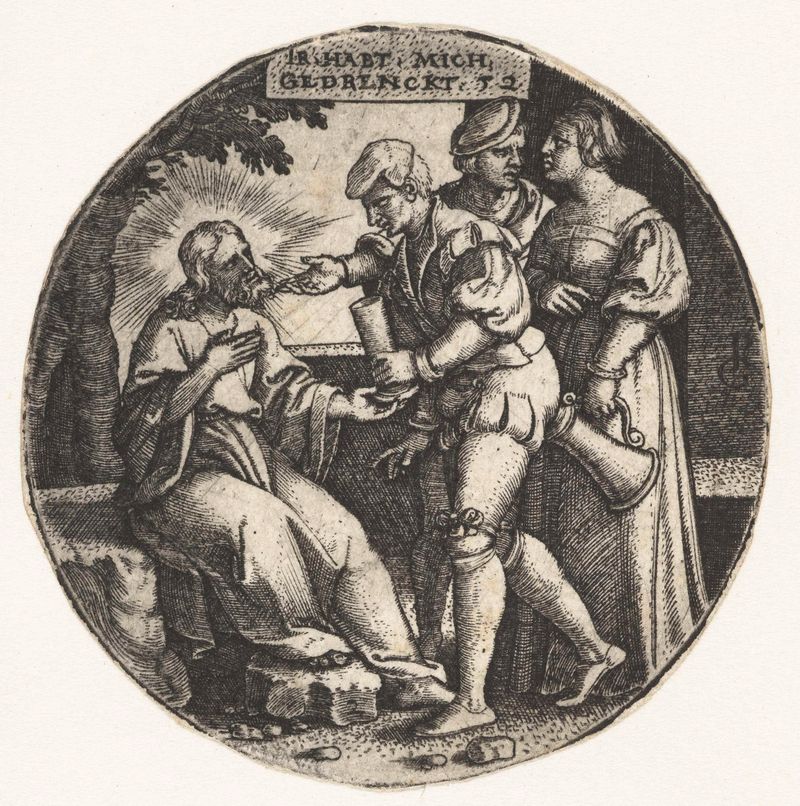
Christus heeft dorst en krijgt drinken aangeboden
Georg Pencz
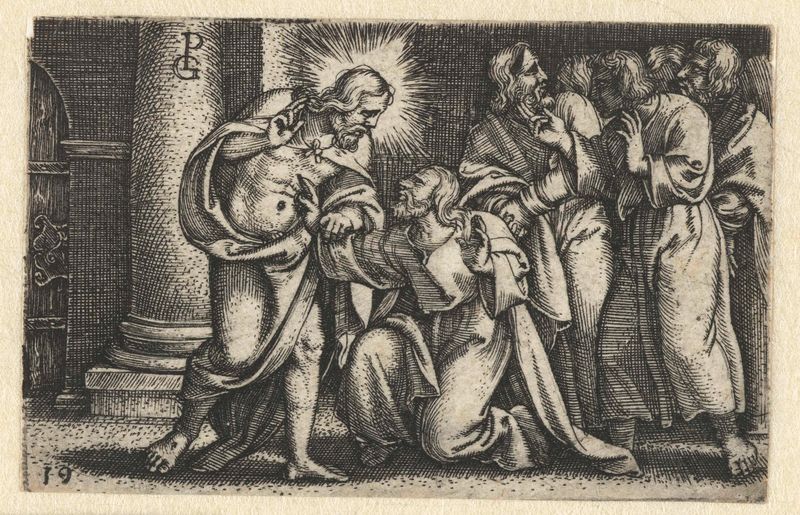
Ongelovige Thomas raakt wonden Christus aan
Georg Pencz

Offer van Abraham van Isaak
Georg Pencz
More Religious Art
Browse all →
The Return of the Prodigal Son
Rembrandt van Rijn

The Garden of Earthly Delights
El Bosco

Count Orgaz’ funeral
El Greco

The Hundred Guilder Print: the central piece with Christ preaching, the plate arched
Rembrandt van Rijn

The Descent from the Cross
Rogier van der Weyden

The return of the prodigal son
Rembrandt van Rijn