
Abraham en Hagar bespied door Sara — History & Facts
Did the painter know this moment would outlive them? In Abraham en Hagar bespied door Sara, color emerges as a silent yet powerful character, telling a story that transcends its canvas. The vivid palette echoes the complexities of human emotions and the tangled web of relationships, inviting us to ponder the weight of choice and consequence through the lens of color. Focus on the rich hues that define the figures’ garments—each shade chosen with intention. Notice how the vibrant reds and greens of Sara’s attire contrast starkly with the earthier tones of Hagar’s clothing.
This visual dialogue not only emphasizes the divide between the two women but also highlights their shared connection to Abraham. The soft, diffused light illuminates their faces, capturing a moment of raw emotion as they navigate jealousy and power. Delve deeper into the scene, and you’ll find layers of meaning woven into the brushstrokes. The positioning of Sara as the observer, poised with a mixture of curiosity and contempt, hints at her internal turmoil and societal expectations.
Meanwhile, Hagar’s posture, a blend of vulnerability and strength, challenges the viewer to reconsider notions of agency. The color palette enforces this emotional tension, with warm tones suggesting intimacy yet also danger, while cooler shades evoke isolation. Georg Pencz crafted this artwork between 1546 and 1550, during a time when Northern Renaissance artists were exploring intricate themes of human experience and emotion. Living in Nuremberg, Pencz was influenced by both the naturalistic details and the emotive power emerging in contemporary art.
His work reflects a moment where personal narratives began intertwining more with broader cultural dialogues, ensuring that these intimate scenes would resonate through the ages.
More Artworks by Georg Pencz
Browse all →
Parabel van de zaaier
Georg Pencz

Parabel van de arbeiders in de wijngaard
Georg Pencz
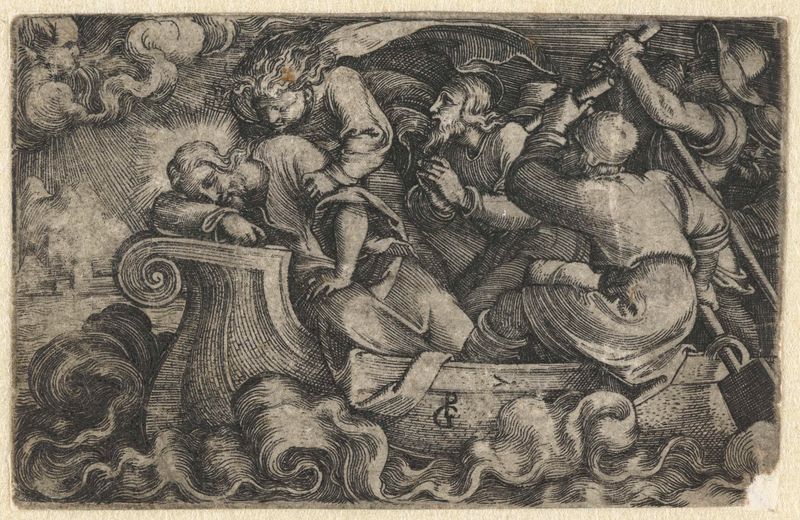
Discipelen wekken slapende Christus tijdens storm op Meer van Galilea
Georg Pencz

Afgunst (Invidia)
Georg Pencz
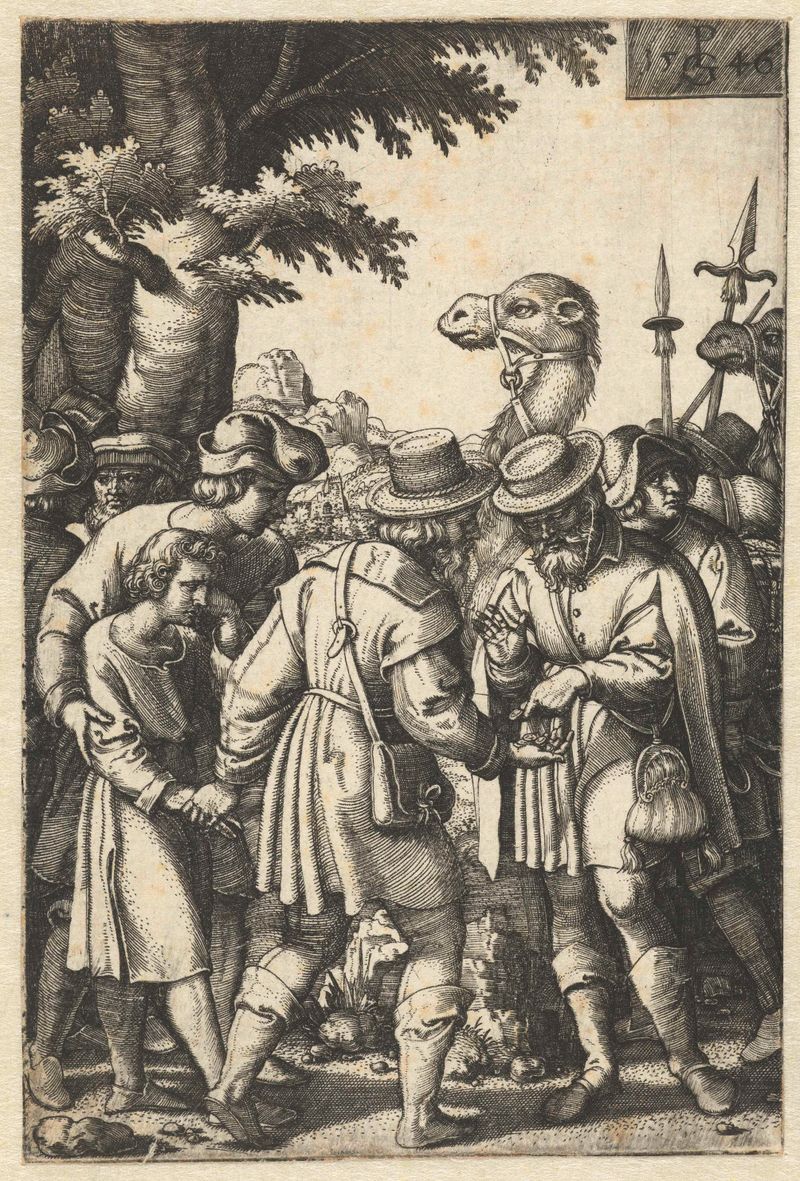
Jozef wordt verkocht aan kooplieden op weg naar Egypte
Georg Pencz

Aanbidding der koningen
Georg Pencz
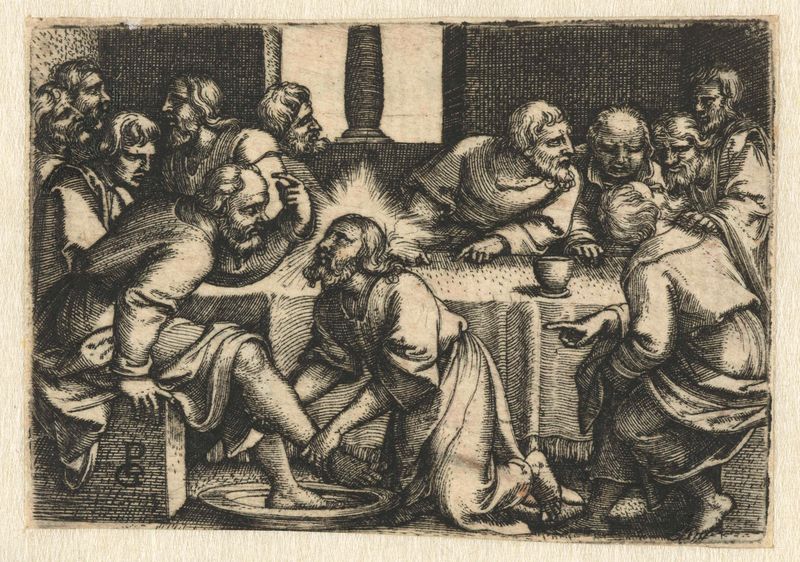
Petrus protesteert als Christus zijn voeten wast
Georg Pencz
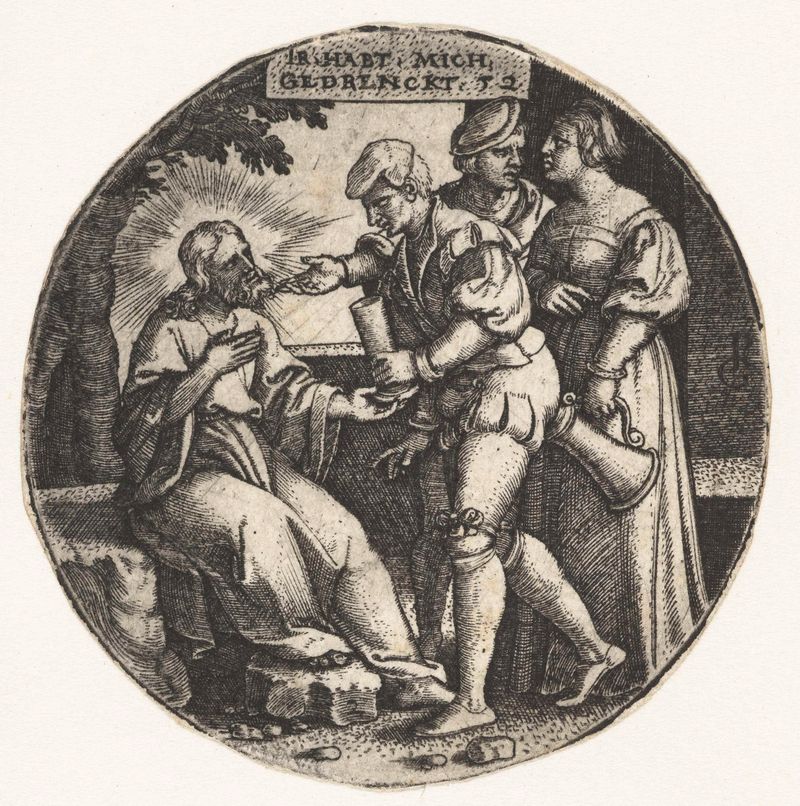
Christus heeft dorst en krijgt drinken aangeboden
Georg Pencz
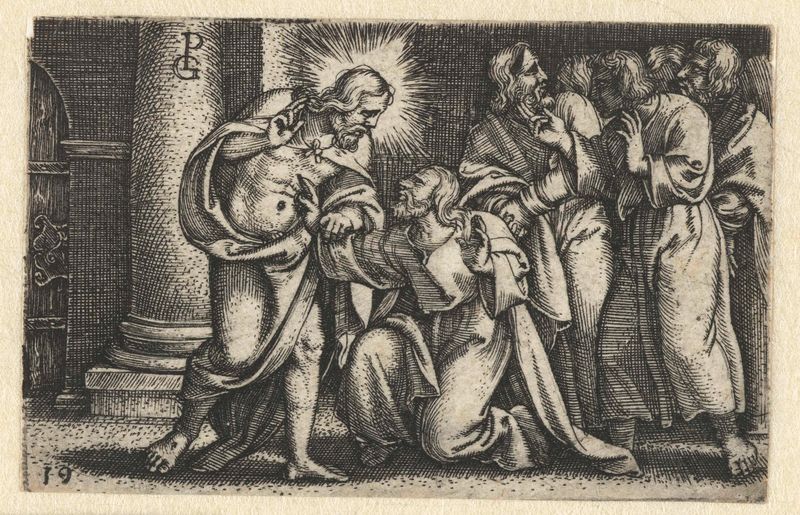
Ongelovige Thomas raakt wonden Christus aan
Georg Pencz

Offer van Abraham van Isaak
Georg Pencz
More Religious Art
Browse all →
The Return of the Prodigal Son
Rembrandt van Rijn

The Garden of Earthly Delights
El Bosco

Count Orgaz’ funeral
El Greco

The Hundred Guilder Print: the central piece with Christ preaching, the plate arched
Rembrandt van Rijn

The Descent from the Cross
Rogier van der Weyden

The return of the prodigal son
Rembrandt van Rijn