Abstract Trio — History & Facts
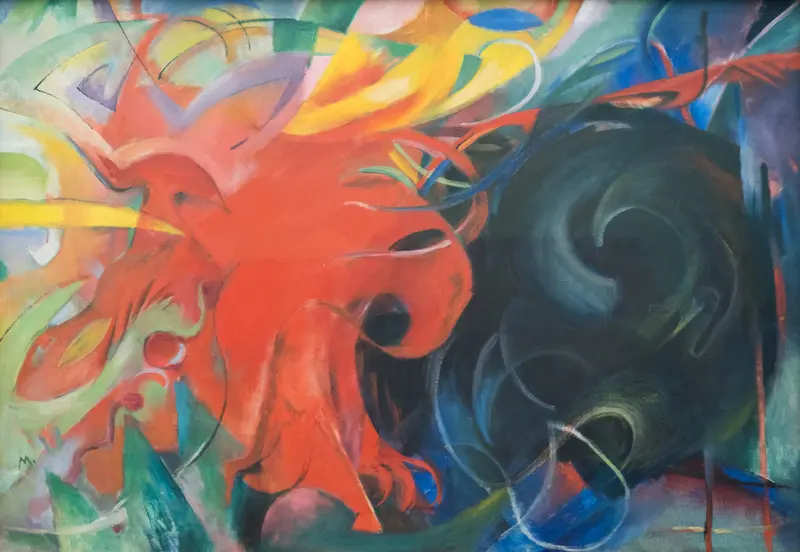
In Abstract Trio, Paul Klee uses a vibrant palette dominated by reds, blues, and yellows. The composition features geometric shapes that intersect and overlap, creating a sense of movement. The forms are abstract, suggesting a playful interaction rather than representational figures.
This work invites viewers to explore the relationships between color and shape. The painting is executed in oil on canvas, showcasing Klee's characteristic use of color and form. The brushwork is fluid, allowing for a dynamic interplay of colors. Klee often employed a technique of layering colors to achieve depth and texture.
This piece exemplifies his exploration of abstraction during the early 20th century. Paul Klee was a Swiss artist associated with the Bauhaus movement and is known for his unique approach to color and form. Abstract Trio reflects his interest in the emotional power of color and the simplification of shapes. An interesting fact about this work is that it was created during a period when Klee was deeply influenced by music, which often inspired his artistic compositions.