Ad marginem — History & Facts
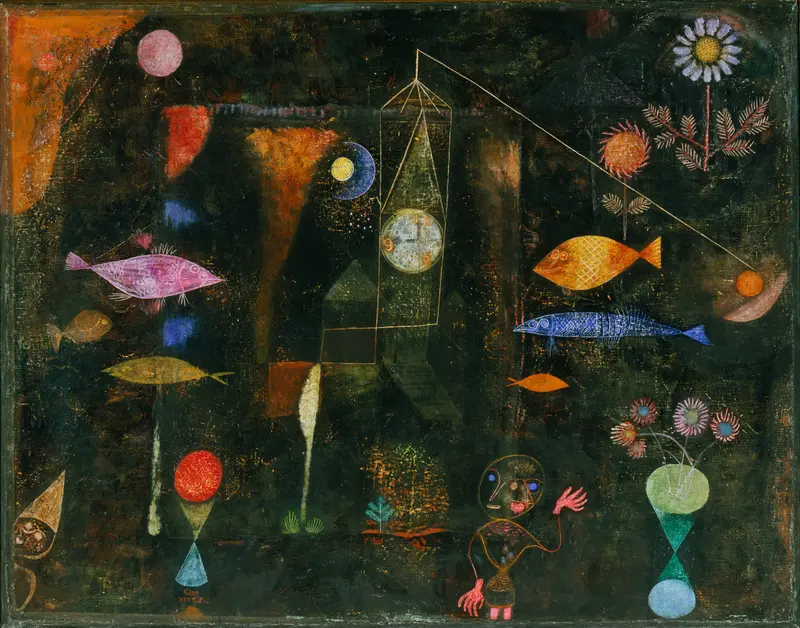
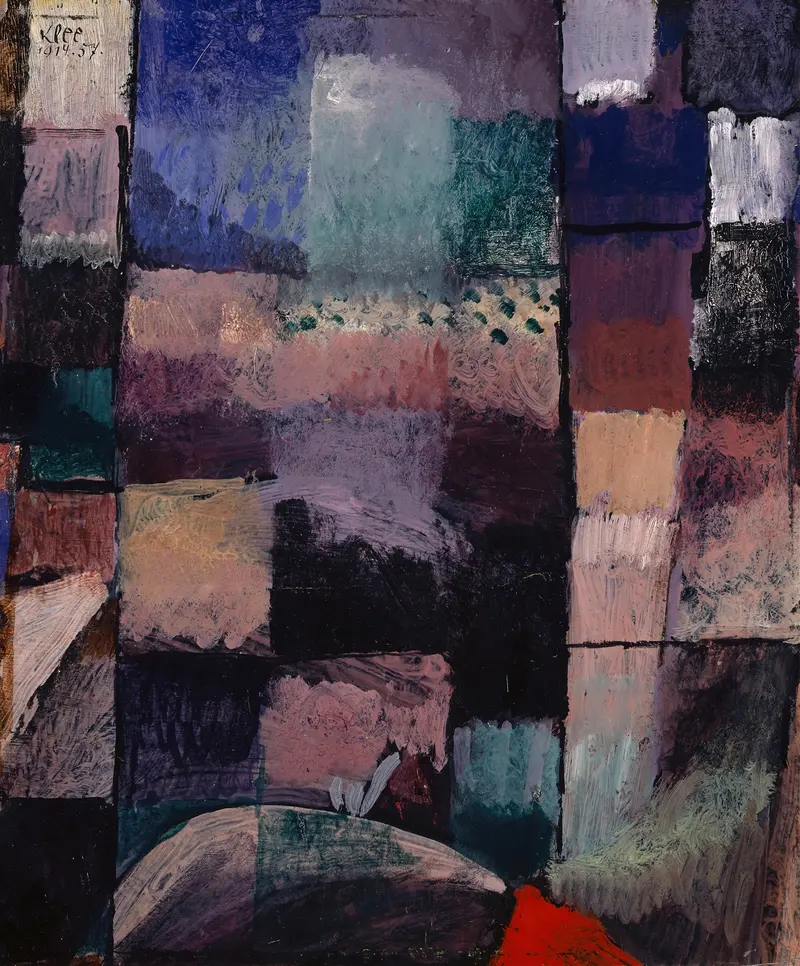
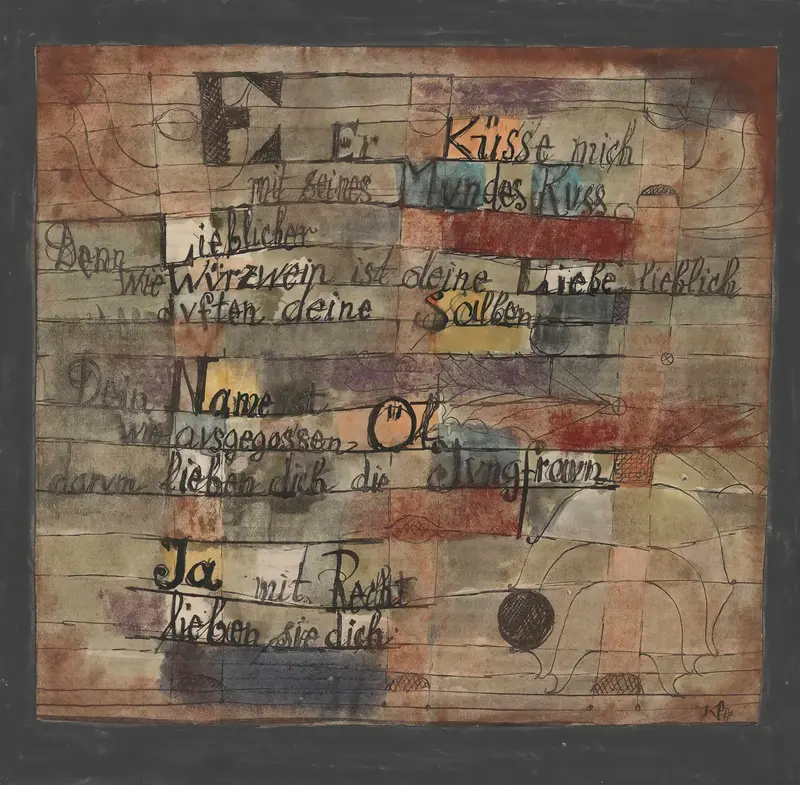
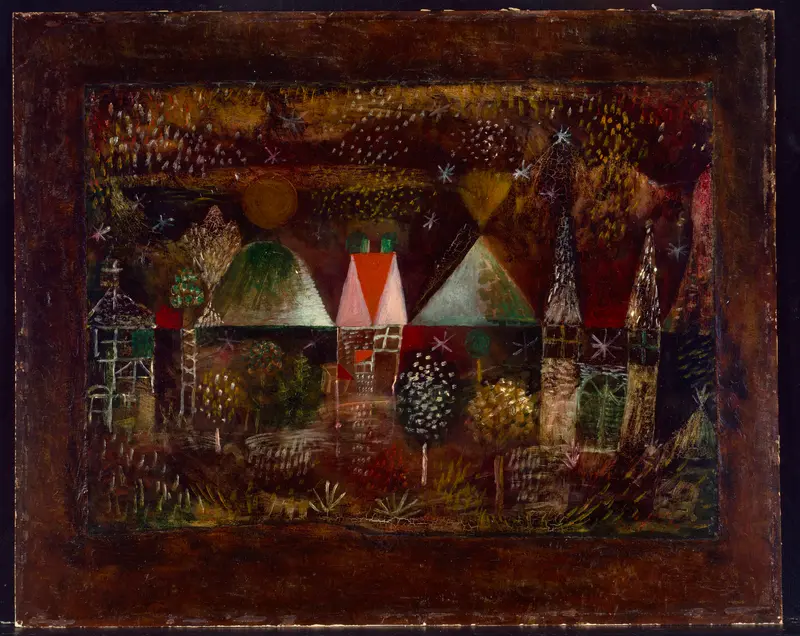
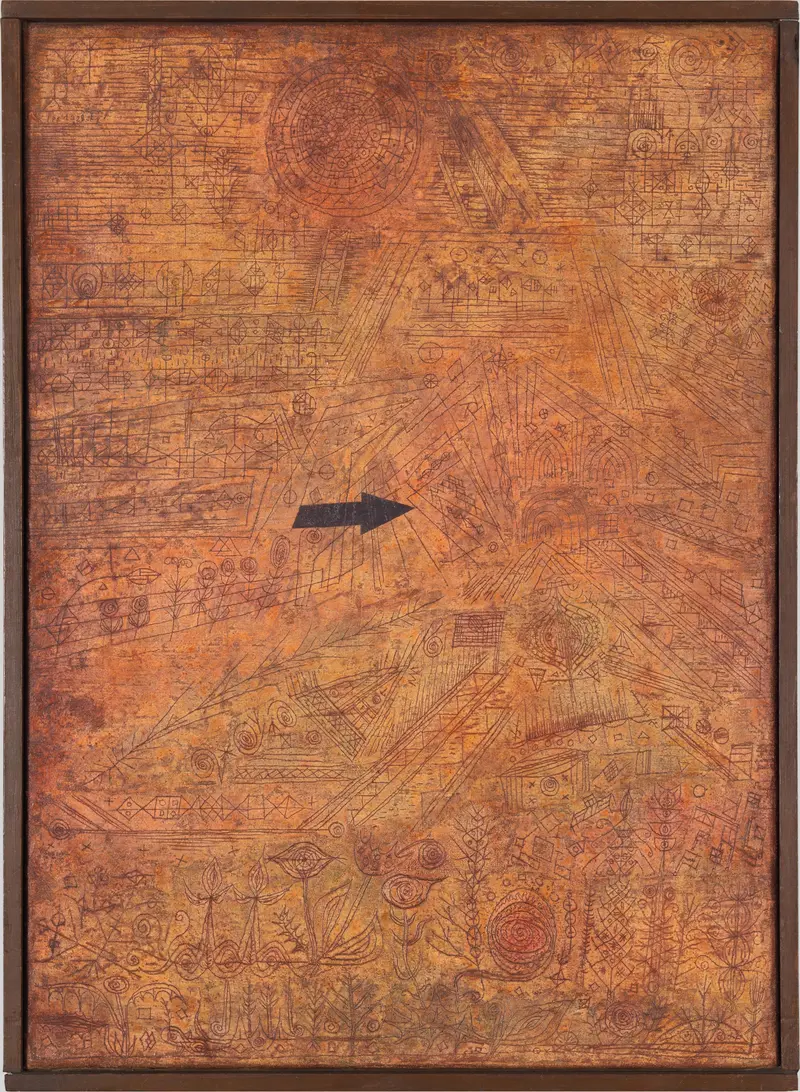
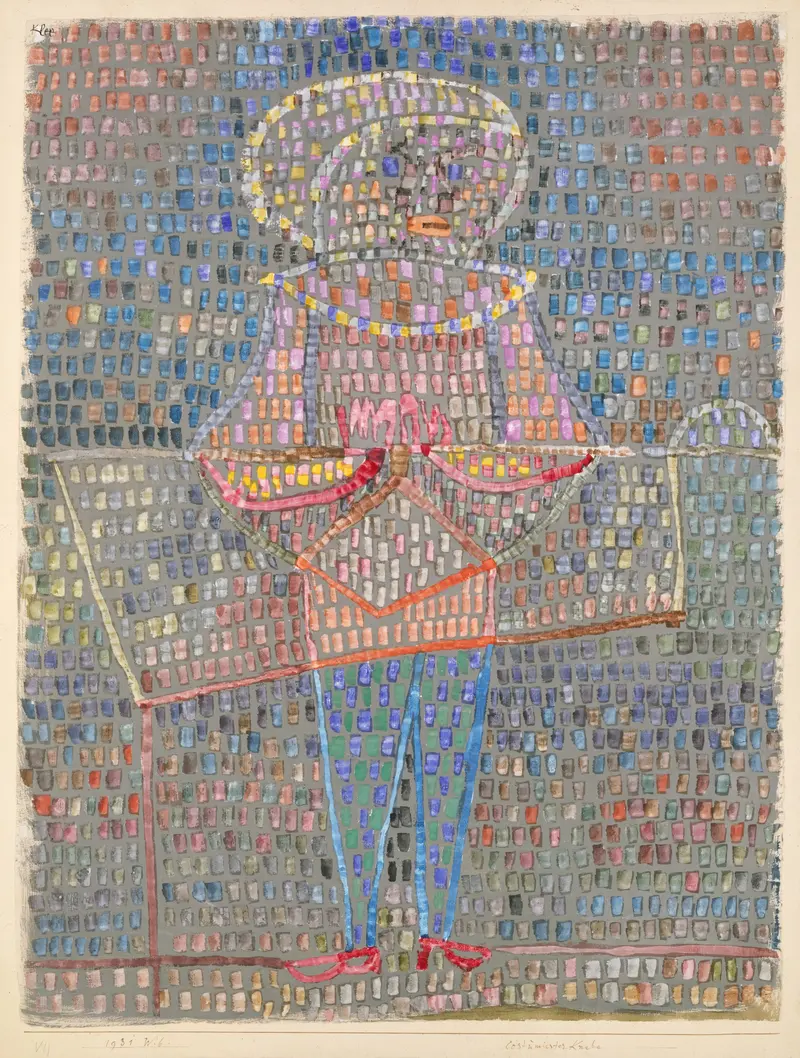
'Ad marginem' by Paul Klee showcases a vibrant palette dominated by reds, blues, and yellows. The composition features abstract shapes that seem to dance across the canvas. These forms create a sense of movement and rhythm, inviting the viewer to explore the piece further.
The background is layered, adding depth to the overall visual experience. The painting is executed in oil on canvas, a medium that allows Klee to achieve rich textures and colors. The dimensions are approximately 50 x 70 cm, making it a medium-sized work that can easily fit into various settings. Klee's unique style combines elements of abstraction with playful forms, which is characteristic of his work during this period.
The piece exemplifies Klee's exploration of color theory and composition. Paul Klee was a Swiss painter known for his contributions to modern art and his involvement with the Bauhaus movement. 'Ad marginem' reflects his interest in the interplay of color and form, a theme prevalent in his oeuvre. An interesting fact about this work is that it was created during a time when Klee was experimenting with new techniques and ideas, pushing the boundaries of traditional painting.
This piece is a testament to his innovative spirit and artistic vision.