Adolf Wolfli 002 — History & Facts
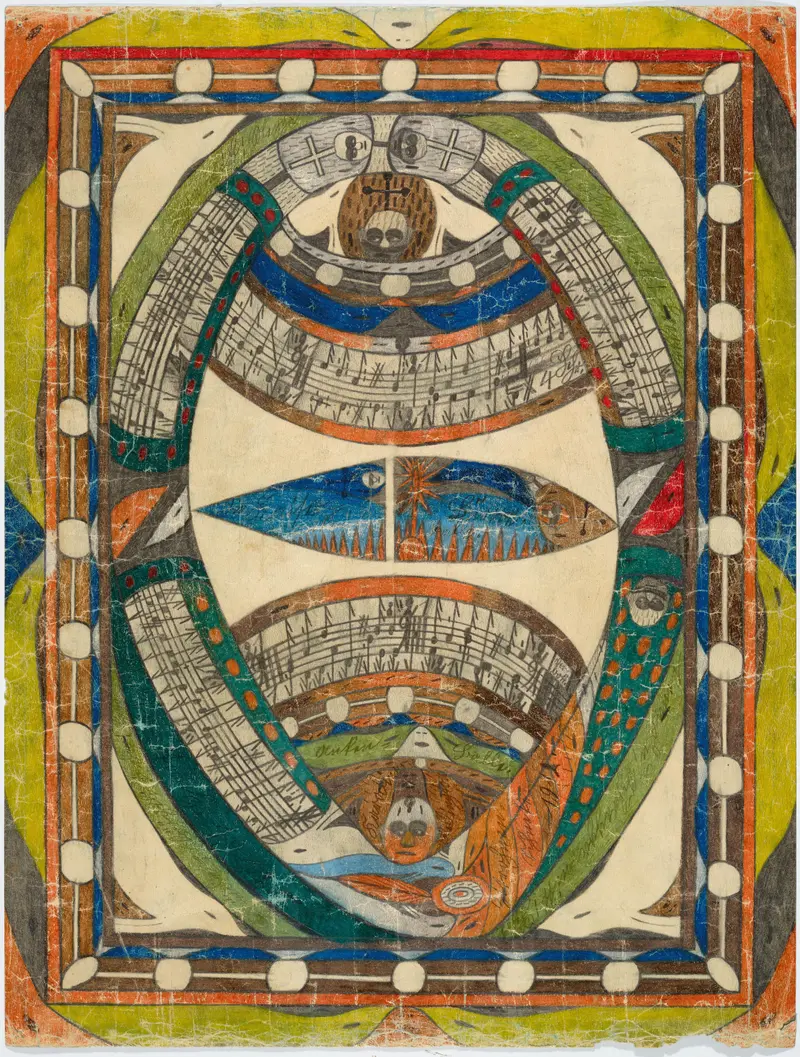
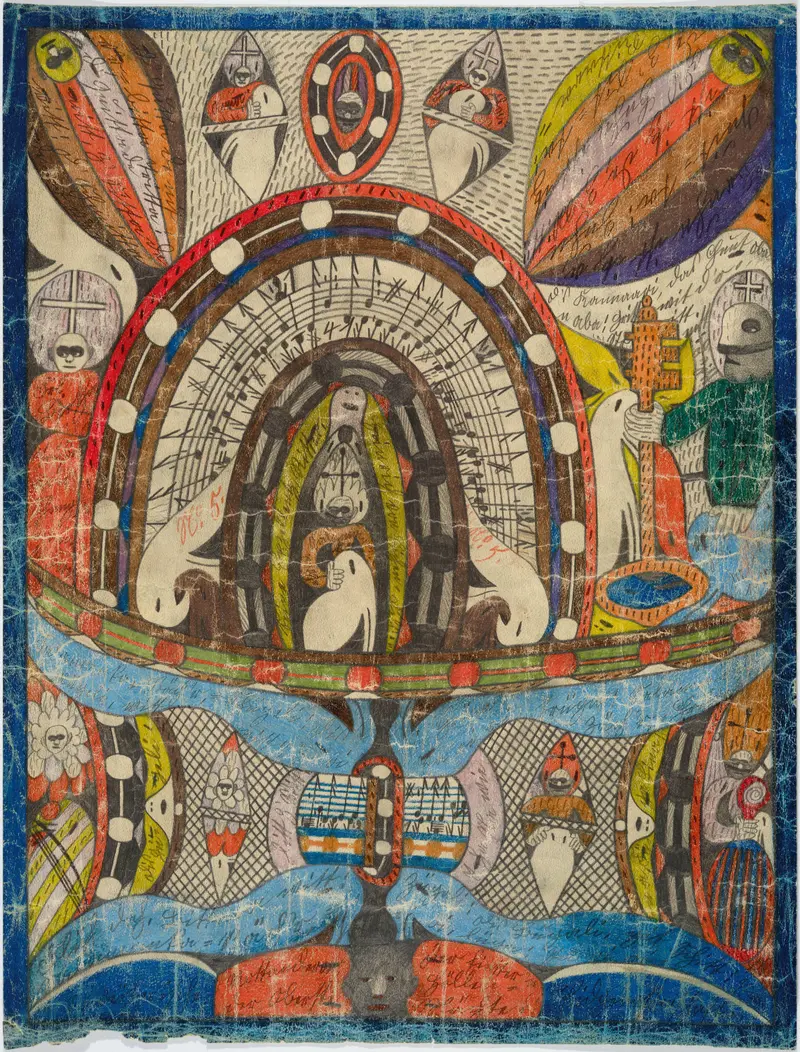
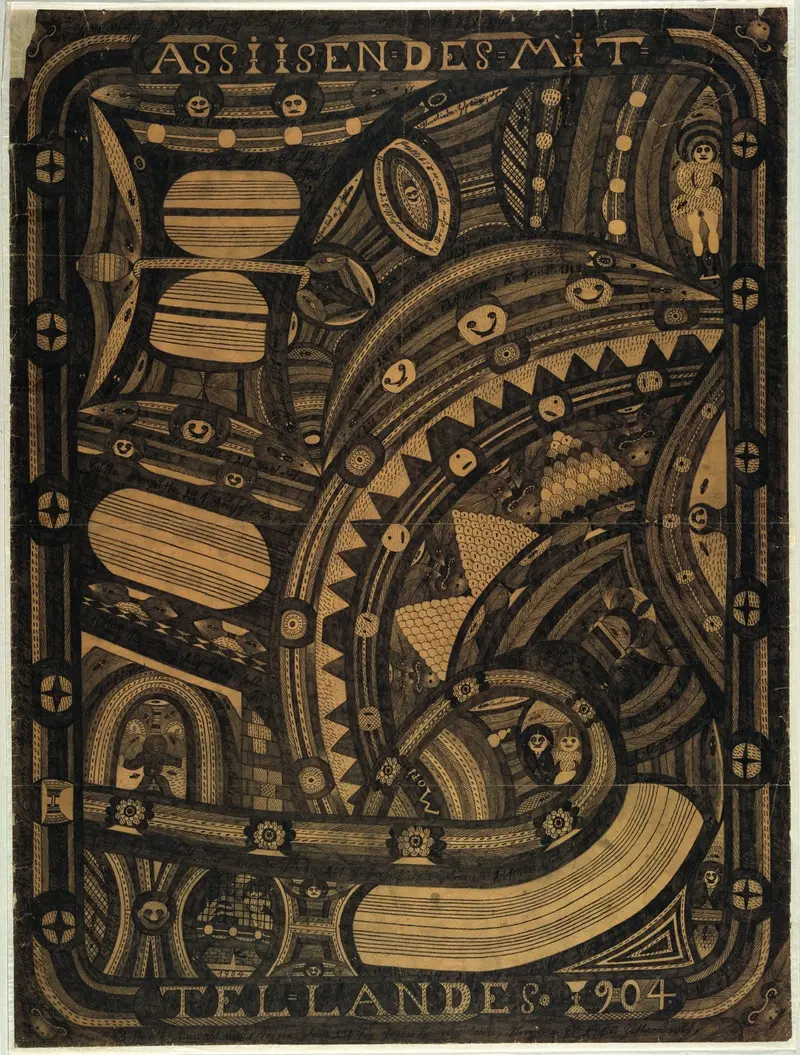
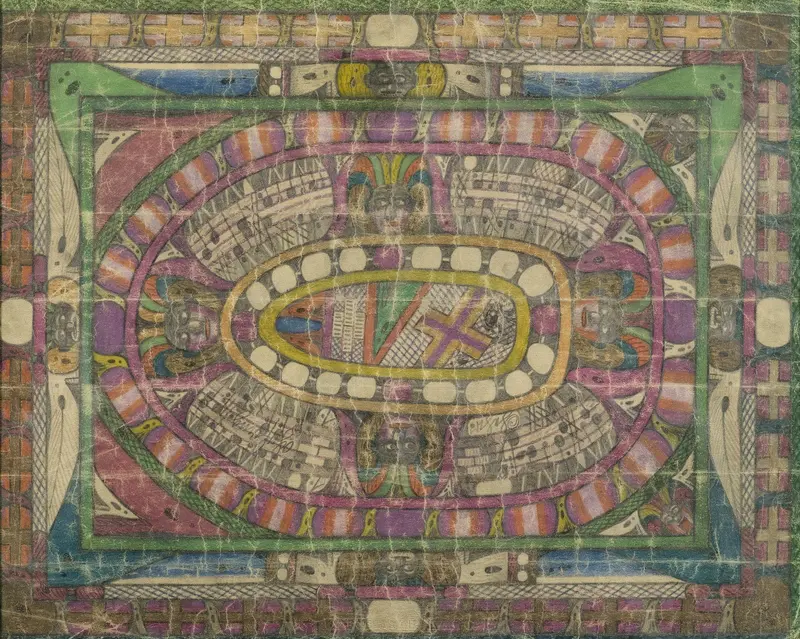
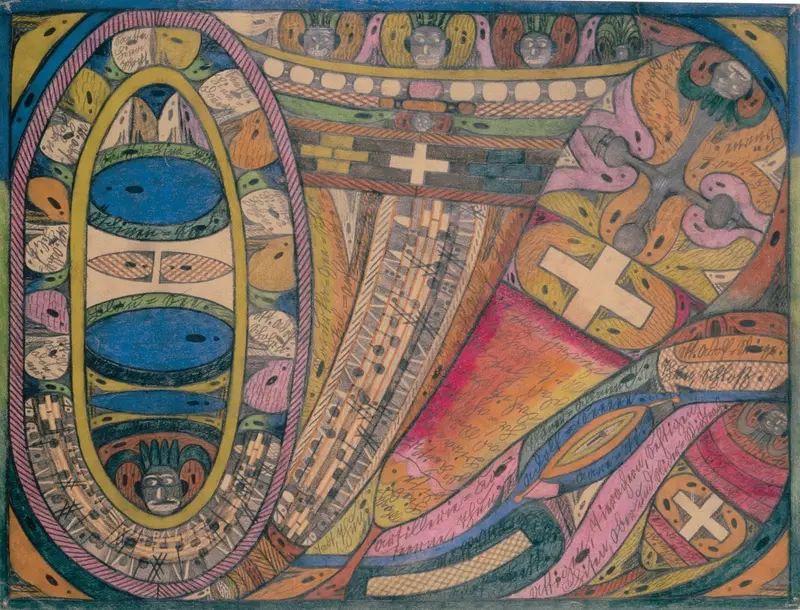
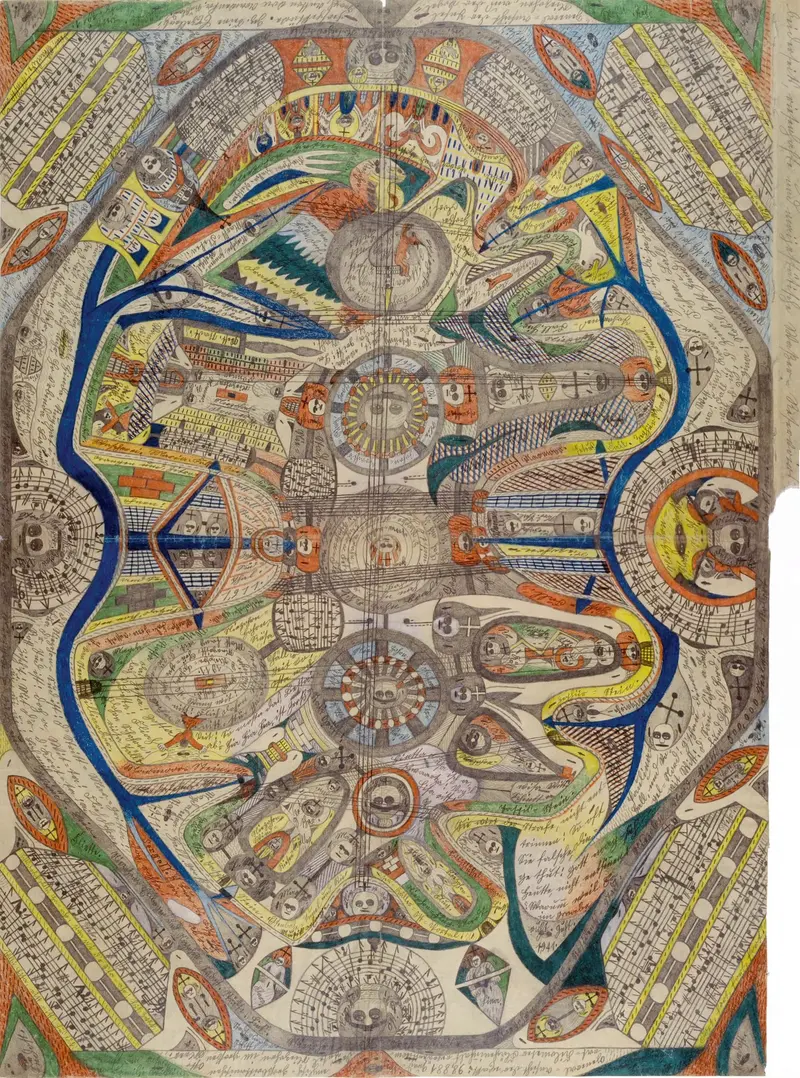
A riot of swirling forms and obsessive detail pulls the viewer into the labyrinthine imagination of Adolf Wölfli. At first glance, the image is a dizzying tapestry of circles, spirals, and geometric patterns, each one packed with tiny faces, symbols, and cryptic motifs. The eye is drawn again and again to the central rosette, ringed with what appear to be clock numerals, as if time itself is caught in the artwork’s feverish logic.
Just below, the title "Hotel Berner-Hof" anchors the composition, rendered in miniature architectural precision, while the surrounding chaos seems to threaten its order. The graphite’s subtle gradations create a dense, almost hypnotic surface, daring the viewer to decipher its secrets. Created in 1905, this drawing is a product of the outsider art movement, a world where self-taught visionaries like Wölfli worked far from the mainstream of academic art. Wölfli, institutionalized for much of his life, famously turned to art as a means of constructing vast imaginary worlds, filling thousands of pages with drawings and narratives.
Such works were rarely commissioned—rather, they were acts of private necessity, later discovered and championed by collectors and museums devoted to art brut. Today, Hotel Berner-Hof resides in the Lille métropole musée d'art moderne, d'art contemporain et d'art brut, a fitting home for a piece that blurs the line between architecture, map, and dream. Stand before it and you sense the intensity of a mind mapping its own universe, one graphite mark at a time.