Adolf Wölfli Zitronen-Schenke — History & Facts
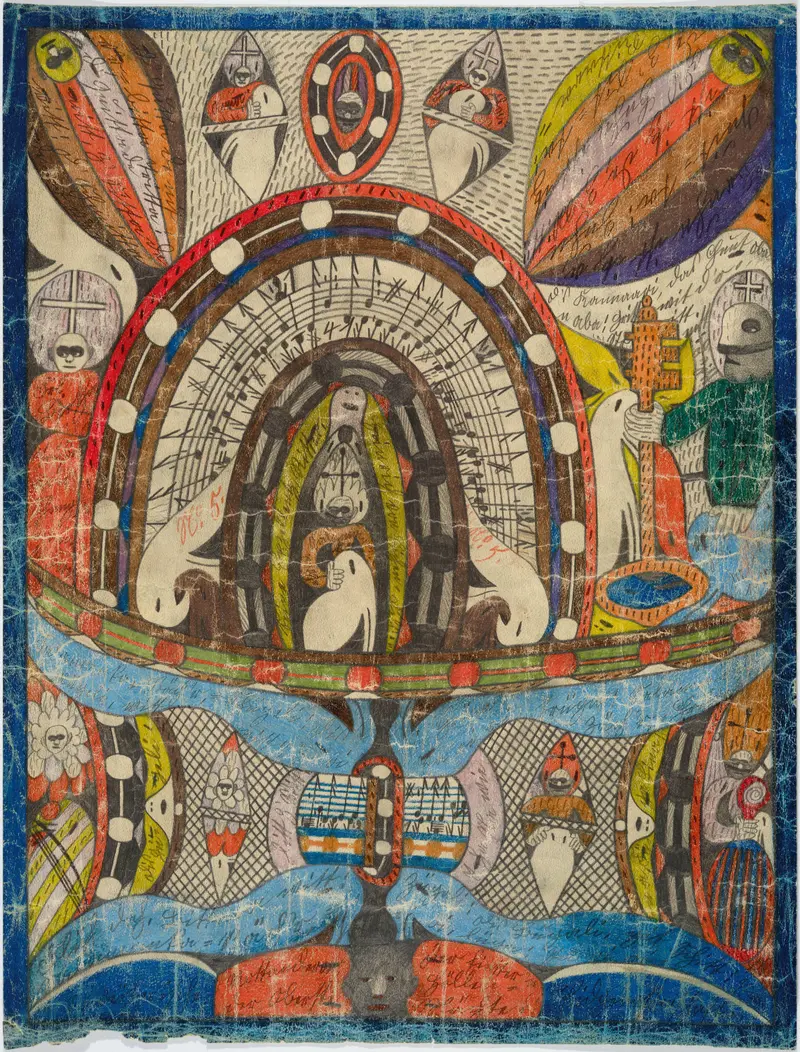
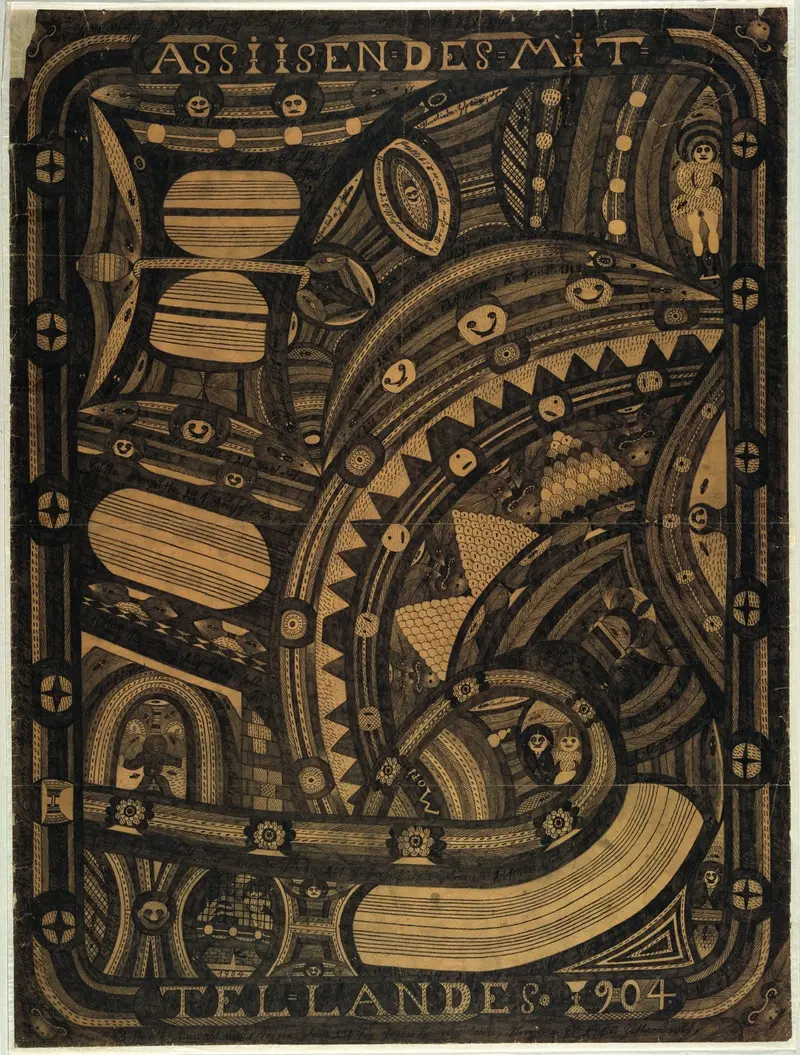
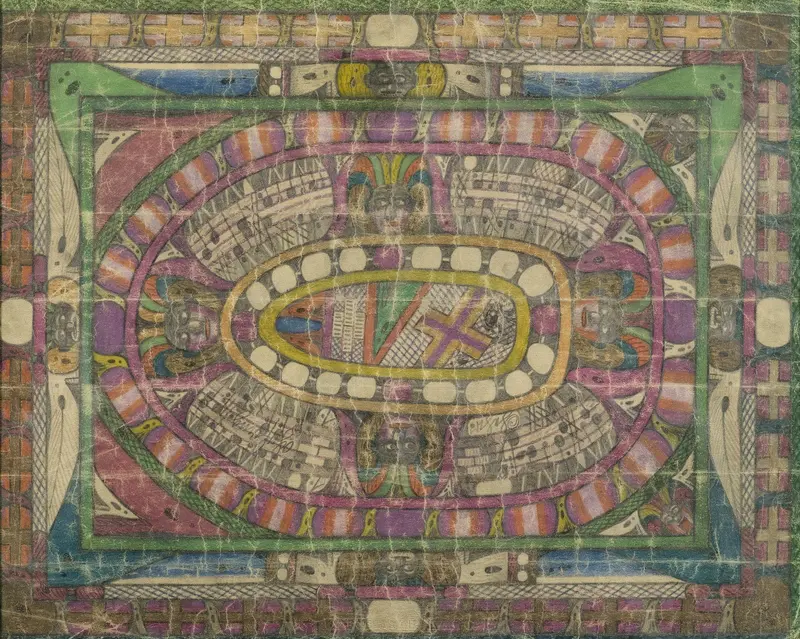
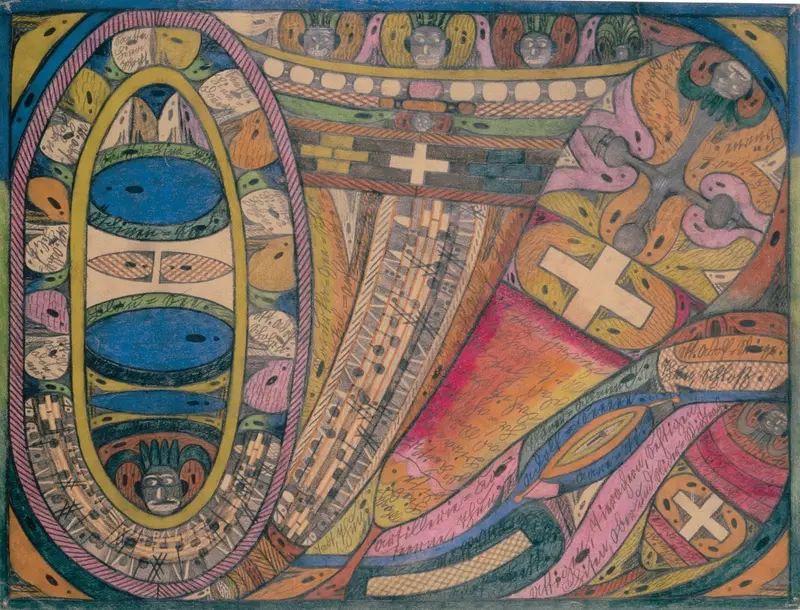
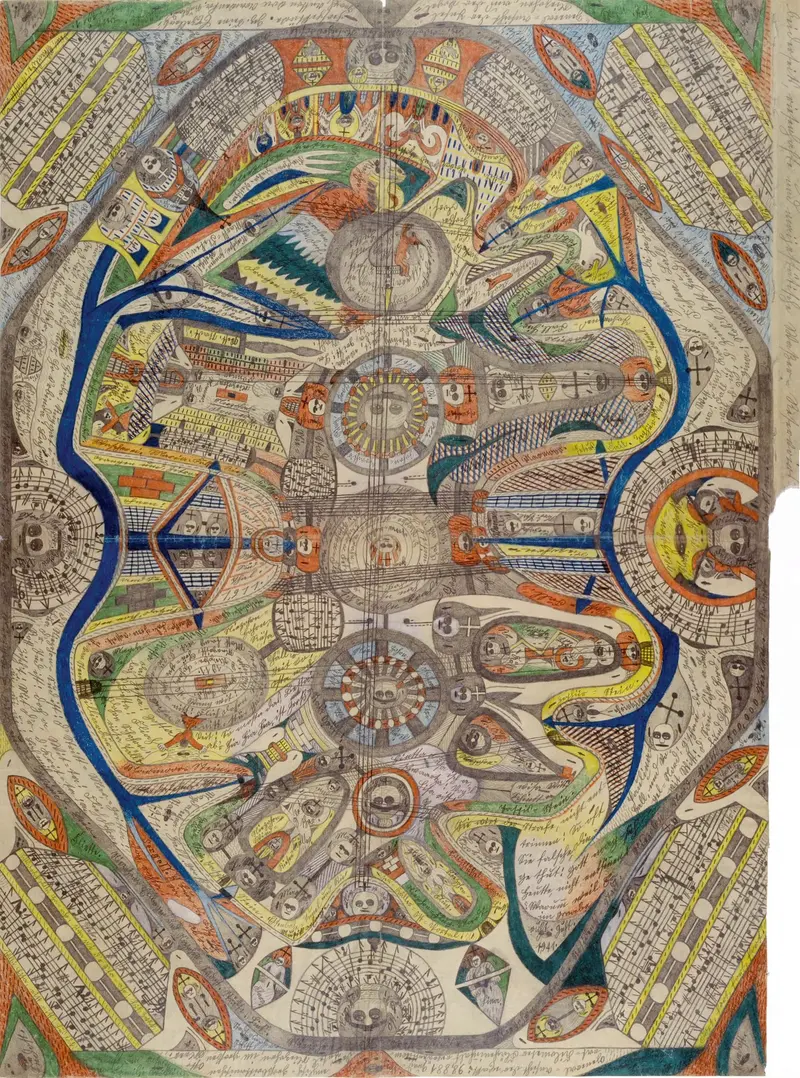
A riot of color and pattern immediately seizes the eye in Zitronen-Schenke, drawing the viewer into a world at once meticulously ordered and wildly imaginative. The composition is a labyrinth of looping forms, musical notations, and enigmatic faces, each element nested within another like a puzzle box. The symmetry is deliberate but never rigid—every curve and border pulses with energy, as if the page itself is vibrating with secret codes.
The faces, half-hidden within the structure, stare out with an unsettling directness, while the bands of musical staves and numbers hint at an inner logic only the artist fully grasped. The palette—dominated by greens, blues, and oranges—creates a sense of both harmony and dissonance, echoing the work’s simultaneous invitation and resistance to interpretation. Created in 1912, this drawing belongs to a world where art was often a private necessity rather than a public commission. Adolf Wölfli was a Swiss artist whose work emerged from the isolation of a psychiatric institution, and his drawings are now recognized as foundational to what would later be called Art Brut, or Outsider Art.
In the early twentieth century, such works were rarely meant for galleries or collectors; they were acts of survival, self-expression, and sometimes obsessive documentation. Zitronen-Schenke survives as part of this tradition, a testament to the power of creativity outside the boundaries of academic art. Its presence in a modern collection invites us to look again—not just at the image, but at the mind that made it, and at the boundaries between order and chaos, sense and nonsense.