
General view of the island Neveranger, — History & Facts
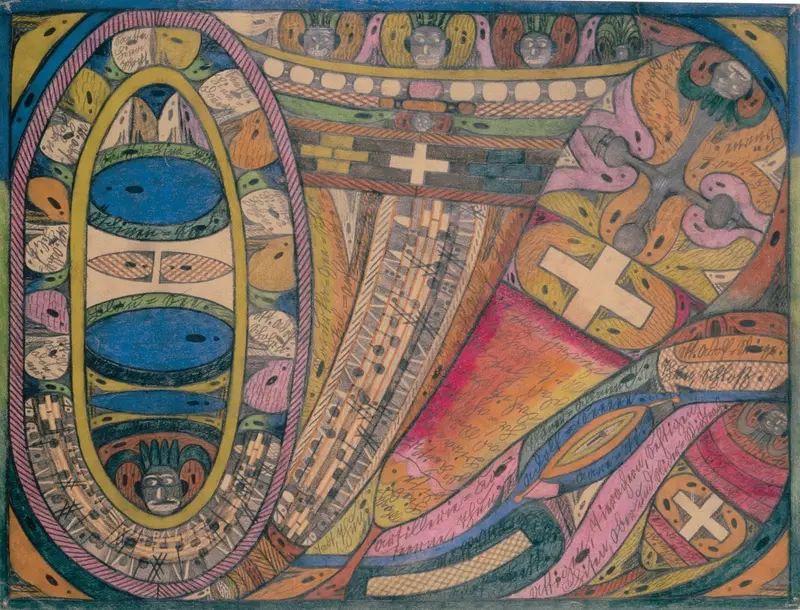
The eye is drawn first to the dense, almost hypnotic symmetry of General view of the island Neveranger, where the page seems to pulse with a secret order. Every inch is alive with pattern: radiating circles, grids, and faces that emerge from the labyrinth of lines, as if the island itself is a living being. The colors—vivid oranges, yellows, blues, and greens—are carefully bounded by black ink, giving the whole work a sense of both exuberance and containment.
Text winds through the image, curling around shapes and filling empty spaces, suggesting a narrative or litany that the viewer is invited to decipher. The effect is both map and mandala, a vision of a world that obeys its own inner logic. Created in 1911, this work belongs to the era when so-called outsider artists like Adolf Wölfli were forging new visual languages far from the mainstream. In early twentieth-century Europe, the boundaries between art, psychiatry, and personal myth were being radically redrawn; Wölfli’s intricate, obsessive drawings were both an act of creation and a means of self-mapping.
History has kept few traces of how this particular piece came to be, but its presence in an online collection today is a testament to the growing recognition of such visionary works. As you trace the lines and symbols, consider how the world of 1911—restless, inventive, and searching for new forms—echoes in every detail.
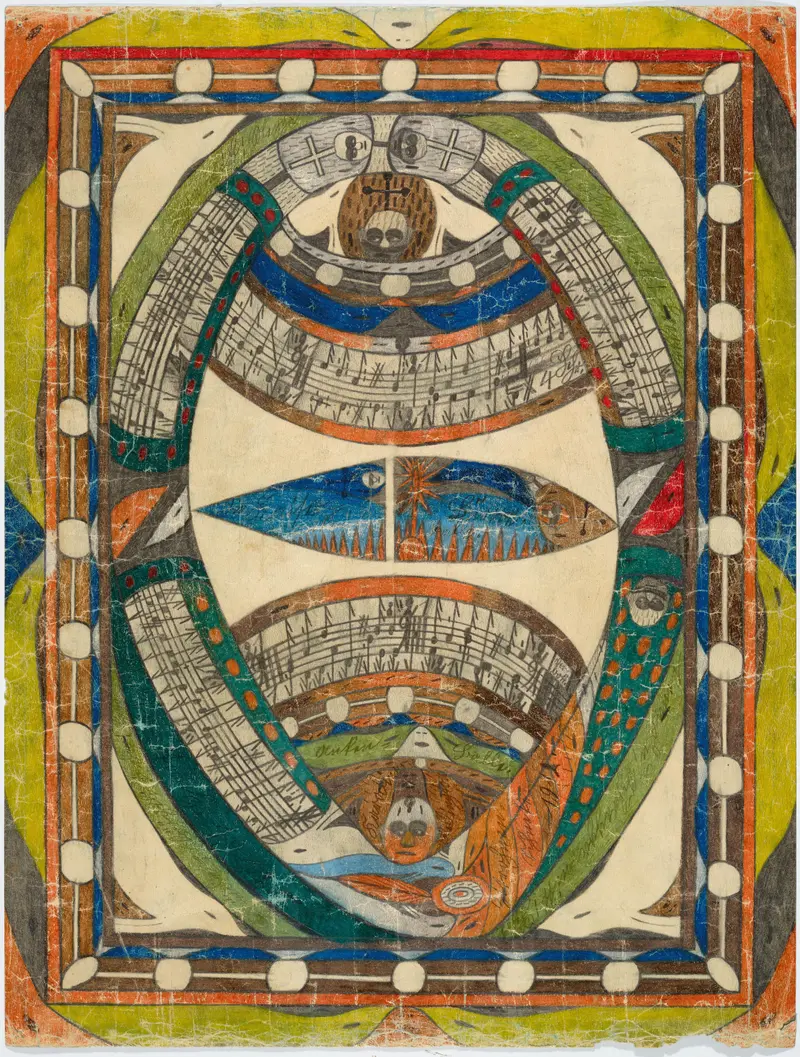
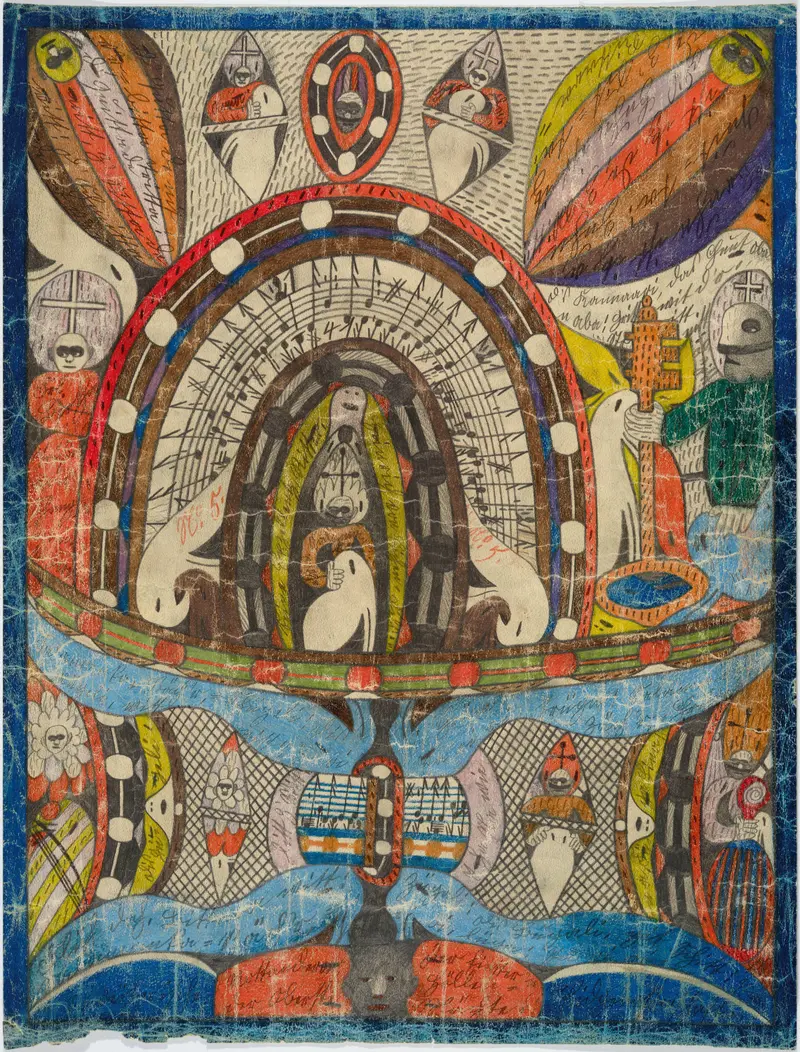
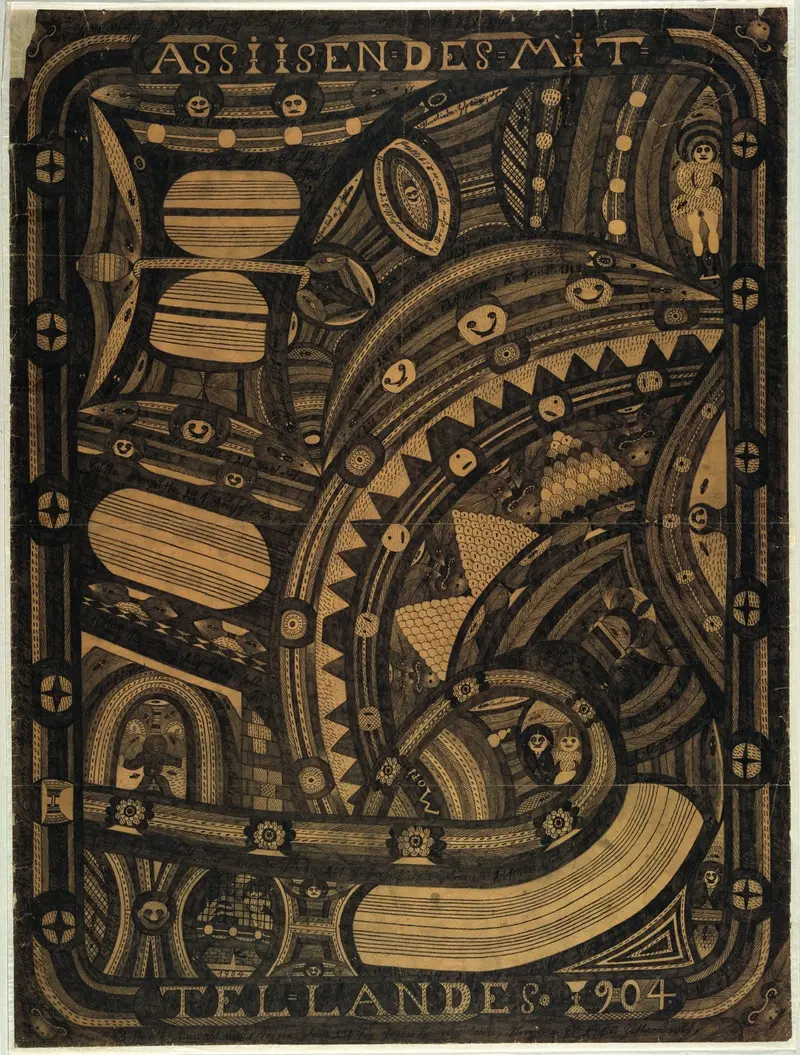
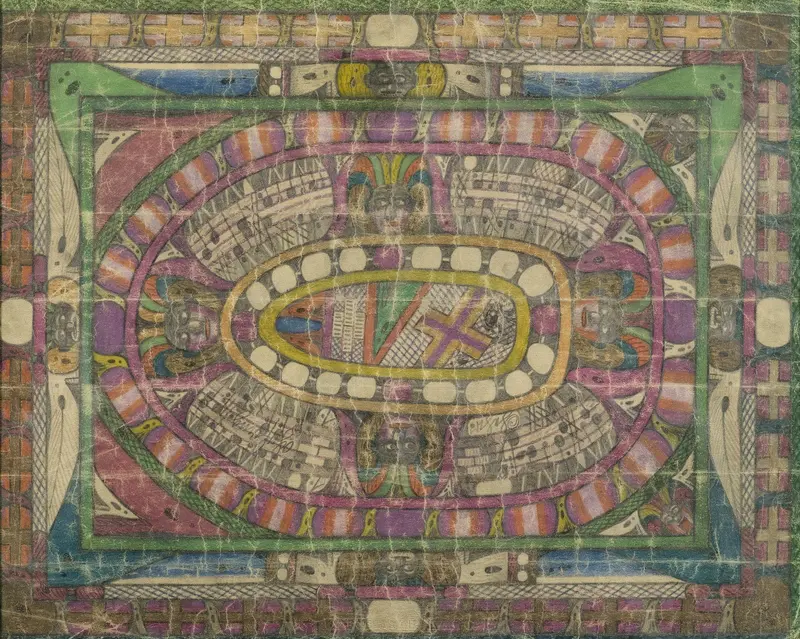
More Artworks by Adolf Wölfli
More Landscape Art

The Starry Night
Vincent van Gogh

View of Delft
Johannes Vermeer

Water Lilies
Claude Monet

The Grand Canal, Venice, looking north-west from the Ca' Corner to the Ca' Contarini degli Scrigni, with the campanile of Santa Maria della Carità
Canaletto

Windsor Castle
Canaletto

The Grand Canal looking North-East from the Palazzo Dolfin-Manin to the Rialto Bridge
Canaletto