Adolf Wölfli Wili Wald in Mexiko — History & Facts
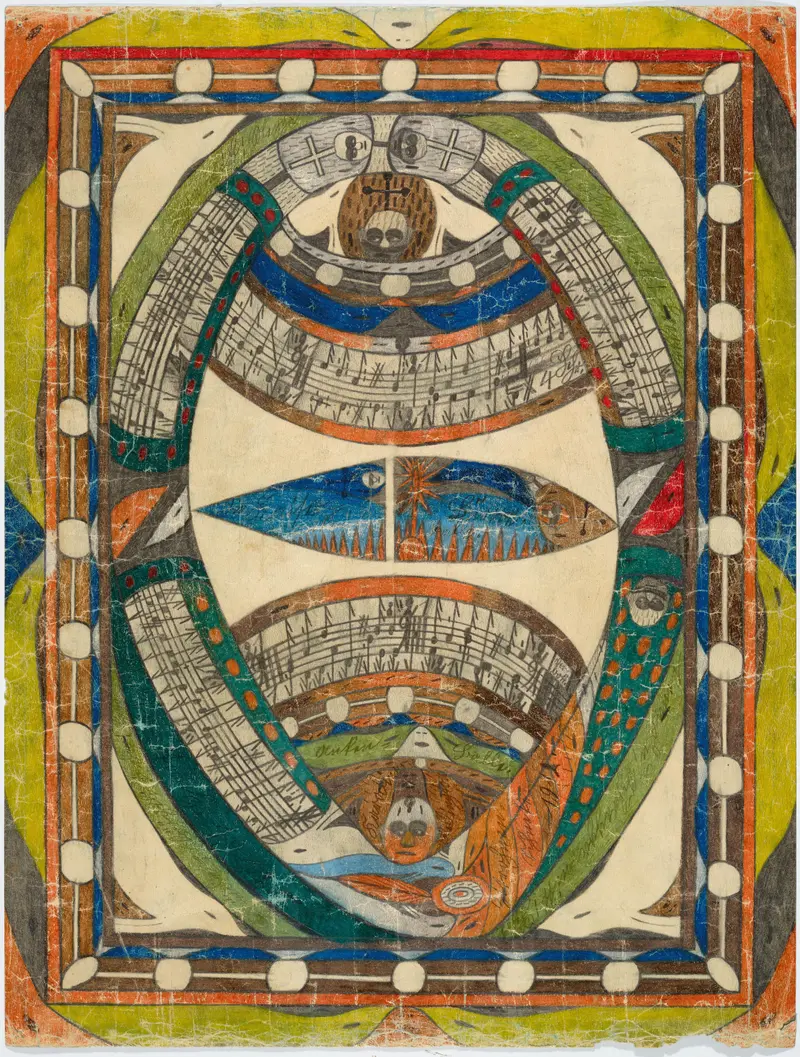
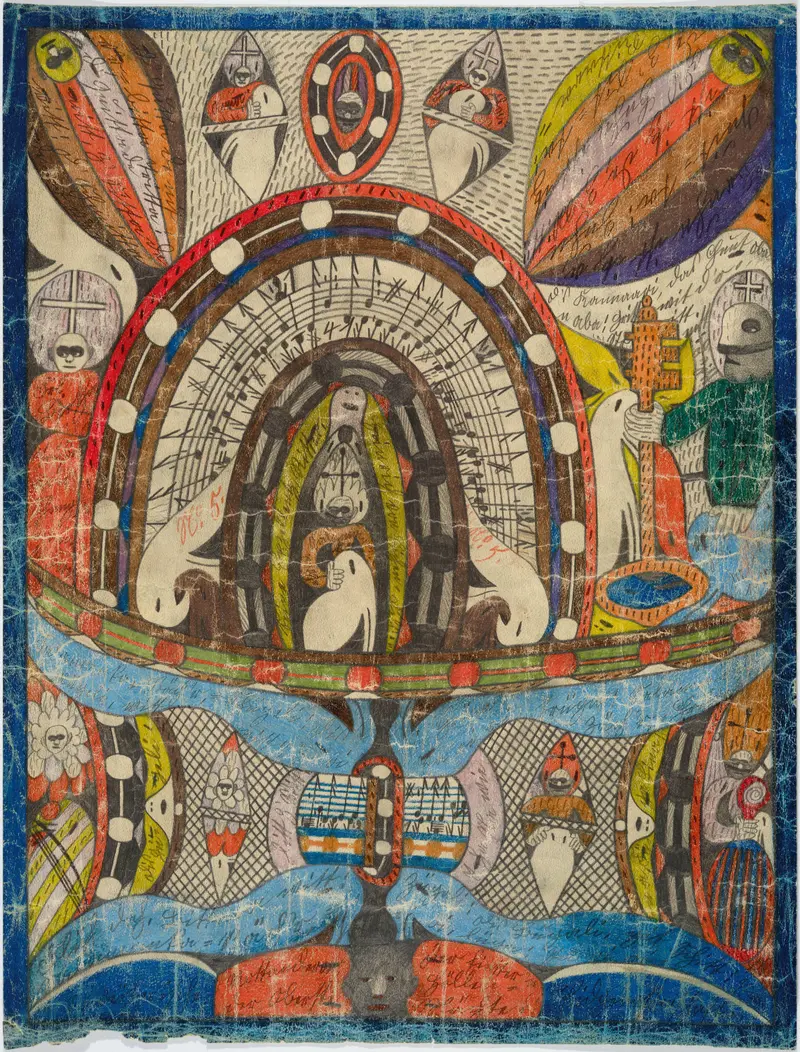
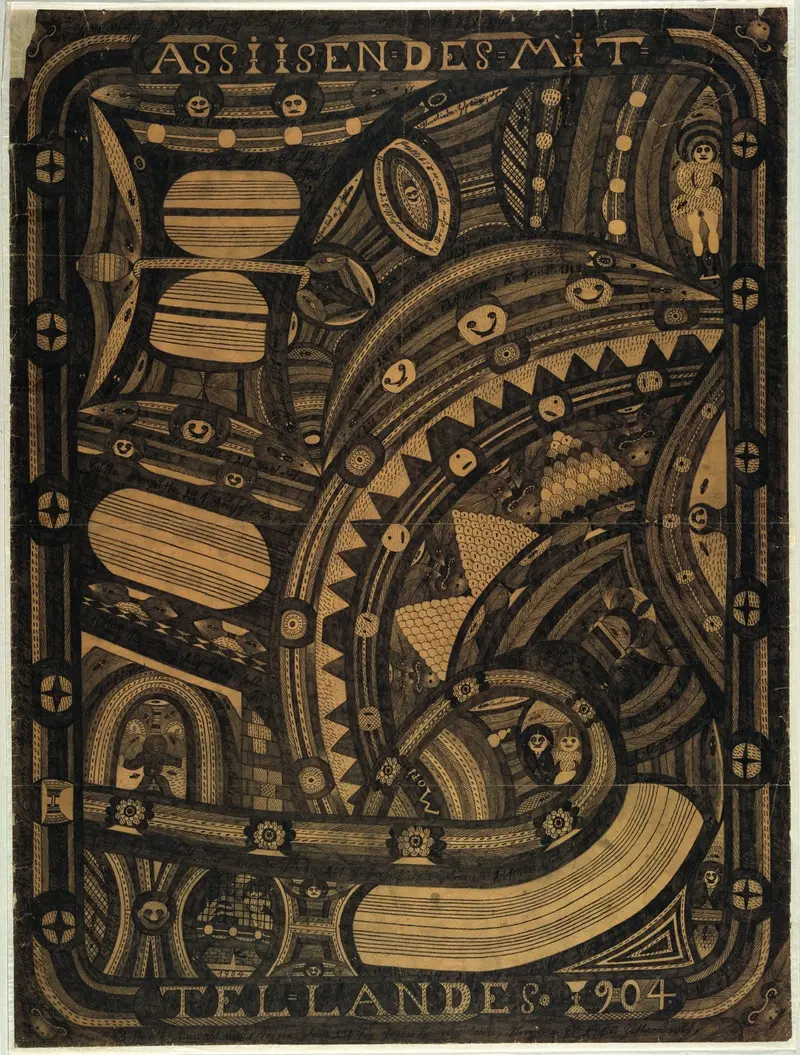
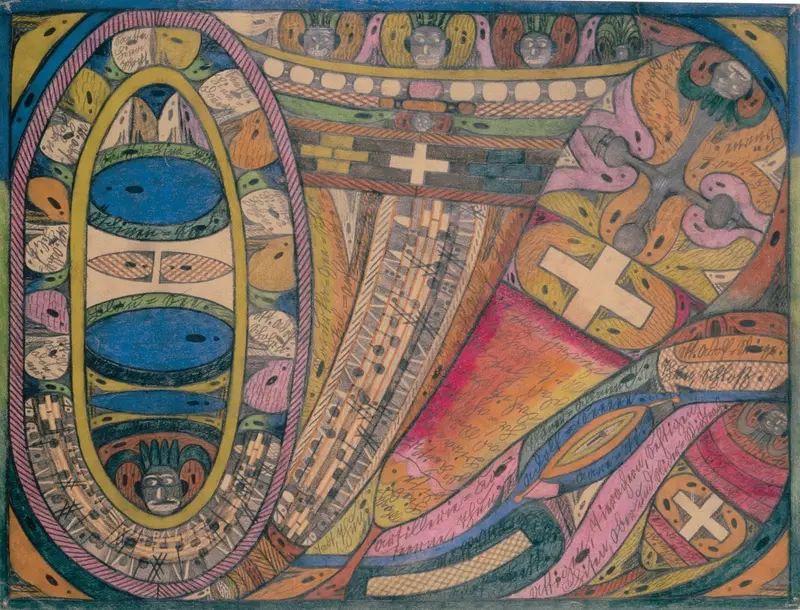
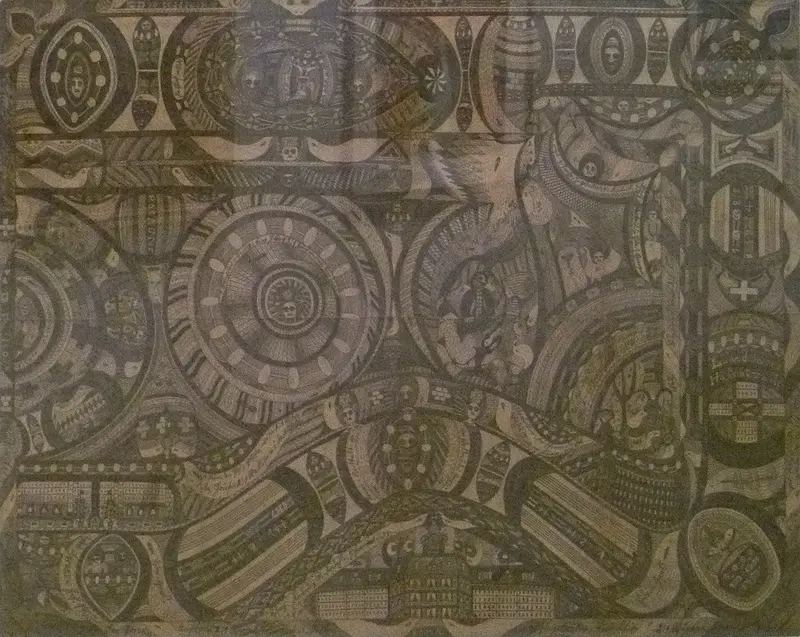
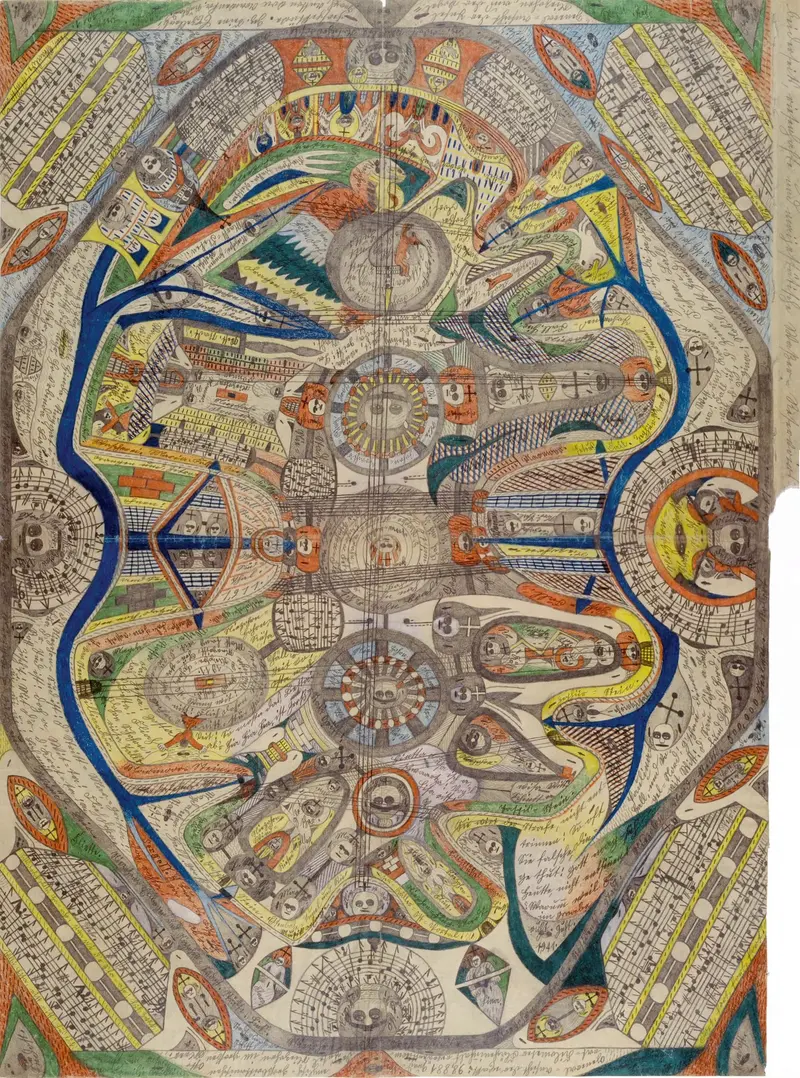
The eye is immediately caught by the hypnotic symmetry and riot of pattern in Adolf Wölfli Wili Wald in Mexiko. The composition draws you inward, layer by layer: first the vivid border, then the radiating ovals, and finally the dense, coded heart of the image. Faces, both human and animal, peer out from the corners and seams, their expressions frozen in a kind of ceremonial watchfulness.
Musical notation, checkerboards, and cryptic symbols crowd every surface, as if the entire sheet were a map to an imaginary land—or a mind at fever pitch. The colored pencil, applied with obsessive precision, gives a sense of both control and compulsion, as if the artist could not stop until every inch was claimed. Created in 1925, this drawing stands as a testament to the world of Art Brut, a movement shaped by artists working outside the academic tradition—often in isolation, as was true of Adolf Wölfli. Wölfli’s works, produced during his long residence in a Swiss psychiatric hospital, were not made for galleries or patrons, but as part of a vast, private cosmology that filled thousands of pages.
The title, with its playful equation—“Wili = Wald = in Mexiko”—hints at the artist’s habit of blending places, people, and invented geographies into a single, fevered narrative. Today, history has kept few traces of the original context for this piece, now held by Koller Auktionen, but the drawing’s energy and detail invite the viewer to lose themselves in its labyrinth again and again.