Assiissen-des-Mit-tel-Landes — History & Facts
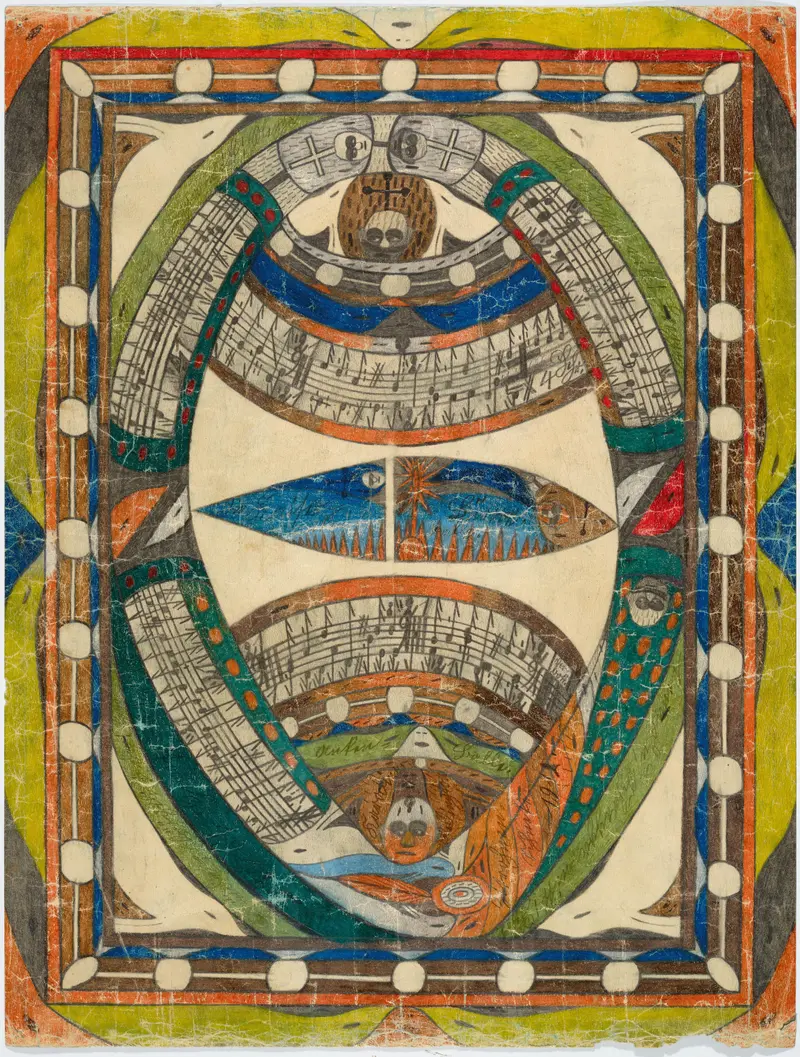
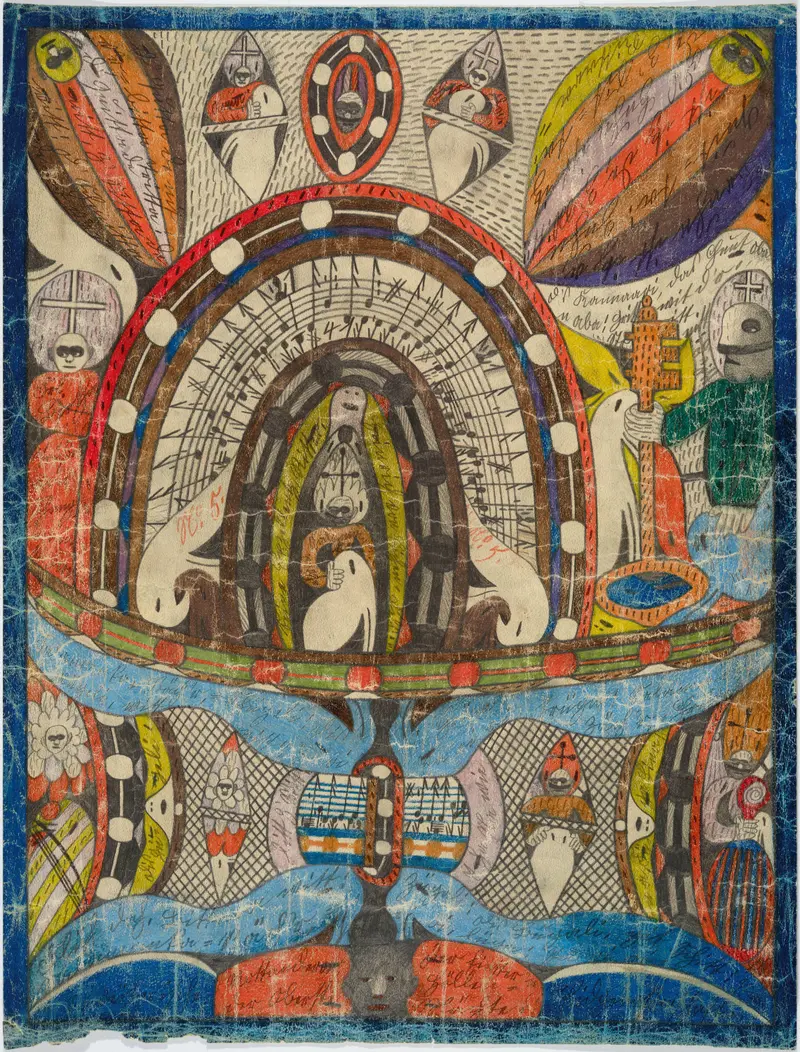
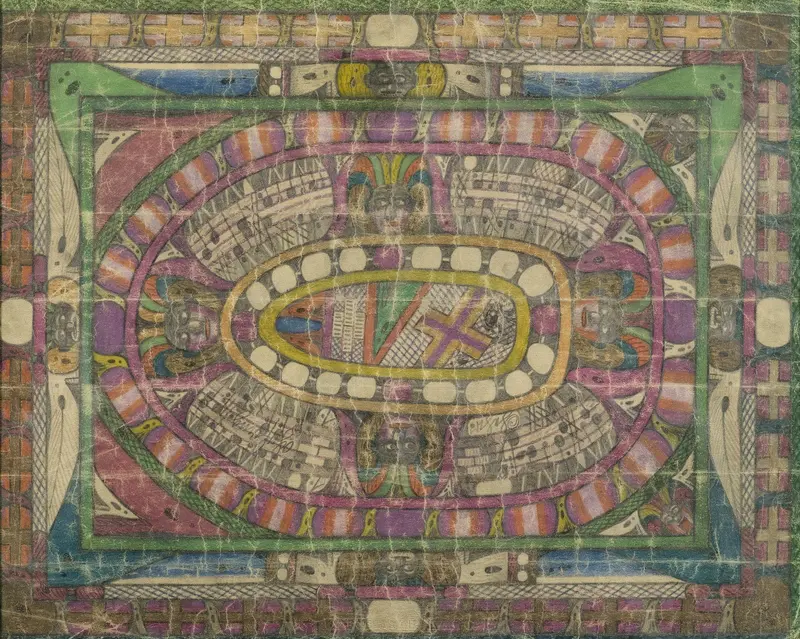
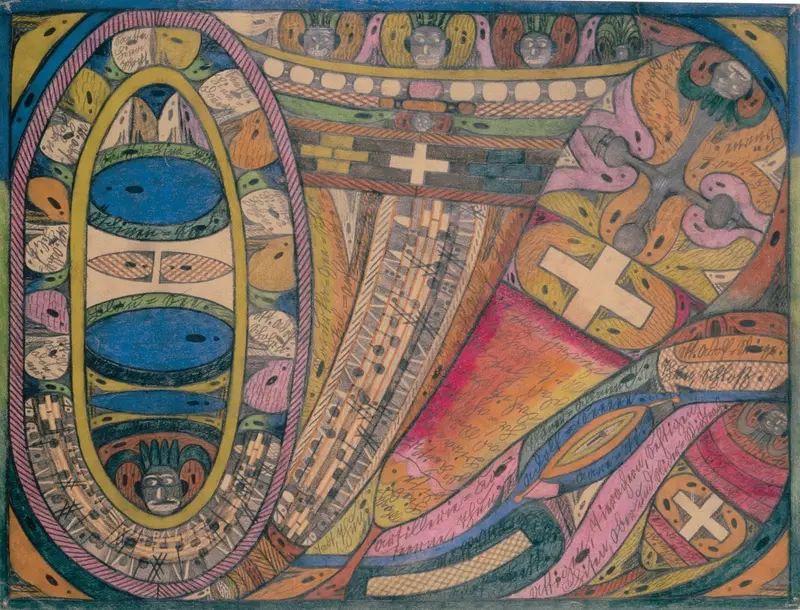
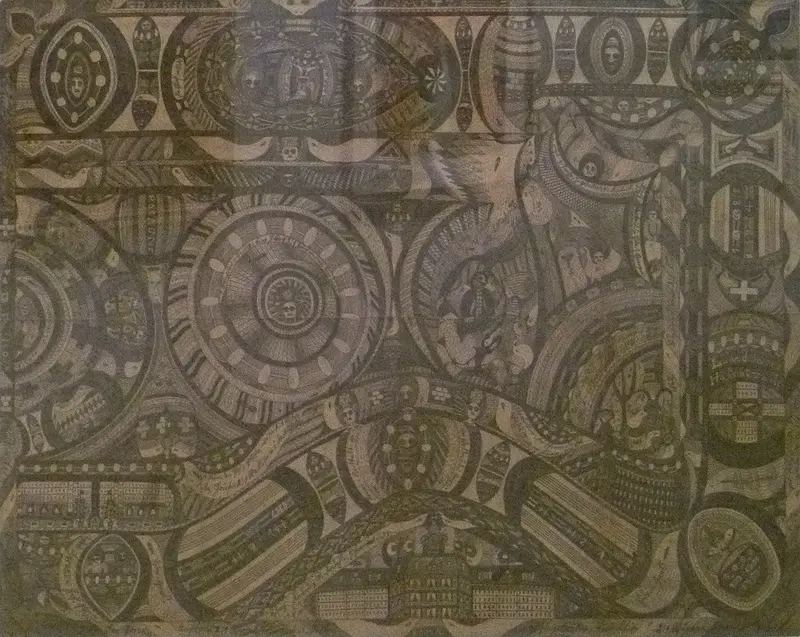
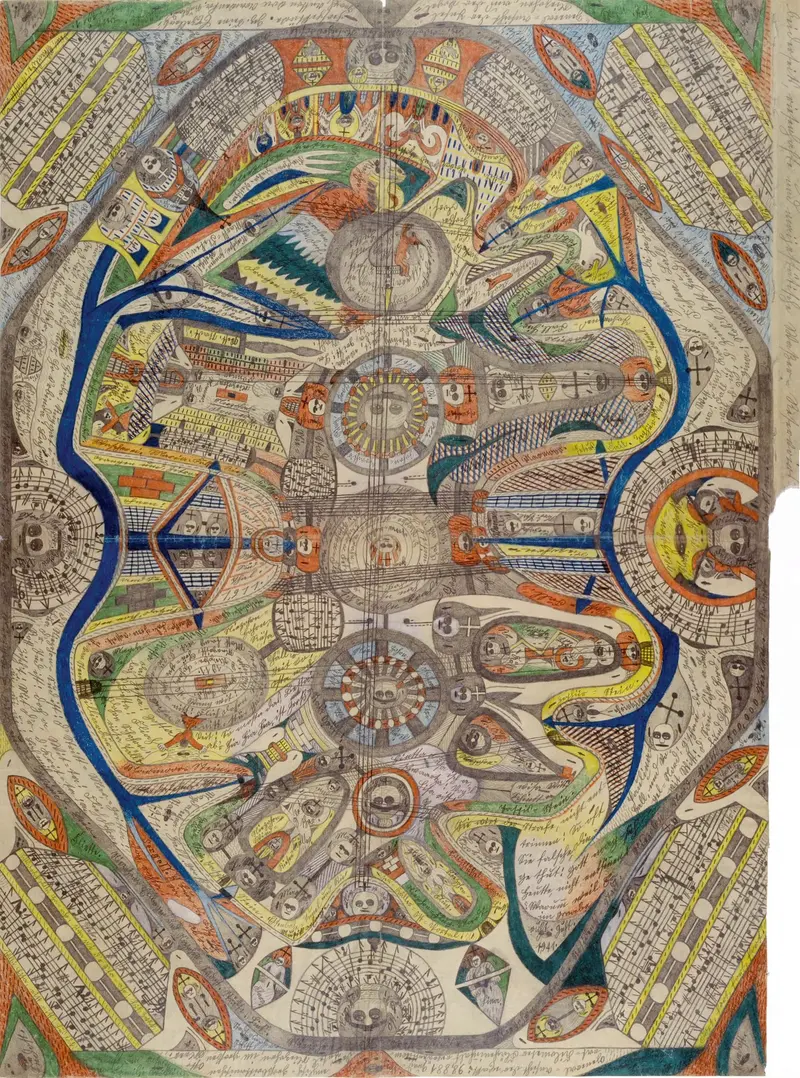
The eye is immediately caught by the hypnotic swirl of lines and symbols that seem to pulse and vibrate across the surface of Assiissen-des-Mit-tel-Landes. The composition is a labyrinth, drawing the viewer deeper with each concentric band, each face, each cryptic motif. Figures emerge from the dense mesh of patterns: a lone, doll-like person stands sentinel at the right, while faces—some smiling, some ambiguous—peek out from the whorls and geometric forms.
The entire surface is alive with a sense of movement, as if the artist were mapping not a place but a fevered mental territory. The dense, looping script and the almost architectural layering of forms suggest both a personal cosmology and a coded language, inviting the viewer to decipher its meaning. Created in 1904, this work belongs to the world of early twentieth-century outsider art, a genre shaped by individuals who worked far from the mainstream art world, often in isolation or institutional settings. Adolf Wölfli is one of the most celebrated figures of this movement, known for transforming humble materials—here, pencil on newsprint—into vast, intricate universes.
Such works were rarely commissioned; instead, they were acts of compulsion or self-expression, sometimes preserved by doctors or collectors who recognized their intensity. Today, Assiissen-des-Mit-tel-Landes is part of a collection dedicated to Wölfli’s legacy, a testament to how art can spring from the margins and demand our attention. Stand before this drawing and let your eye wander—there is always another path to follow.