After Prayers — History & Facts
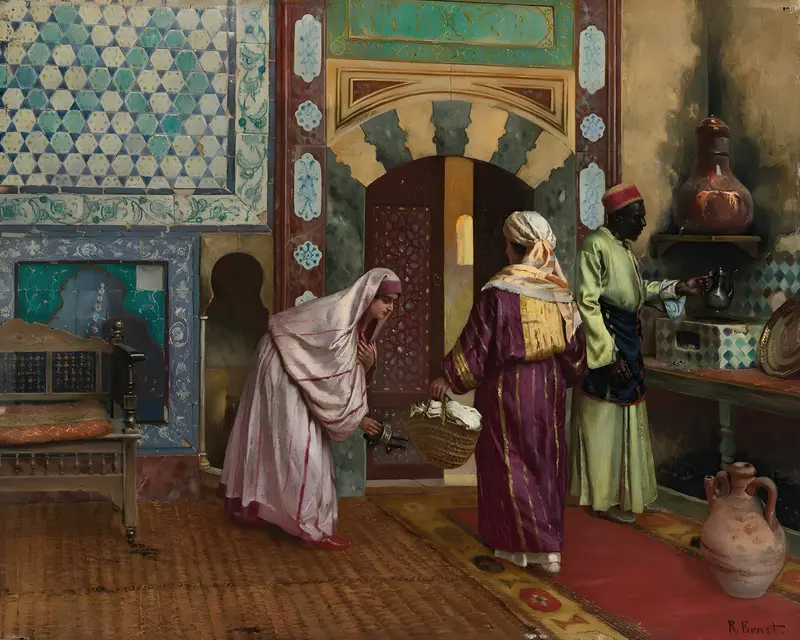
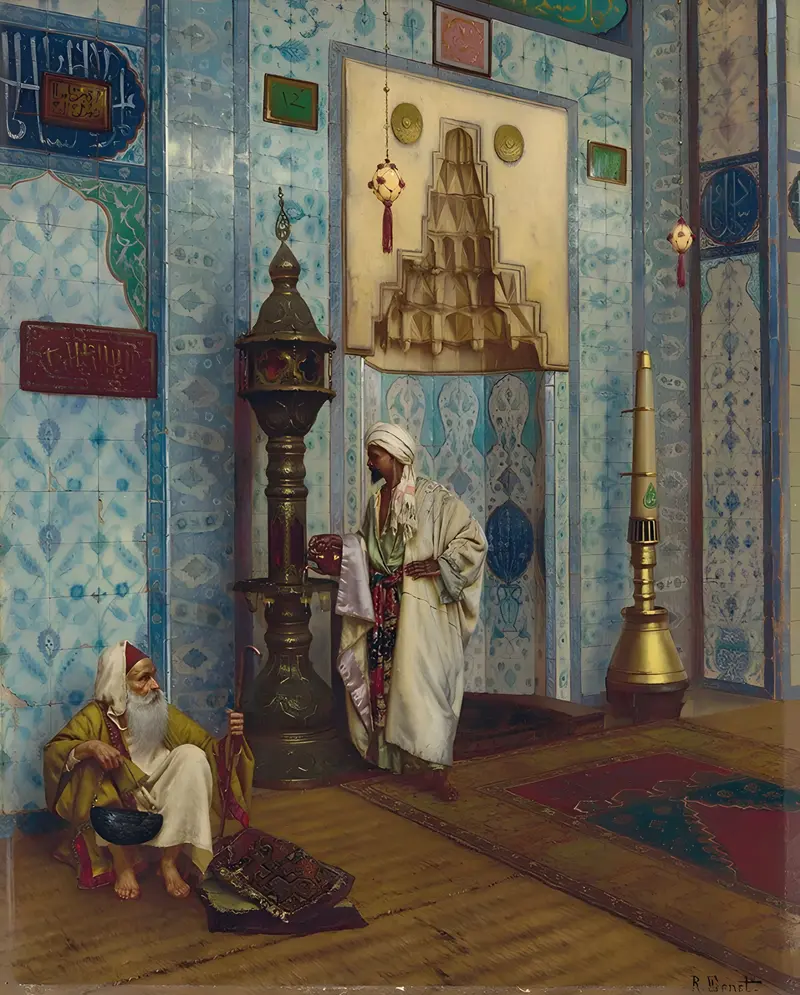
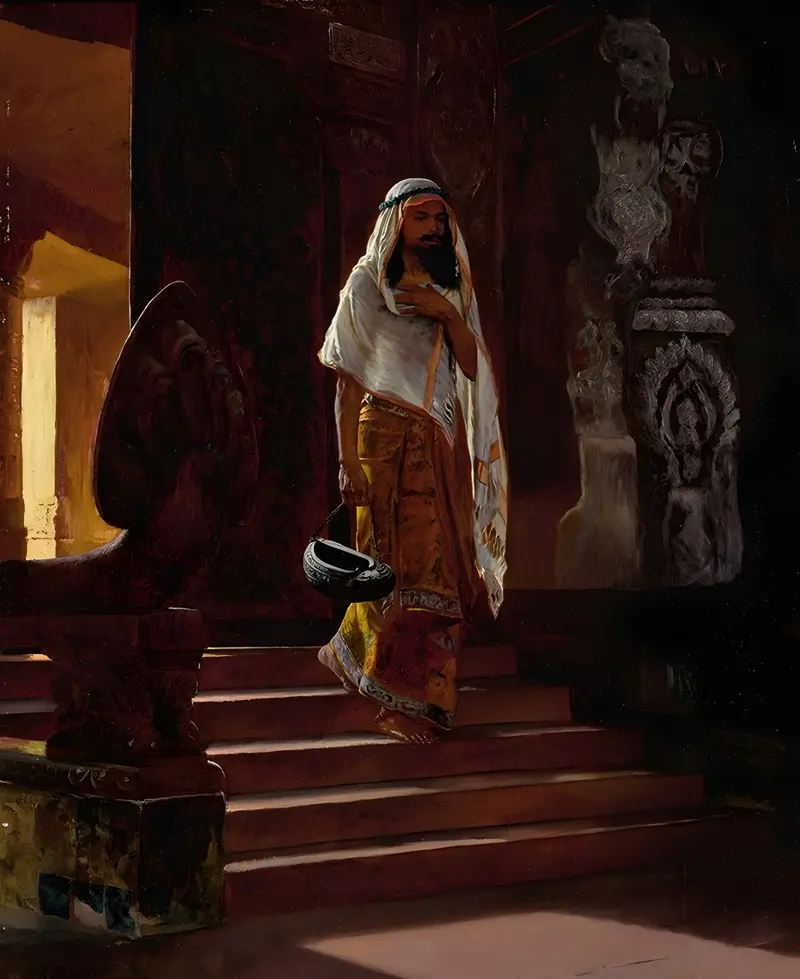
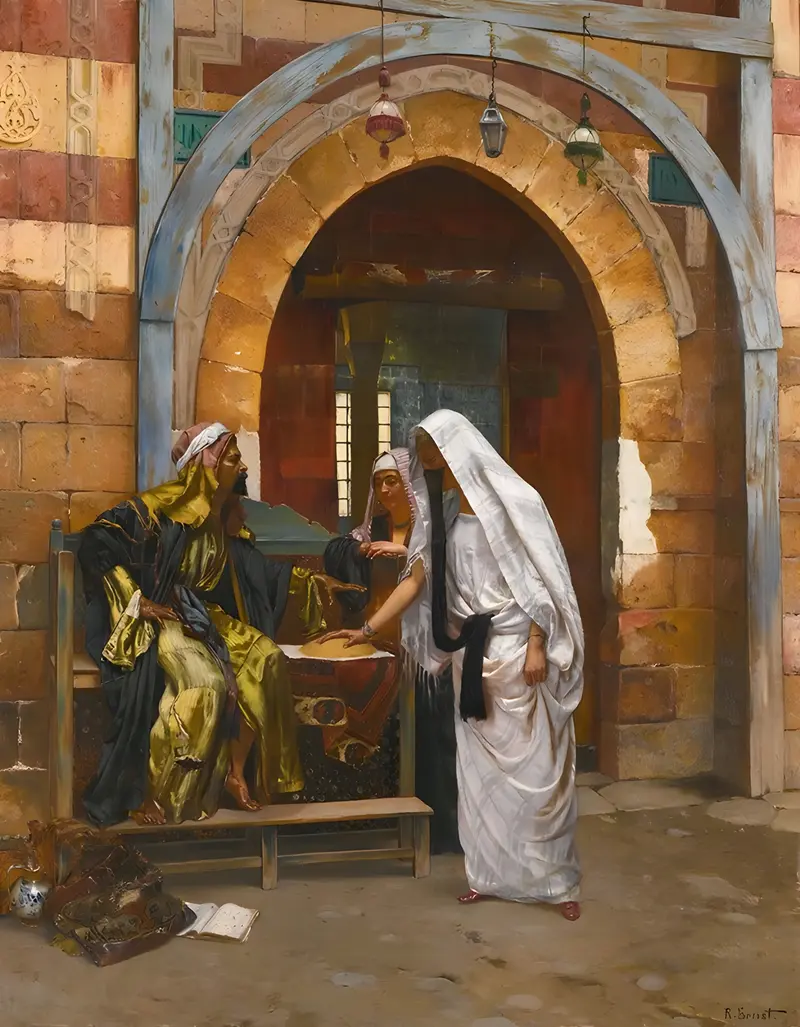
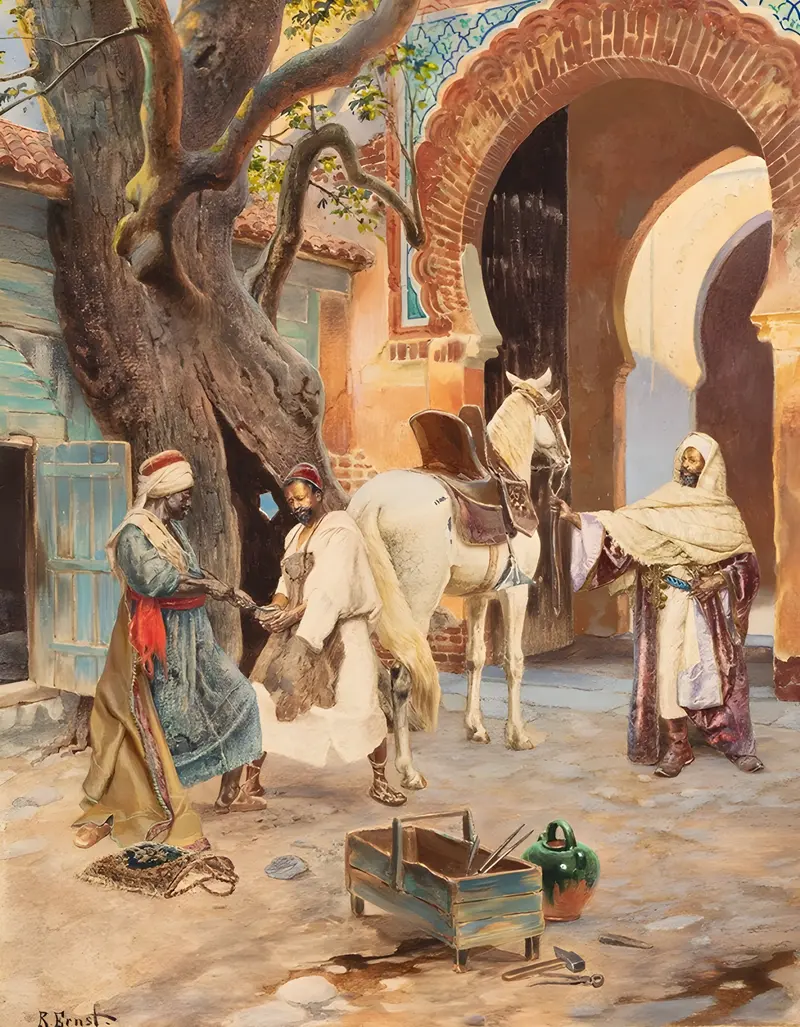
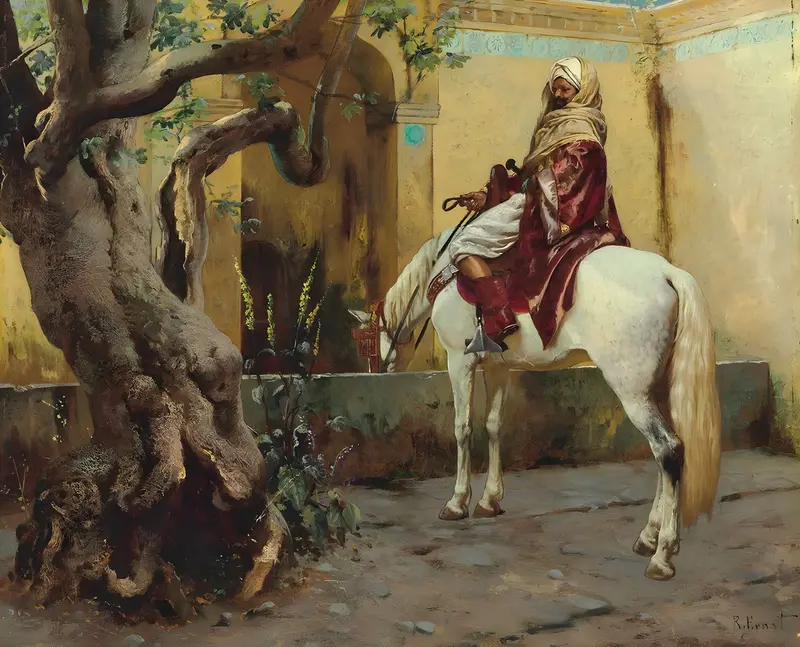
In After Prayers, Rudolf Ernst captures a tranquil scene set in a Middle Eastern environment. The painting features warm colors, with rich browns and golds dominating the palette. Figures dressed in traditional attire are seen in a moment of reflection after prayer.
The setting includes intricate architectural elements that suggest a mosque or similar structure. The painting is executed in oil on canvas, showcasing Ernst's skill in blending colors and textures. The use of light is particularly notable, as it creates a soft glow that enhances the serene atmosphere. Viewers can observe the detailed patterns on the clothing and the architecture, which are characteristic of Ernst's style.
The dimensions are approximately 70 x 100 cm, making it a substantial piece. Rudolf Ernst was known for his depictions of Orientalist themes, often focusing on the daily life and culture of the Middle East. After Prayers reflects his fascination with this region, showcasing both its beauty and spirituality. An interesting fact about this work is that it exemplifies the 19th-century European interest in Eastern cultures, which was a significant aspect of the Orientalism movement.
Ernst's paintings often invite viewers to explore the nuances of these cultures through his artistic lens.