
After the attack. Plevna, 1877- — History & Facts
In After the attack. Plevna, 1877- by Vasily Vereshchagin, the viewer is confronted with a stark scene of devastation. The colors are muted, dominated by browns and grays, reflecting the somber aftermath of battle.
Figures of soldiers and fallen comrades are scattered across the landscape, emphasizing the chaos and tragedy of war. The setting is a battlefield, marked by destruction and a sense of loss. The painting is executed in oil on canvas, showcasing Vereshchagin's skill in capturing realistic details. The brushwork is meticulous, allowing for a vivid representation of the textures of the soldiers' uniforms and the surrounding environment.
The composition draws the viewer's eye across the canvas, leading them through the narrative of the aftermath. The dimensions are approximately 150 x 200 cm, making it a large and impactful work. Vasily Vereshchagin was known for his powerful depictions of war and its consequences. This work, created in the context of the Russo-Turkish War, reflects his commitment to portraying the harsh realities of conflict.
An interesting fact about this painting is that it was part of a series that aimed to document the human cost of war, a theme that Vereshchagin explored throughout his career. His works often served as a critique of the glorification of battle and the romanticism of war.
More Artworks by Vasily Vereshchagin
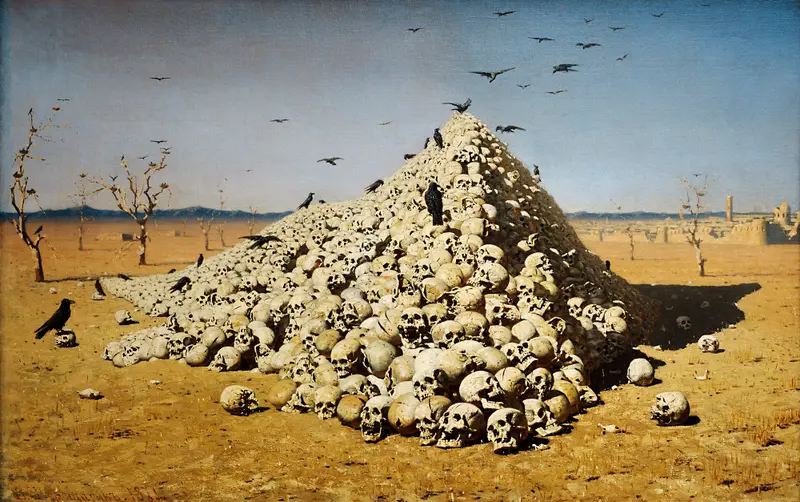
The Apotheosis of War
Vasily Vereshchagin
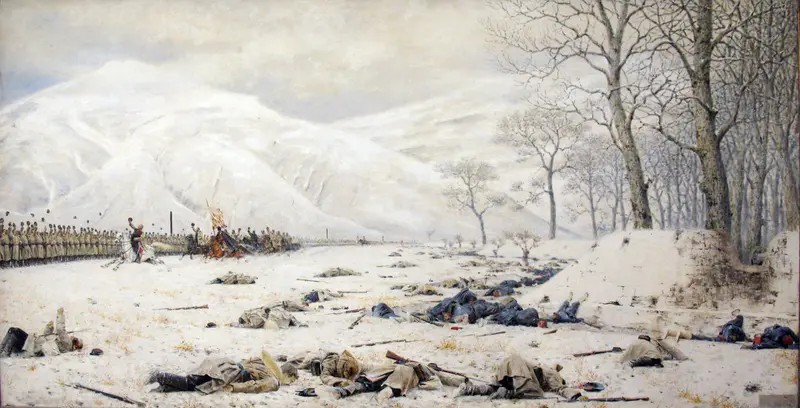
Battlefield at the Shipka
Vasily Vereshchagin
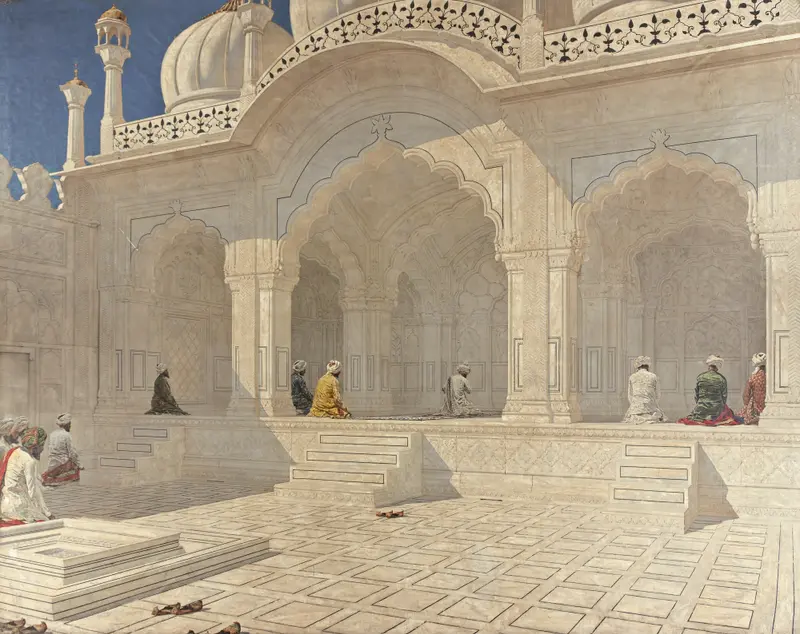
Pearl Mosque At Delhi
Vasily Vereshchagin
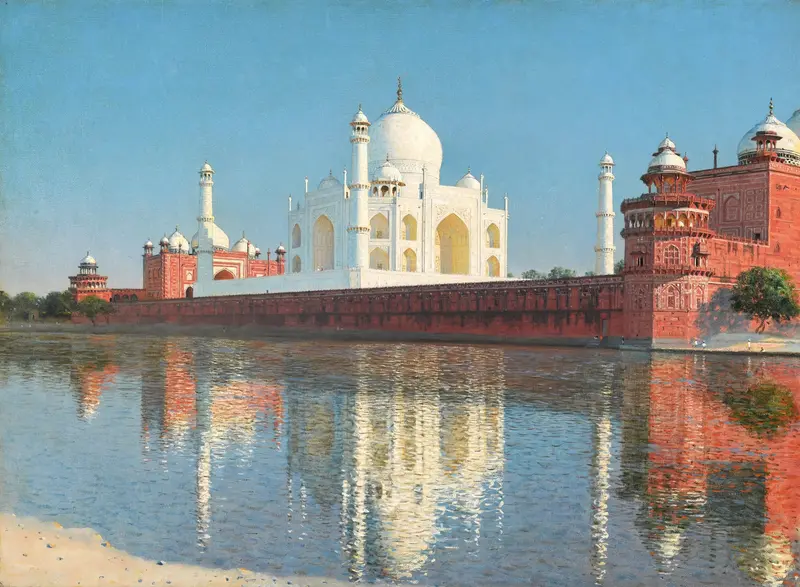
Taj Mahal Mausoleum, Agra
Vasily Vereshchagin
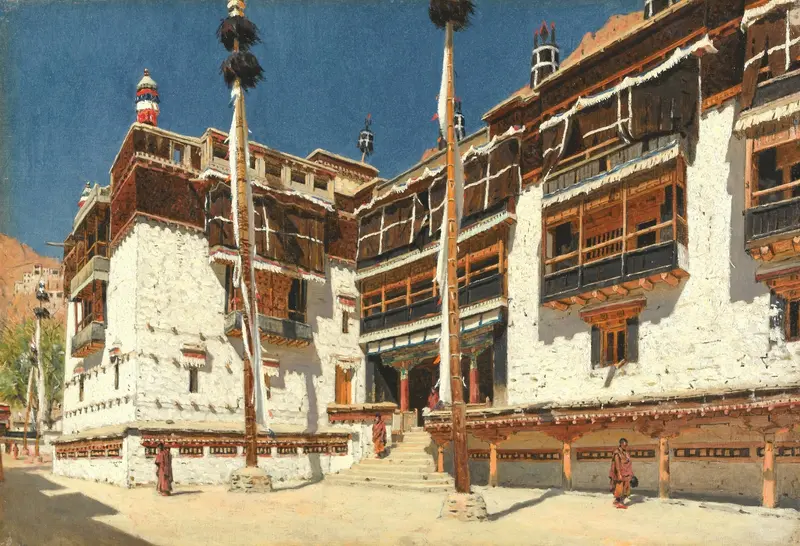
Hemis Monastery in Ladakh
Vasily Vereshchagin

Mortally wounded
Vasily Vereshchagin
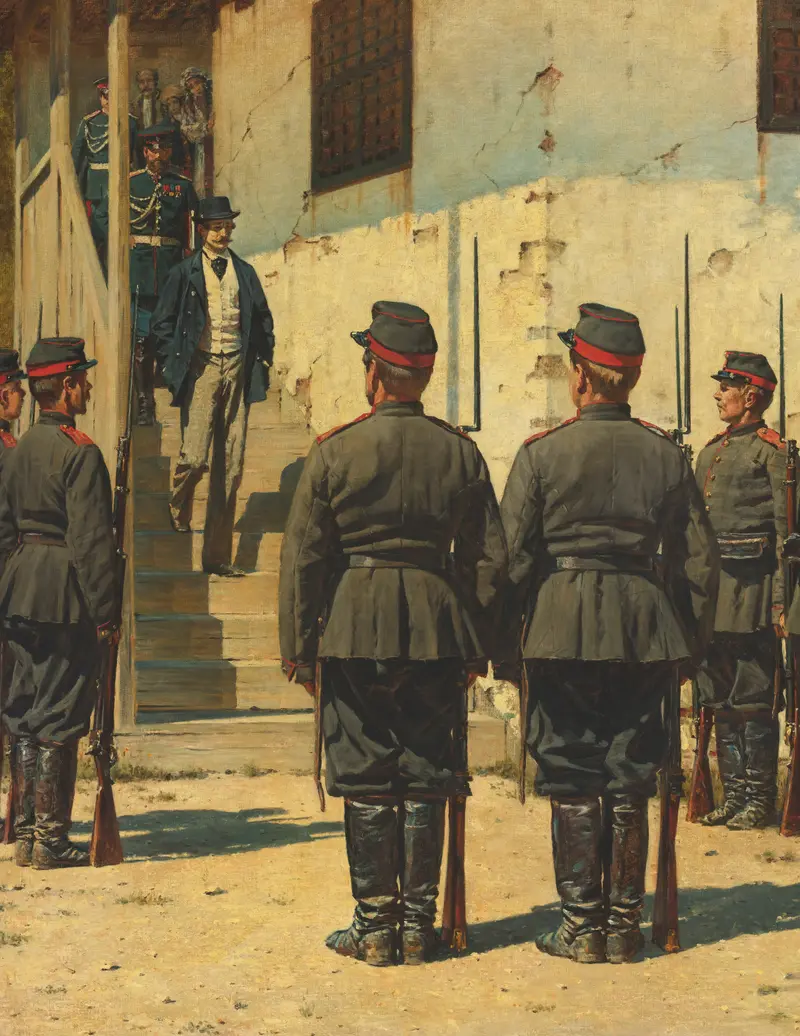
The Spy
Vasily Vereshchagin
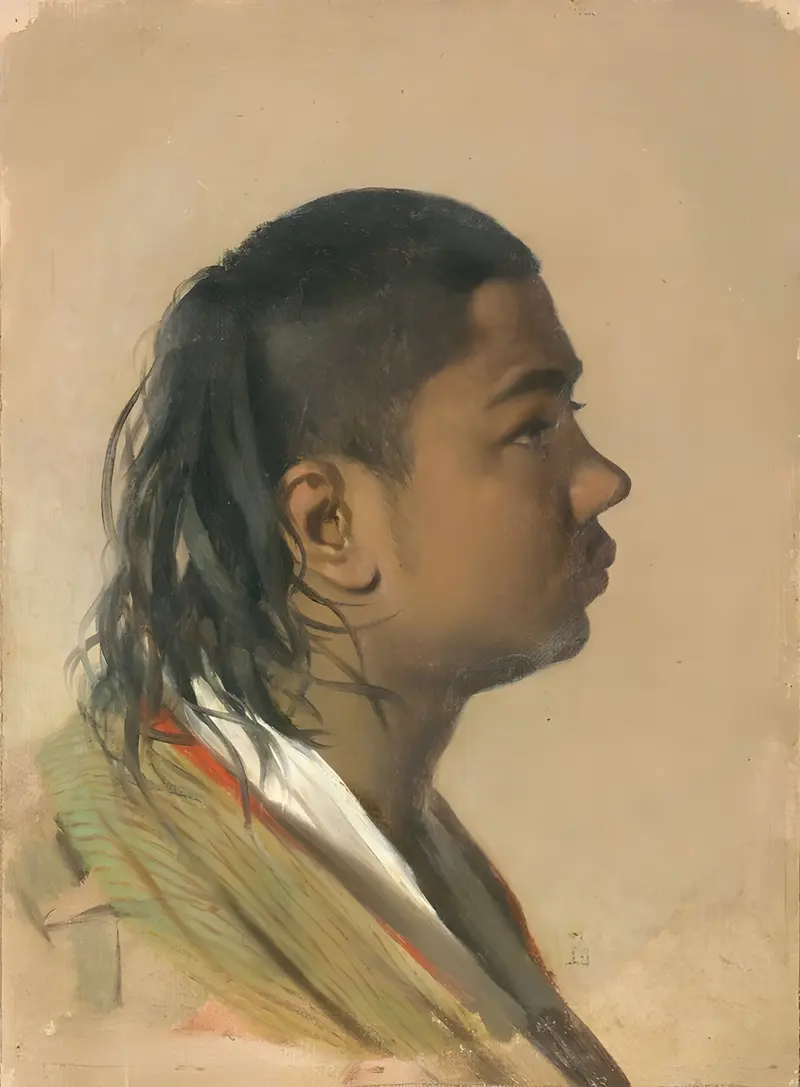
Uzbek boy
Vasily Vereshchagin
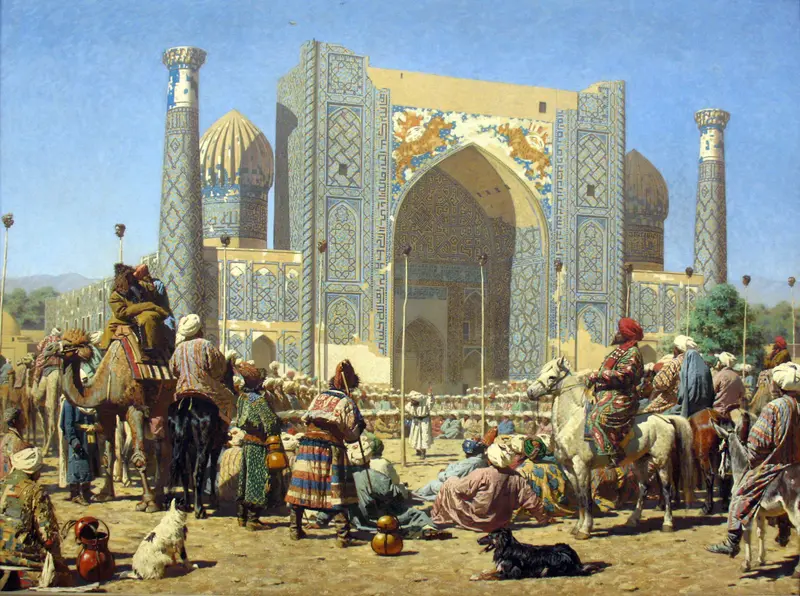
They are triumphant
Vasily Vereshchagin
Study for ‘Beggar in Washington’
Vasily Vereshchagin





