
After the Ball — History & Facts
In After the Ball, Alfred Stevens presents a scene filled with rich colors and intricate details. The painting depicts a woman in a lavish gown, her expression one of contemplation after a grand event. Surrounding her are elements of elegance and opulence, reflecting the atmosphere of a high-society ball.
The soft lighting enhances the mood, creating a sense of intimacy and reflection. The painting is executed in oil on canvas, showcasing Stevens' skill in capturing textures and fabrics. The intricate patterns of the woman's dress and the delicate play of light on her skin are particularly noteworthy. Viewers can appreciate the meticulous attention to detail, from the folds of the gown to the background elements that suggest a luxurious setting.
The composition draws the eye to the central figure, emphasizing her emotional state. Alfred Stevens was known for his depictions of fashionable women and social scenes in the late 19th century. After the Ball is a prime example of his focus on the lives of the elite, often portraying their inner feelings and societal pressures. An interesting fact about this work is that it reflects the changing roles of women during this period, as they began to assert their individuality and emotions in public spaces.
This painting serves as a snapshot of a moment in time, encapsulating the complexities of social interactions.
More Artworks by Alfred Stevens

Hesitation (Madame Monteaux?)
Alfred Stevens
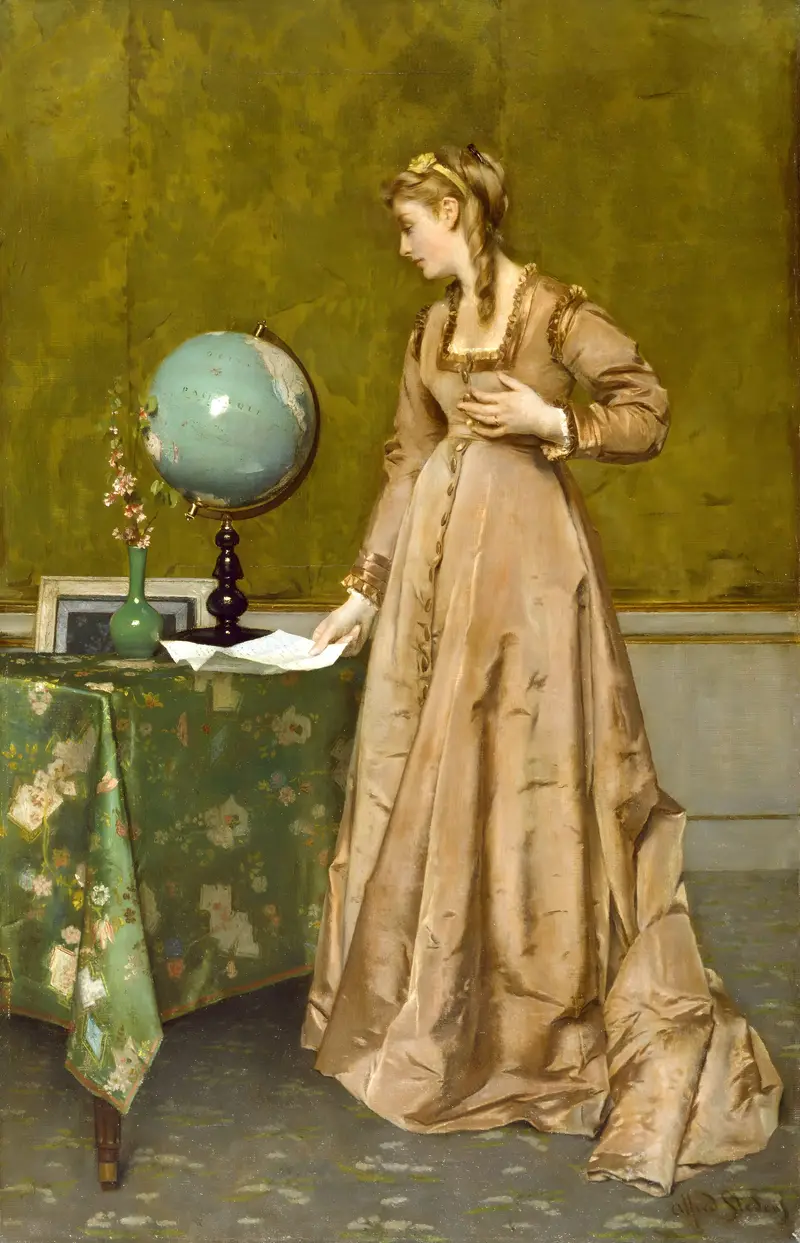
News from Afar
Alfred Stevens
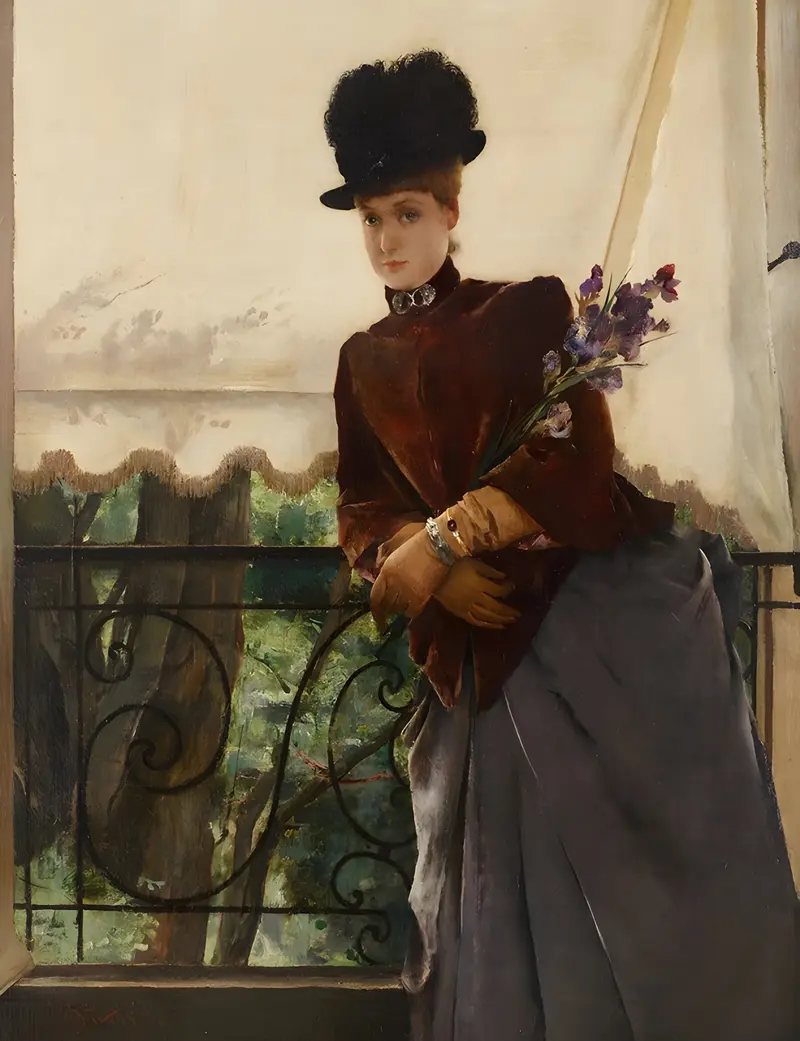
Portrait of Mademoiselle Dubois
Alfred Stevens

Chez soi
Alfred Stevens
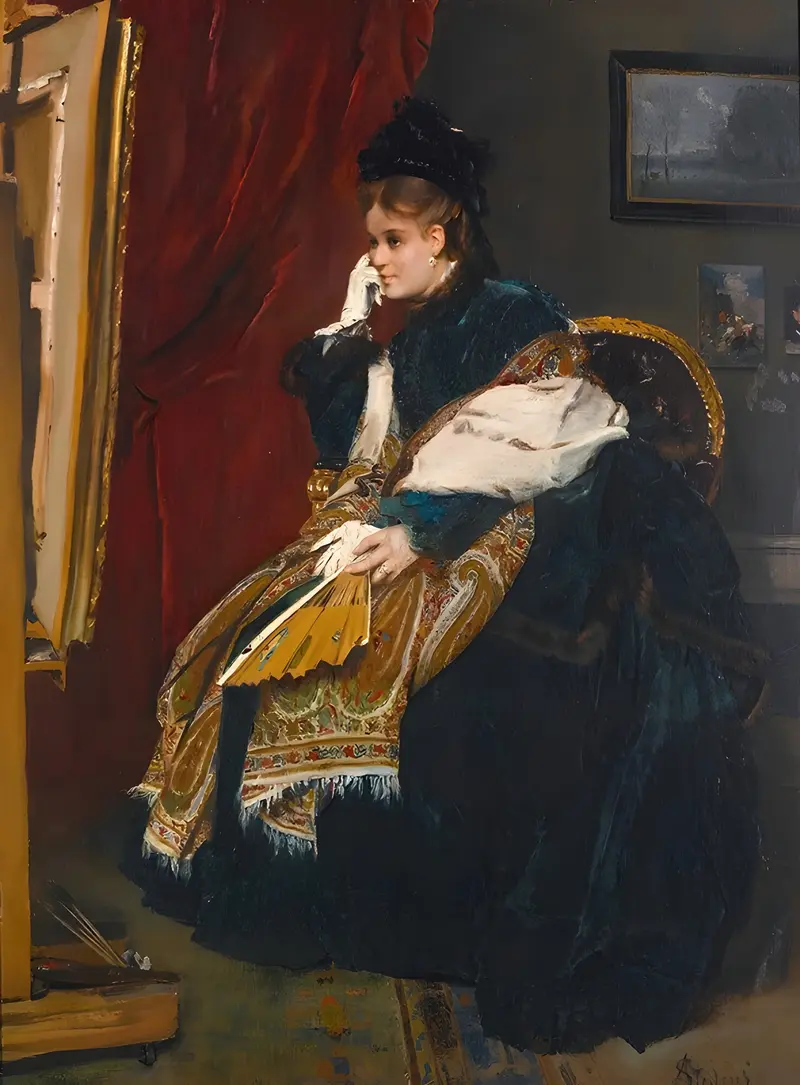
La femme en vert dans l’atelier
Alfred Stevens
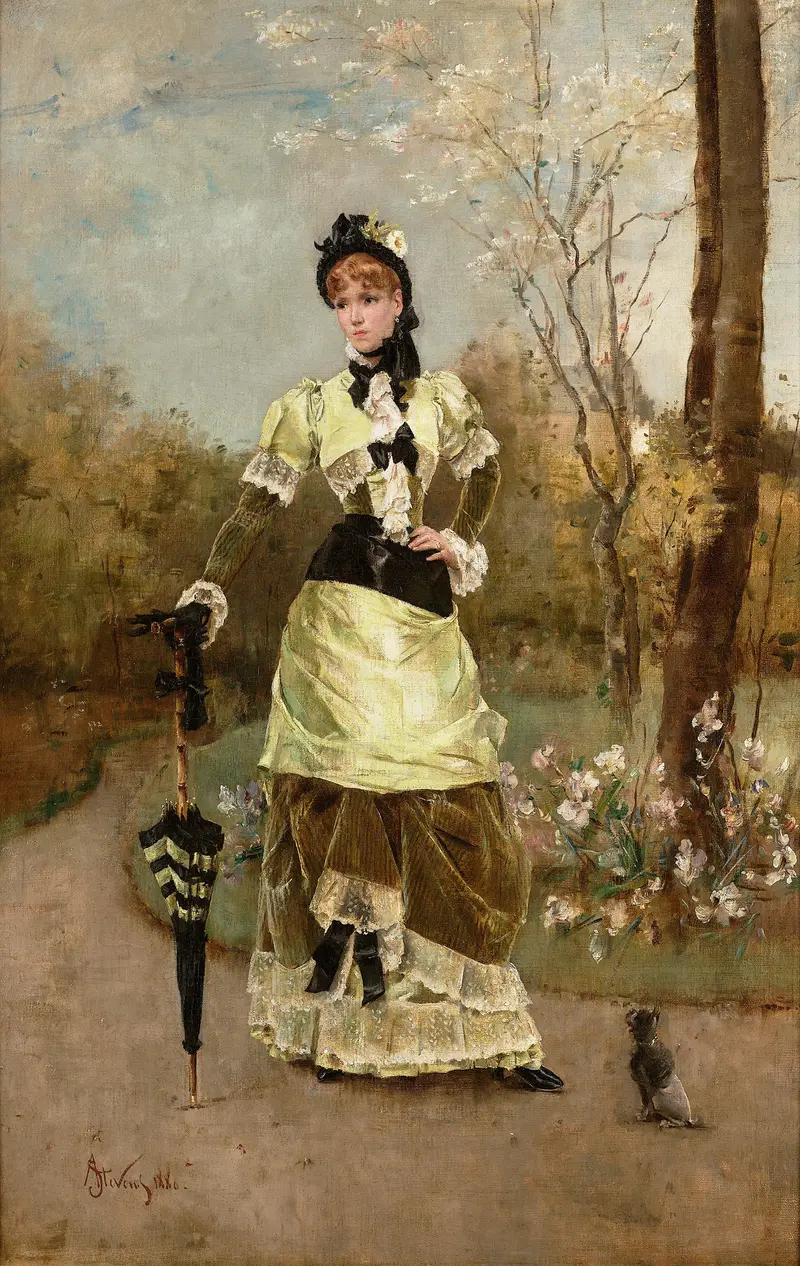
La Parisienne
Alfred Stevens
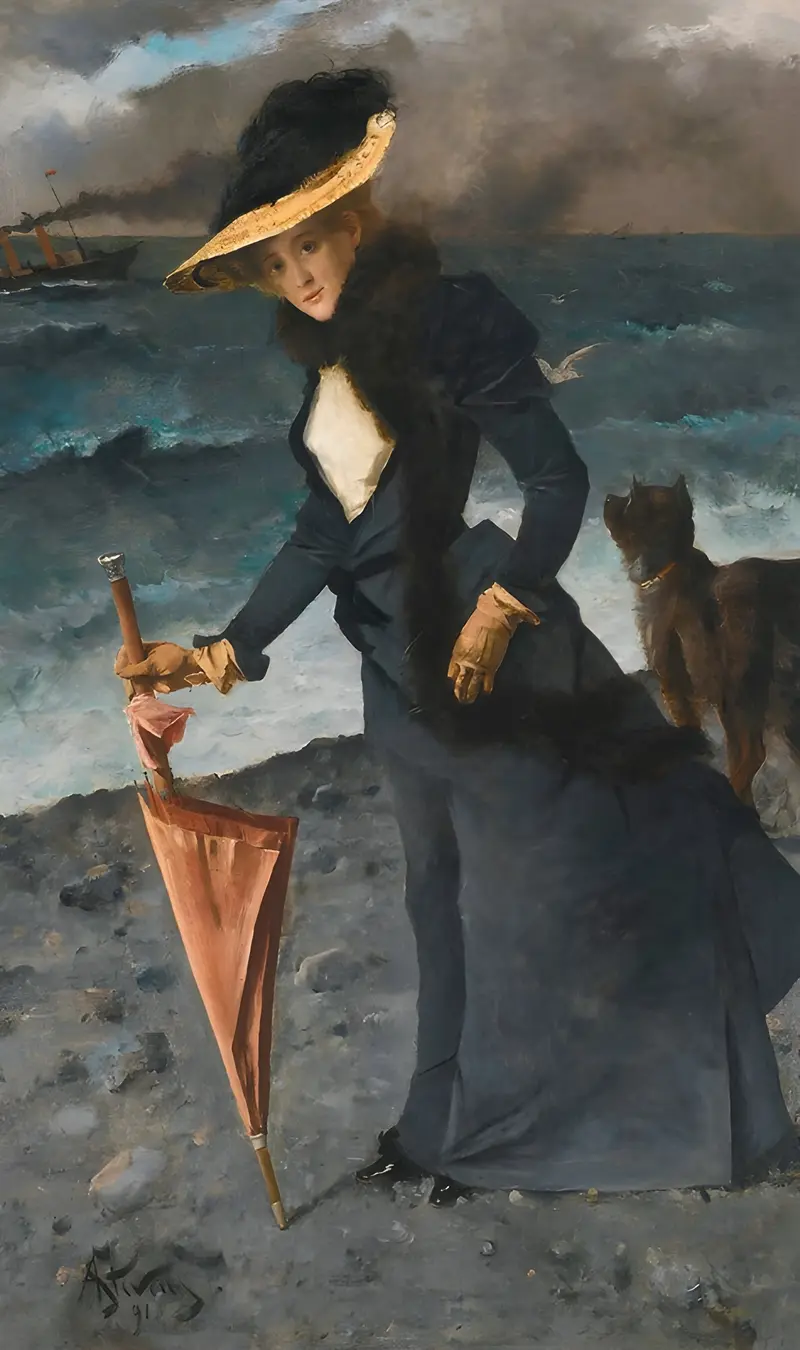
Le Coup De Vent
Alfred Stevens
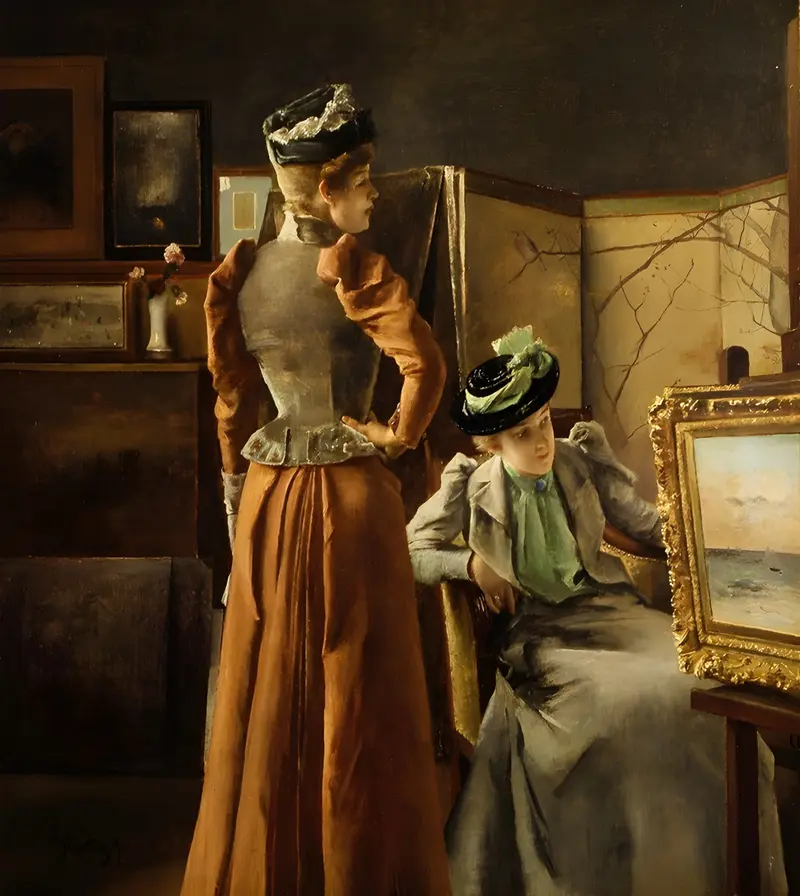
Looking at a Painting
Alfred Stevens
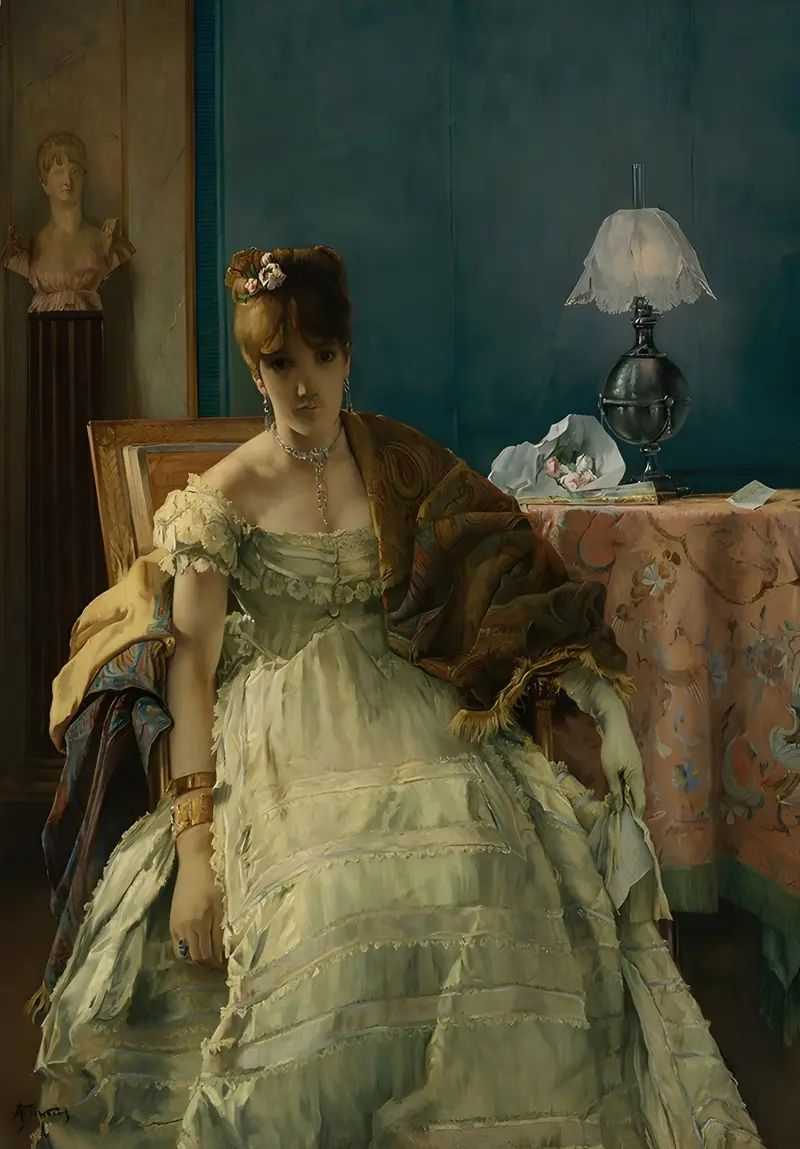
Lovelorn
Alfred Stevens
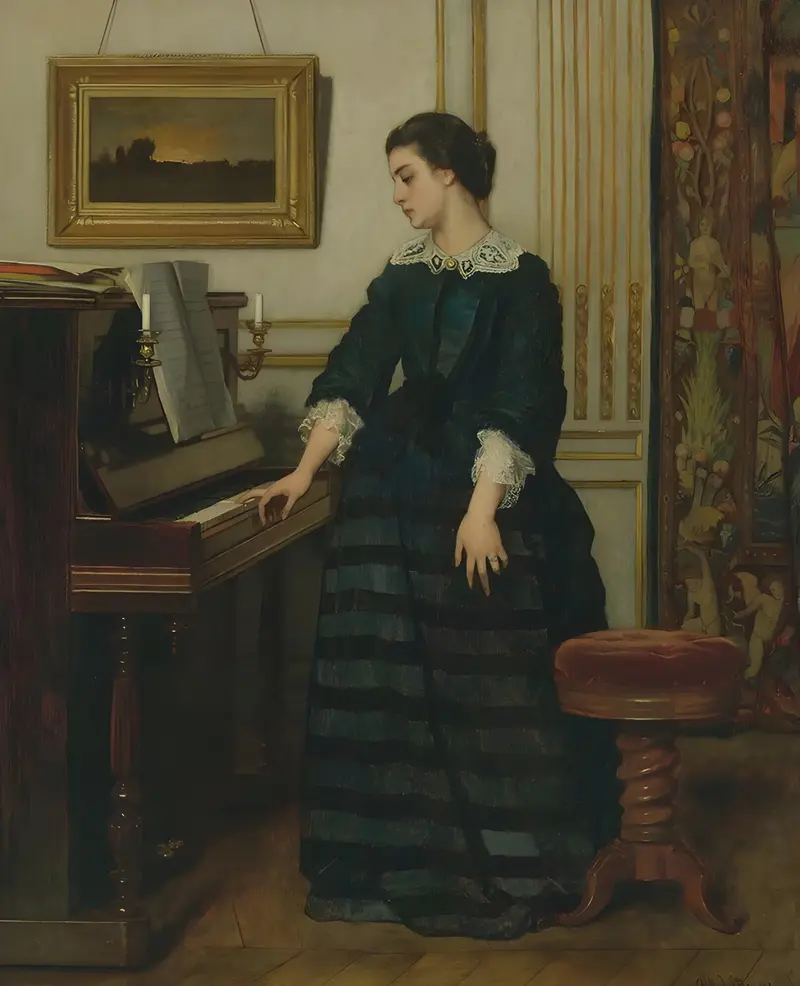
L’absence
Alfred Stevens
More Genre Scene Art

Banquet of the Officers of the St George Civic Guard
Frans Hals

Rembrandt and Saskia in the Scene of the Prodigal Son
Rembrandt van Rijn

Bal du moulin de la Galette
Pierre-Auguste Renoir

Quadrille at the Moulin Rouge
Henri de Toulouse-Lautrec

A Burial at Ornans
Gustave Courbet

When Will You Marry?
Paul Gauguin