Discover insights about this artwork
After the Party — History & Facts
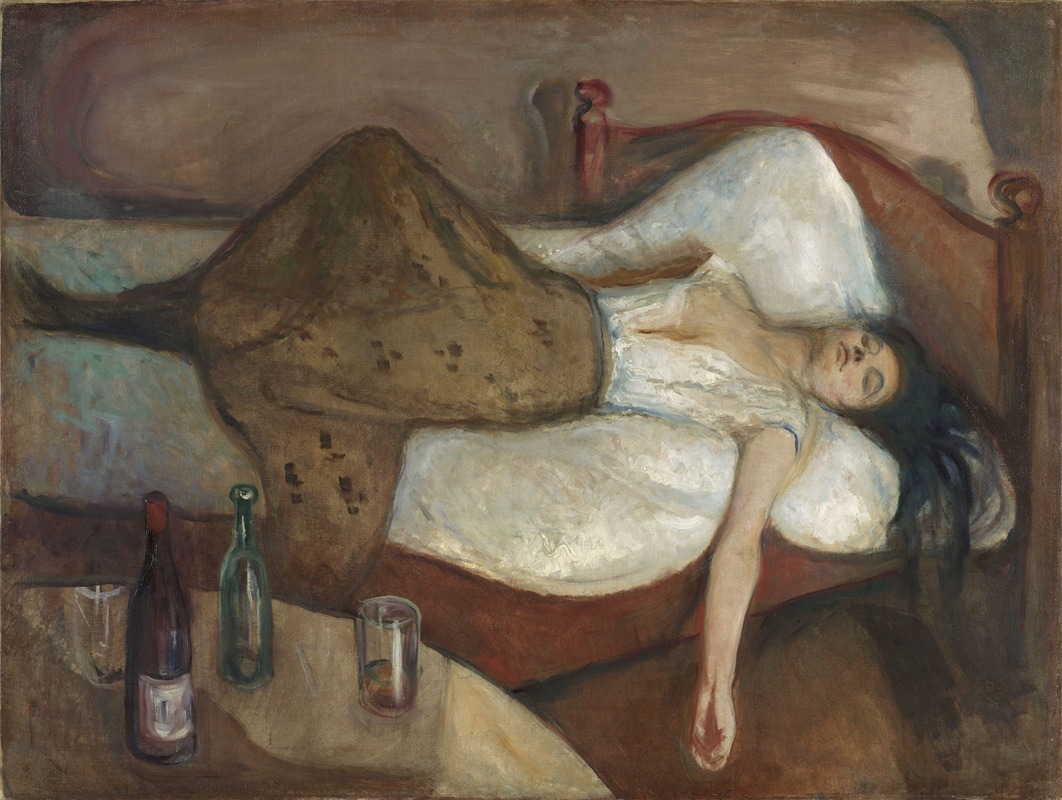
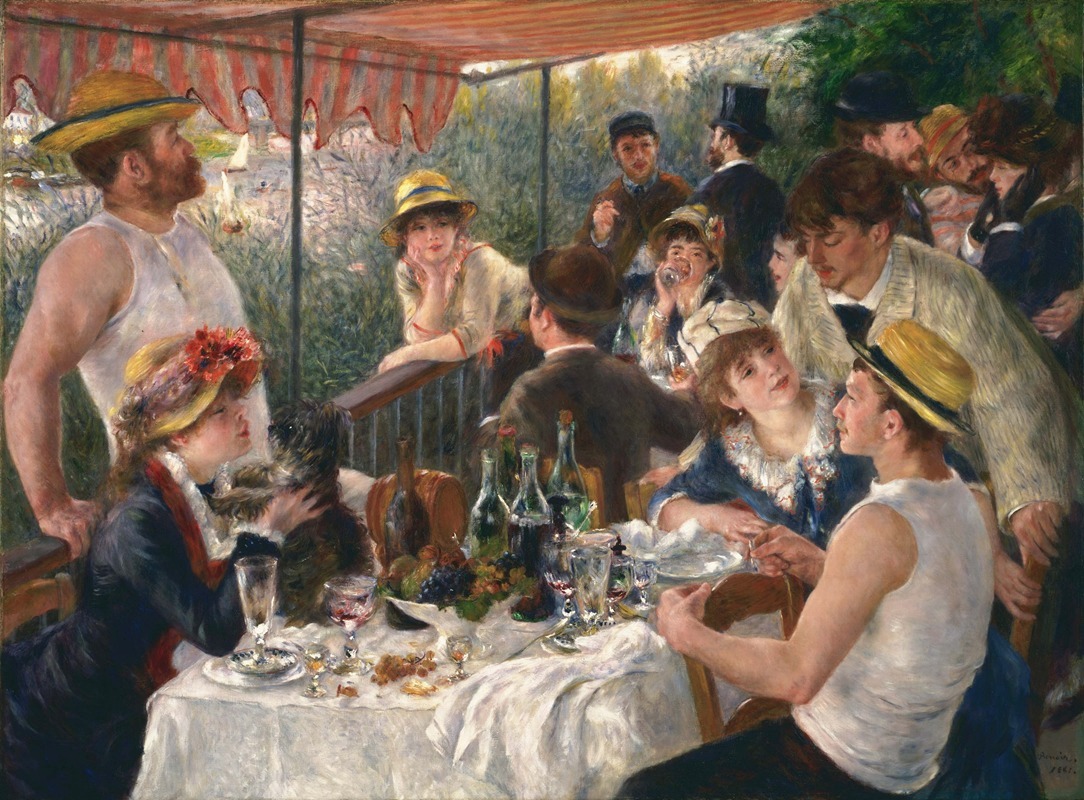
After the Party depicts a group of people sitting in a dimly lit room after a lively event. The figures appear relaxed, some leaning back in their chairs, while others are engaged in quiet conversation. The colors are rich and moody, with deep reds and browns dominating the scene, creating an intimate atmosphere.
You can see hints of leftover decorations and empty glasses scattered around, suggesting the party's recent energy. Look closely at the expressions on the faces of the figures; they convey a mix of joy and exhaustion. The details in their clothing are carefully painted, showing various textures and patterns that suggest their social status. The background is somewhat blurred, focusing attention on the people and their interactions.
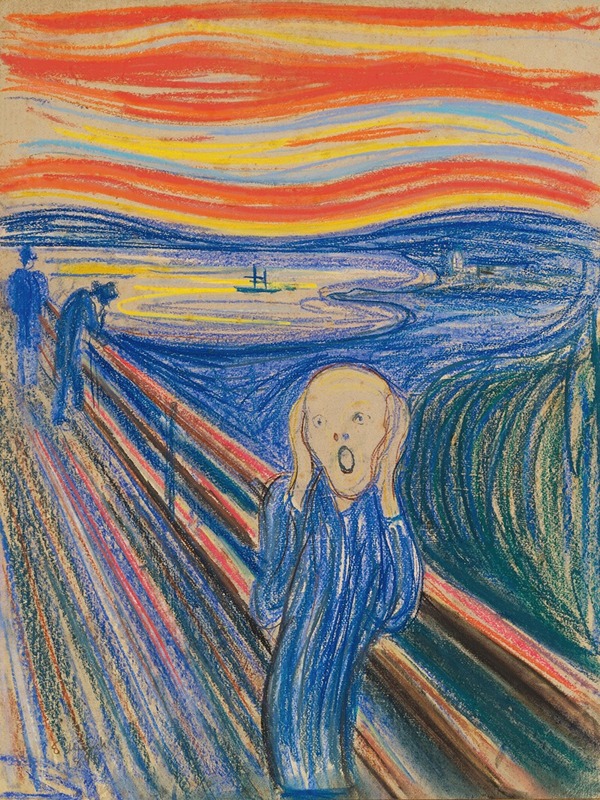
The use of light and shadow adds depth, making the room feel more alive despite the stillness. Edvard Munch painted this work during the late 19th century, a time when he was exploring themes of emotional intensity and human experience. He is best known for his iconic painting The Scream, which reflects deep psychological themes. Interestingly, Munch often drew inspiration from his own life experiences, including parties and social gatherings.
Today, his works are celebrated for their unique ability to express complex emotions and the human condition.