
Akita Tsuchizaki — History & Facts
What secret hides in the quiet of the canvas? The stillness of Kawase Hasui's work envelops the viewer, inviting introspection and admiration for the beauty found in serene landscapes. Look to the left at the gentle slope of the hills, where soft greens and muted browns blend seamlessly, embodying nature's tranquility. The delicate brushwork reveals a textured ambiance, while pale blues and subtle grays in the sky evoke the calm of dusk. Notice how the light elegantly dances over the surface of the water, reflecting an ethereal glow that enhances the composition’s peacefulness. Beneath the surface calm, tension whispers through the contrasts of light and shadow, echoing the duality of day and night.
The solitary figure, perhaps a farmer or a wanderer, stands at the water's edge, suggesting a connection to nature that transcends the physical. The absence of bustling activity reinforces solitude, allowing the viewer to ponder the quiet beauty of existence and the stories untold. In 1928, during a time of significant change in Japan, Hasui created this piece while exploring the theme of landscapes as reflections of human emotion. His work emerged within the Shin-hanga movement, which aimed to fuse traditional ukiyo-e techniques with Western realism.
This period marked a shift towards capturing the beauty of Japan’s natural world, making this artwork not just a visual feast but a profound narrative of cultural identity.
More Artworks by Kawase Hasui
Browse all →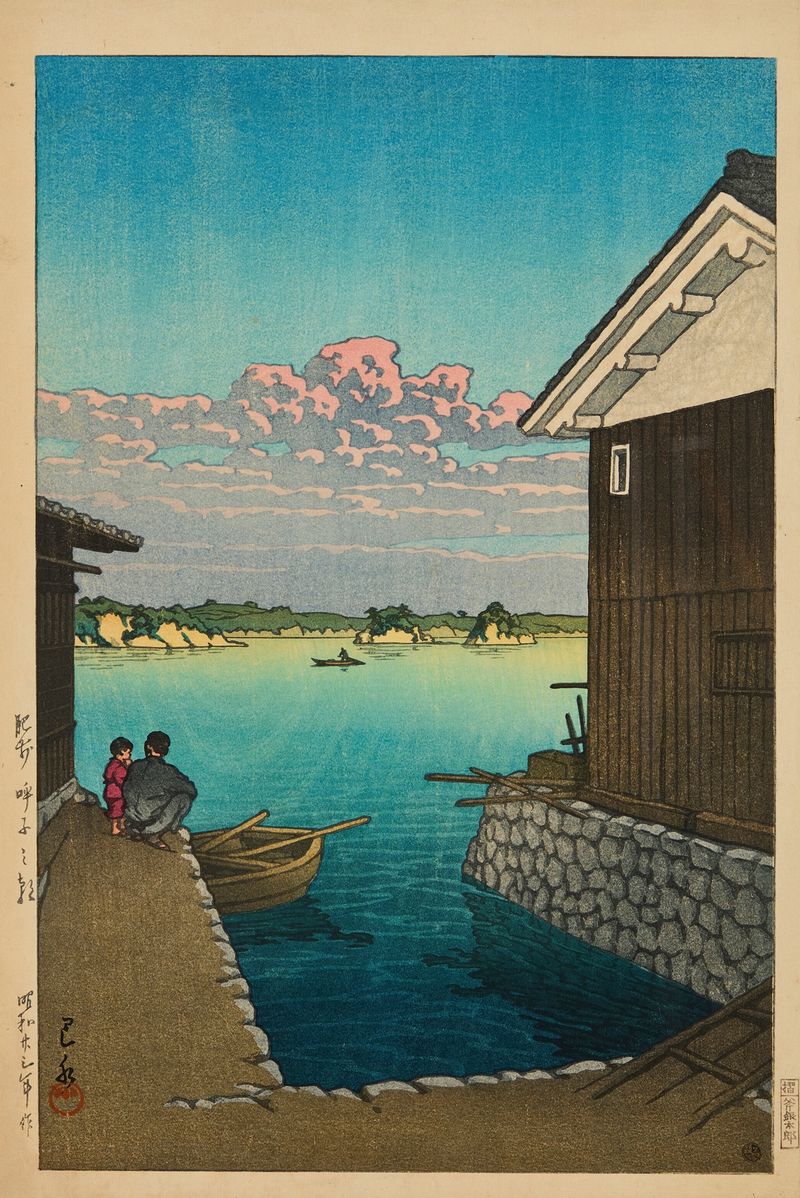
Hizen Yobuko no asa (Morning in Yobuko, Hizen)
Kawase Hasui
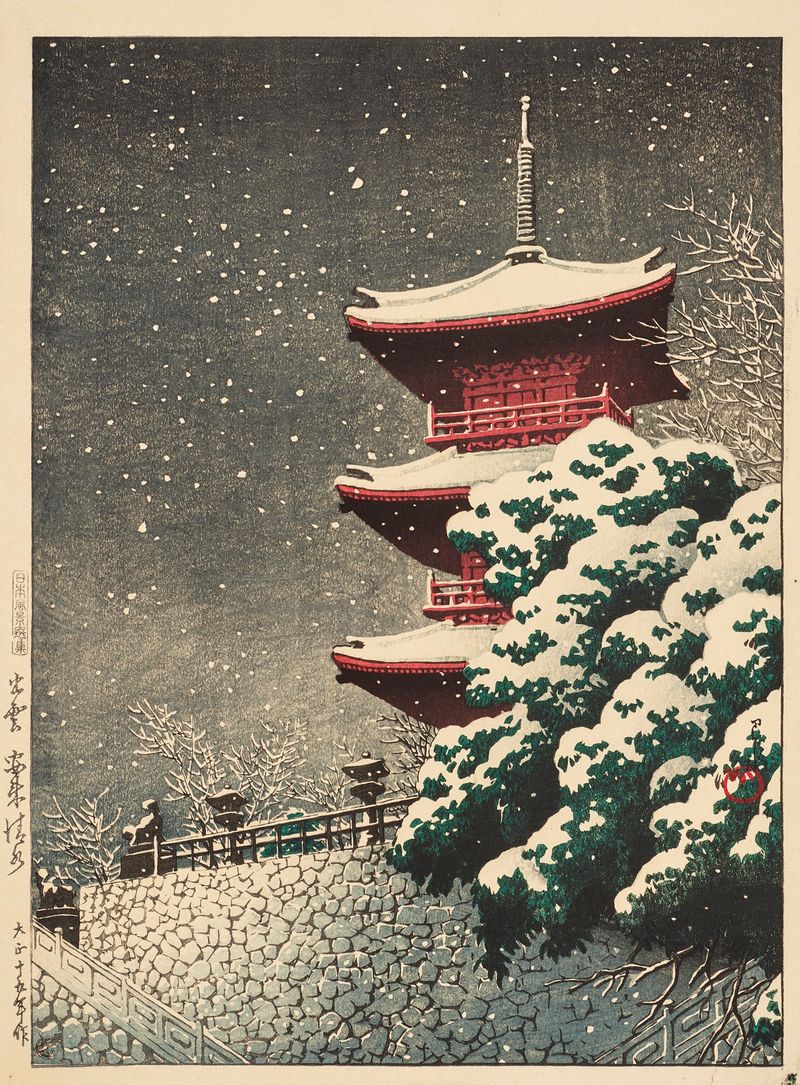
Izumo, Yasugi Kiyomizu (Yasugi Kiyomizu Temple at Izumo)
Kawase Hasui
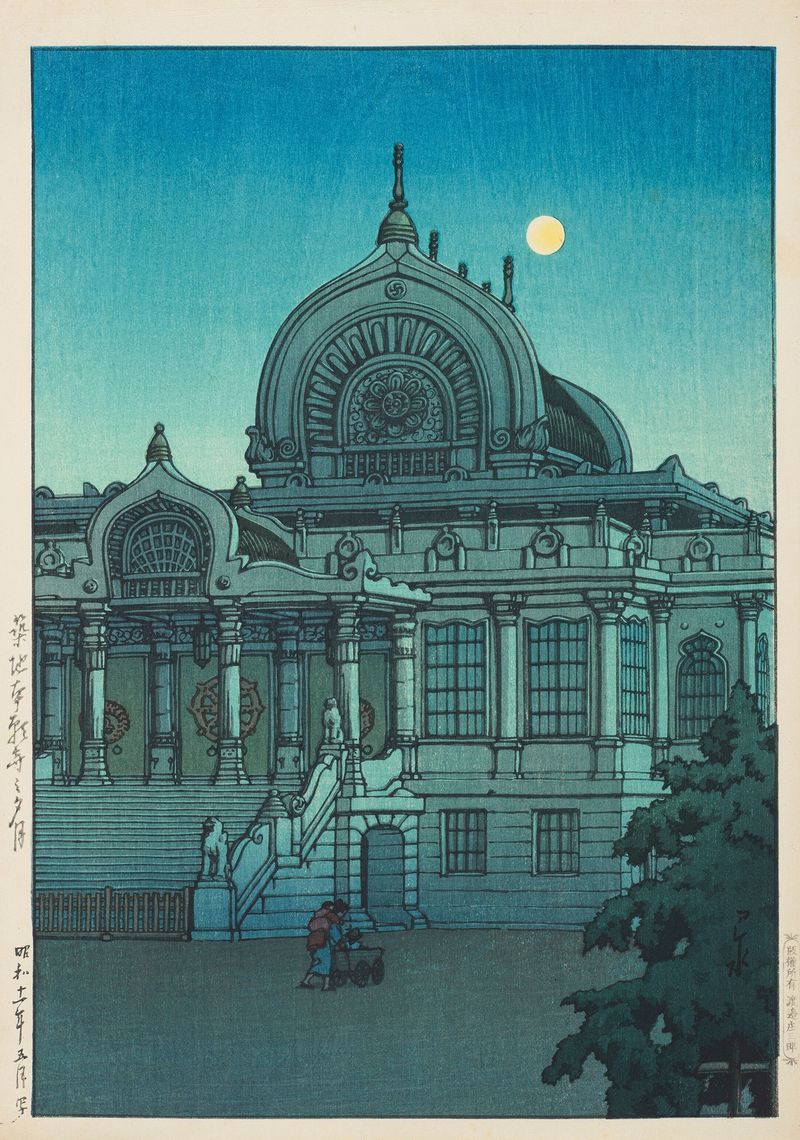
Tsukiji Honganji no yuzuki (Evening moon at Honganji Temple in Tsukiji)
Kawase Hasui
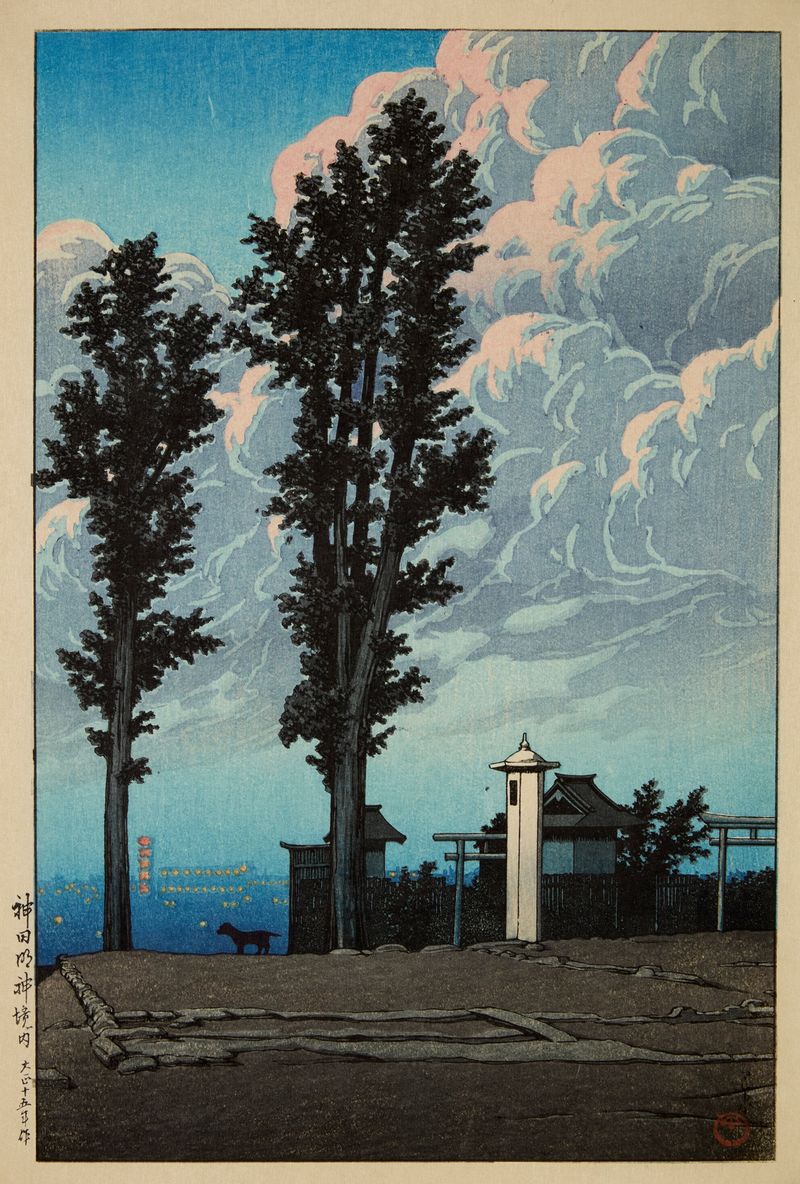
Kanda Myojin keidai (Kanda Myojin Shrine precent)
Kawase Hasui
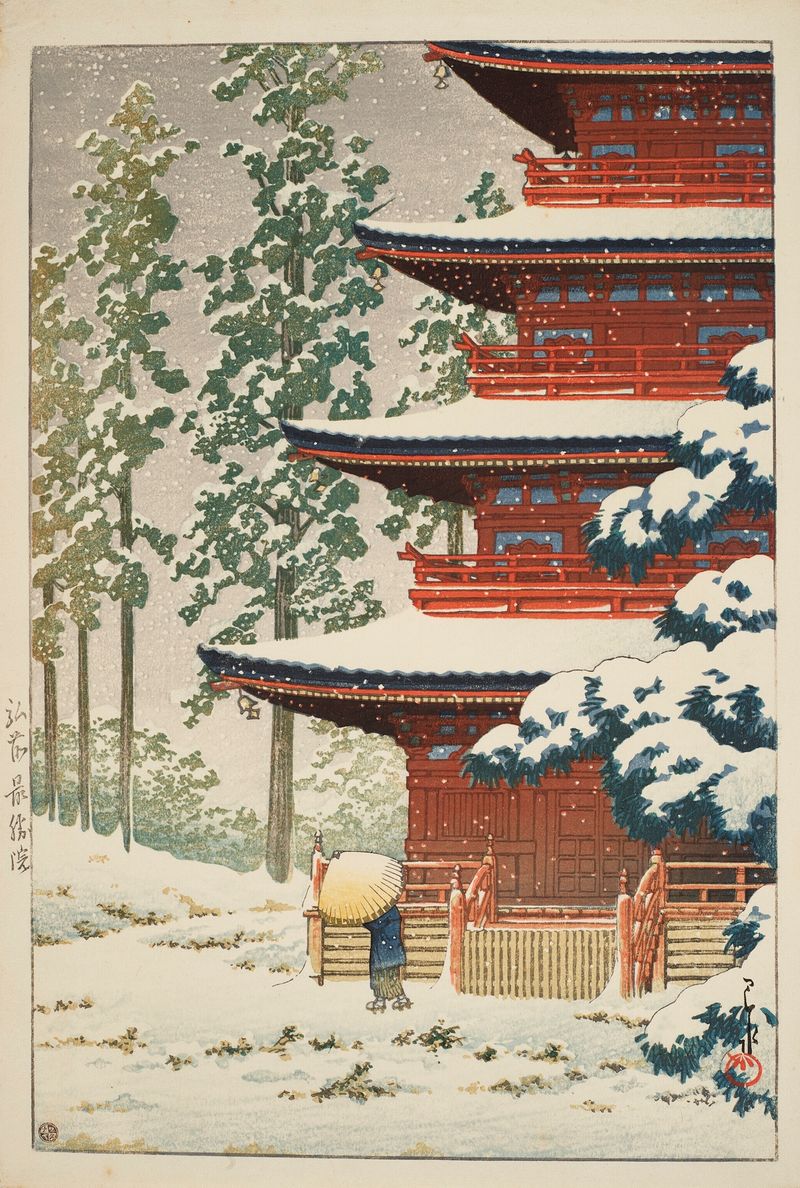
Saisho-in Temple, Hirosaki
Kawase Hasui
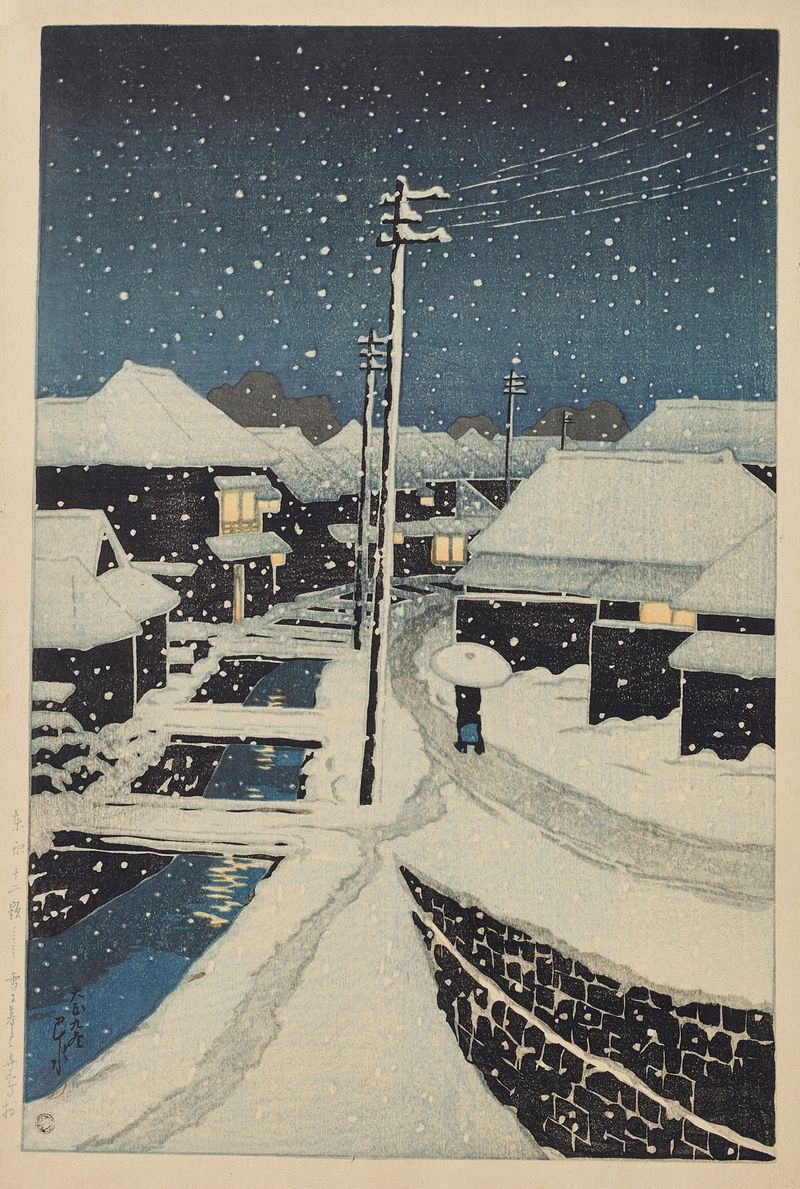
Yuki ni fururu Terajima mura (Evening snow at Terajima Village)
Kawase Hasui
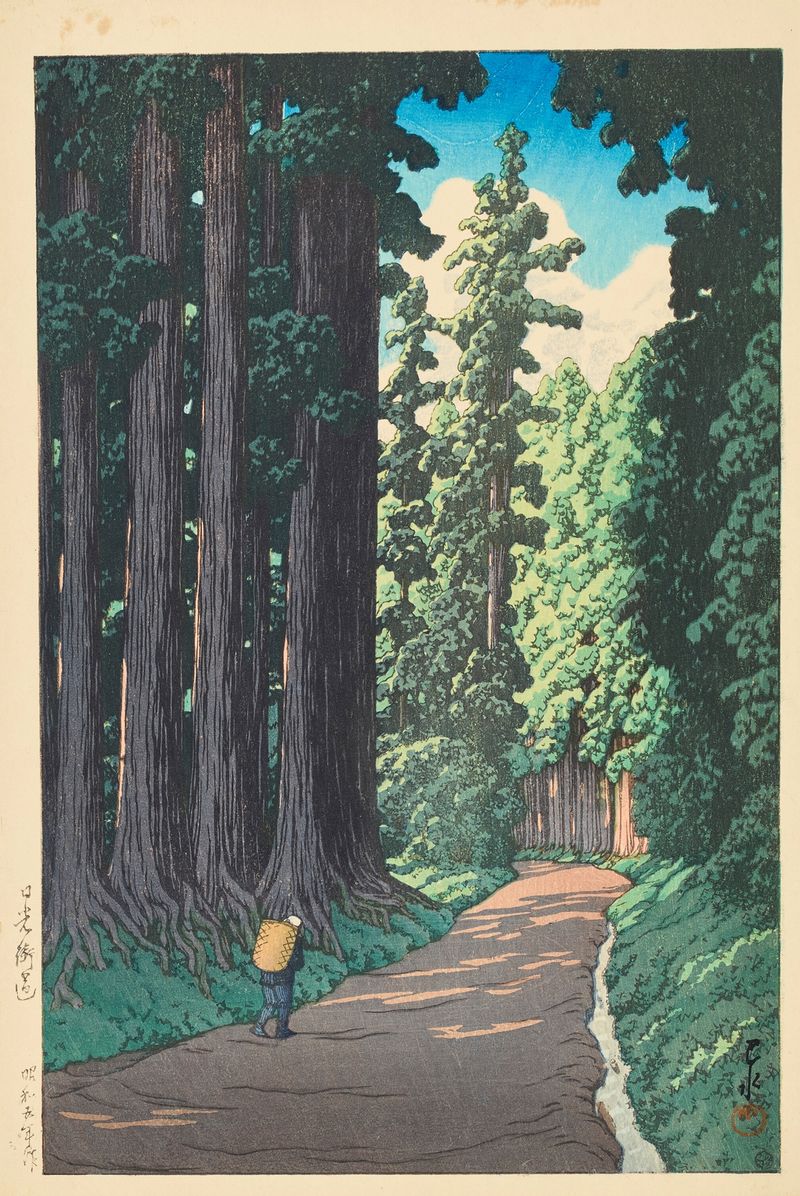
Nikko gaido (The Road to Nikko)
Kawase Hasui
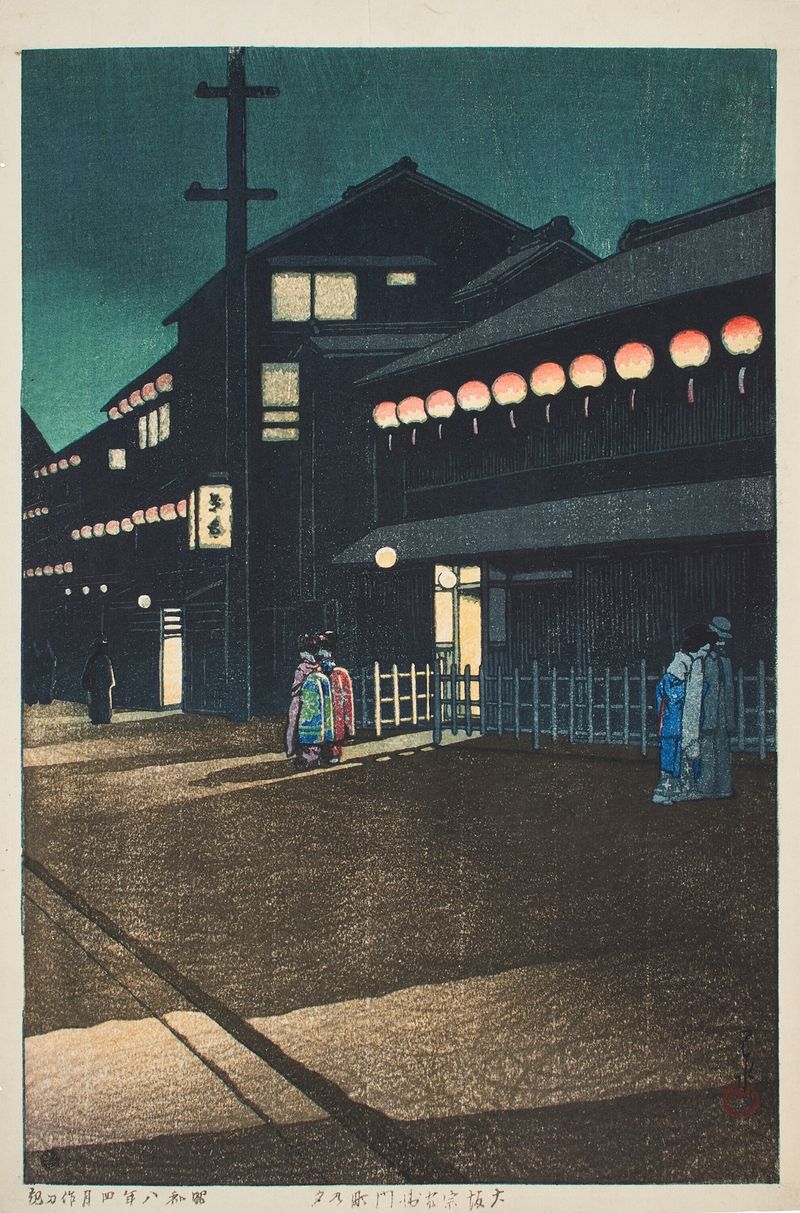
Osaka Soemon-cho no yu (Evening in Soemon-cho, Osaka)
Kawase Hasui
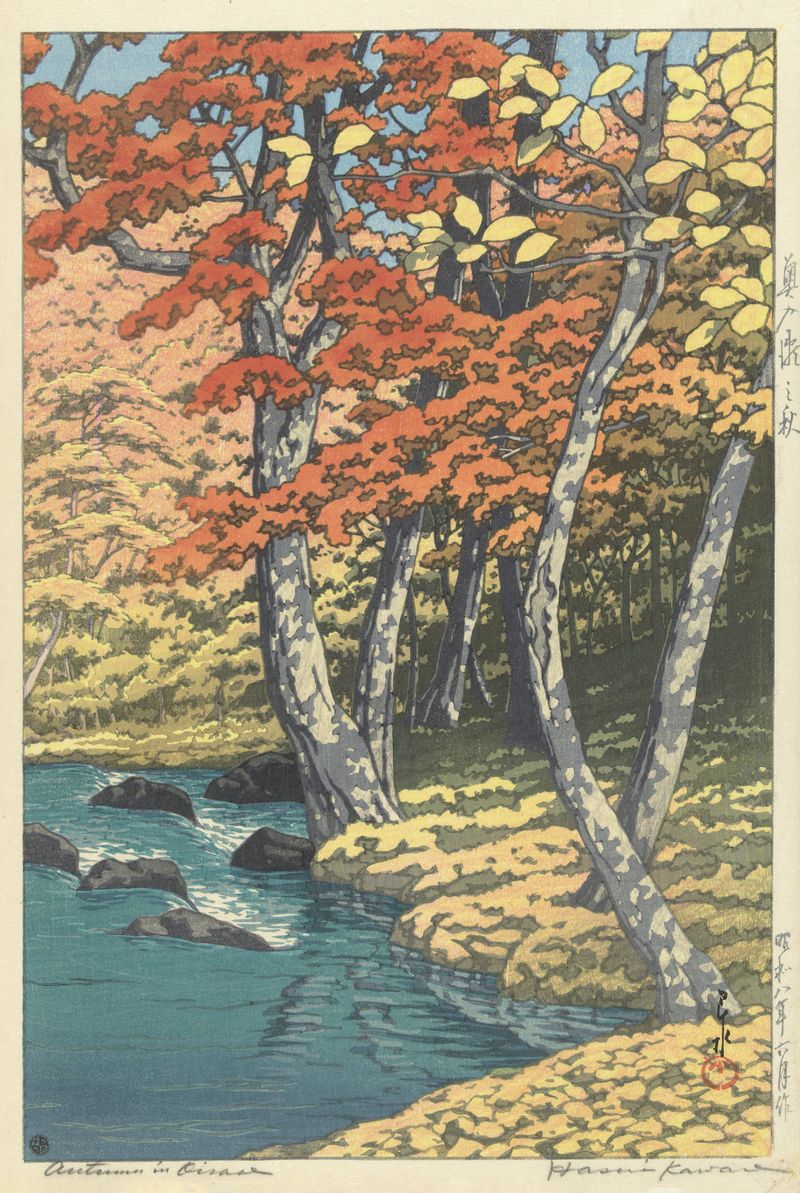
Autumn In Oirase
Kawase Hasui
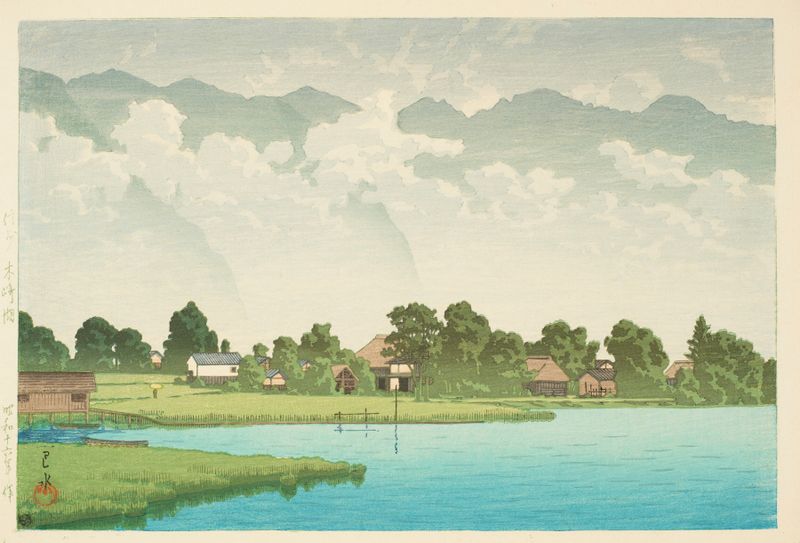
Shinshu Kizakiko (Kizaki Lake in Shinshu)
Kawase Hasui





