
Albert – Les ruines de Notre-Dame de Brébières — History & Facts
When did color learn to lie? In the realm of art, illusions can illuminate truths hidden beneath the surface, revealing a divine beauty intertwined with decay. Look to the left at the crumbling stone of Notre-Dame de Brébières, where muted grays and ochres breathe life into the remnants of a once-majestic structure. Tatin’s brushstrokes capture the gentle play of light filtering through the ruins, casting soft shadows that dance across the ground. The warm hues contrast starkly against the cool, melancholy sky, evoking a poignant sense of nostalgia that envelops the viewer. Delve deeper into the scene, and a complex narrative emerges.
The juxtaposition of decay and ethereal light suggests the resilience of beauty amid ruin, a metaphor for the fragility of divinity itself. Each fragment of stone tells of a history rich with reverence, while the presence of vibrant greens creeping through the cracks embodies nature’s reclamation. This interplay of life and death serves as a reminder of the cycles that govern existence. E.
Tatin painted Les ruines de Notre-Dame de Brébières in 1920, during a time of profound change in France following World War I. The country was grappling with the aftermath of destruction, both physical and emotional. In the world of art, there was a shift towards capturing the raw essence of reality and exploring the interplay between the past and the present, a theme that resonates powerfully in this work.
More Artworks by E. Tatin
Browse all →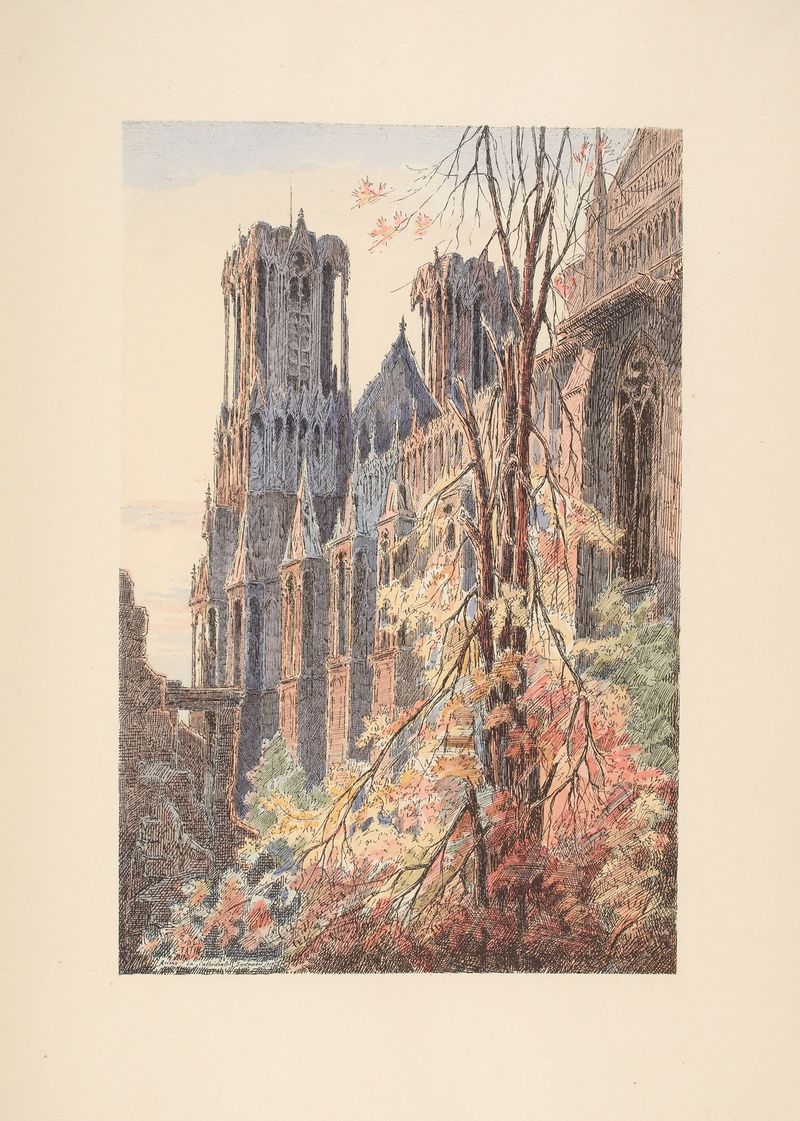
Reims – La cathédrale vue des ruines de l’archevèché
E. Tatin
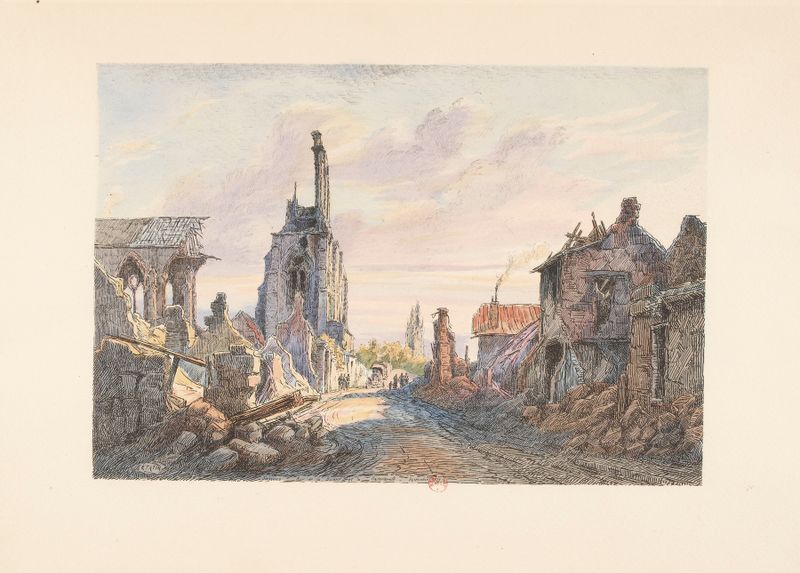
Soissons – La cathédrale et la rue de la Buerie
E. Tatin
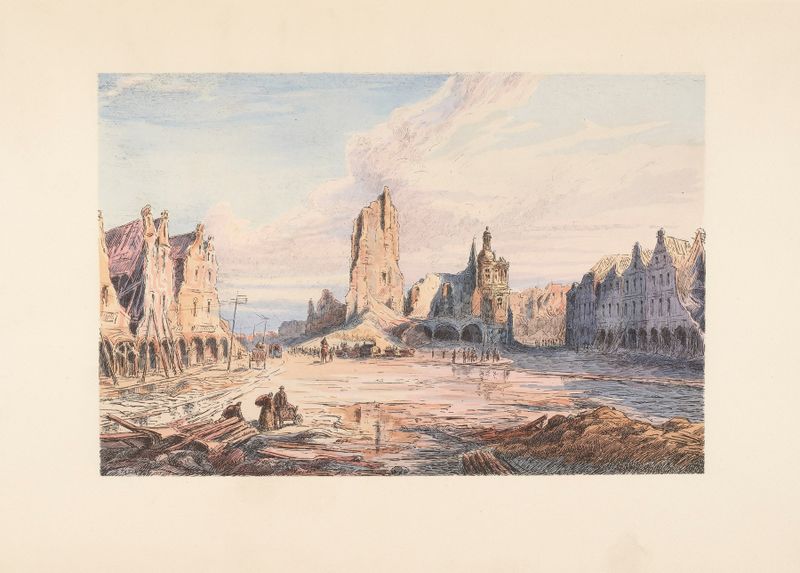
Arras – La petite place, l’hótel de ville et le beffroi
E. Tatin

Douai – La place du marché
E. Tatin
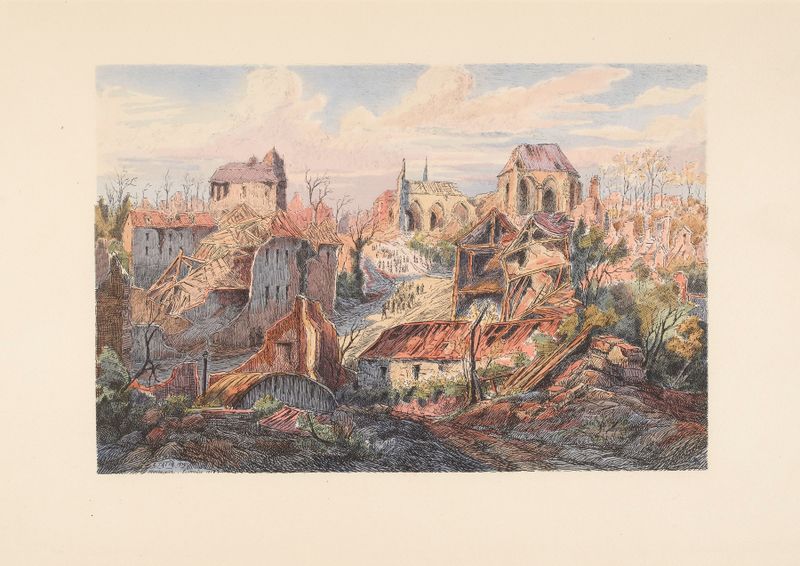
Montdidier – Vue générale
E. Tatin
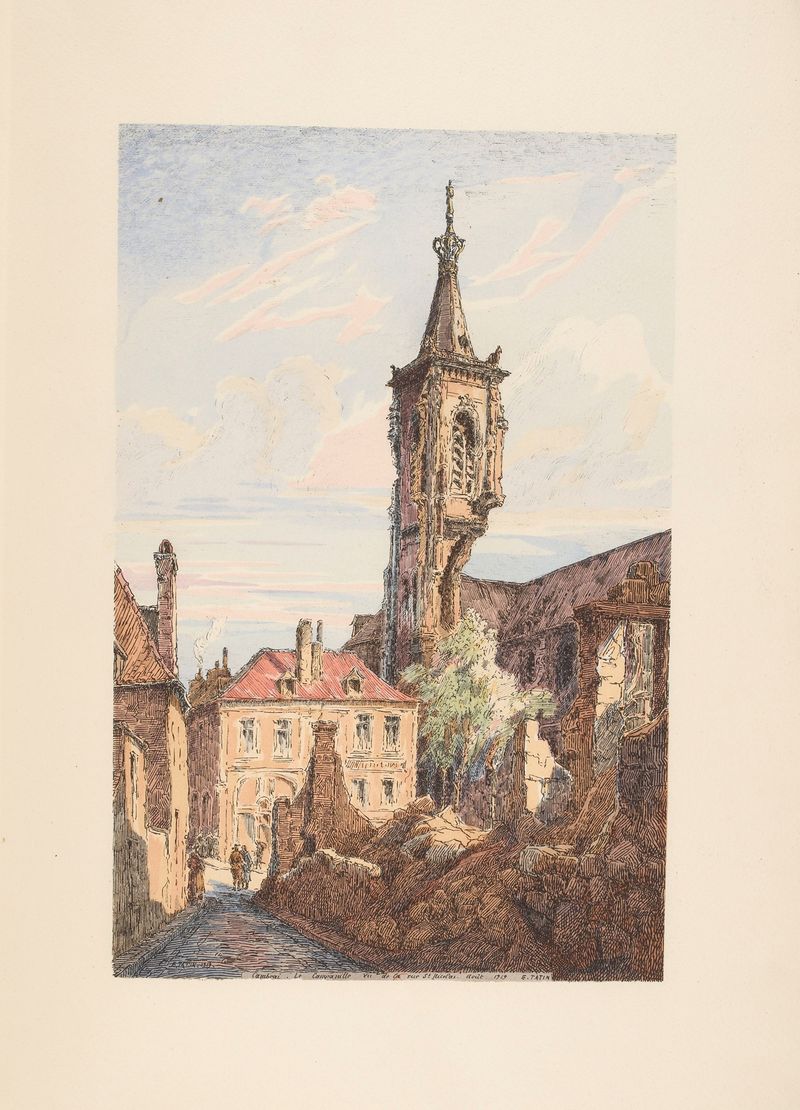
Cambrai – La cathédrale
E. Tatin

Verdun – Rue Saint-Paul
E. Tatin

Péronne – Place de l’Hotel-de-Ville
E. Tatin

Saint-Quentin – La Collégiale vue de la rue Saint-Andre
E. Tatin
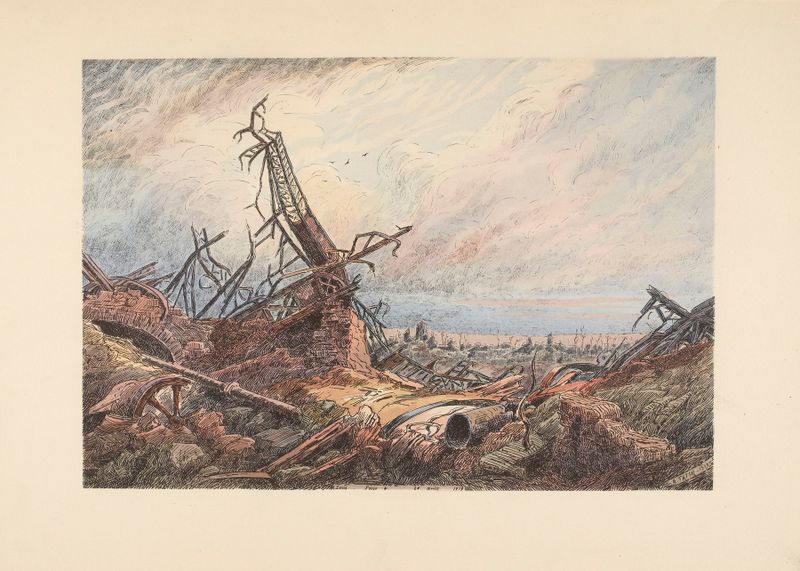
Lens – La fosse n°4
E. Tatin
More Architecture Art
Browse all →
The statue of Liberty
Frédéric Auguste Bartholdi

View of Houses in Delft, Known as ‘The Little Street’
Johannes Vermeer

View of Houses in Delft, Known as ‘The Little Street’
Johannes Vermeer

The Cathedral in Rouen. The portal, Grey Weather
Claude Monet

The yellow house
Vincent van Gogh

The Church in Auvers-sur-Oise, View from the Chevet
Vincent van Gogh