
Arras – La petite place, l’hótel de ville et le beffroi — History & Facts
In the quiet recesses of our memories, certain places linger, echoing with the weight of longing and nostalgia. Look to the center of the canvas, where the town square radiates a serene charm, the Hôtel de Ville standing as a testament to time’s passage. The intricate architectural details emerge from a textured palette of soft grays and muted earth tones, inviting your gaze to wander through the cobblestone streets. Notice how the light plays tenderly across the surfaces, illuminating the beffroi with a gentle glow, while shadows create a sense of depth that suggests stories waiting to be told. Embedded within the scene is a subtle tension between permanence and ephemerality.
The vibrant presence of life is almost palpable, yet the distant silhouettes hint at absence, as if the figures once bustling through this square have faded into memory. This interplay of light and shadow alludes to the artist's own yearning for connection, capturing not just a place, but the essence of moments that slip through our fingers like sand. In 1920, E. Tatin painted this evocative piece while navigating a post-war landscape, where the remnants of conflict existed alongside a yearning for peace.
Working in France, Tatin was part of a broader movement that sought to reconcile the chaos of the world with the beauty of everyday life, breathing new energy into the silent narratives of forgotten towns.
More Artworks by E. Tatin
Browse all →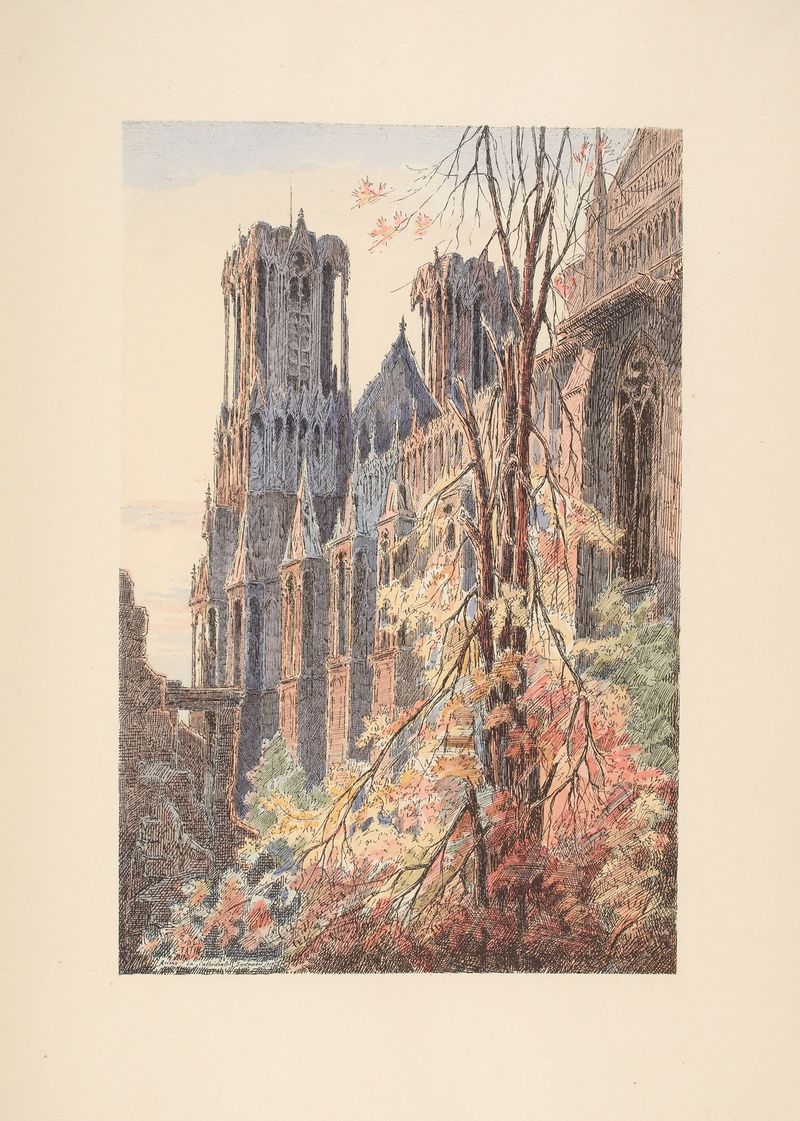
Reims – La cathédrale vue des ruines de l’archevèché
E. Tatin
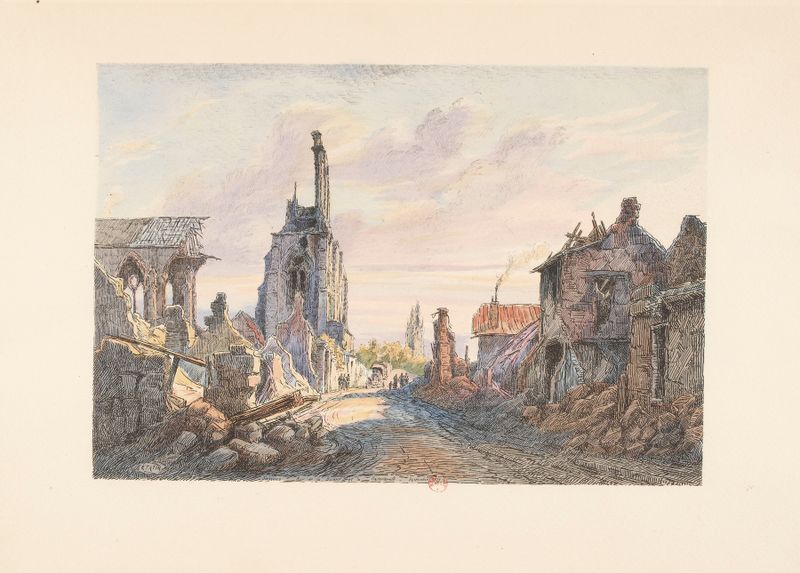
Soissons – La cathédrale et la rue de la Buerie
E. Tatin

Douai – La place du marché
E. Tatin
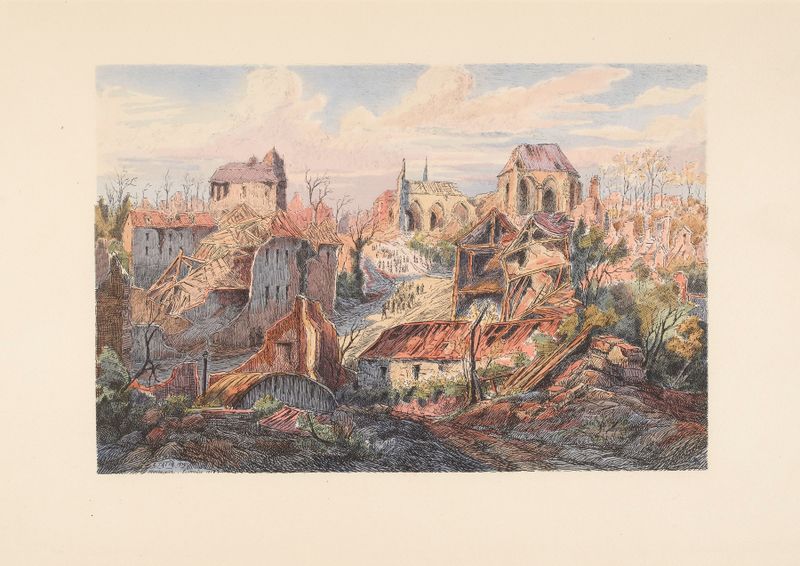
Montdidier – Vue générale
E. Tatin
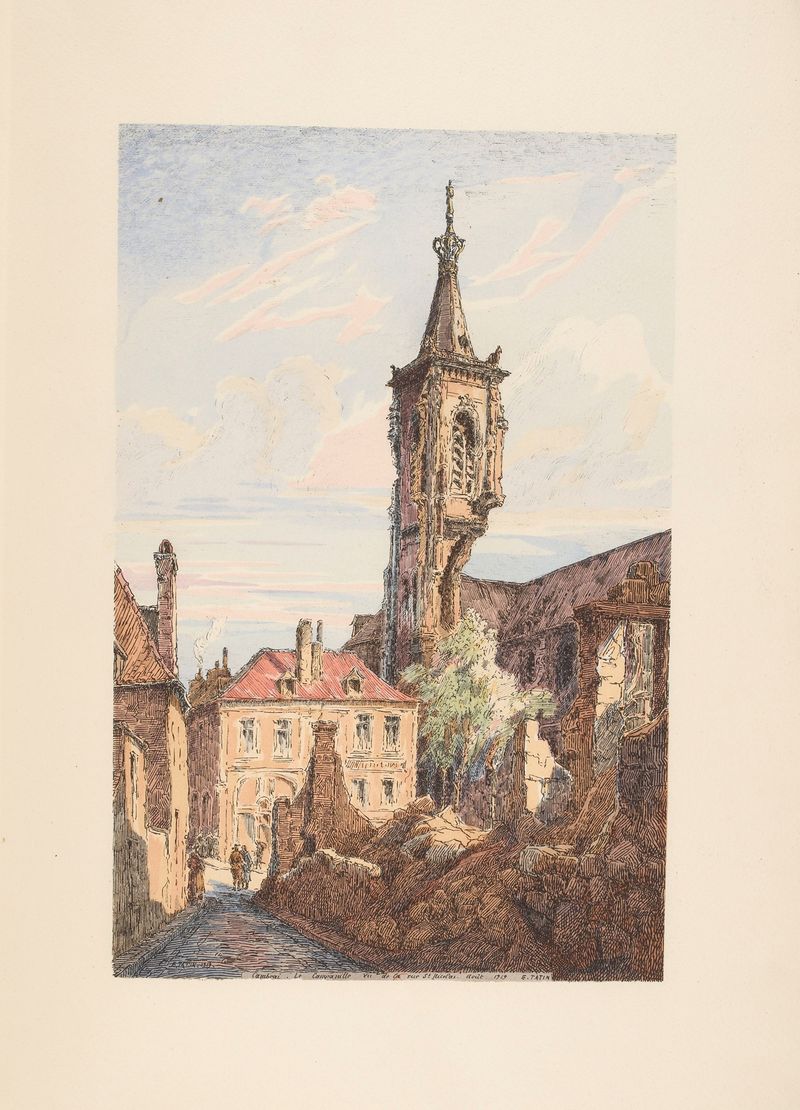
Cambrai – La cathédrale
E. Tatin
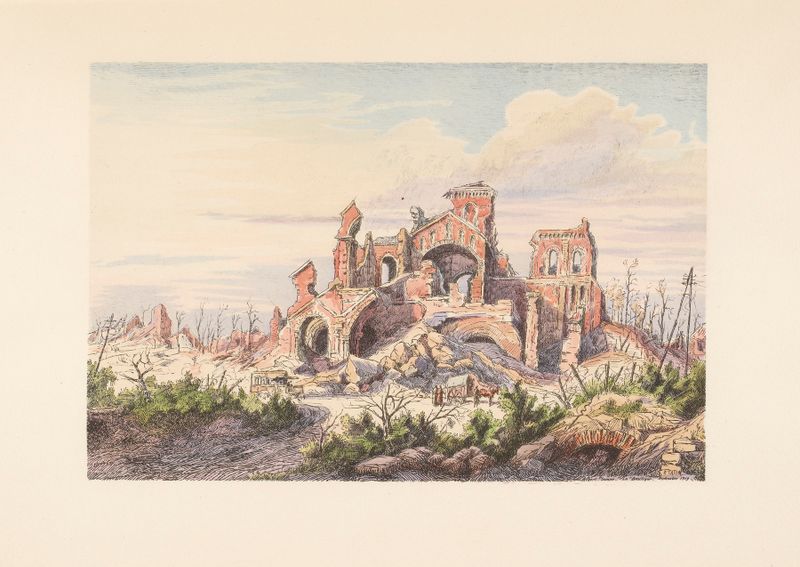
Albert – Les ruines de Notre-Dame de Brébières
E. Tatin

Verdun – Rue Saint-Paul
E. Tatin

Péronne – Place de l’Hotel-de-Ville
E. Tatin

Saint-Quentin – La Collégiale vue de la rue Saint-Andre
E. Tatin
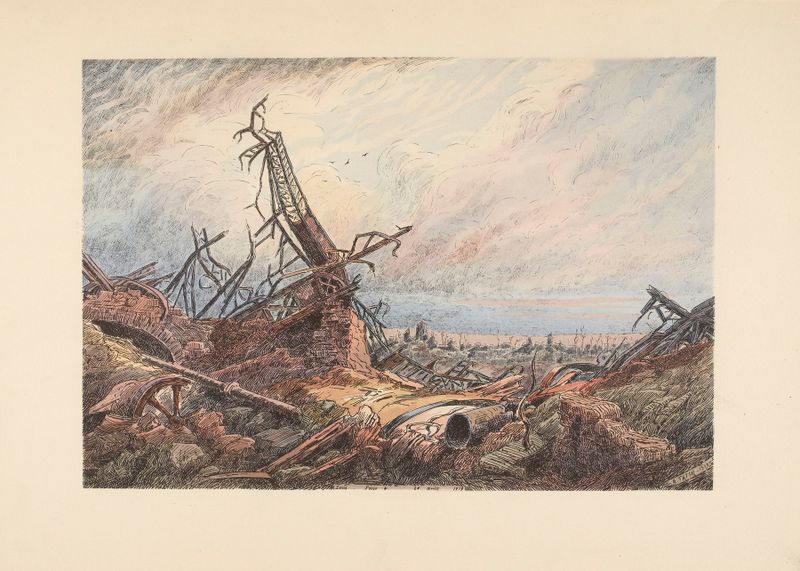
Lens – La fosse n°4
E. Tatin





