
Montdidier – Vue générale — History & Facts
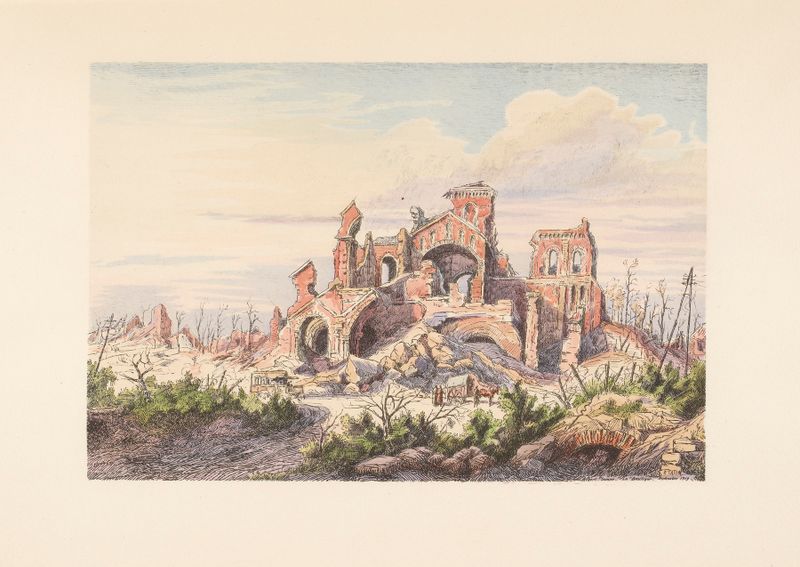
Innocence is a fragile thread spun through the fabric of life, yet it stands resilient, even amidst the tumult of modernity. In the hands of E. Tatin, this sentiment transforms into a visual journey, inviting us to explore the delicate balance between nature and human intervention. Look to the lower left corner where the sweeping lines of the landscape guide your gaze upward toward the horizon.
Notice how the soft greens and earthy browns intermingle, creating a rhythm that feels both harmonious and alive. The sky, a wash of blues and whites, serves as a serene backdrop, contrasting with the more vibrant earthly tones below. Tatin’s brushwork, a dance of thick and thin strokes, imbues the scene with a sense of movement, suggesting that life is ever-evolving, and perhaps, inexorably innocent. Delve deeper into the artwork, and you’ll uncover subtle contrasts that resonate with the viewer.
The foreground teems with intricate detail, reflecting the human touch on an otherwise untouched landscape, while the distant hills fade softly into abstraction. This juxtaposition of clarity and ambiguity invites contemplation about the impact of civilization on the natural world. The innocence of the scenery stands stark against the backdrop of a post-war society, echoing both hope and a longing for simplicity. In 1920, Tatin was navigating a world still reeling from the devastation of World War I.
He painted Montdidier – Vue générale in this context, capturing not only a physical landscape but also the emotional landscape of his time. It was an era where artists sought to reconnect with nature, exploring themes of peace, renewal, and the innocence that can often feel lost in the chaos of modern existence.
More Artworks by E. Tatin
Browse all →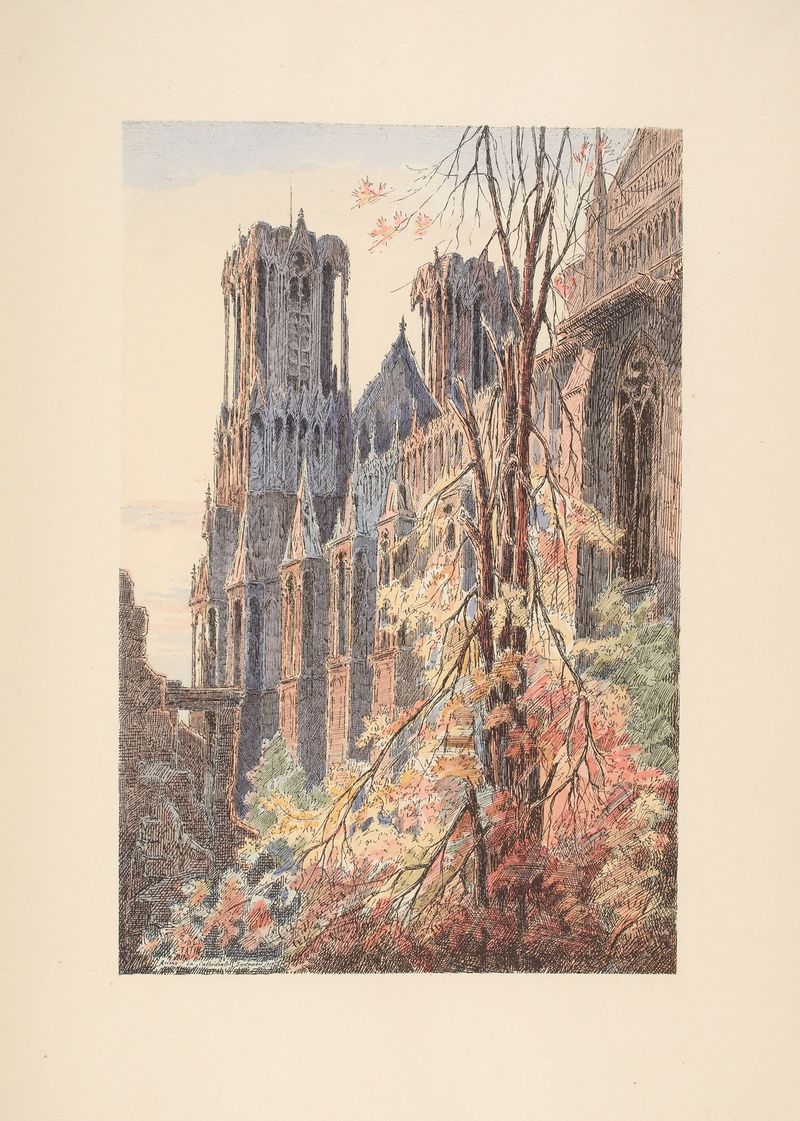
Reims – La cathédrale vue des ruines de l’archevèché
E. Tatin
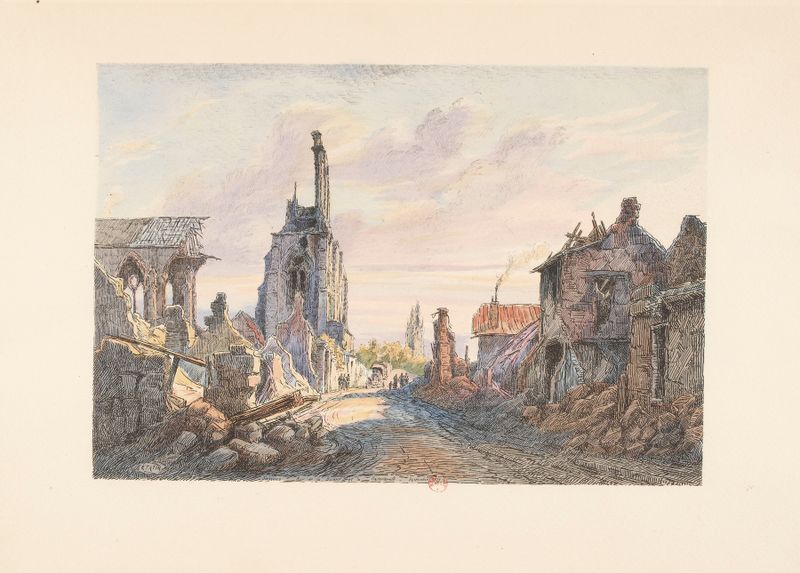
Soissons – La cathédrale et la rue de la Buerie
E. Tatin
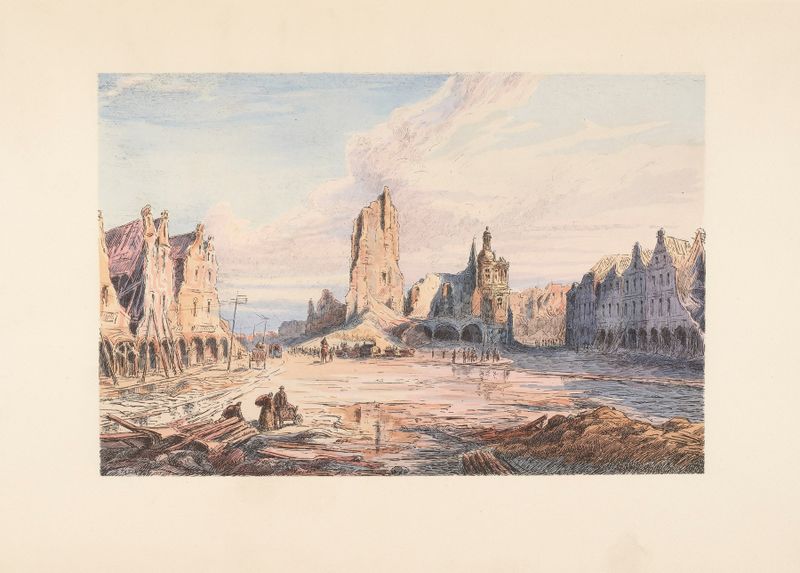
Arras – La petite place, l’hótel de ville et le beffroi
E. Tatin

Douai – La place du marché
E. Tatin
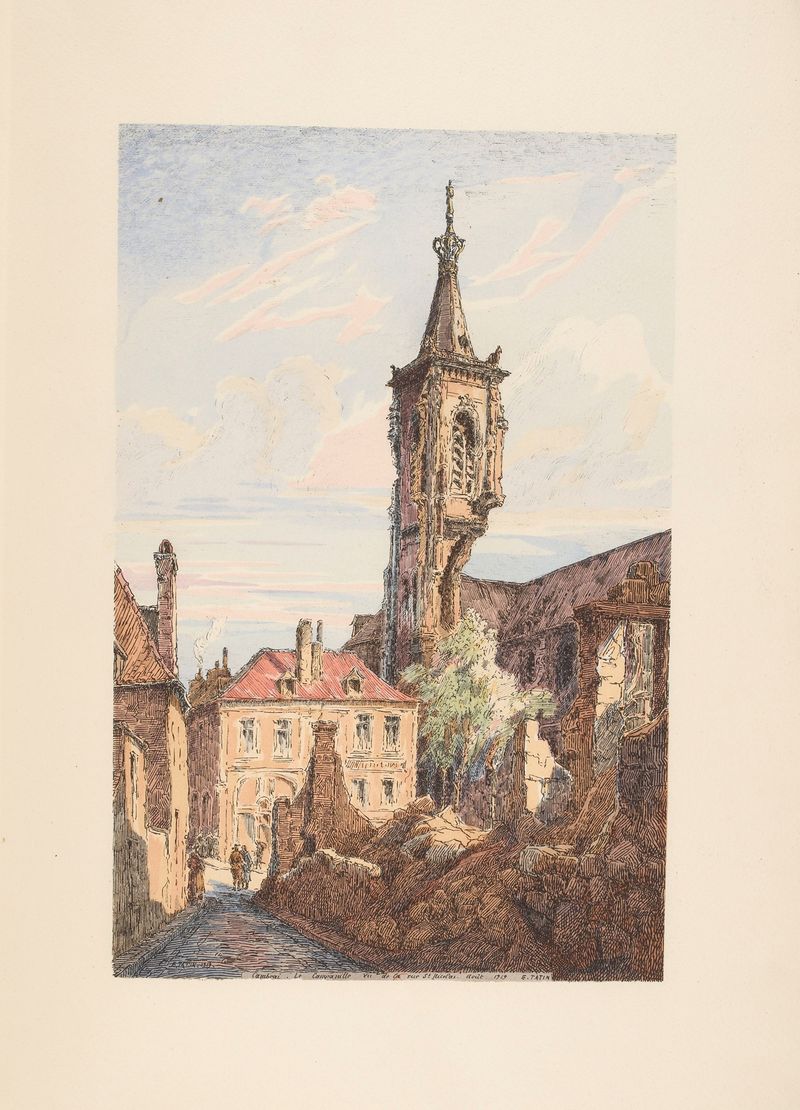
Cambrai – La cathédrale
E. Tatin
Albert – Les ruines de Notre-Dame de Brébières
E. Tatin

Verdun – Rue Saint-Paul
E. Tatin

Péronne – Place de l’Hotel-de-Ville
E. Tatin

Saint-Quentin – La Collégiale vue de la rue Saint-Andre
E. Tatin
Lens – La fosse n°4
E. Tatin





