
Soissons – La cathédrale et la rue de la Buerie — History & Facts
In a world that rushes forward, beauty often slips through our fingers like grains of sand. Here, in the stillness of E. Tatin's work, we find a moment suspended between memory and existence, inviting us to linger a little longer. Look closely at the left side of the canvas, where the towering spires of the cathedral pierce the sky, painted in delicate strokes that echo both reverence and nostalgia.
The cool tones of blue and gray interplay with warmer shades, casting a serene glow over the street below. Notice how the cobblestones, rendered with meticulous detail, guide your eye towards the gentle bustle of life that fills the foreground, creating a harmonious juxtaposition of stone and spirit. Within this scene lies a rich tapestry of contrasts. The imposing structure of the cathedral stands in stark relief against the lively figures that populate the street, embodying the tension between the permanence of architecture and the fleeting nature of human activity.
There’s a subtle interplay between light and shadow, suggesting the passage of time; the sun illuminates vibrant patches of color in the figures' clothing, hinting at moments of joy amidst the stillness of the grand edifice. Each detail tells a story, reflecting an enduring beauty that transcends the chaos of modern life. In 1920, E. Tatin painted this work amidst a post-war Europe grappling with change and reconstruction.
Living in France, he sought to capture the essence of his surroundings while reflecting a broader artistic movement that embraced realism infused with impressionist techniques. This period was marked by a deep yearning for stability, a desire to remember beauty in a time when memories were filled with shadows.
More Artworks by E. Tatin
Browse all →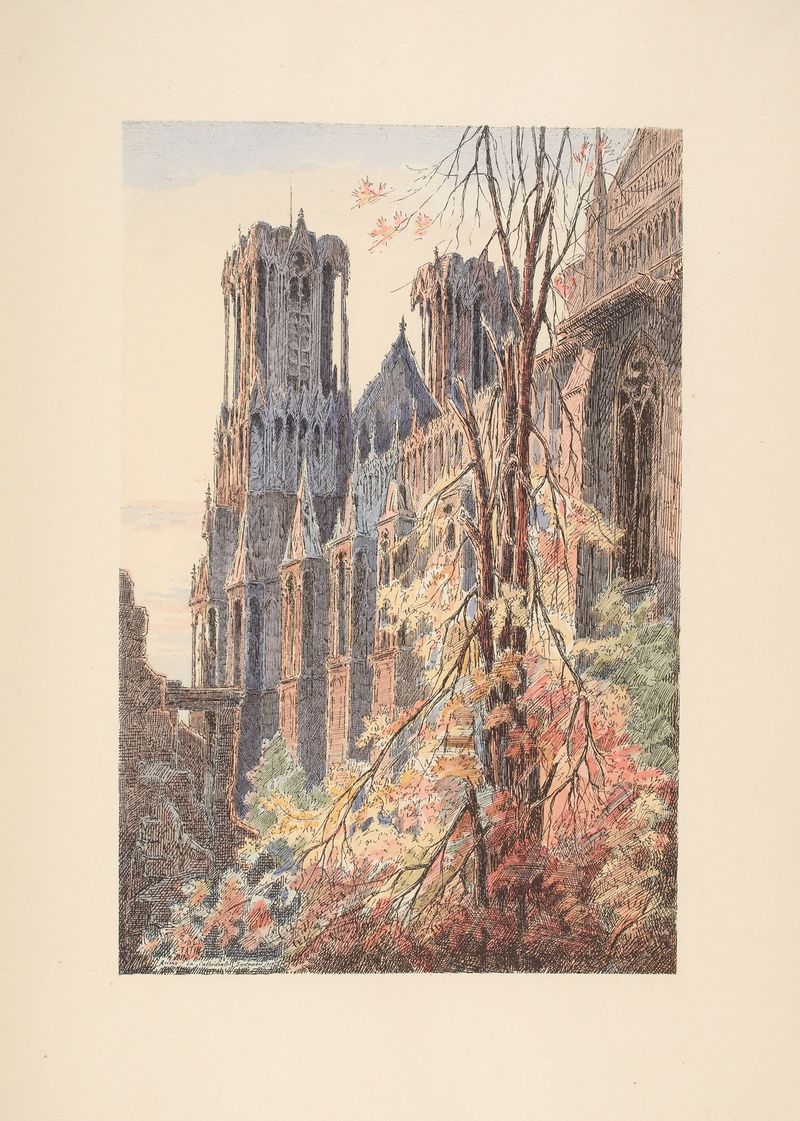
Reims – La cathédrale vue des ruines de l’archevèché
E. Tatin
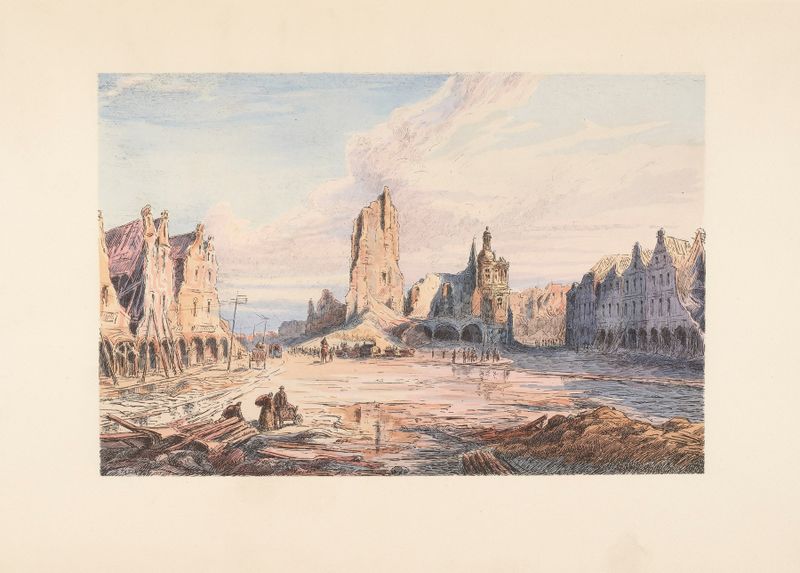
Arras – La petite place, l’hótel de ville et le beffroi
E. Tatin

Douai – La place du marché
E. Tatin
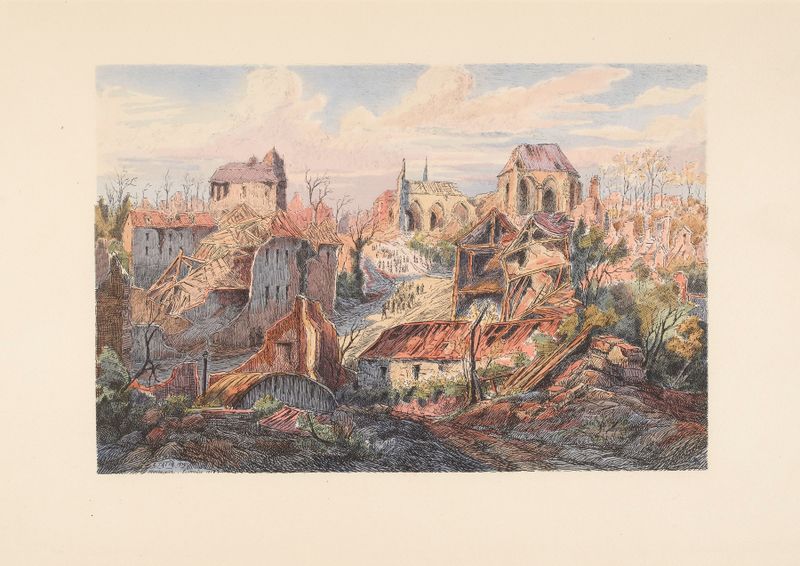
Montdidier – Vue générale
E. Tatin
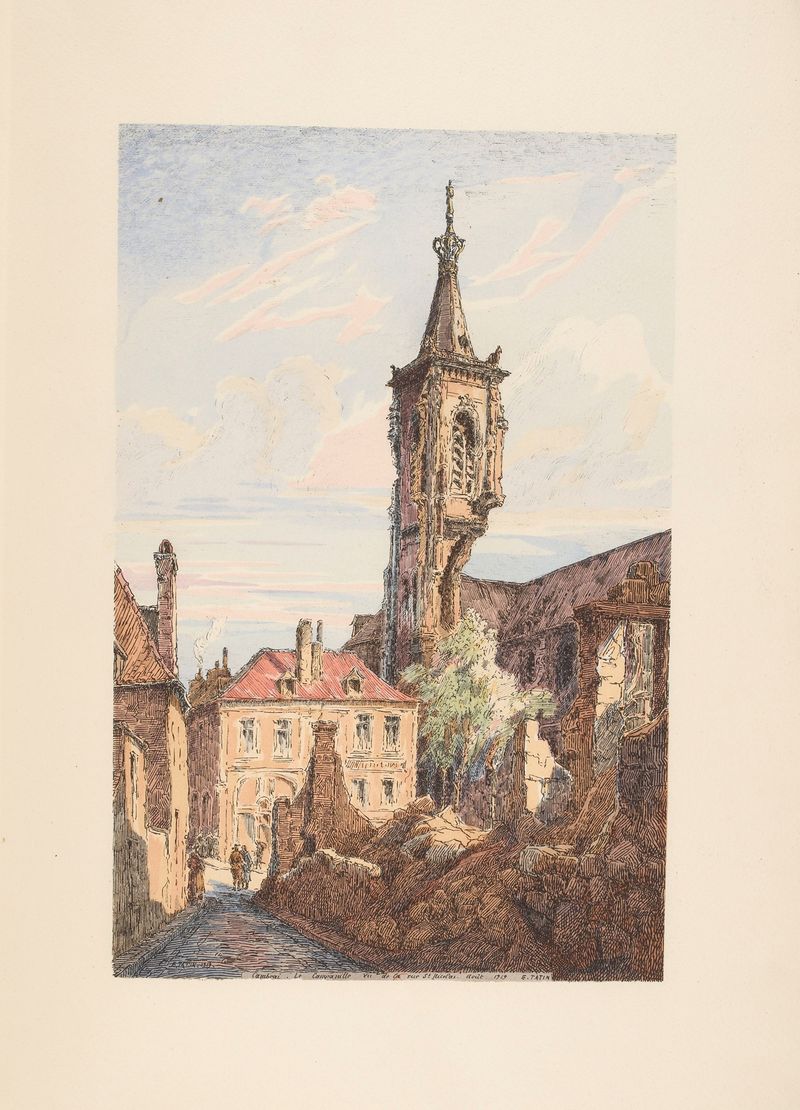
Cambrai – La cathédrale
E. Tatin
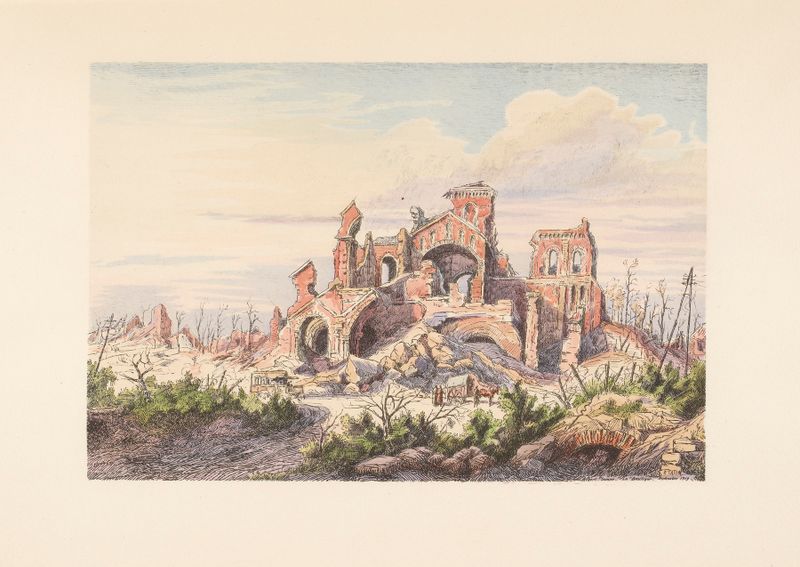
Albert – Les ruines de Notre-Dame de Brébières
E. Tatin

Verdun – Rue Saint-Paul
E. Tatin

Péronne – Place de l’Hotel-de-Ville
E. Tatin

Saint-Quentin – La Collégiale vue de la rue Saint-Andre
E. Tatin
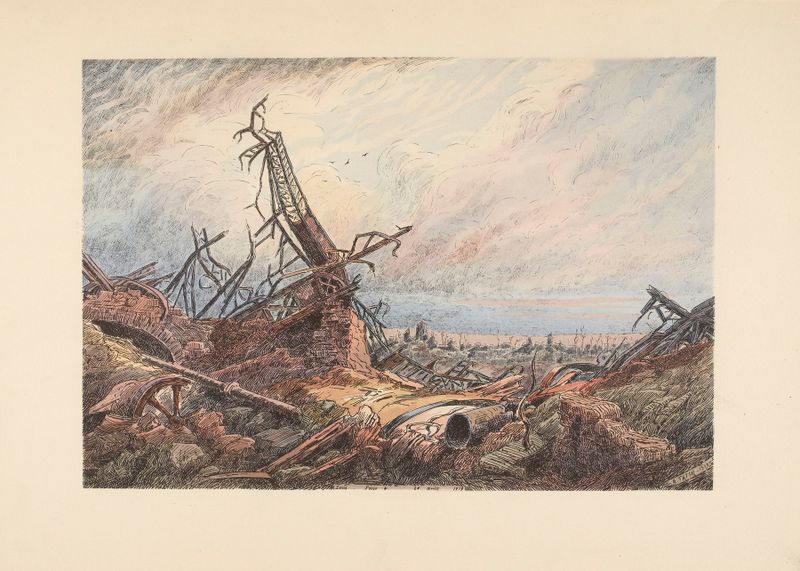
Lens – La fosse n°4
E. Tatin
More Architecture Art
Browse all →
The statue of Liberty
Frédéric Auguste Bartholdi

View of Houses in Delft, Known as ‘The Little Street’
Johannes Vermeer

View of Houses in Delft, Known as ‘The Little Street’
Johannes Vermeer

The Cathedral in Rouen. The portal, Grey Weather
Claude Monet

The yellow house
Vincent van Gogh

The Church in Auvers-sur-Oise, View from the Chevet
Vincent van Gogh