
Cambrai – La cathédrale — History & Facts
Can paint confess what words never could? In Cambrai – La cathédrale, E. Tatin encapsulates a profound legacy, where the stillness of stone speaks louder than the clamor of human existence. Look to the imposing façade of the cathedral, drenched in rich, earth-toned hues that evoke a sense of both majesty and solemnity. Notice how the warm light bathes the scene, casting gentle shadows that highlight the intricate carvings and weathered textures.
The composition draws the eye upward, inviting a contemplative gaze toward the soaring spires that seem to pierce the sky, connecting the earthly to the divine. Beneath this serene exterior lies a tension between permanence and impermanence. The cathedral, a testament to human endeavor, stands resilient against the passage of time, yet the crumbling details whisper of decay and forgotten stories. Each marked stone tells a tale of devotion, loss, and the relentless push toward legacy, reflecting a world where faith and history entwine.
The contrast between the vibrant façade and the shadows it casts speaks to the duality of beauty and fragility—an eternal dance between life and death. Created in 1920, Tatin's work emerged during a period of significant transition in art, marked by the aftermath of World War I. As the world grapples with the scars of conflict, artists sought new forms of expression, and Tatin was no exception. His focus on architectural subjects underscores a yearning for stability and continuity in a rapidly changing environment, while simultaneously paying homage to the grandeur of the past.
More Artworks by E. Tatin
Browse all →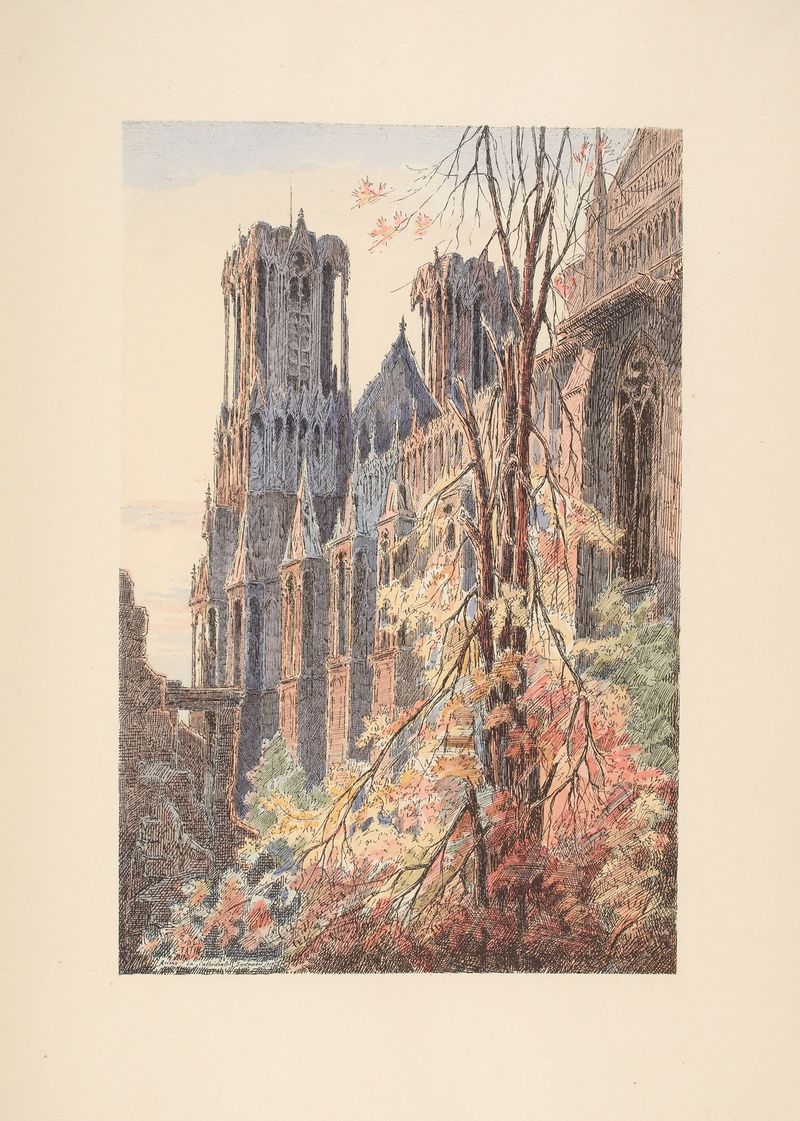
Reims – La cathédrale vue des ruines de l’archevèché
E. Tatin
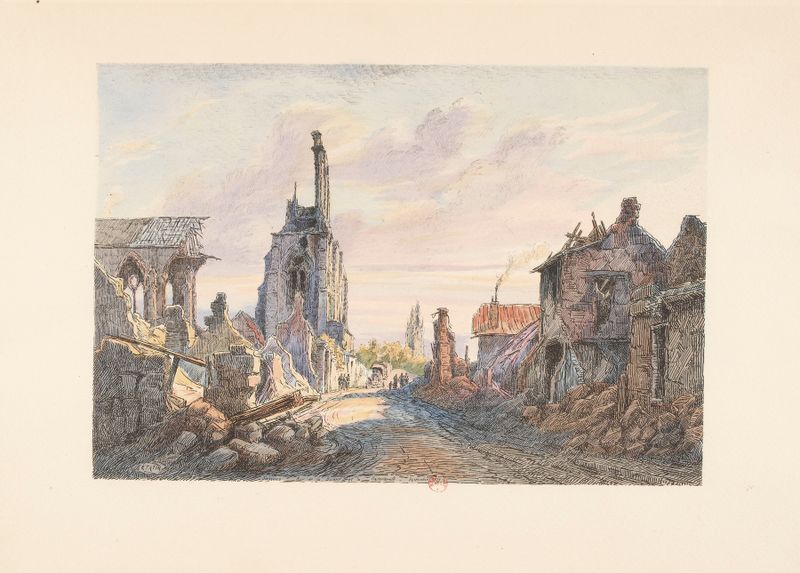
Soissons – La cathédrale et la rue de la Buerie
E. Tatin
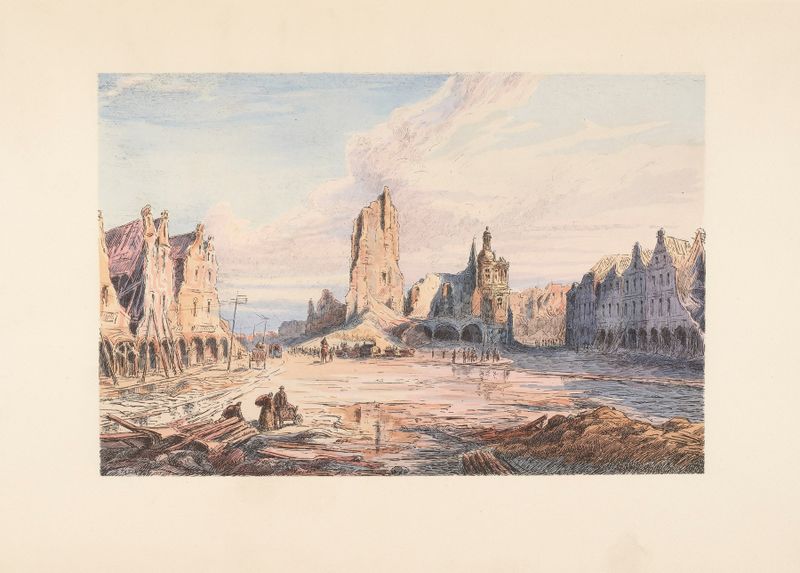
Arras – La petite place, l’hótel de ville et le beffroi
E. Tatin

Douai – La place du marché
E. Tatin
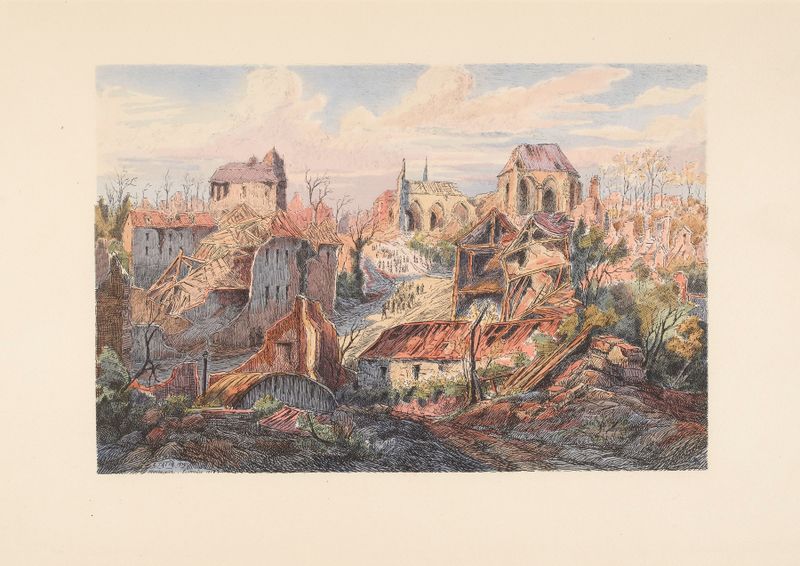
Montdidier – Vue générale
E. Tatin
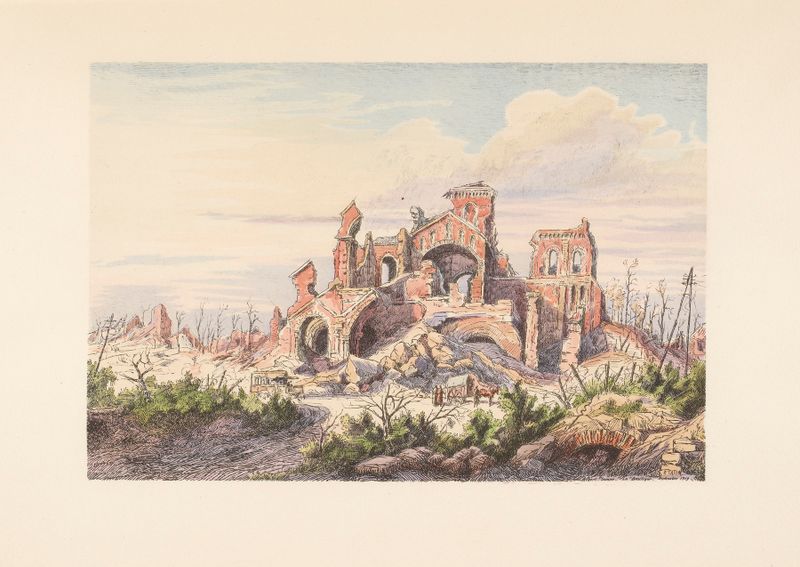
Albert – Les ruines de Notre-Dame de Brébières
E. Tatin

Verdun – Rue Saint-Paul
E. Tatin

Péronne – Place de l’Hotel-de-Ville
E. Tatin

Saint-Quentin – La Collégiale vue de la rue Saint-Andre
E. Tatin
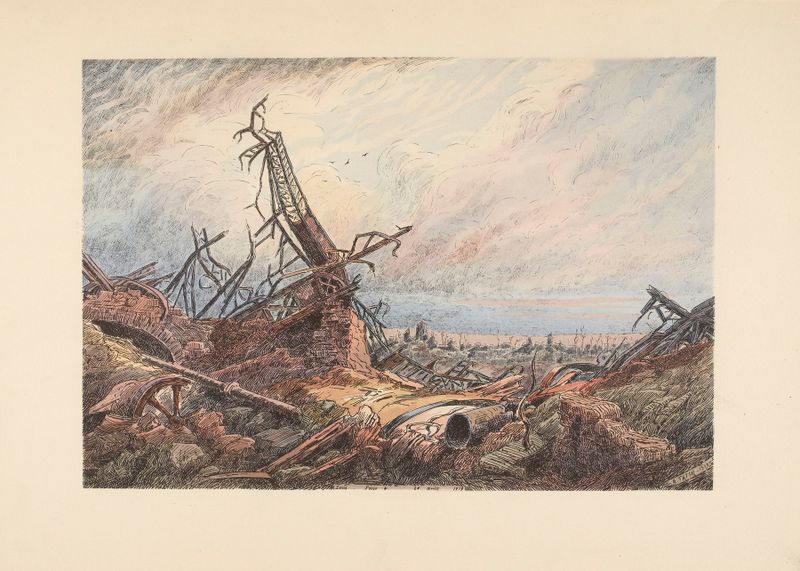
Lens – La fosse n°4
E. Tatin
More Architecture Art
Browse all →
The statue of Liberty
Frédéric Auguste Bartholdi

View of Houses in Delft, Known as ‘The Little Street’
Johannes Vermeer

View of Houses in Delft, Known as ‘The Little Street’
Johannes Vermeer

The Cathedral in Rouen. The portal, Grey Weather
Claude Monet

The yellow house
Vincent van Gogh

The Church in Auvers-sur-Oise, View from the Chevet
Vincent van Gogh