
Saint-Quentin – La Collégiale vue de la rue Saint-Andre — History & Facts
Who listens when art speaks of silence? In the stillness of Saint-Quentin – La Collégiale vue de la rue Saint-Andre, the viewer is drawn into a world that echoes with an unspeakable ecstasy, with each architectural detail whispering stories of devotion and time. Look to the center, where the grand façade of the Collégiale emerges from the cool shadows of the street. Notice how the intricate carvings and soaring towers are bathed in soft, golden light, casting gentle reflections on the cobblestone path. The deep blues and warm earth tones create a harmonious tension, inviting your eye to traverse the contrast between solidity and ethereality.
The balance of light and shadow in this composition evokes a sense of both reverence and intimacy, as if the building itself is a silent guardian of the memories it holds. Beneath the surface, there lies a juxtaposition of solitude and community. The empty street hints at a moment frozen in time, yet the presence of the church suggests a gathering of souls that has long since faded. The textured walls speak of resilience against the wear of centuries, while the gentle archways beckon toward both exit and entry, symbolizing the passage between earthly life and spiritual transcendence.
This duality invites the viewer to reflect on their own relationship with the sacred and the mundane. In 1920, E. Tatin crafted this piece during a period marked by post-war introspection in France. Straddling the line between Impressionism and Modernism, the artist sought to capture the essence of place and memory as the nation sought to rebuild itself.
His depiction of the Collégiale at a moment of serene solitude speaks to a collective yearning for peace amidst the discord of a changing world, revealing the profound power of stillness in the face of tumult.
More Artworks by E. Tatin
Browse all →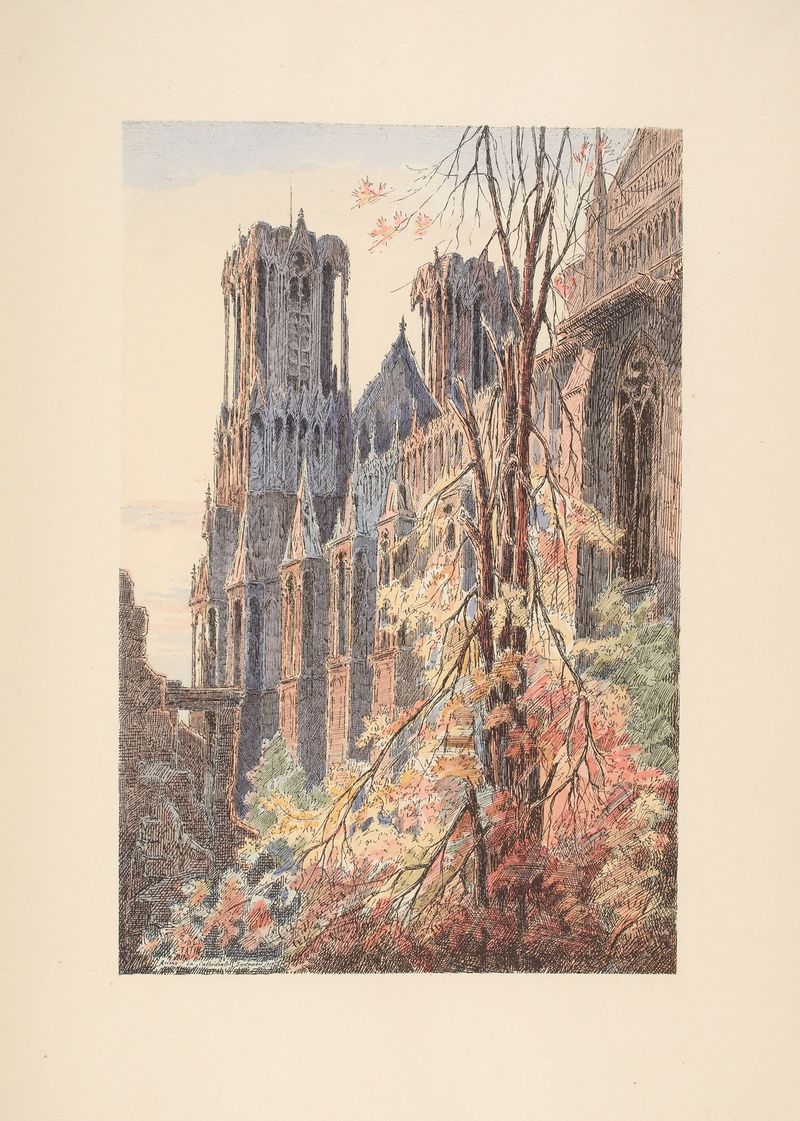
Reims – La cathédrale vue des ruines de l’archevèché
E. Tatin
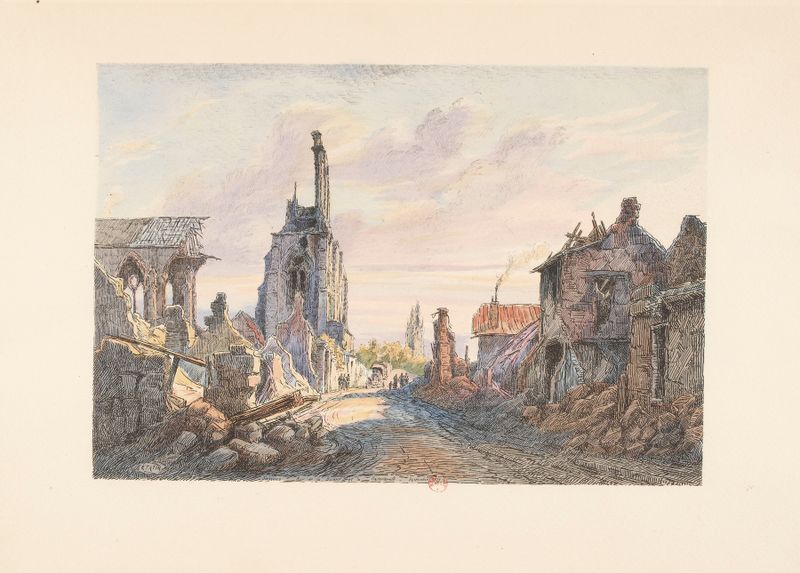
Soissons – La cathédrale et la rue de la Buerie
E. Tatin
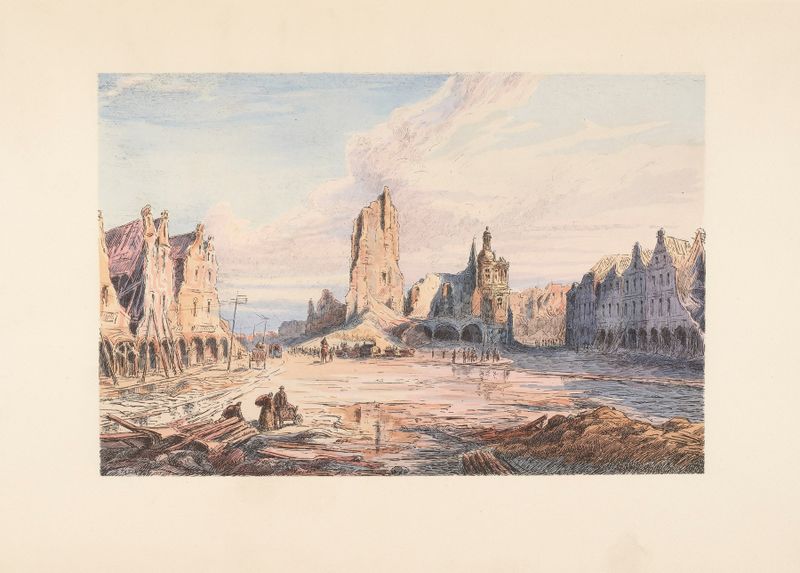
Arras – La petite place, l’hótel de ville et le beffroi
E. Tatin

Douai – La place du marché
E. Tatin
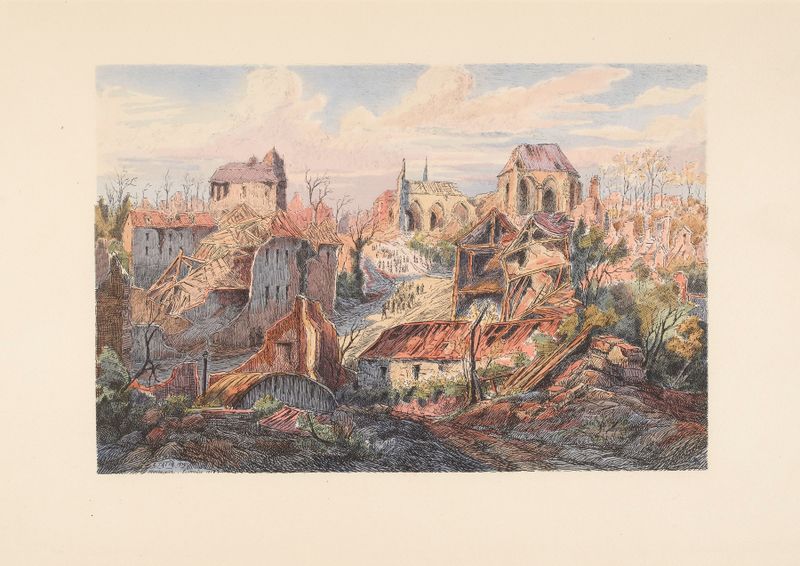
Montdidier – Vue générale
E. Tatin
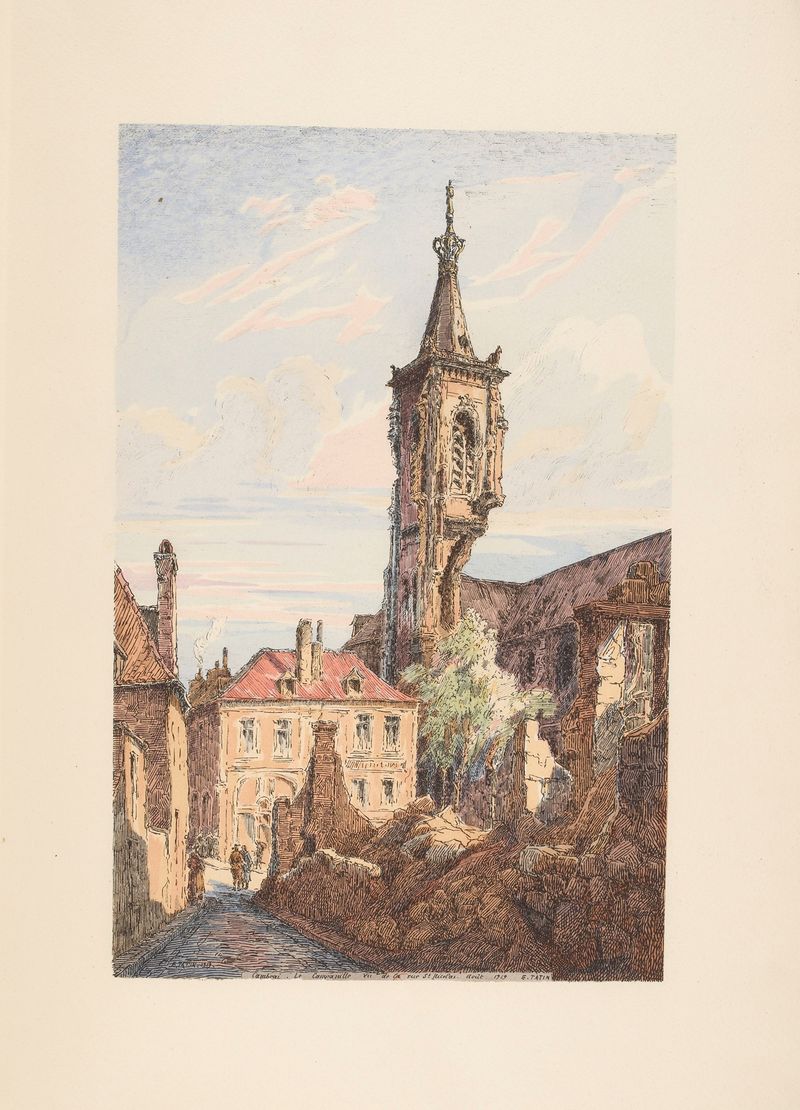
Cambrai – La cathédrale
E. Tatin
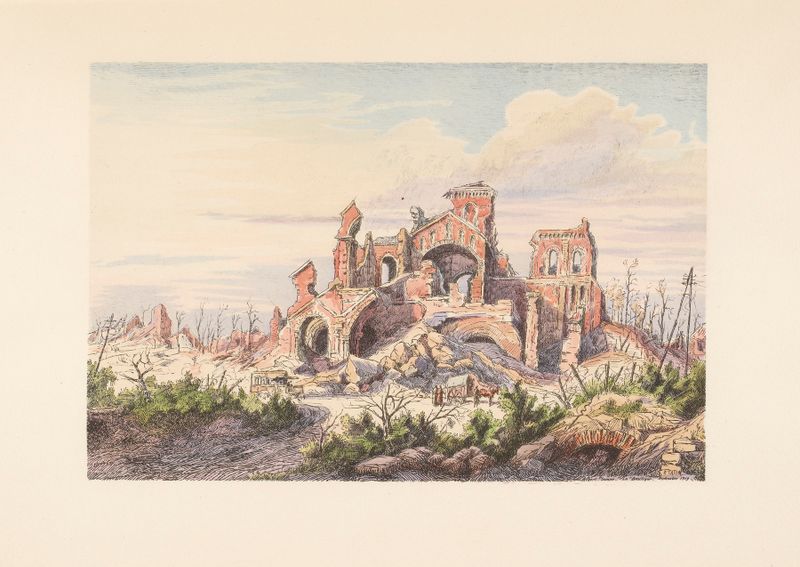
Albert – Les ruines de Notre-Dame de Brébières
E. Tatin

Verdun – Rue Saint-Paul
E. Tatin

Péronne – Place de l’Hotel-de-Ville
E. Tatin
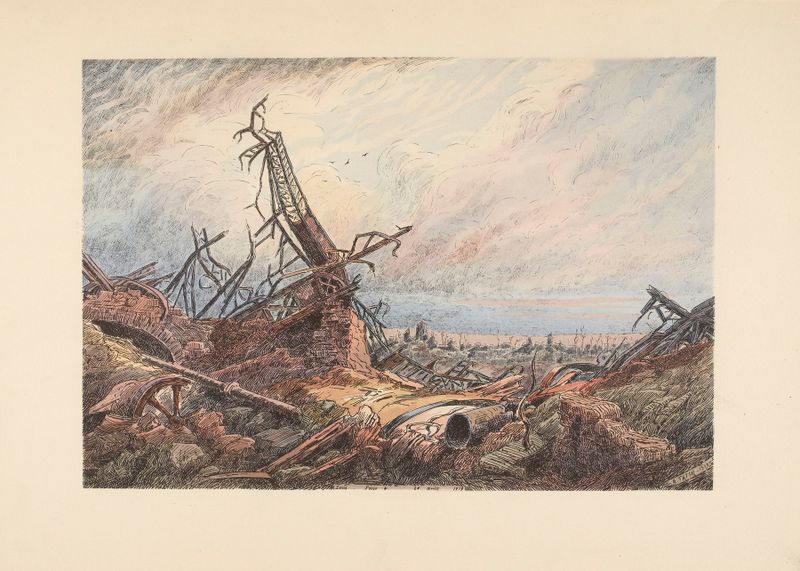
Lens – La fosse n°4
E. Tatin
More Architecture Art
Browse all →
The statue of Liberty
Frédéric Auguste Bartholdi

View of Houses in Delft, Known as ‘The Little Street’
Johannes Vermeer

View of Houses in Delft, Known as ‘The Little Street’
Johannes Vermeer

The Cathedral in Rouen. The portal, Grey Weather
Claude Monet

The yellow house
Vincent van Gogh

The Church in Auvers-sur-Oise, View from the Chevet
Vincent van Gogh