Alea jacta — History & Facts
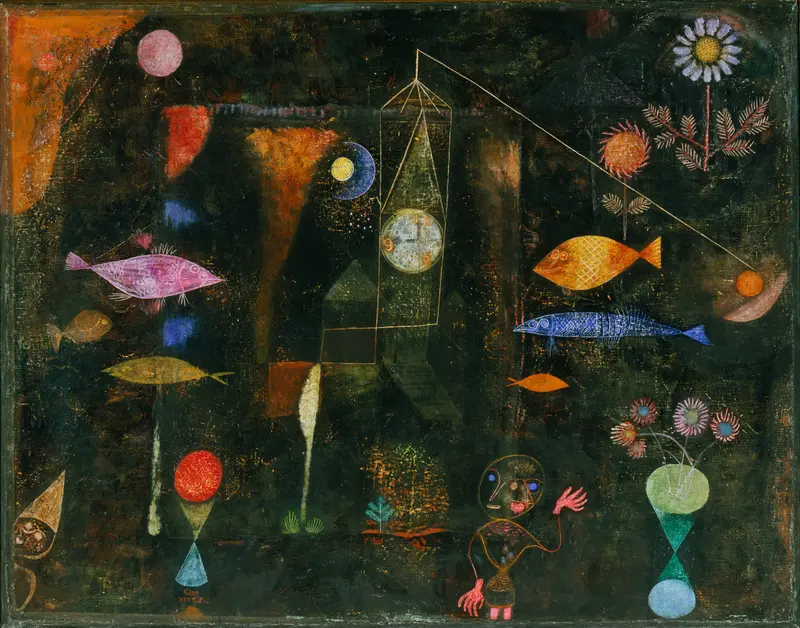
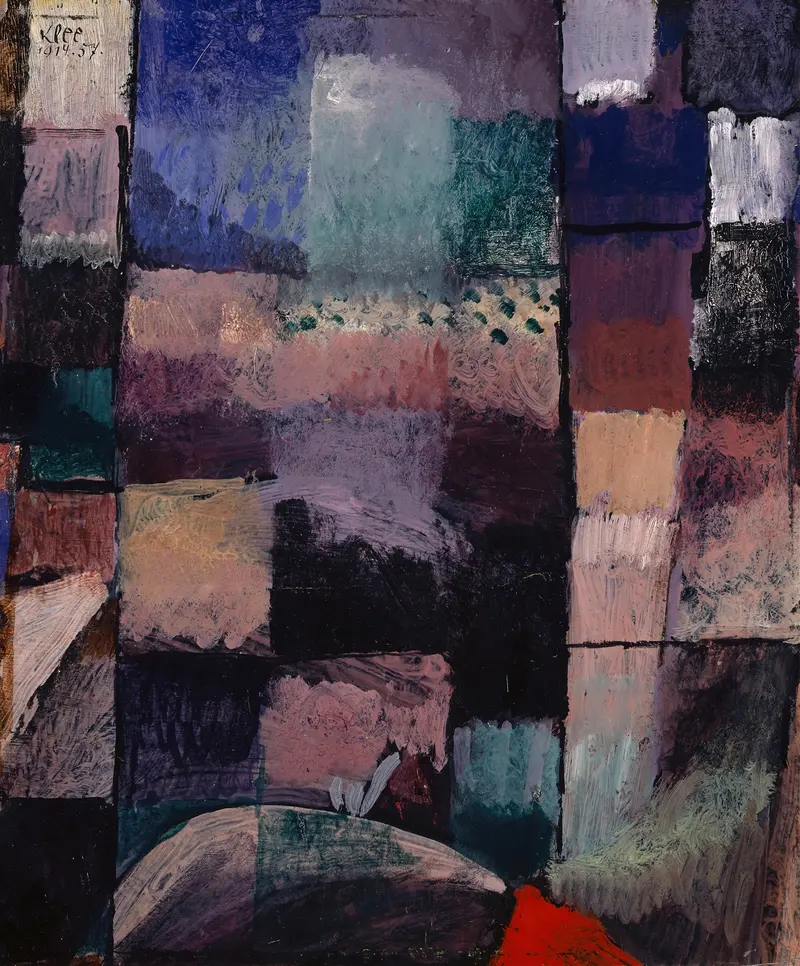
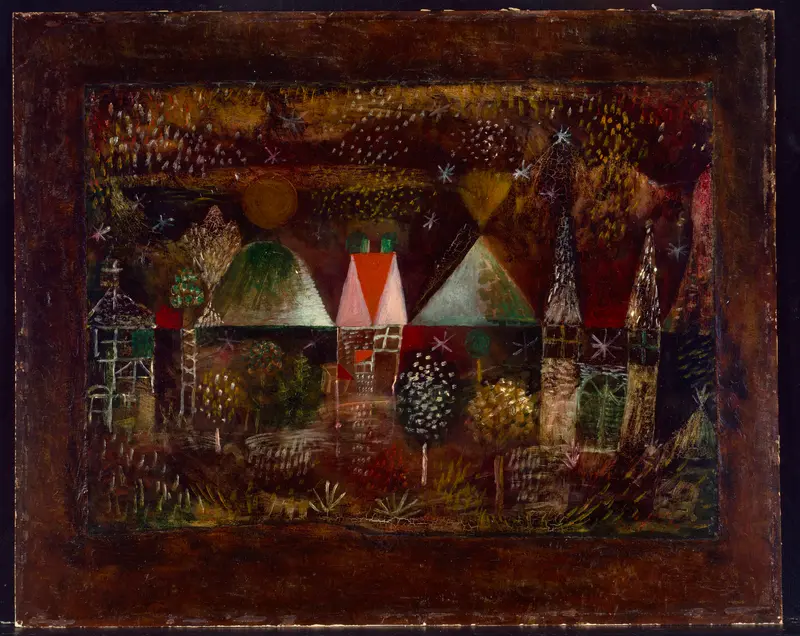
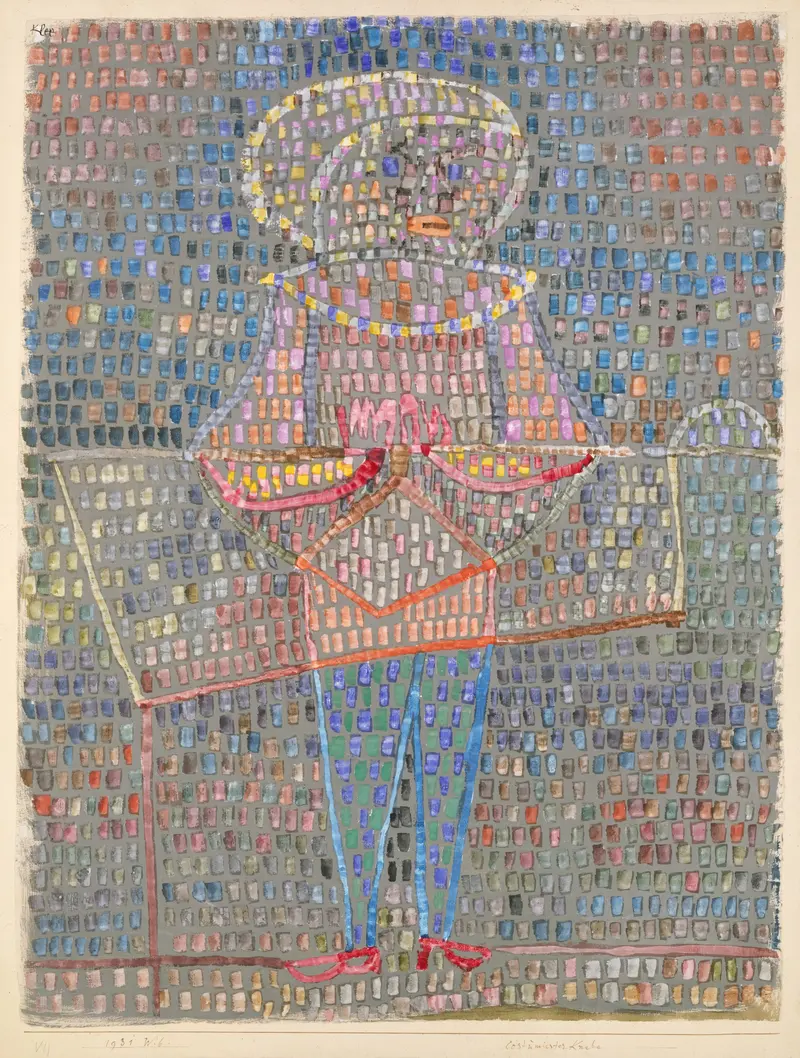
In Alea jacta, vibrant colors dominate the canvas, with swirling forms and geometric shapes intermingling. The composition is lively and dynamic, suggesting movement and energy. Klee employs a palette of reds, blues, and yellows, creating a visual rhythm that captivates the viewer.
The abstract nature of the work invites multiple interpretations and emotional responses. The painting is characterized by its use of oil on canvas, a medium that allows for rich textures and layered colors. Klee's technique involves bold brushstrokes and a playful approach to form, which is typical of his style. The dimensions are approximately 60 x 80 cm, making it a medium-sized work that can be appreciated up close.
The interplay of colors and shapes creates a sense of depth and complexity. Paul Klee, a Swiss artist, was a key figure in the development of modern art, blending elements of expressionism and abstraction. Alea jacta, which translates to 'The Die is Cast,' reflects Klee's interest in chance and spontaneity in art. An interesting fact about this work is that it was created during a period when Klee was exploring the relationship between color and emotion.
This painting exemplifies his innovative approach to visual language.