Alger Mareh — History & Facts
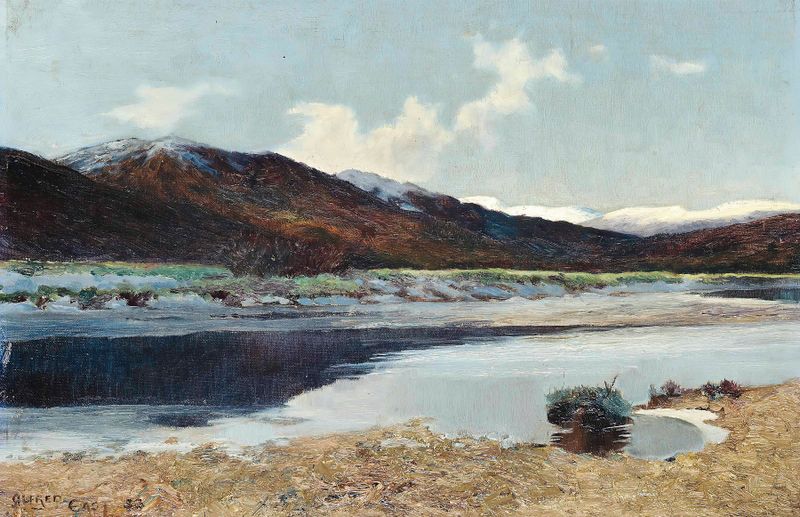
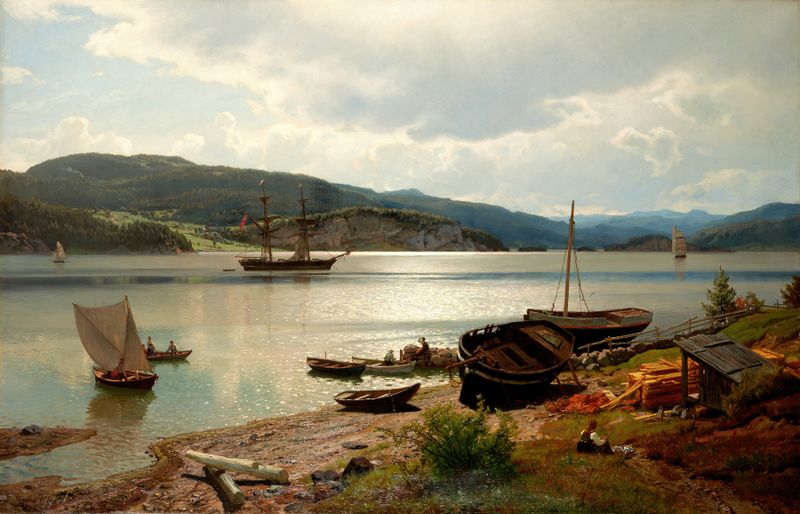
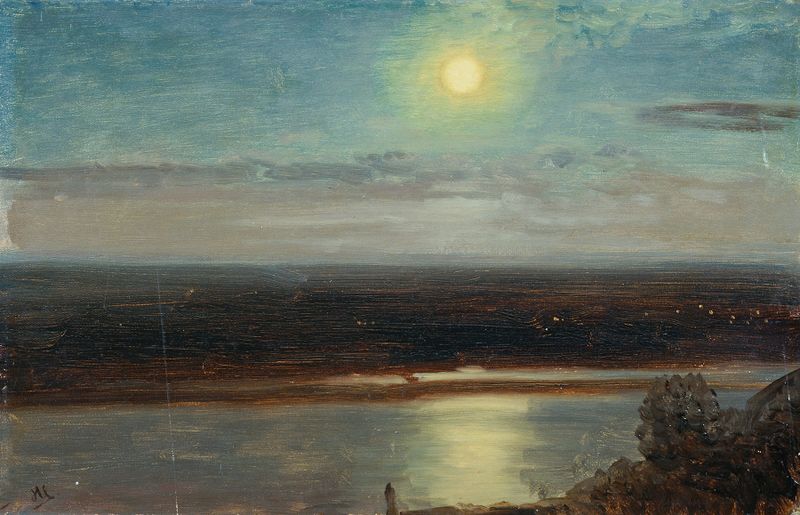
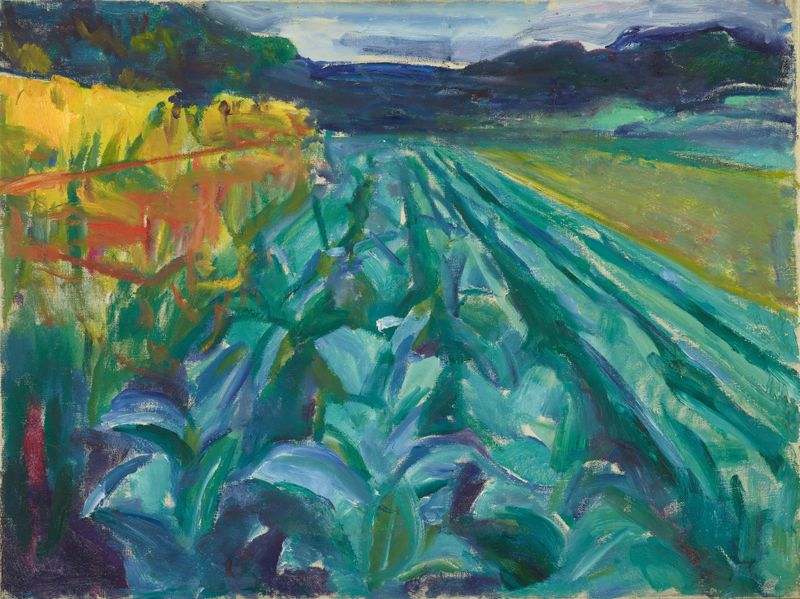
In the midst of chaos, there lies an exquisite order that captivates the heart and mind. Look closely at Alger Mareh, where the vibrant blues and greens swirl and interweave, creating a visual symphony. Notice how the light dances across the surface of the water, reflecting the warmth of the sun while hinting at the cool shadows beneath. The textured brushstroke invites your eye to traverse the canvas, revealing both the serenity of the scene and the underlying turmoil of nature in motion. As you observe the interplay between the figures and the landscape, consider the emotional tensions that Bridgman captured.
The chaos of the waves, rendered with energetic strokes, stands in contrast to the calmness of the distant shores. The juxtaposition of the human form against the vastness of the sea evokes a sense of vulnerability amidst nature’s grandeur. Each detail, from the delicate foam to the rugged cliffs, underscores an inherent conflict — the struggle between man's fleeting presence and the eternal power of the elements. Frederick Arthur Bridgman created this work in 1886 while living in Paris, where he was influenced by the vibrant art scene of the time.
He was deeply engaged with themes of exoticism and the allure of distant lands, drawing inspiration from his travels in North Africa. The painting reflects not only his personal experiences but also the broader fascination with capturing the raw beauty of the natural world during a period marked by exploration and discovery.
More Artworks by Frederick Arthur Bridgman
Browse all →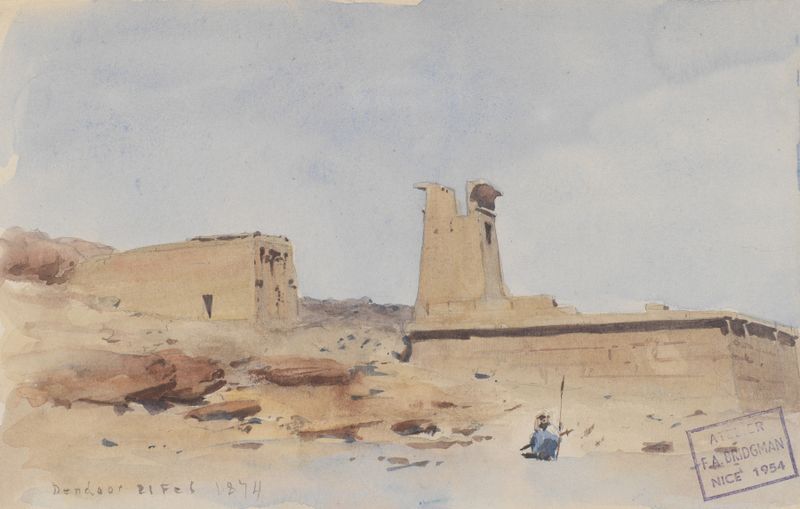
The Temple of Dendur, Showing the Pylon and Terrace
Frederick Arthur Bridgman
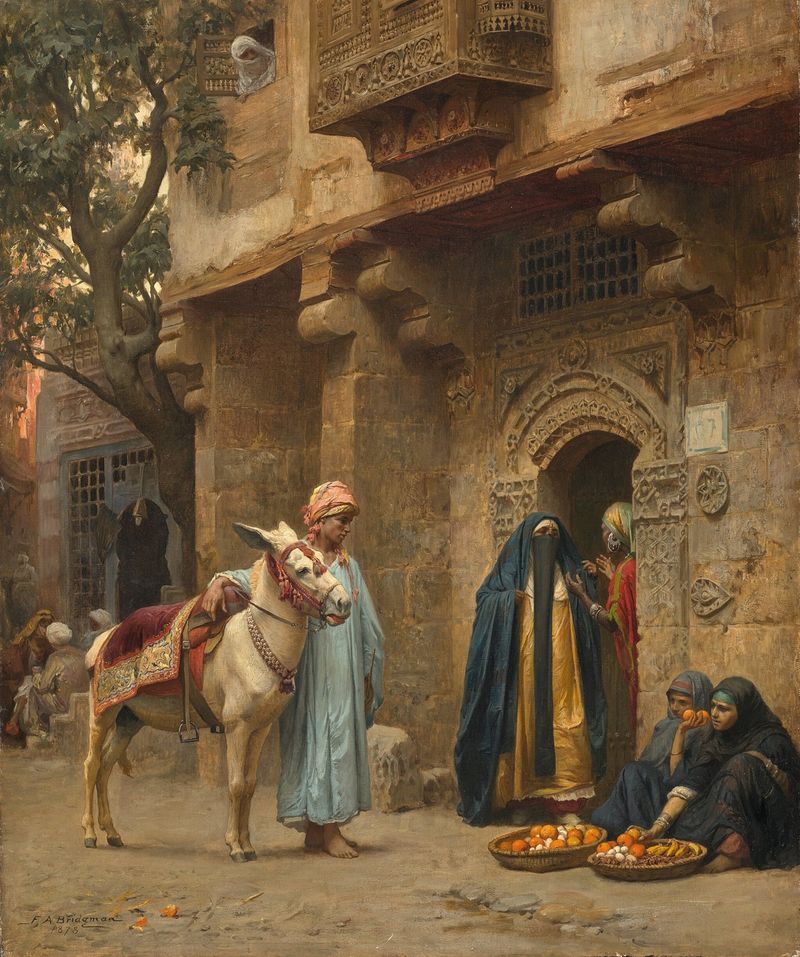
A Cairo Street
Frederick Arthur Bridgman
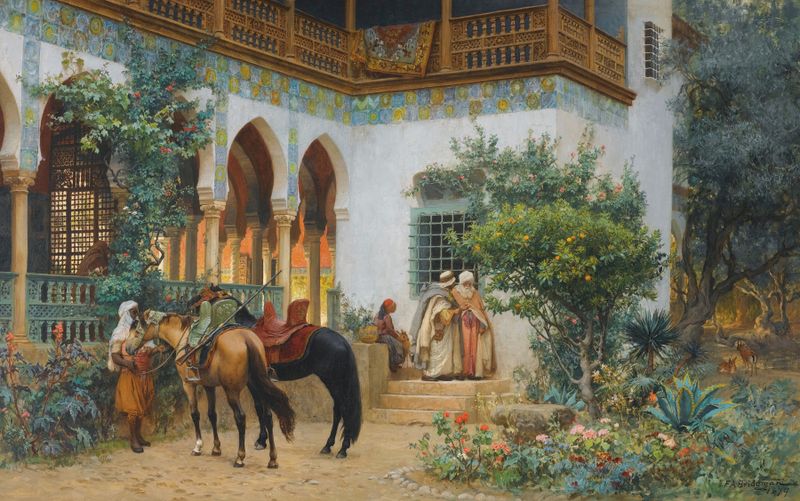
A North African Courtyard
Frederick Arthur Bridgman
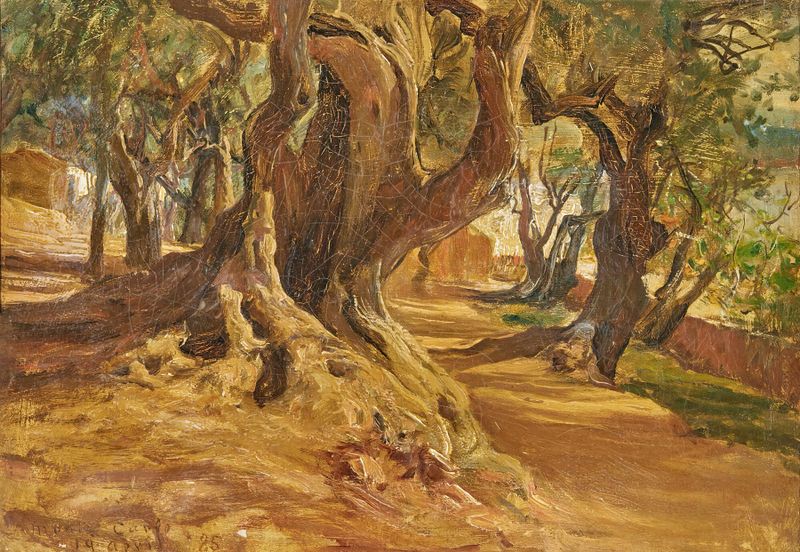
Tree Trunk
Frederick Arthur Bridgman
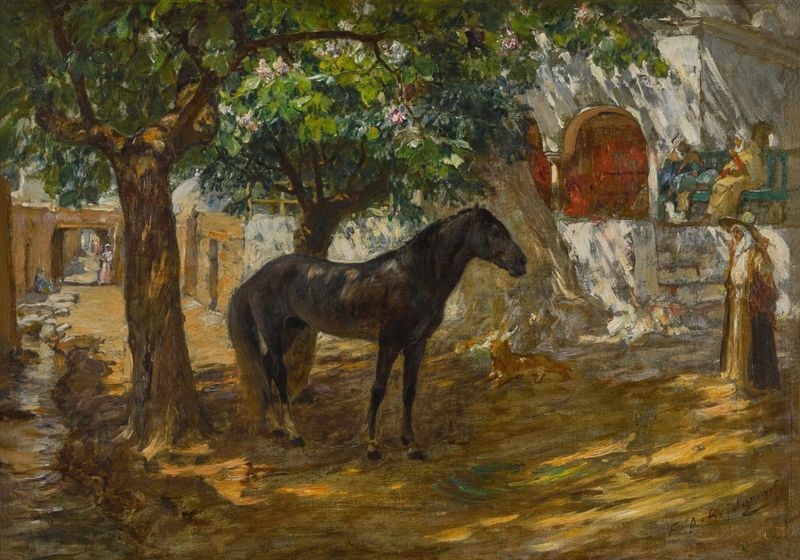
Village in the Sahara
Frederick Arthur Bridgman
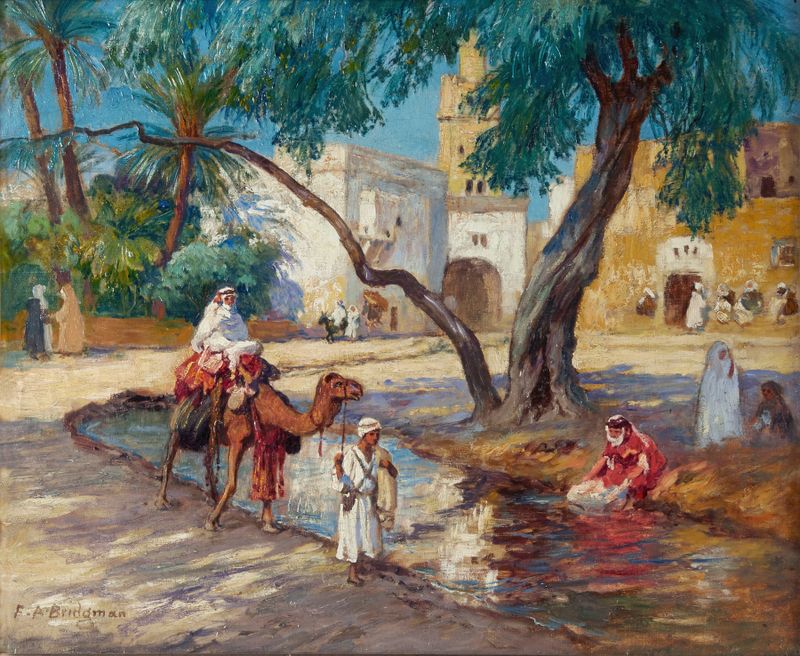
A view of an Algerian village
Frederick Arthur Bridgman
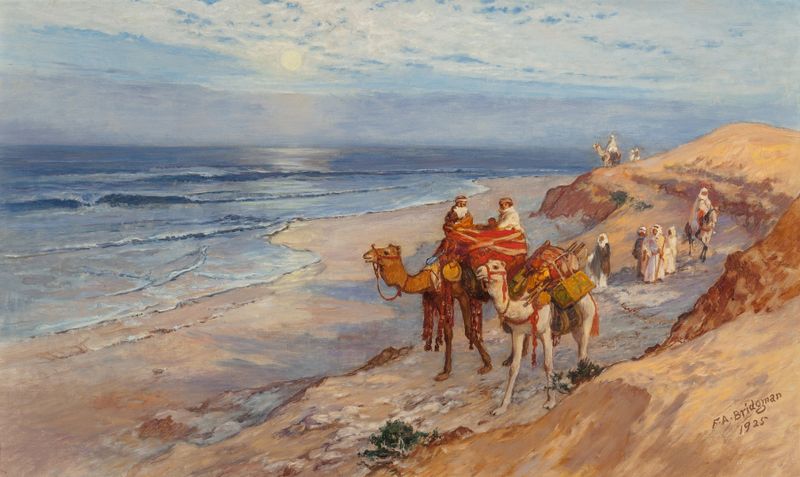
Sur la côte de Tanger l’Atlantique
Frederick Arthur Bridgman
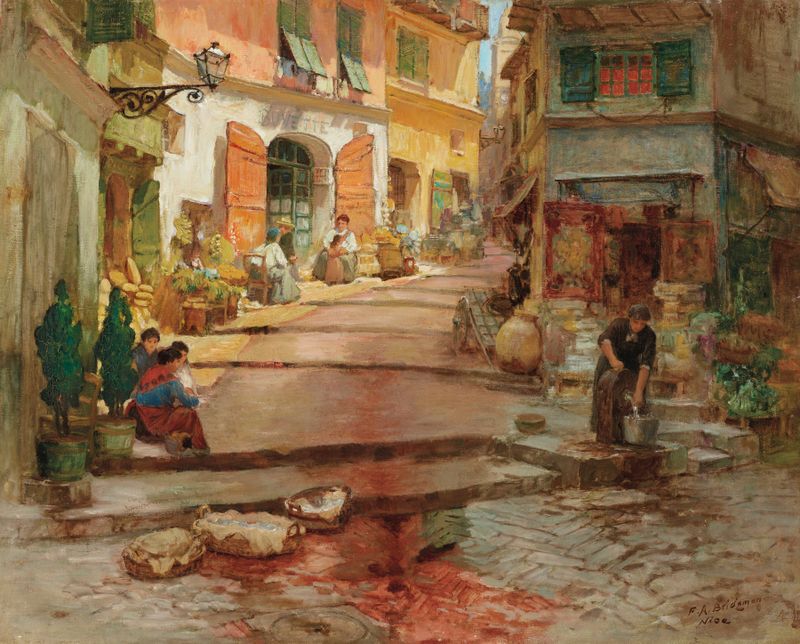
Rue Droite, dans le vieux Nice
Frederick Arthur Bridgman
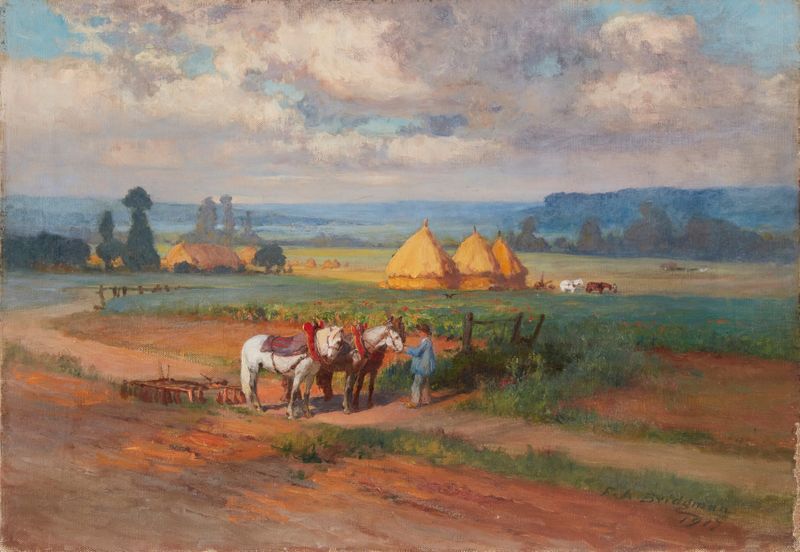
En Normandie
Frederick Arthur Bridgman
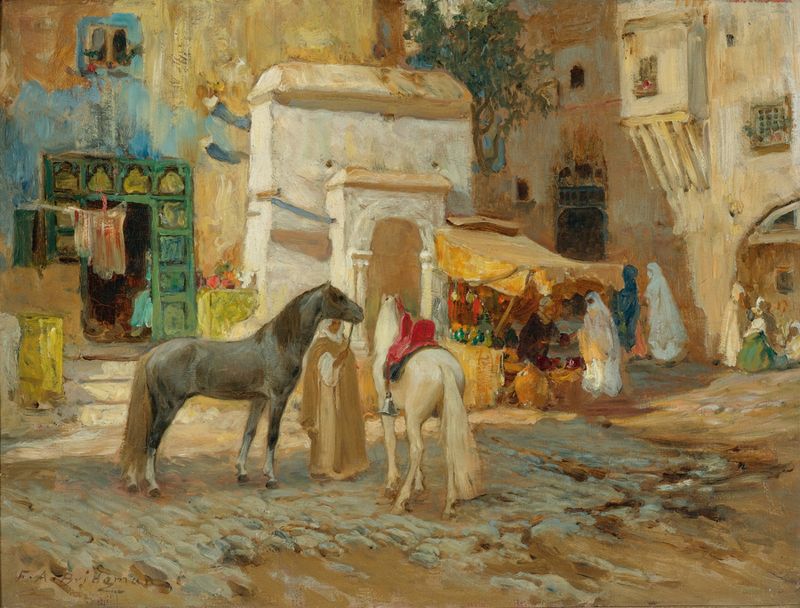
The Market Square
Frederick Arthur Bridgman