
Die Donau mit dem Marchfeld bei Nacht — History & Facts
Did the painter know this moment would outlive them? In the stillness of night, the landscape breathes a quiet melancholy, whispering secrets of time and memory across the canvas. Look to the foreground where the glimmering river flows lazily under a cloak of darkness. The cool hues of blue and indigo blend seamlessly with softer, muted shades, guiding your eyes towards the shimmering reflections on the water's surface. Notice how the delicate brushstrokes create a rhythmic dance of light and shadow, expertly capturing the intangible essence of nightfall.
The horizon is painted with a touch of ethereal warmth, hinting at the distant presence of life beyond the edges of this serene scene. As you delve deeper, discover the tension between tranquility and longing within the painting. The quiet river, a symbol of continuity, contrasts with the vastness of the night sky, evoking a sense of solitude and introspection. Shadows loom large, suggesting unseen narratives, while the faint glow on the water hints at the flickering memories of what once was.
This interplay of light and dark invites reflection, urging the viewer to ponder their own connections to the landscape and to time itself. In 1870, Anton Hlavacek painted this work during a period marked by an evolving sense of identity within the Austrian art scene. Emerging from the constraints of romanticism, artists like Hlavacek began to explore more intimate and personal expressions. His portrayal of the Danube at night reflects not only a commitment to natural beauty but also an exploration of deeper emotional landscapes, mirroring the uncertainties of a changing era.
More Artworks by Anton Hlavacek
Browse all →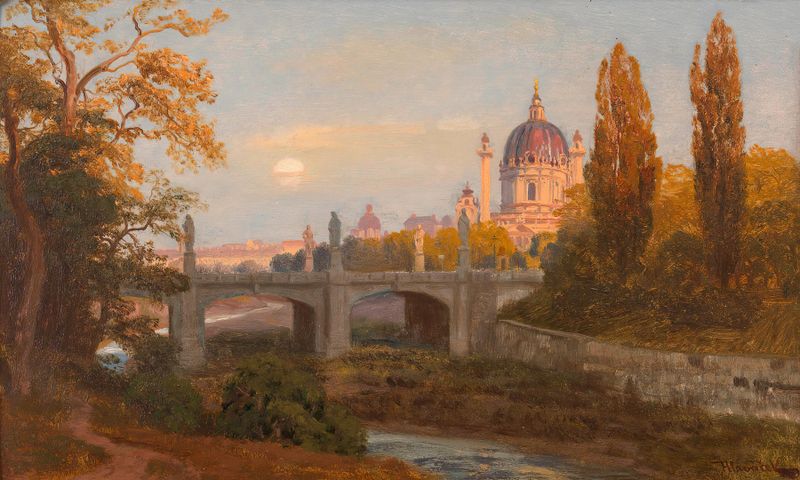
Blick vom Wienfluss gegen Elisabethbrücke und Karlskirche
Anton Hlavacek

A View of Vienna from the Nussberg
Anton Hlavacek

Blick über Pötzleinsdorf auf Wien von der Julienhöhe aus
Anton Hlavacek

Blick auf den Kahlenberg vom Cobenzl aus
Anton Hlavacek

Scene of the Prein near Reichenau
Anton Hlavacek

Der Schneeberg bei Gutenstein
Anton Hlavacek
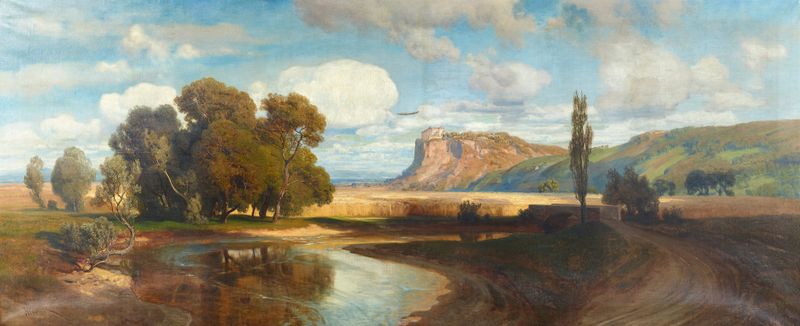
Burg Devín (Theben) an der Donau
Anton Hlavacek

Grinzing vom Hungerberg aus
Anton Hlavacek
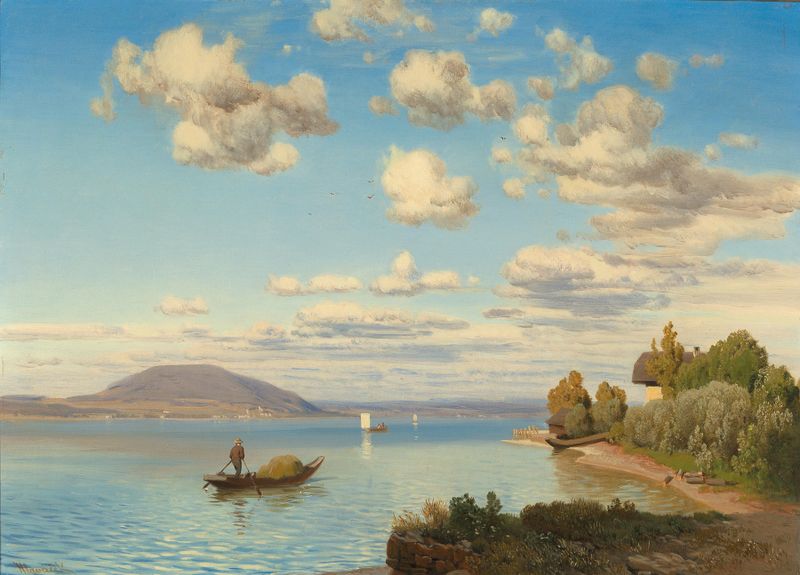
A Scene on Lake Attersee
Anton Hlavacek

Die Kaiserstadt an der Donau – Wien vom Nußberg
Anton Hlavacek





