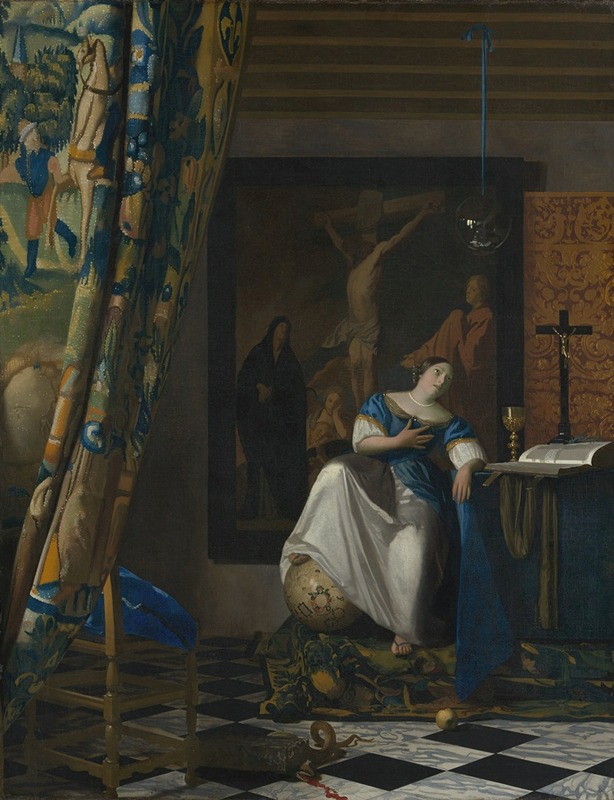
Allegorie met Kracht (Fortitudo) en Vrede (Pax) — History & Facts
In the realm of destiny, the brush dances, capturing fleeting moments that resonate through eternity. Look to the right at the imposing figure of Fortitudo, her strong posture and flowing drapery exuding a palpable sense of strength. Notice how the light caresses her muscular form, emphasizing the contours and creating a dynamic tension against the softer, tranquil presence of Pax to the left. Their juxtaposition, vibrant yet balance-driven, invites a meditation on the dualities of human existence—power and peace, conflict and resolution.
The palette is rich with warm earth tones and gentle pastels, drawing the eye through a harmonious blend of action and serenity. Consider the small details: the delicate expressions on their faces, a subtle reflection of their roles in our souls. Fortitudo’s gaze is fierce and unwavering, a testament to resilience, while Pax's soft smile speaks to the hope inherent in stillness. The contrasting textures—the roughness of Fortitudo’s armor against the softness of Pax’s flowing robes—emphasize the tension between the forces they represent.
Together, they embody the balance of life’s adversities and the gentle embrace of tranquility. Giovanni Domenico Tiepolo painted this work between 1753 and 1757 in Venice, during a period marked by artistic innovation and the decline of the Rococo style. As he navigated the complexities of his family legacy within art, Tiepolo was encapsulating this moment of transition, seeking to immortalize the ideals of strength and peace in a time when Europe faced both turmoil and enlightenment.
More Artworks by Giovanni Domenico Tiepolo
Browse all →
Engel met scapulier
Giovanni Domenico Tiepolo
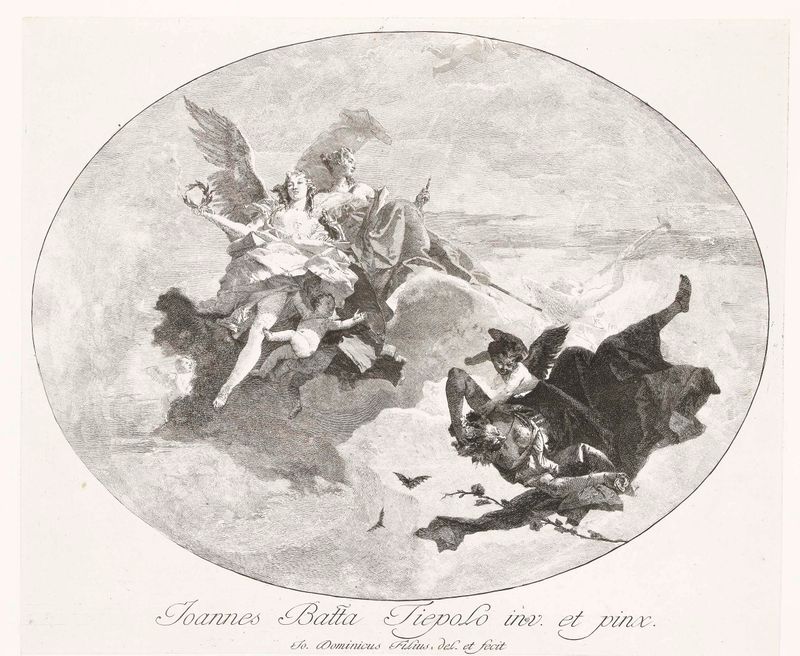
Deugd en Faam verjagen Gierigheid
Giovanni Domenico Tiepolo
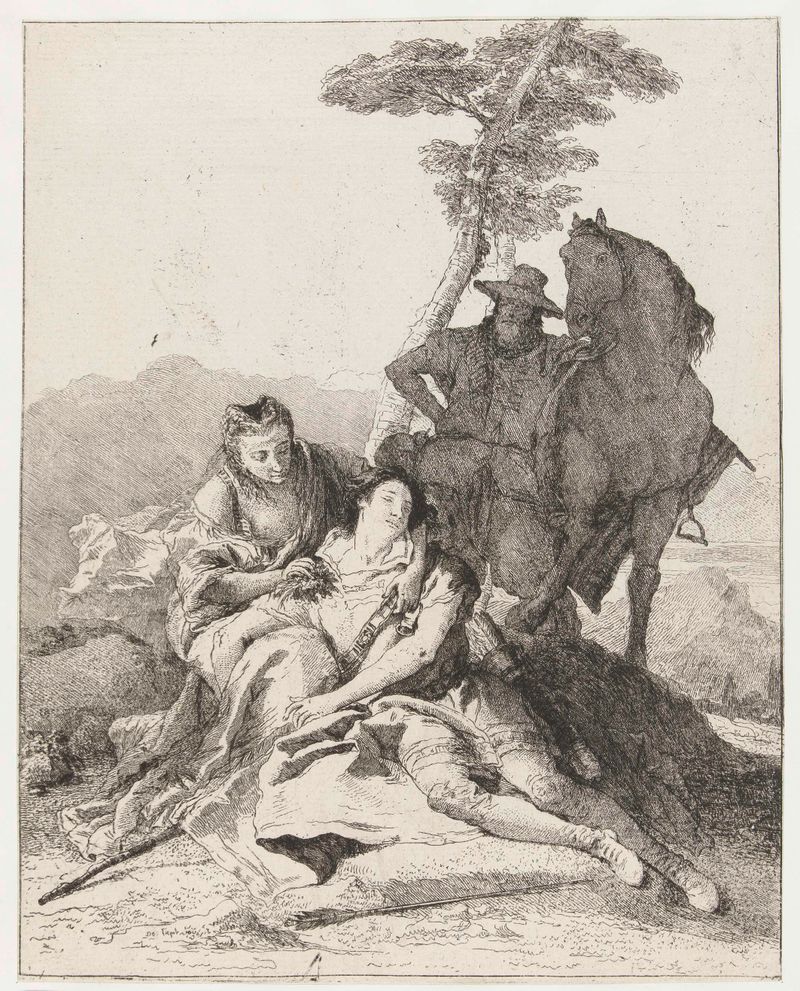
Angelica geneest de wond van Medoro
Giovanni Domenico Tiepolo
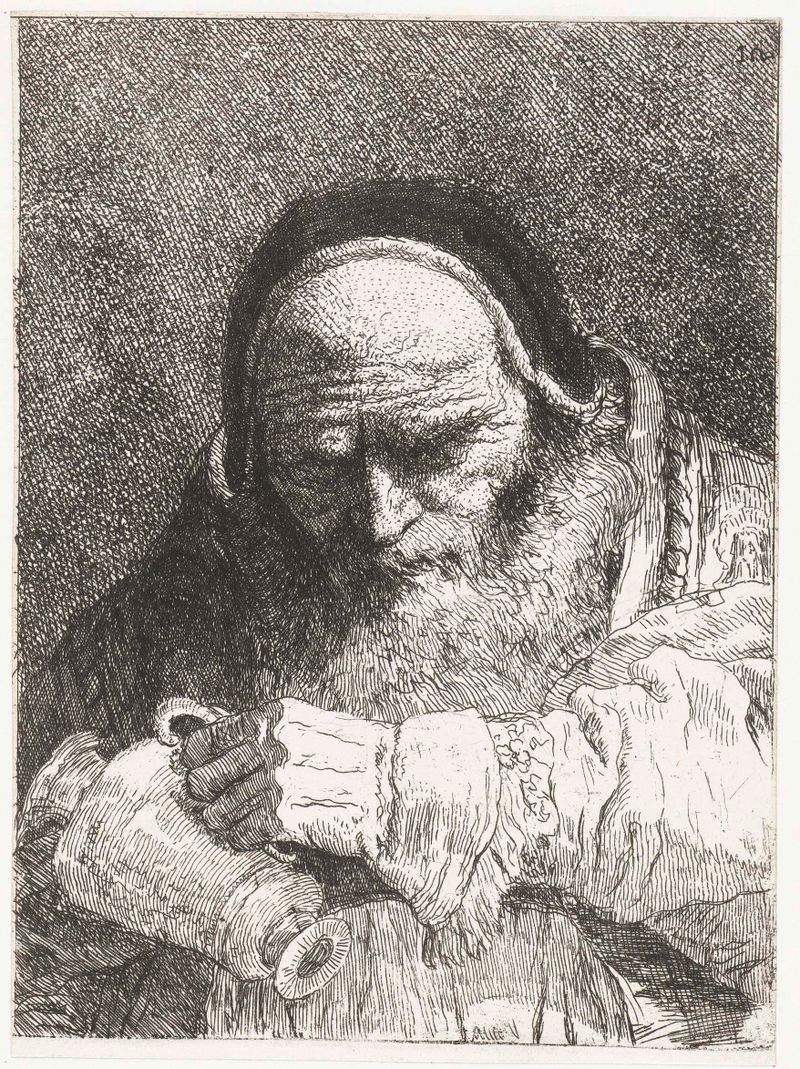
Paus met schenkkan
Giovanni Domenico Tiepolo

Heilige familie vertrekt door een stadspoort
Giovanni Domenico Tiepolo
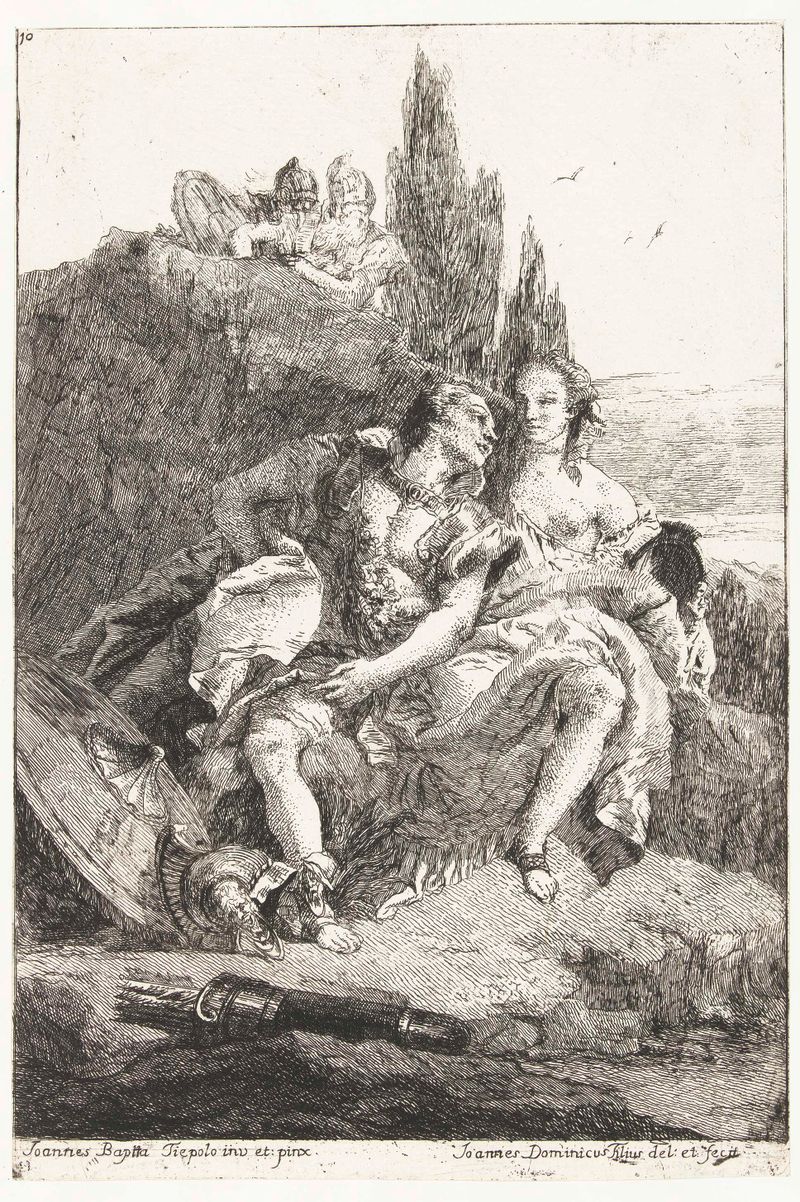
Rinaldo en Armida als liefdespaar aangetroffen bij een meer door twee ridders
Giovanni Domenico Tiepolo
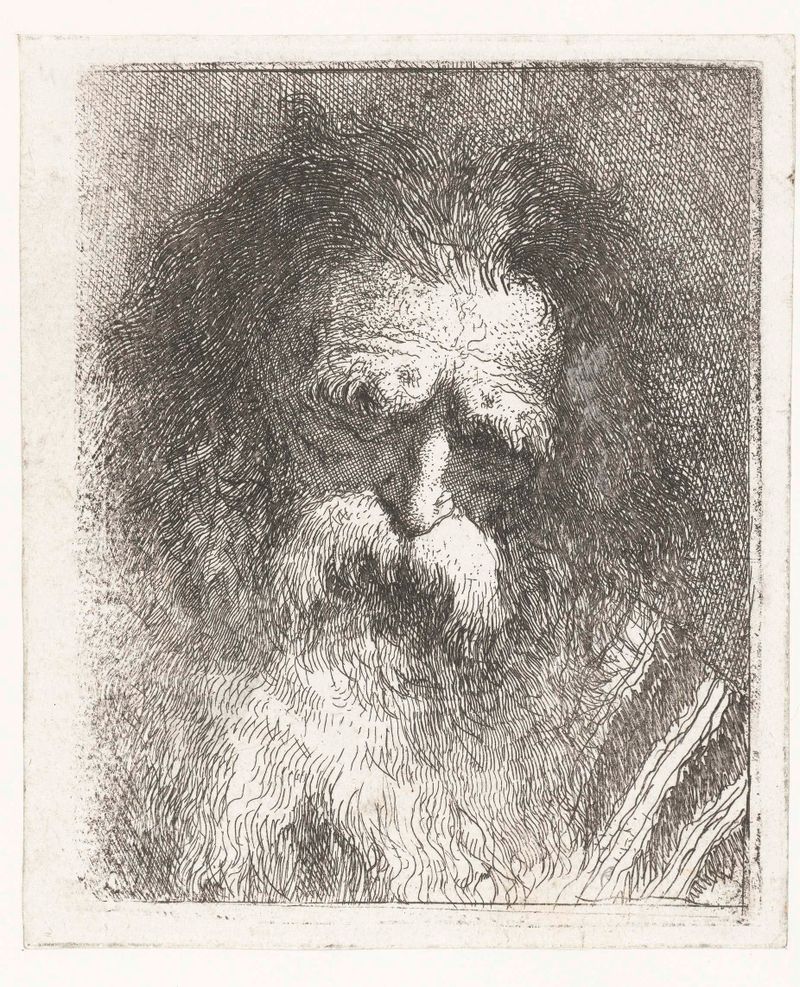
Oude man met borstelige wenkbrauwen en baard
Giovanni Domenico Tiepolo

Man met zwaard
Giovanni Domenico Tiepolo

Man met lange haren en zonder hoofddeksel
Giovanni Domenico Tiepolo

Man met ontblote schouder
Giovanni Domenico Tiepolo