
Am Holzrechen — History & Facts
In Am Holzrechen, the transformation of nature is not just depicted; it is felt. The interplay of light and shadow draws the viewer into a moment suspended in time, where the past and present converge in a vibrant tableau. Begin your exploration by focusing on the enchanting interplay of colors. Look to the left at the warm hues of autumn foliage, where burnt oranges and deep reds contrast sharply with the cool greens of lingering summer.
Notice how the dappled sunlight filters through the leaves, creating intricate patterns that dance across the ground. The meticulous detail in the brushwork gives life to every blade of grass and every branch, inviting you to step into this serene landscape. The emotional tension within the piece lies in its duality. While the scene radiates tranquility, there’s an underlying sense of change—a hint of melancholy as the seasons shift.
The figures in the foreground, engaged in their labor, symbolize the relentless passage of time, echoing the cycles of nature at play. This moment captures not only the beauty of the environment but also the bittersweet essence of transformation that accompanies each season’s end. In 1897, during his time in Vienna, the artist was working amidst an atmosphere of artistic innovation and societal change. As a member of the Vienna Secession movement, he sought to break from tradition and embrace modernity.
This painting reflects his engagement with the natural world, capturing the essence of a moment that speaks to the inevitability of change, both in art and life.
More Artworks by Eduard Peithner von Lichtenfels
Browse all →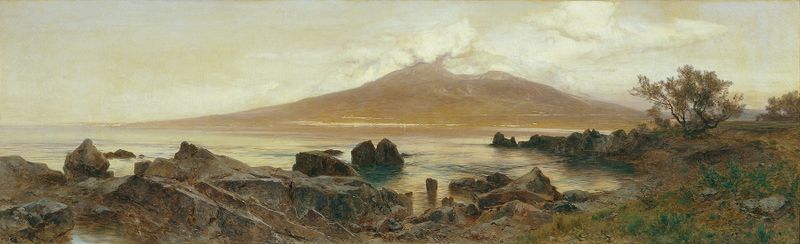
Der Vesuv
Eduard Peithner von Lichtenfels

Donauufer im Prater
Eduard Peithner von Lichtenfels
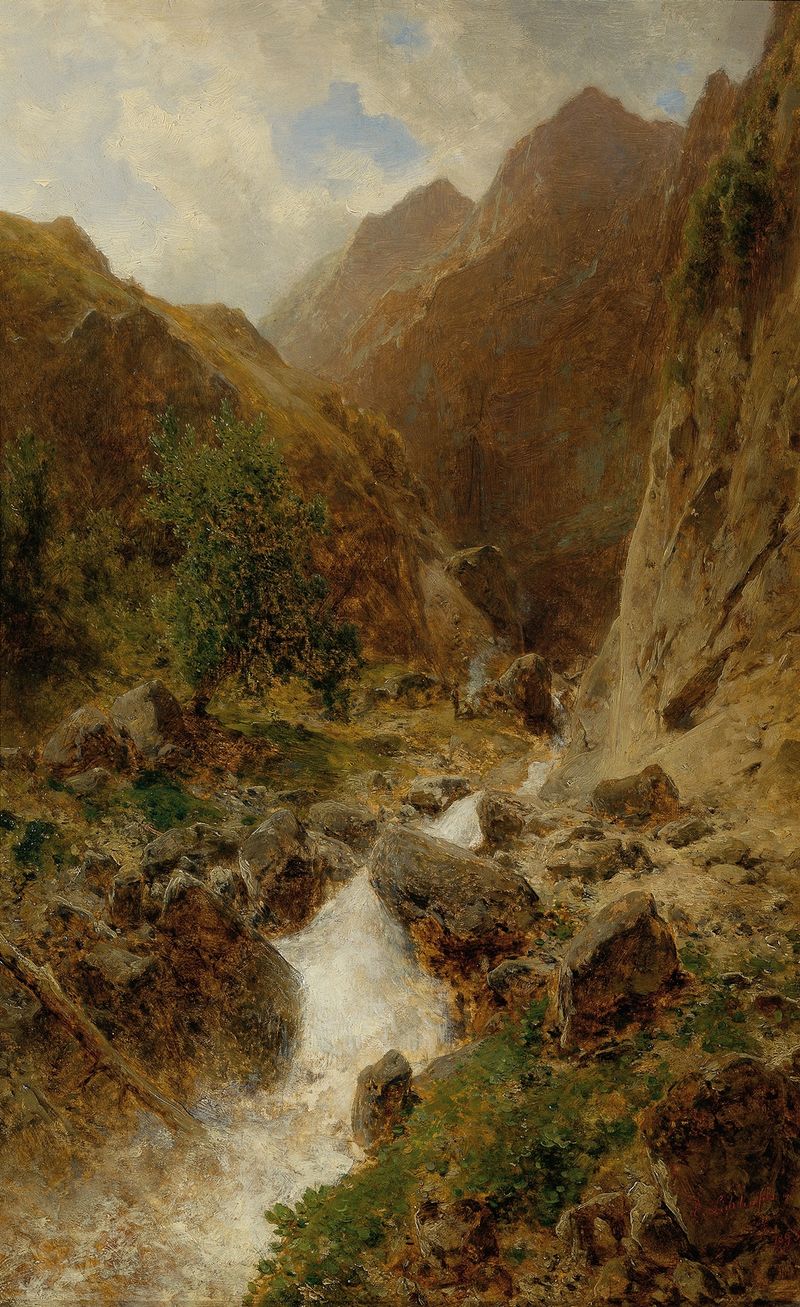
Wildbach
Eduard Peithner von Lichtenfels

Mountain stream
Eduard Peithner von Lichtenfels

Partie bei Hallein an der Salzach
Eduard Peithner von Lichtenfels

Schloss Liechtenstein (vor der Restaurierung)
Eduard Peithner von Lichtenfels

Dürnstein – Am Weg zum Schloss
Eduard Peithner von Lichtenfels

Alpensee
Eduard Peithner von Lichtenfels
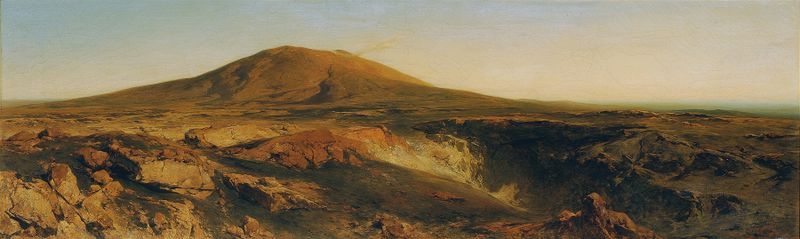
Der Gipfel des Ätna 1878
Eduard Peithner von Lichtenfels

Landschaftsmotiv
Eduard Peithner von Lichtenfels





