
Der Gipfel des Ätna 1878 — History & Facts
What secret hides in the quiet of the canvas? In the silence of Der Gipfel des Ätna, an unspoken madness stirs beneath the surface, inviting contemplation and curiosity. Look to the center, where the summit of Mount Etna rises majestically, its snow-capped peak contrasting against the rich blues and greens of the surrounding landscape. The meticulous brushstrokes create a vibrant texture, imbuing the scene with an almost tangible sense of place. Notice how the light plays across the crater's edge, its subtle highlights hinting at the dormant power that lies beneath, while shadows dance along the slopes, suggesting the mountain's ever-changing temperament. As you explore further, the fiery hues at the mountain's base evoke a sense of chaos lurking just beneath the serenity of this idyllic scene.
The juxtaposition of tranquility and potential destruction resonates deeply—one can almost feel the earth trembling with the volcano’s restless spirit. This duality emphasizes the contrast between the breathtaking beauty of nature and its capacity for madness, compelling the viewer to reflect on the delicate balance of life and turmoil. In Der Gipfel des Ätna, Eduard Peithner von Lichtenfels captured this dramatic landscape in the late 1870s, a time when he was deeply engrossed in depicting the power and beauty of nature. Working in Germany, he was influenced by the Romantic movement’s fascination with the sublime, while the rising interest in scientific exploration added depth to his understanding of the natural world.
The painting stands as a testament to that period, merging artistic insight with the underlying tensions of nature's unpredictability.
More Artworks by Eduard Peithner von Lichtenfels
Browse all →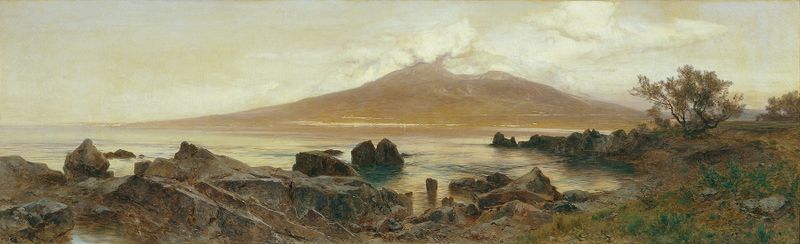
Der Vesuv
Eduard Peithner von Lichtenfels

Donauufer im Prater
Eduard Peithner von Lichtenfels
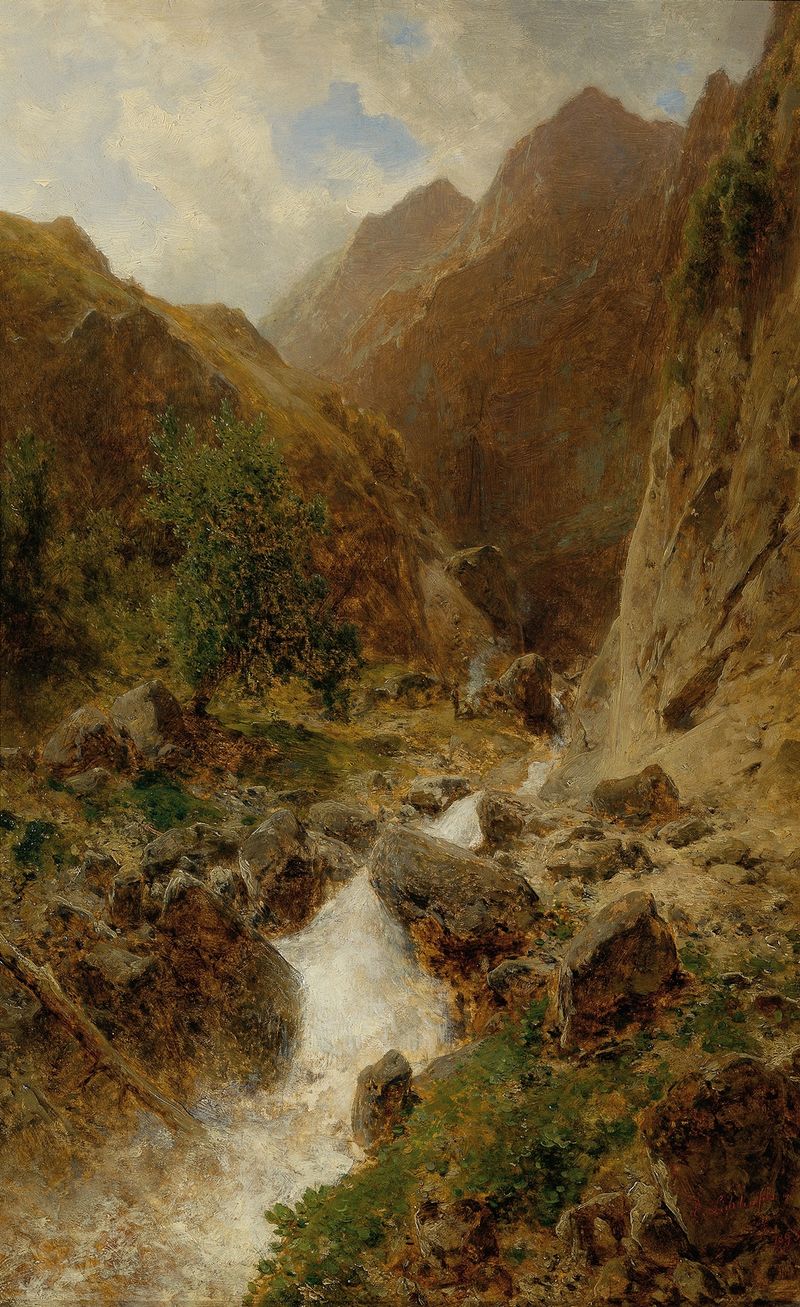
Wildbach
Eduard Peithner von Lichtenfels

Mountain stream
Eduard Peithner von Lichtenfels

Partie bei Hallein an der Salzach
Eduard Peithner von Lichtenfels

Schloss Liechtenstein (vor der Restaurierung)
Eduard Peithner von Lichtenfels

Dürnstein – Am Weg zum Schloss
Eduard Peithner von Lichtenfels

Alpensee
Eduard Peithner von Lichtenfels

Landschaftsmotiv
Eduard Peithner von Lichtenfels

The March-Au Near Lundenburg
Eduard Peithner von Lichtenfels





