
An Alpine Lake — History & Facts
Who listens when art speaks of silence? In An Alpine Lake, the stillness resonates, inviting contemplation and evoking the bittersweet ache of nostalgia. Look to the tranquil waters at the center of the composition, where the mirror-like surface reflects the surrounding peaks, their jagged outlines softened by the gentle caress of twilight. The palette is a harmonious blend of muted greens and blues, interspersed with the delicate blush of waning sunlight. Notice how the brushstrokes capture the serenity of the moment, each stroke deliberate yet free, allowing the landscape to breathe with life and quietude. Within this serene panorama lies a deeper emotional landscape.
The distant mountains suggest isolation, a place removed from the clamor of human life, while the lake’s crystalline surface holds the weight of memories untold. The interplay of light and shadow evokes a sense of transience; something precious is captured, yet fragile, as if the moment could slip away into the ether of time. It speaks to the viewer's inner yearning for peace, a space to remember and reflect. In 1870, Aleksander Swieszewski painted this piece during a period of burgeoning Romanticism in art, where nature became a focal point for exploring emotion.
Living in Poland at the time, he was influenced by the German landscape tradition, which sought to express the sublime quality of nature. As industrialization began to encroach upon the natural world, artworks like this provided a refuge, celebrating the untouched beauty of landscapes that sparked a longing for simpler, quieter times.
More Artworks by Aleksander Swieszewski
Browse all →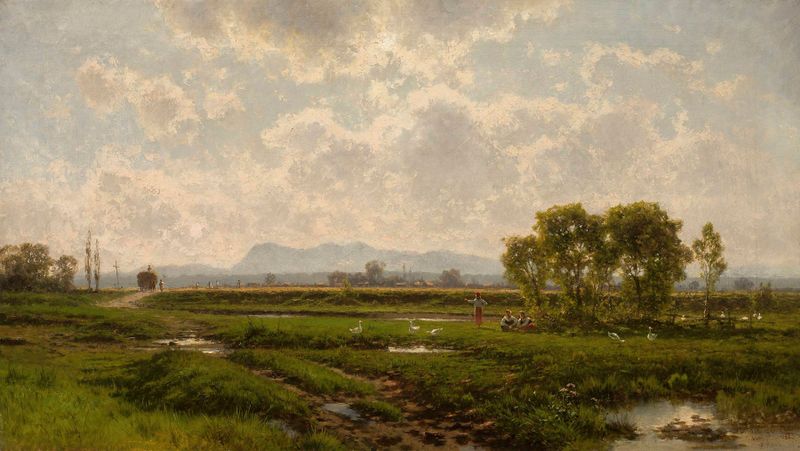
Landscape from South Tyrol
Aleksander Swieszewski

Dachauer Landschaft im Abendrot
Aleksander Swieszewski
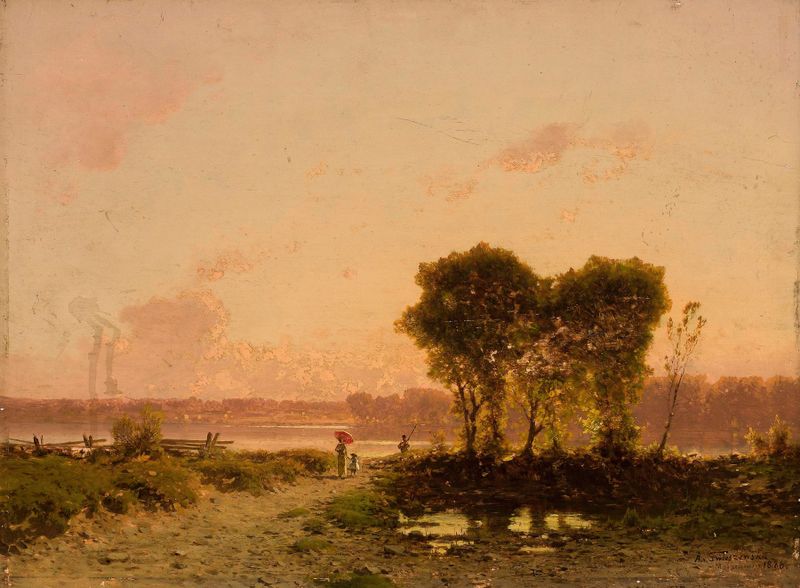
Landscape with a riverat sunset
Aleksander Swieszewski

Mediterranean landscape
Aleksander Swieszewski

Landscape with a road
Aleksander Swieszewski

Landscape at sunset
Aleksander Swieszewski
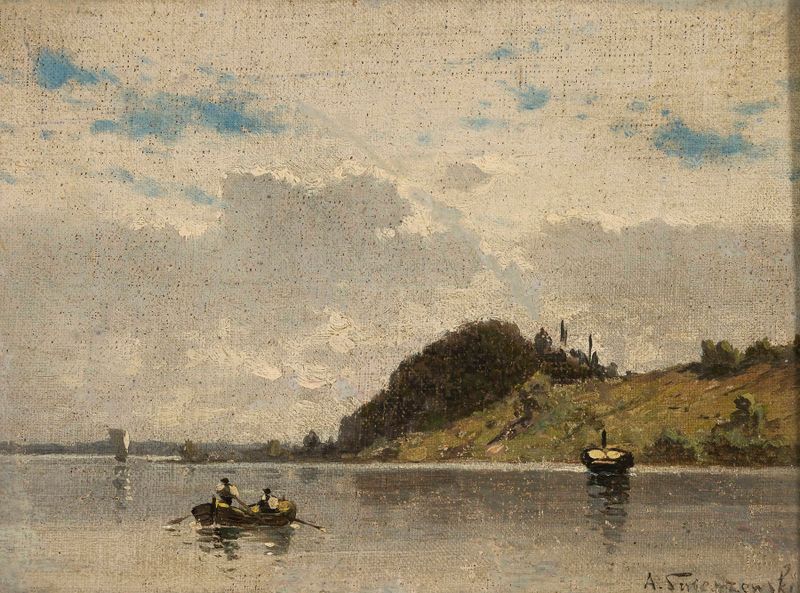
River (lake) landscape
Aleksander Swieszewski
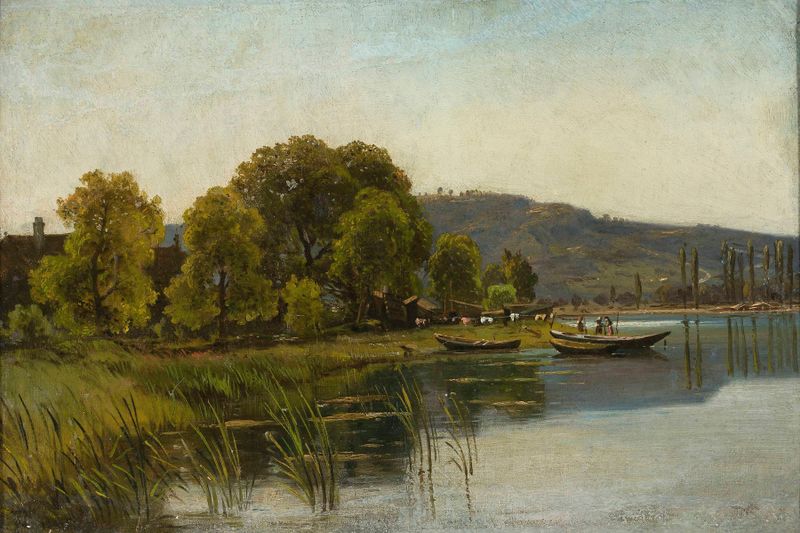
Waterside landscape
Aleksander Swieszewski





