
Zachód słońca nad jeziorem — History & Facts
What first catches the eye in Zachód słońca nad jeziorem is the extraordinary way the last light of day ignites the mountain face, turning stone into a glowing wall of copper and rose. The painter, Aleksander Swieszewski, leads the viewer’s gaze from the cool, shadowed foreground—where two figures tend a boat at the water’s edge—across the glassy lake to those sun-struck peaks. The reflection in the water is gentle, almost blurred, as if the lake itself is reluctant to let go of the day.
Details like the small haystack floating near the shore and the distant rowboats, their oars just breaking the mirrored surface, anchor the scene in daily life, yet the vast sky and monumental mountains dwarf all human presence. The low horizon gives the sky and its changing light the leading role, suggesting a quiet awe before nature. Painted in 1881, this work belongs to a period when landscape painting in Eastern Europe was both a celebration of national scenery and a meditation on humanity’s place within it. Artists like Swieszewski often balanced careful observation with a poetic sensibility, seeking not only to record a view but to evoke the mood of a specific hour.
Such paintings were popular among the growing middle class, who sought reminders of the countryside as urbanization accelerated. While little is recorded about the specific journey of this painting—now documented in the agraart.pl collection—its careful composition and atmospheric effects place it firmly within the late 19th-century tradition of lyrical landscape. Let your eyes linger on the shifting colors and the quiet labor of the figures; the world of 1881 is not so far away as it first appears.
More Artworks by Aleksander Swieszewski

Landscape from South Tyrol
Aleksander Swieszewski
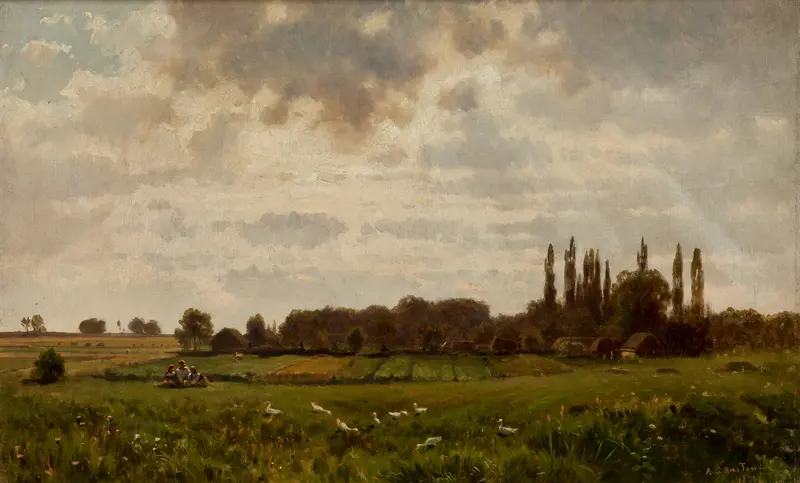
Village Masłowice
Aleksander Swieszewski

Dachauer Landschaft im Abendrot
Aleksander Swieszewski
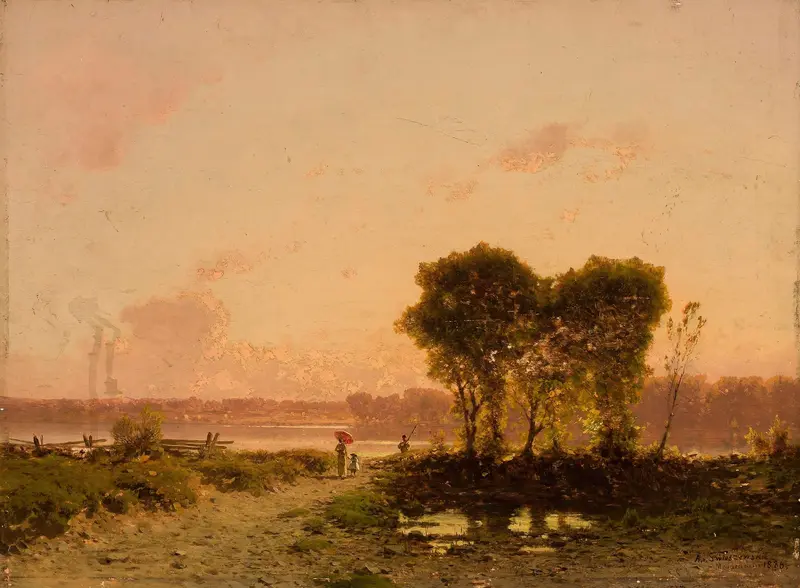
Landscape with a riverat sunset
Aleksander Swieszewski
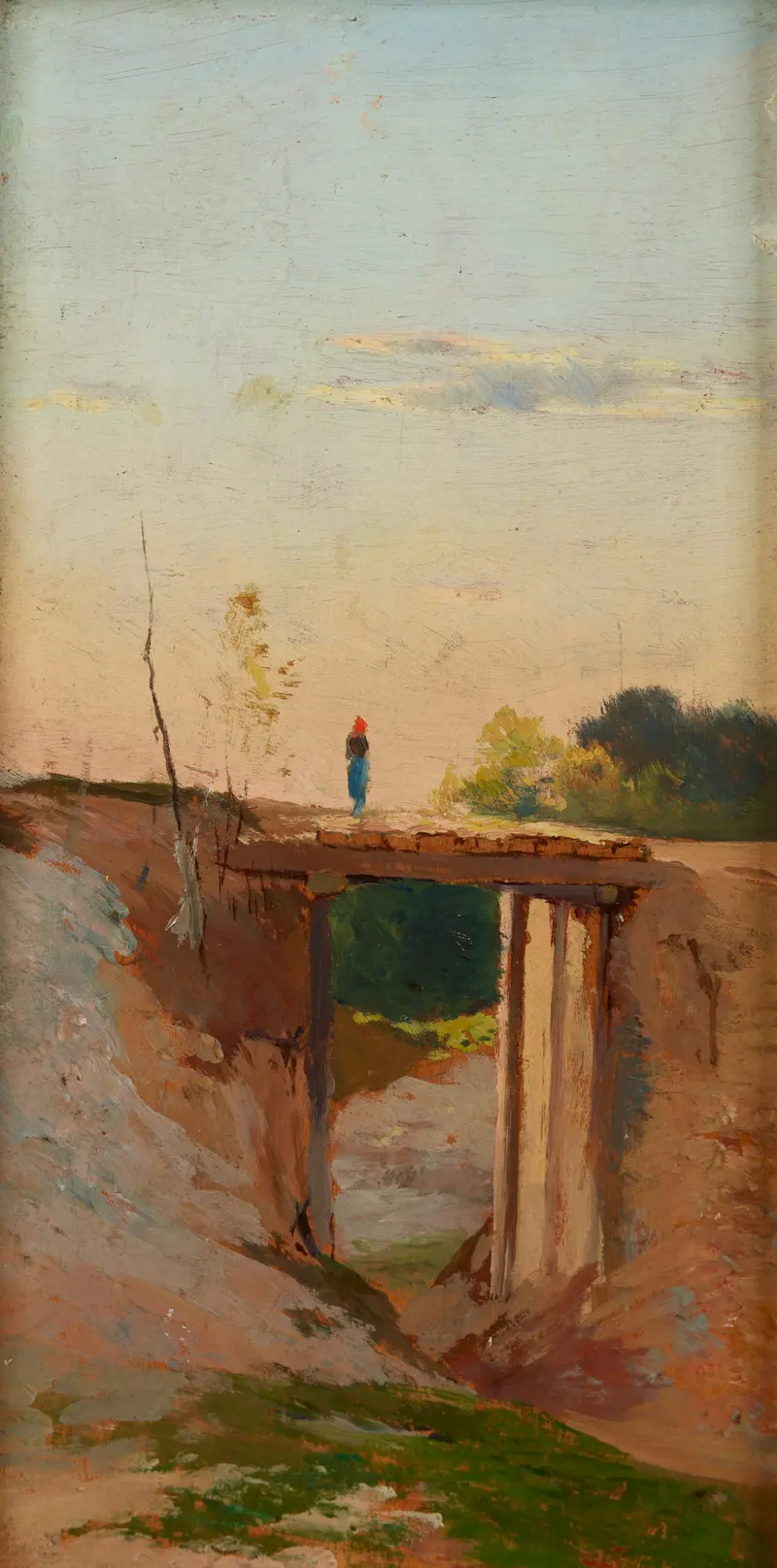
Small Bridge
Aleksander Swieszewski
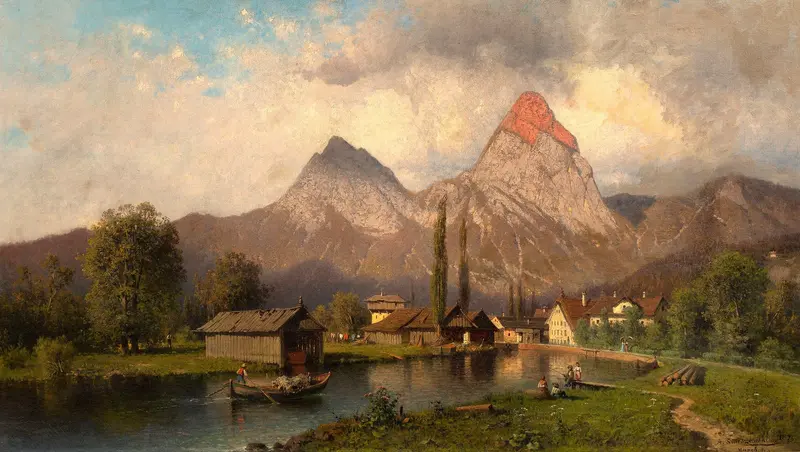
Pejzaż alpejski
Aleksander Swieszewski
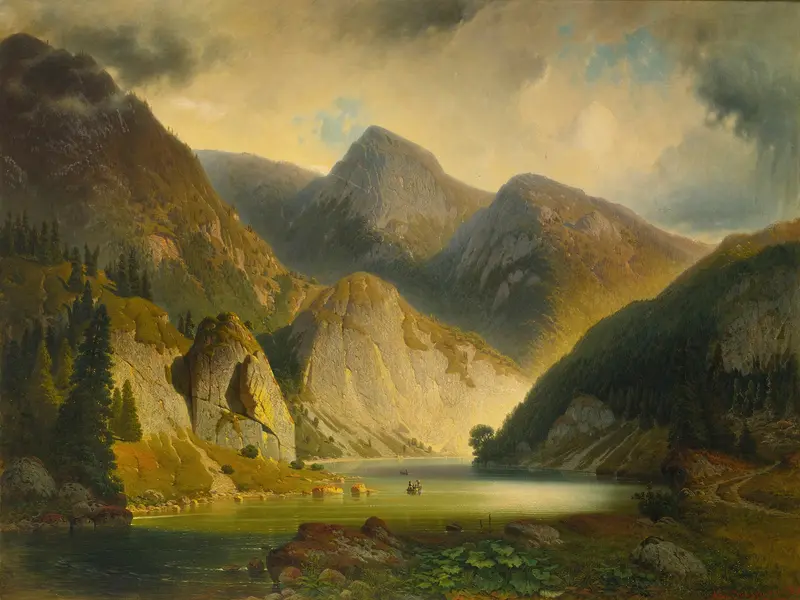
An Alpine Lake
Aleksander Swieszewski
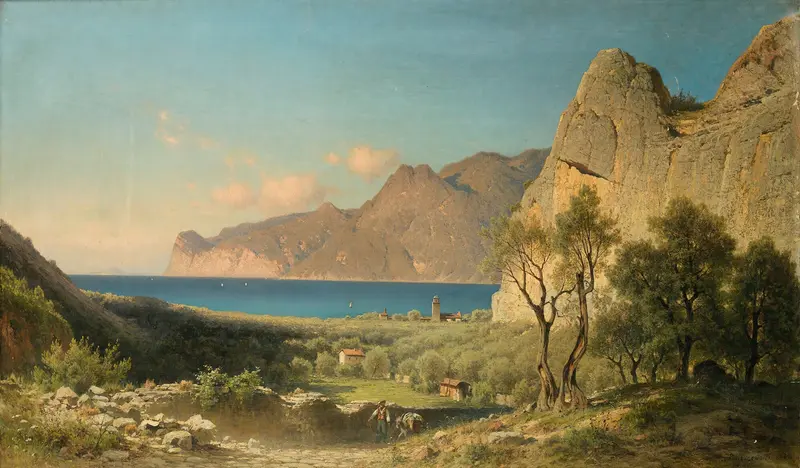
Mediterranean landscape
Aleksander Swieszewski
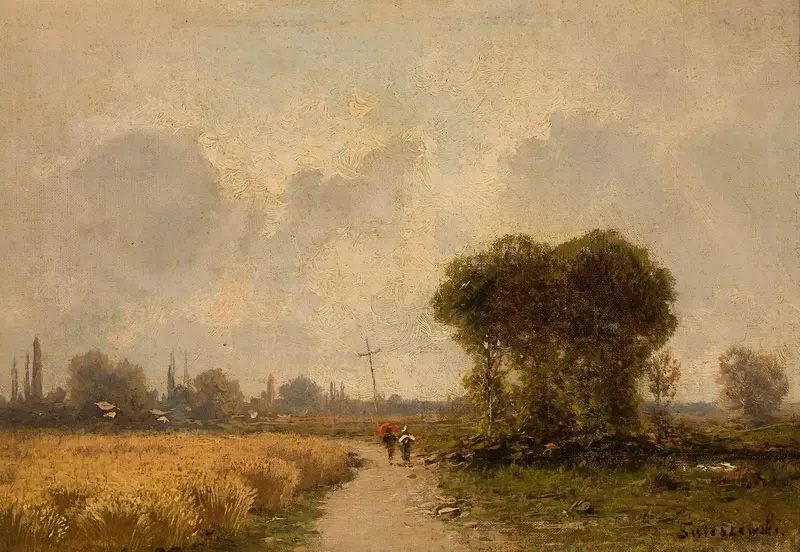
Landscape with a road
Aleksander Swieszewski
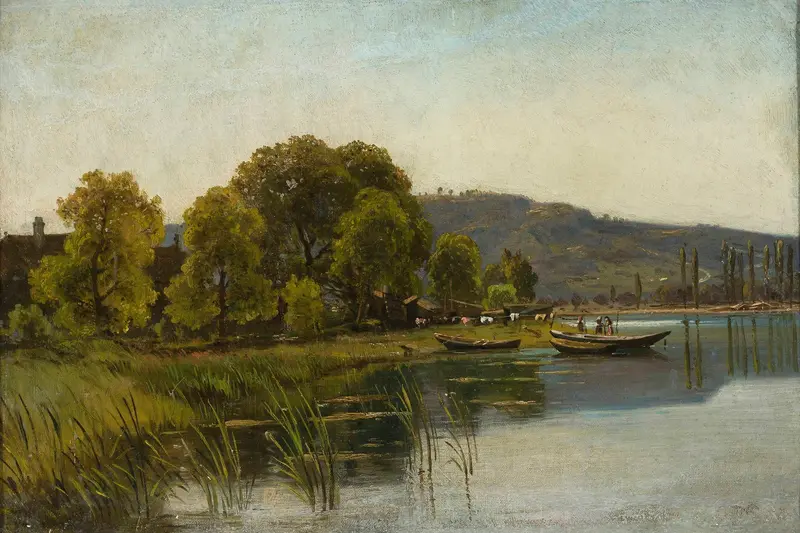
Waterside landscape
Aleksander Swieszewski
More Landscape Art

The Starry Night
Vincent van Gogh

View of Delft
Johannes Vermeer

Water Lilies
Claude Monet

The Grand Canal, Venice, looking north-west from the Ca' Corner to the Ca' Contarini degli Scrigni, with the campanile of Santa Maria della Carità
Canaletto

Windsor Castle
Canaletto

The Grand Canal looking North-East from the Palazzo Dolfin-Manin to the Rialto Bridge
Canaletto