
Village Masłowice — History & Facts
A sky that nearly overwhelms the land draws you first, its shifting clouds stretching wide above a patchwork of fields and distant trees. Below this drama of light and vapor, the eye drifts down to a small group of figures, gathered in the grass with their backs to the viewer, their presence almost swallowed by the vastness around them. The painter, Aleksander Swieszewski, has let the horizon sink low, giving the sky the leading role and turning the villagers and their geese into delicate notes in a larger, quieter symphony.
The careful placement of white birds across the foreground pulls your gaze gently from left to right, echoing the movement of the clouds above and inviting you to linger over each detail — the wildflowers, the subtle lines of cultivation, the tall poplars rising like sentinels at the edge of the village. Painted in 1873, Village Masłowice belongs to an era when artists across Europe were turning to the countryside, seeking both solace and truth in rural scenes. Such works were often commissioned by landowners or collected by urban patrons longing for a vision of unspoiled nature, even as industrialization crept ever closer. The National Museum in Kraków, which now holds this painting, preserves it as part of a broader memory of Polish landscape art — a tradition shaped by changing borders, shifting identities, and the persistent allure of home.
History has kept few traces of this particular village or the lives of those who appear here, but the painting’s gentle rhythms and open sky invite us to imagine their world, and to return to the canvas with fresh eyes.
More Artworks by Aleksander Swieszewski

Landscape from South Tyrol
Aleksander Swieszewski

Dachauer Landschaft im Abendrot
Aleksander Swieszewski
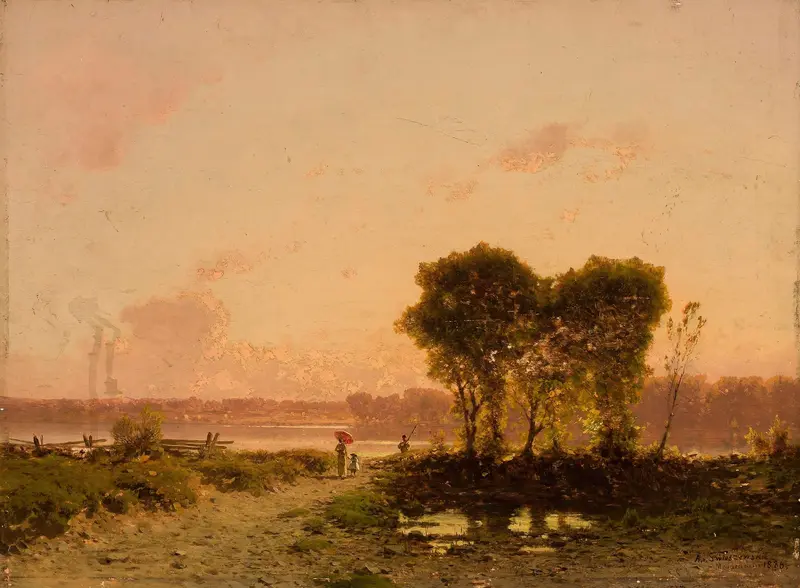
Landscape with a riverat sunset
Aleksander Swieszewski
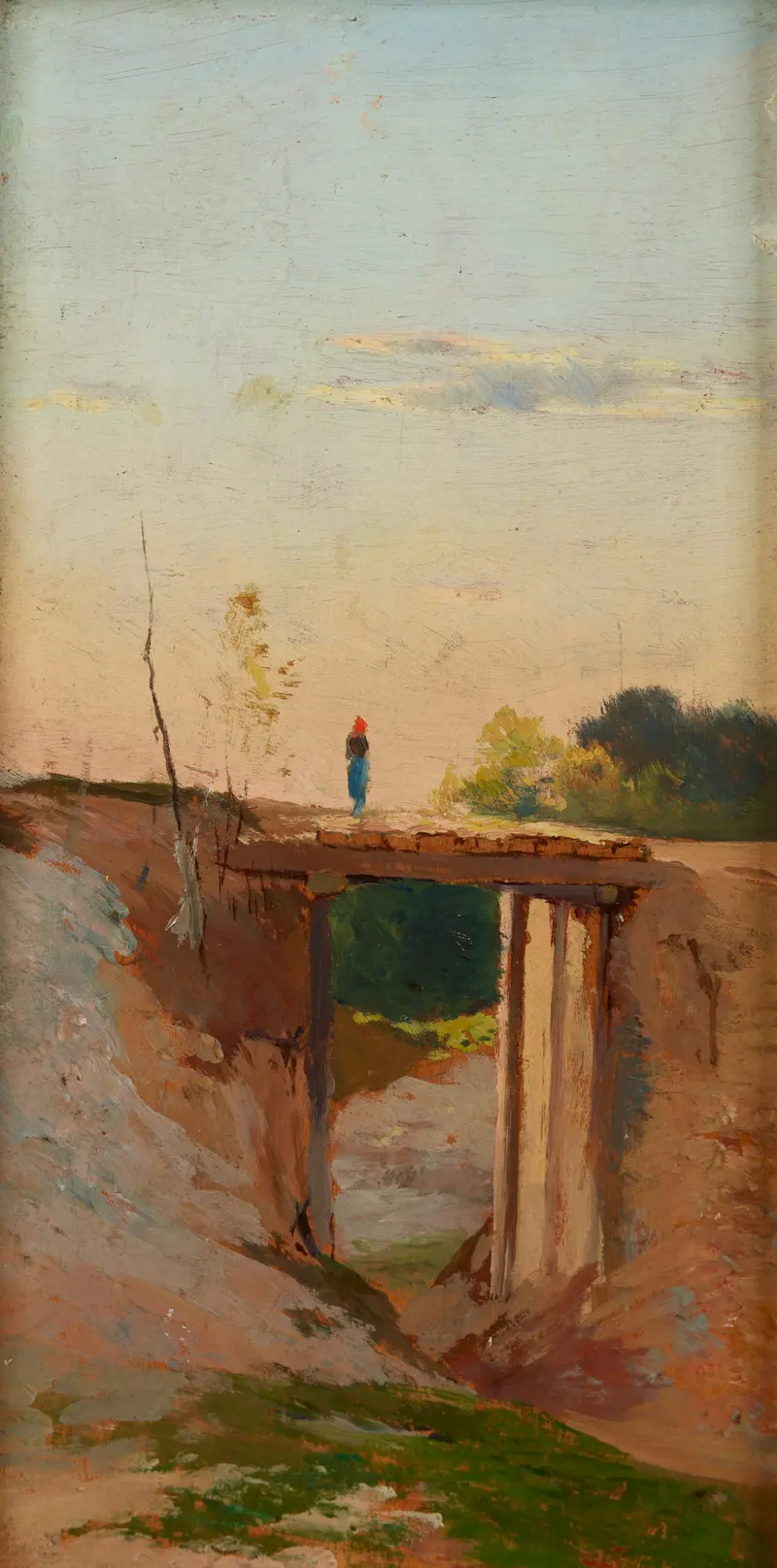
Small Bridge
Aleksander Swieszewski
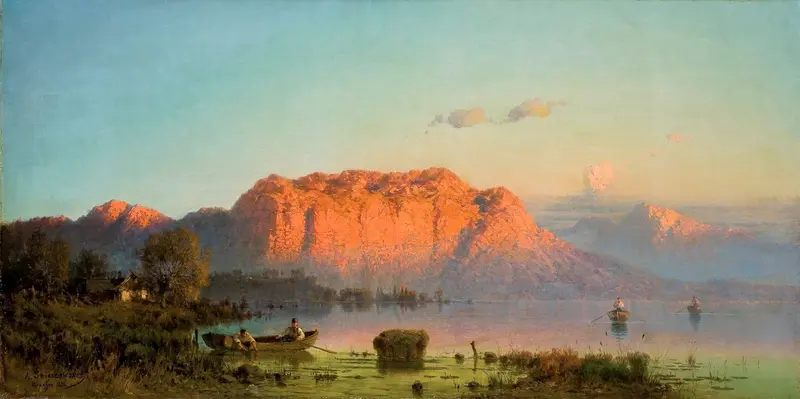
Zachód słońca nad jeziorem
Aleksander Swieszewski
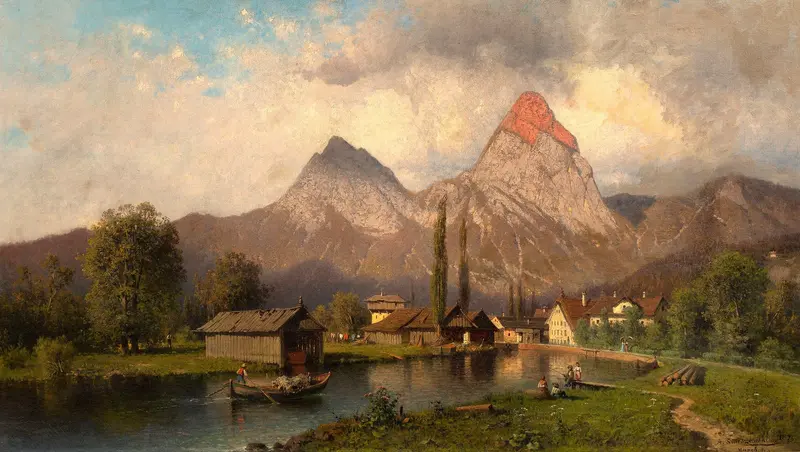
Pejzaż alpejski
Aleksander Swieszewski
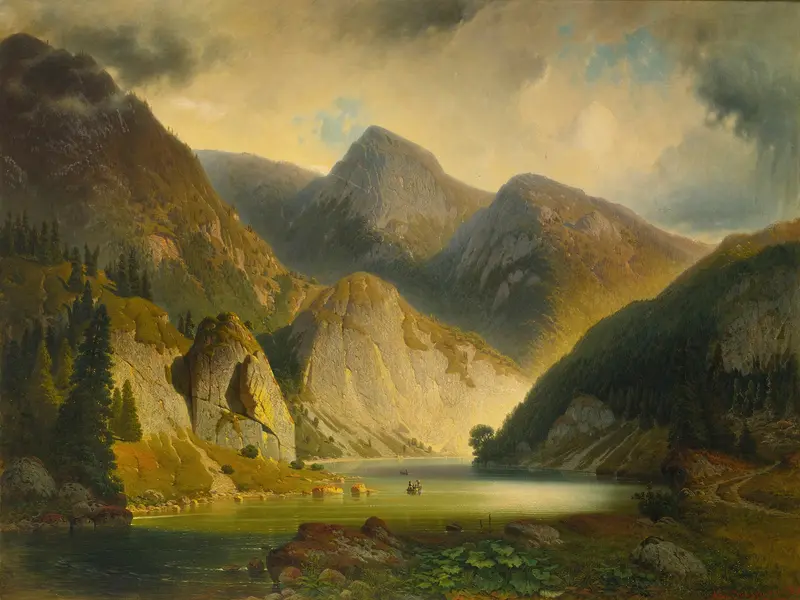
An Alpine Lake
Aleksander Swieszewski
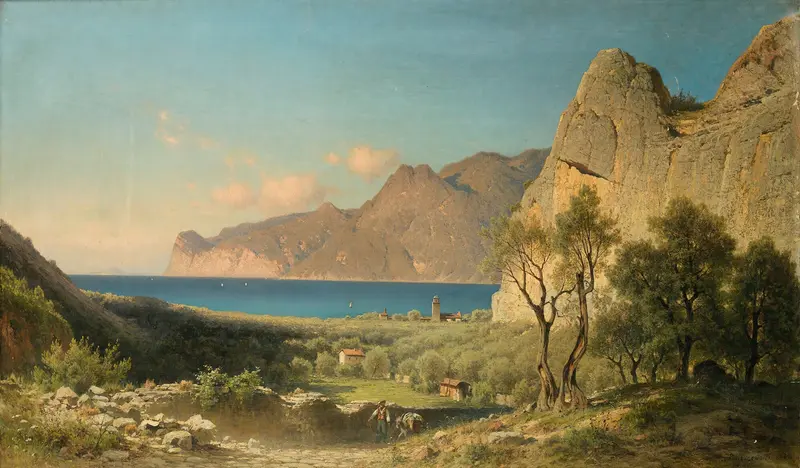
Mediterranean landscape
Aleksander Swieszewski
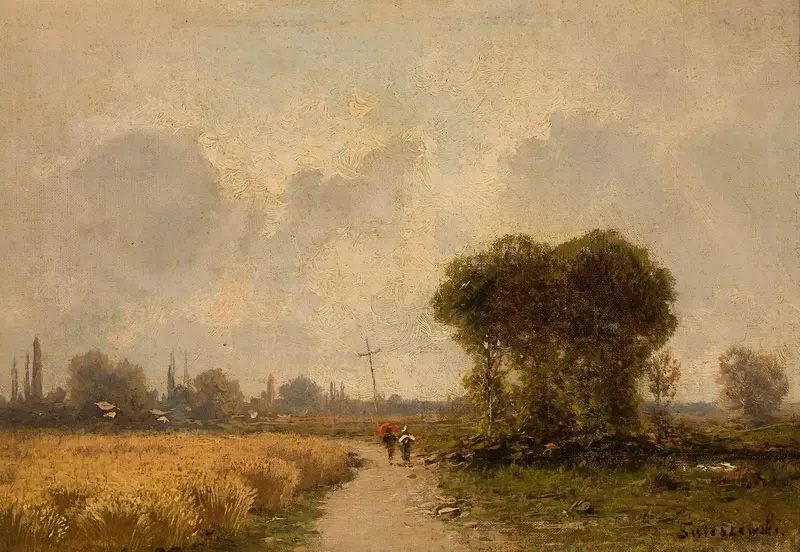
Landscape with a road
Aleksander Swieszewski
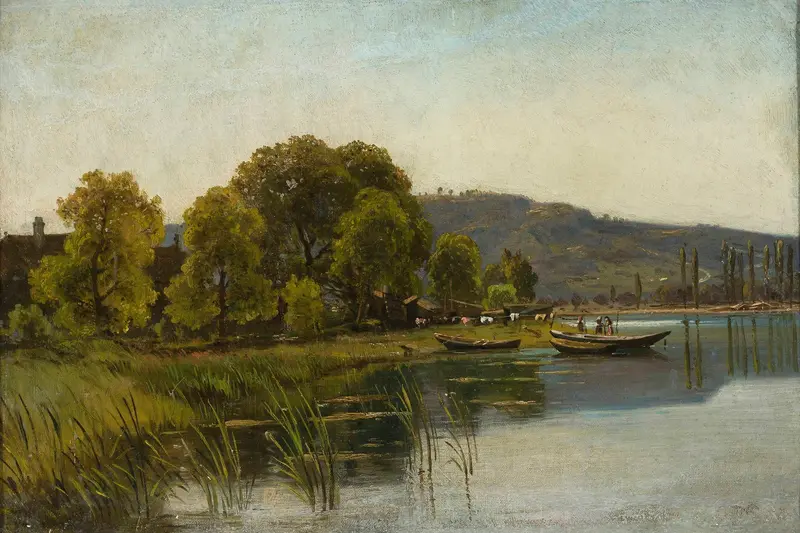
Waterside landscape
Aleksander Swieszewski
More Landscape Art

The Starry Night
Vincent van Gogh

View of Delft
Johannes Vermeer

Water Lilies
Claude Monet

The Grand Canal, Venice, looking north-west from the Ca' Corner to the Ca' Contarini degli Scrigni, with the campanile of Santa Maria della Carità
Canaletto

Windsor Castle
Canaletto

The Grand Canal looking North-East from the Palazzo Dolfin-Manin to the Rialto Bridge
Canaletto