
Pejzaż alpejski — History & Facts
What first catches the eye in Pejzaż alpejski is the way the mountain’s pale, craggy face rises behind the clustered roofs and tall poplars, its summit brushed with a warm, almost improbable blush of evening light. Aleksander Swieszewski draws the viewer in along the curve of the river, past a weathered boathouse and a small group of figures at the water’s edge, their gestures hinting at the rhythms of daily life—perhaps a conversation, a pause in work, or the simple act of watching the water. The painter’s attention to the reflection of buildings and trees in the still surface, the careful dappling of light on the grass, and the subtle shift from shadow to sun across the valley, all work together to create a sense of both intimacy and grandeur.
The mountains are not distant, untouchable giants; they are neighbors, looming over a community that seems to have adapted itself to their presence. Painted in 1879, this scene belongs to a moment when landscape painting was both a celebration of natural beauty and a record of a changing world. In the late nineteenth century, artists across Europe turned their attention to the Alps, drawn by both their dramatic forms and the new accessibility brought by the railways. Such works were often commissioned by collectors eager to display their taste for the picturesque, or by travelers wishing to remember their journeys.
Though little is recorded about the specific history of this canvas, its presence in the collection at www.polswissart.pl places it among the quieter treasures of the era, a reminder of how artists like Swieszewski captured not only the majesty of the mountains but the everyday life unfolding in their shadow. Notice, as you look again, how the painting invites you to imagine the coolness of the water, the texture of the grass, and the hush that falls as the sun slips behind the peaks.
More Artworks by Aleksander Swieszewski

Landscape from South Tyrol
Aleksander Swieszewski
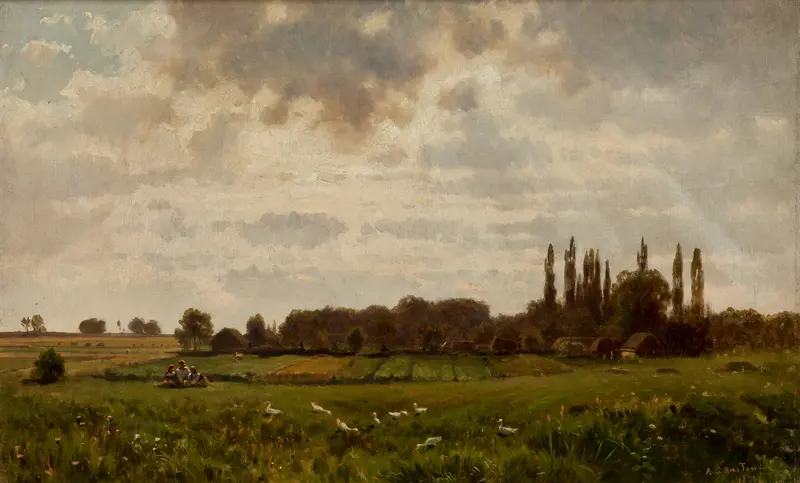
Village Masłowice
Aleksander Swieszewski

Dachauer Landschaft im Abendrot
Aleksander Swieszewski
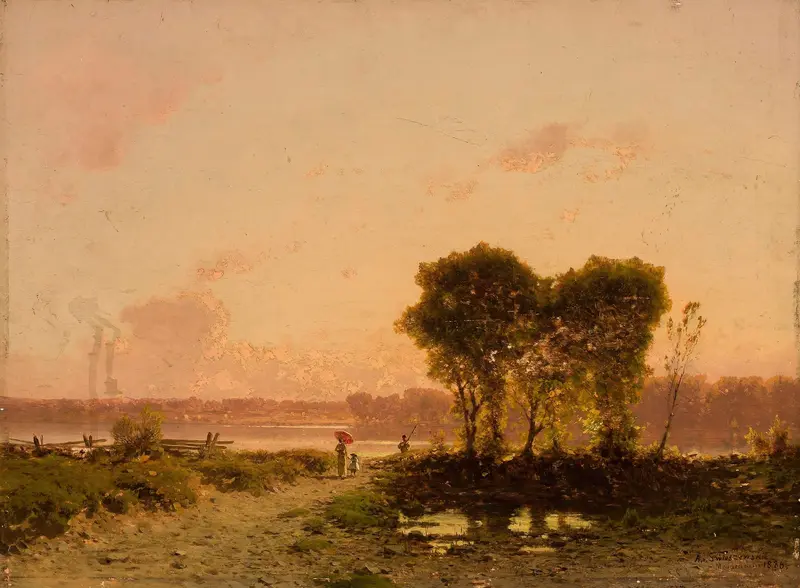
Landscape with a riverat sunset
Aleksander Swieszewski
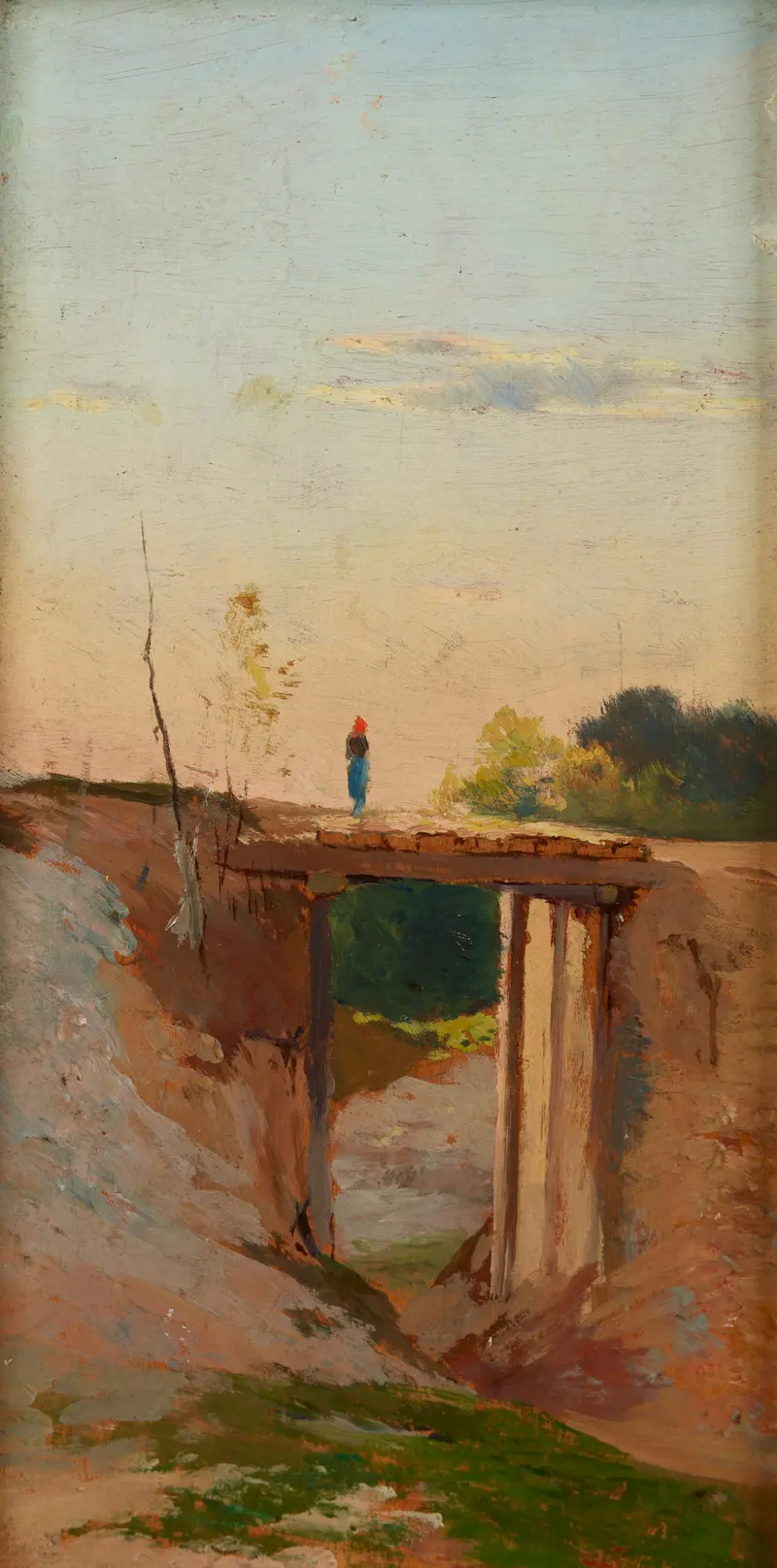
Small Bridge
Aleksander Swieszewski
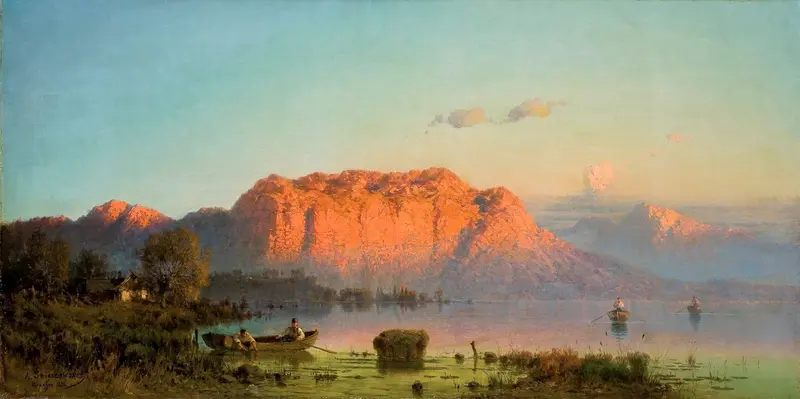
Zachód słońca nad jeziorem
Aleksander Swieszewski
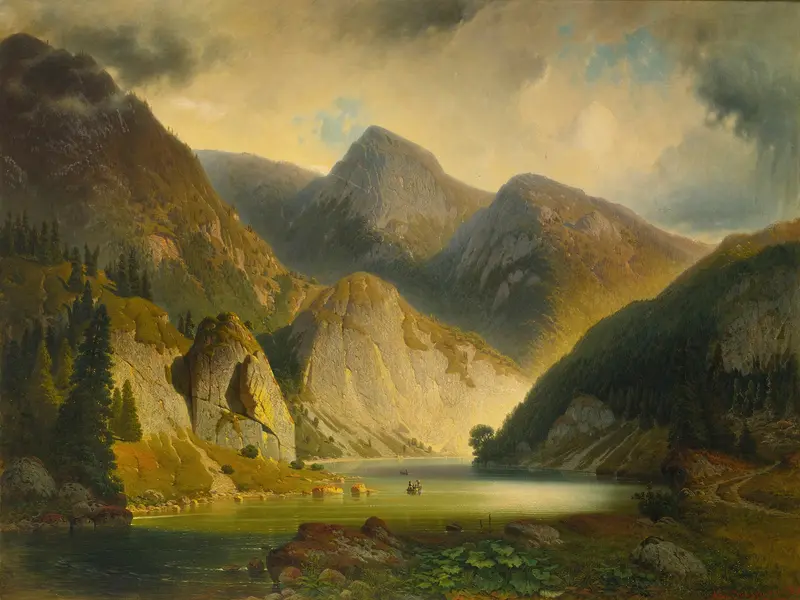
An Alpine Lake
Aleksander Swieszewski
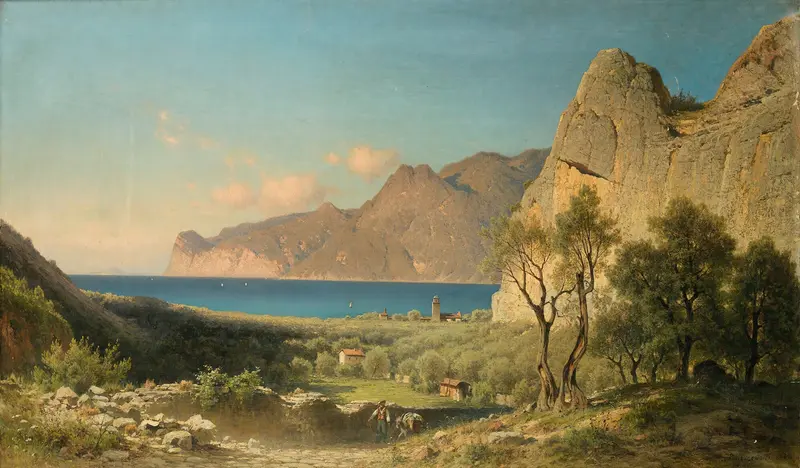
Mediterranean landscape
Aleksander Swieszewski
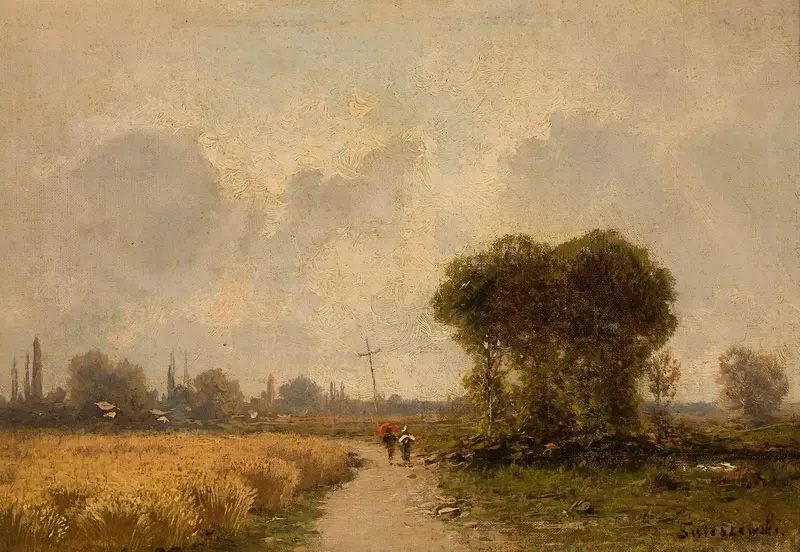
Landscape with a road
Aleksander Swieszewski
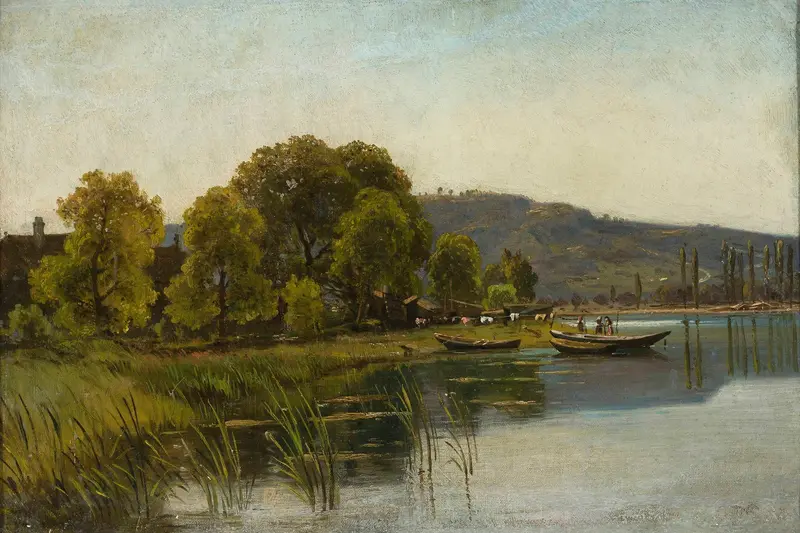
Waterside landscape
Aleksander Swieszewski
More Landscape Art

The Starry Night
Vincent van Gogh

View of Delft
Johannes Vermeer

Water Lilies
Claude Monet

The Grand Canal, Venice, looking north-west from the Ca' Corner to the Ca' Contarini degli Scrigni, with the campanile of Santa Maria della Carità
Canaletto

Windsor Castle
Canaletto

The Grand Canal looking North-East from the Palazzo Dolfin-Manin to the Rialto Bridge
Canaletto