
An Arcadian Landscape — History & Facts
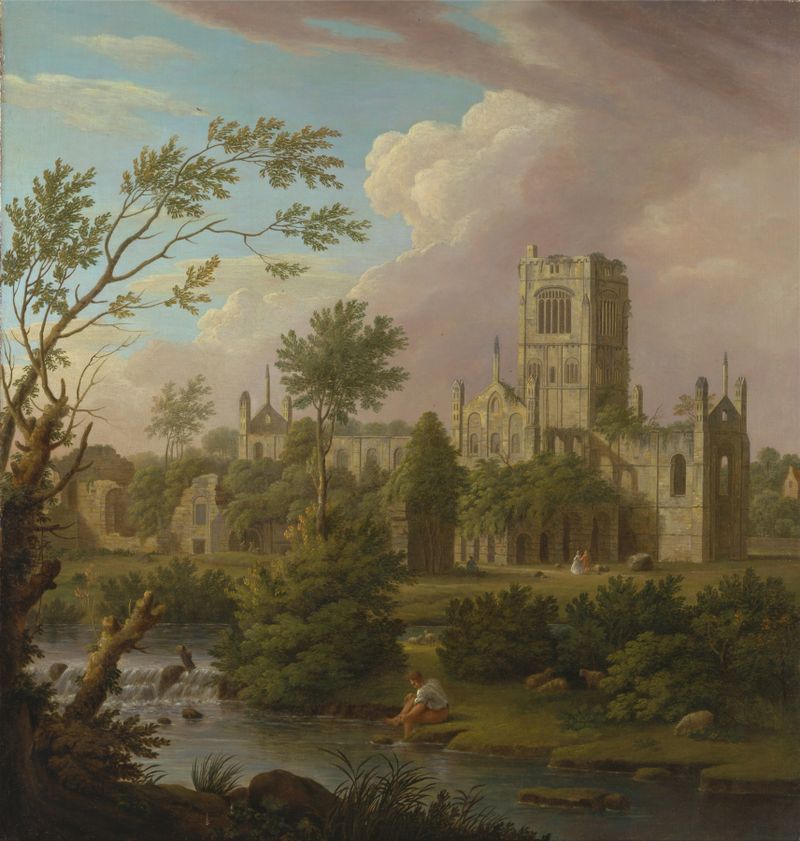
In the stillness of a moment captured, one can feel the quiet awe of nature enveloping the viewer. It invites contemplation, prompting us to pause and absorb the beauty held within its frame. Look to the right at the towering trees, their leaves a rich green, dappled with sunlight filtering through the branches. The gentle curve of the landscape leads the eye to a serene river, its surface reflecting the soft blues and yellows of the sky.
Notice how the warm hues harmonize with the cool shadows, creating a delicate balance that draws you deeper into the scene. Each stroke of the brush captures the essence of tranquility, revealing the artist's masterful command of color and light. Beyond the idyllic beauty, there lies an undercurrent of longing and nostalgia. The figures are small against the vastness, suggesting humanity's subtle place within the grandeur of nature.
The distant mountains stand as silent witnesses to the passage of time, evoking a sense of infinity. Lambert’s composition intertwines the serene with the sublime, reminding us of our connection to the world around us, while also hinting at the transience of such moments. Created in 1742, the work emerged during a time when the artist was establishing himself in England, reflecting the shift towards a more romantic view of landscape painting. The early 18th century was marked by a growing appreciation for the pastoral ideal, as artists like Lambert turned their focus towards nature's beauty, often as a counterpoint to the burgeoning industrialization.
In this context, An Arcadian Landscape not only showcases Lambert's technical prowess but also embodies the cultural zeitgeist of his time.
More Artworks by George Lambert
Browse all →
Capriccio With A Classical Sarcophogus And Possibly Beeston Castle, Chesire
George Lambert
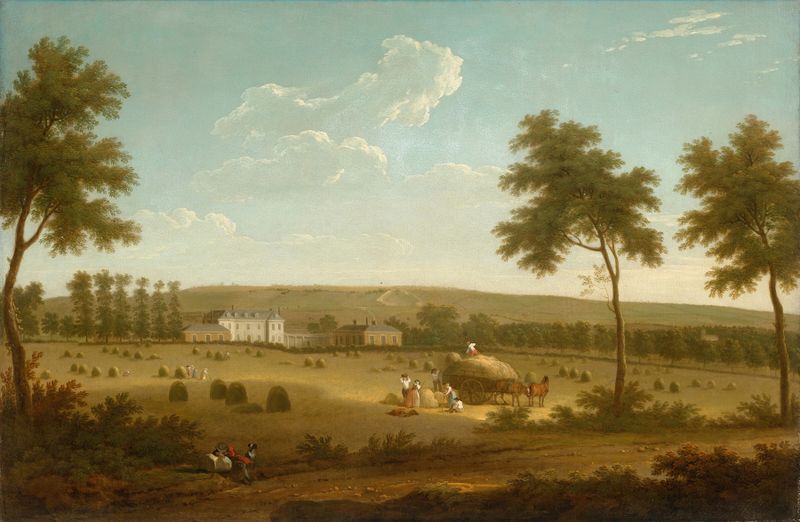
A South-east view of Leybourne Grange, Kent
George Lambert

An Italianate Landscape with Maneus Curius Dentatus with acolytes rejecting the gifts of the Samnites and preferring Turnips
George Lambert
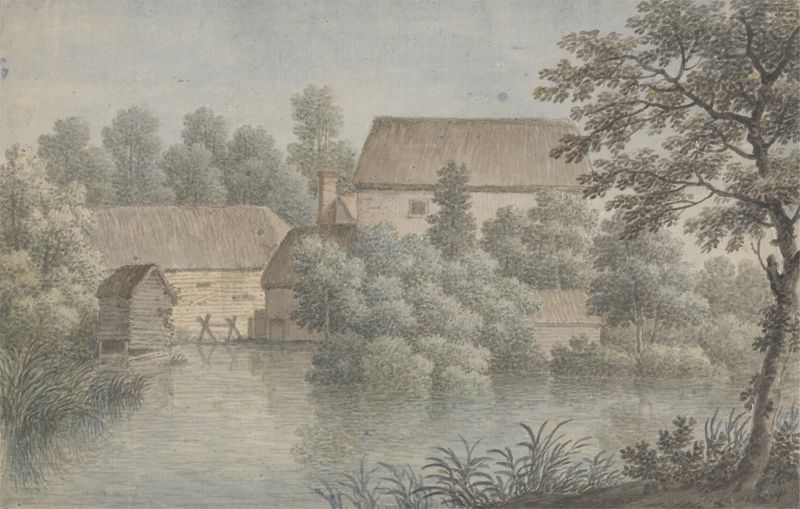
A Village Pond with Farm Buildings
George Lambert

A Pastoral Landscape with Shepherds and their Flocks
George Lambert

Wooded landscape with figures resting by a stream
George Lambert
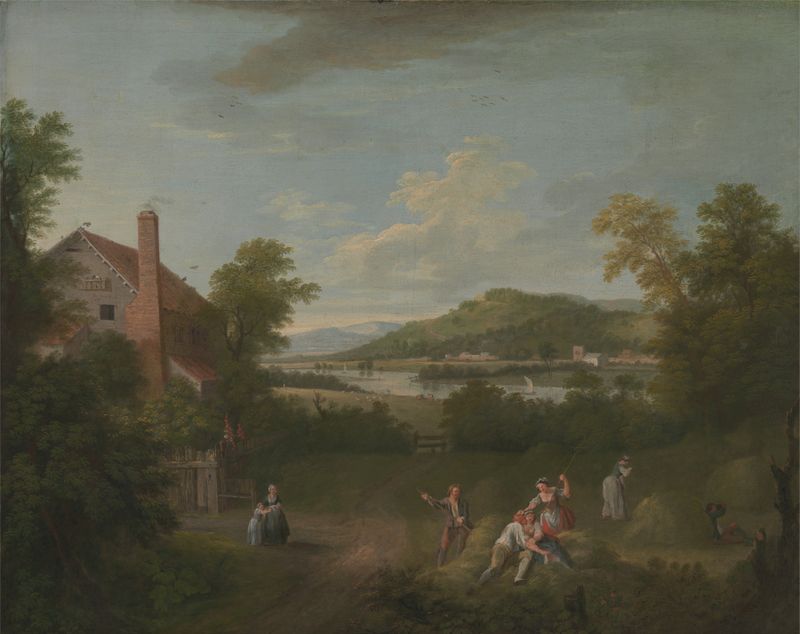
Landscape with Farmworkers
George Lambert
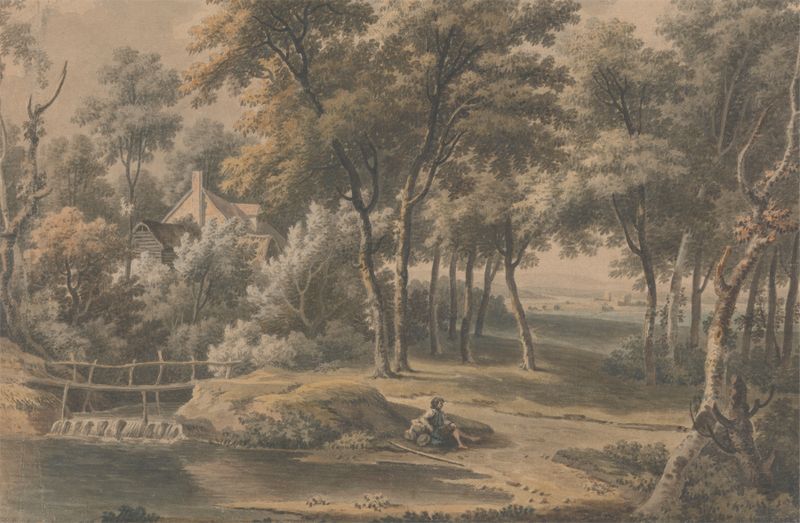
A Woody Landscape
George Lambert
Kirkstall Abbey, Yorkshire
George Lambert

Classical Landscape
George Lambert





