
An architectural capriccio with a campiello — History & Facts
When did color learn to lie? In the whimsical world crafted by Francesco Guardi, the vibrant hues intertwine with the echoes of madness, blurring the line between reality and imagination. Each stroke dances on the canvas, inviting the viewer to question their perception of beauty and chaos. Look to the center where a sun-drenched campiello awakens, surrounded by edifice and serenaded by the laughter of unseen figures. The crisp blues and warm terracotta hues invoke a sense of nostalgia, while the fragmented architectural forms challenge our understanding of solidity.
Notice how the light falls upon the buildings, illuminating their intricate details, yet leaving shadows lurking in the corners, as if secrets are hidden within the very walls. Beneath the surface, the composition reveals a deeper psychological narrative. The playful disarray of structures hints at the turbulence of the mind, where order and disorder coalesce. The juxtaposition of serene water and chaotic architecture reflects a tension between tranquility and turmoil, prompting introspection about the world’s fragile veneer.
Each element, from the delicate reflections to the vibrant figures, encapsulates the madness of beauty—where both allure and confusion coexist. Francesco Guardi painted during the 18th century, a time marked by the transition from the Baroque to the Rococo. Working in Venice, he captured the city’s changing spirit, as tourism began to flourish. This period saw a burgeoning interest in landscape and panoramic views, and Guardi’s work emerged as a response to the playful yet profound exploration of urban life, solidifying his legacy as a key figure in the development of Venetian vedute.
More Artworks by Francesco Guardi
Browse all →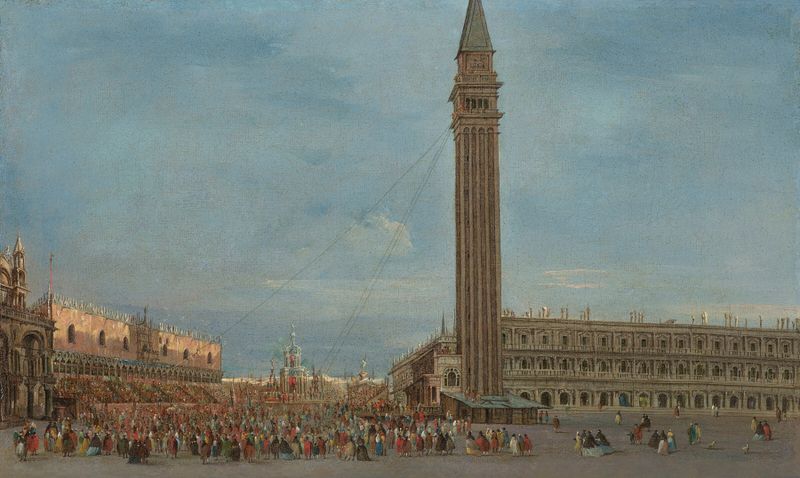
Venice, the Piazzetta San Marco with the Festival of Giovedì Grasso
Francesco Guardi
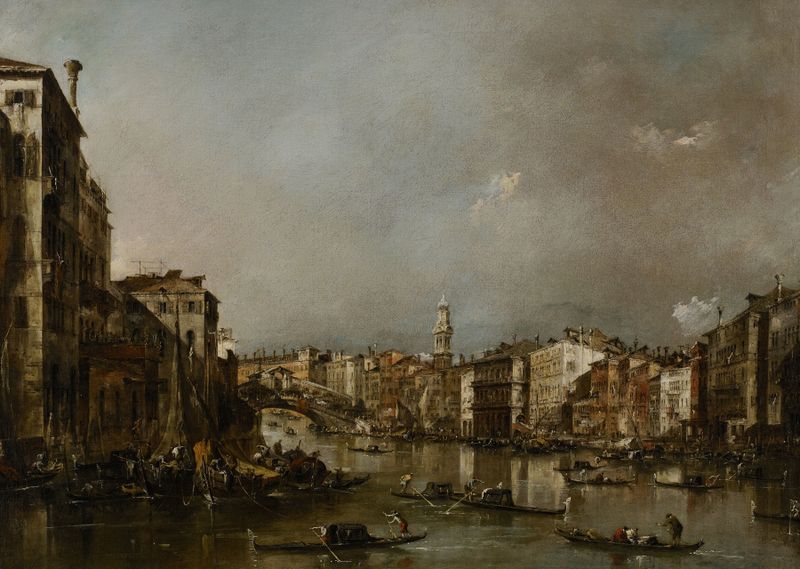
View up the Grand Canal toward the Rialto
Francesco Guardi
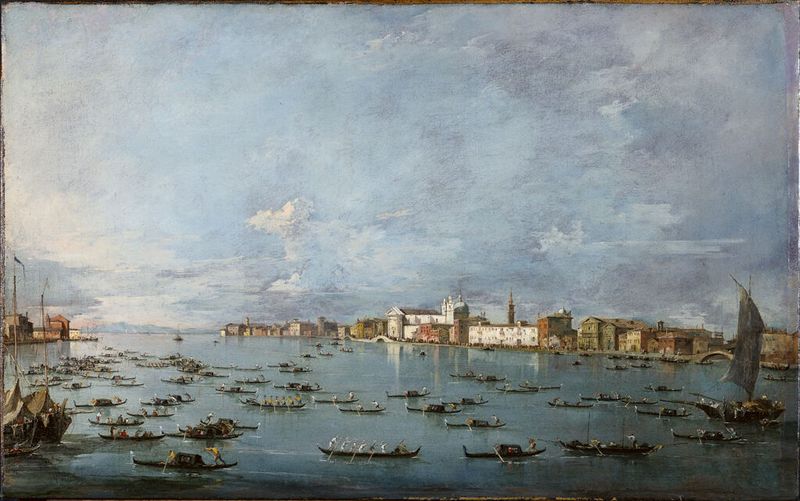
The Fondamenta della Zattere, Venice
Francesco Guardi
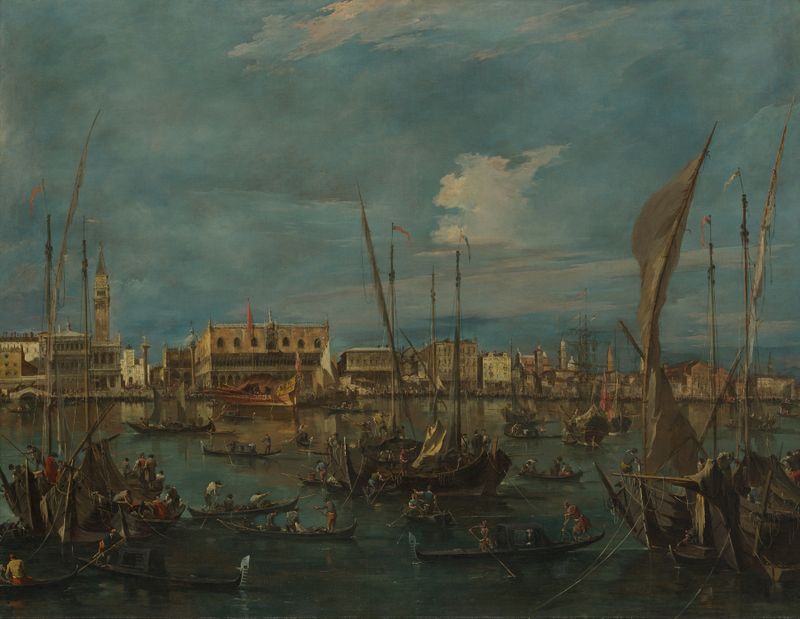
Venice from the Bacino di San Marco
Francesco Guardi

Venice, the Piazzetta looking south, with a view of the Doge’s Palace and the Biblioteca Marciana, the island of San Giorgio Maggiore beyond
Francesco Guardi

Venice, The Rialto
Francesco Guardi
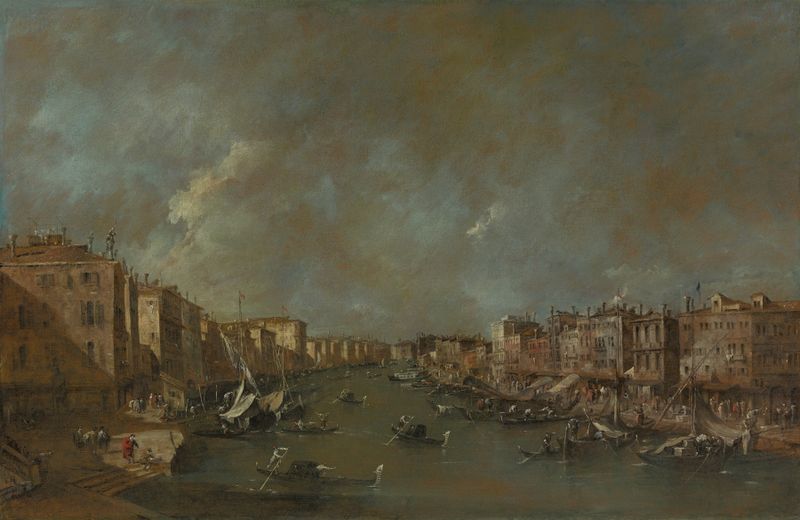
View of the Grand Canal from the Ponte di Rialto
Francesco Guardi
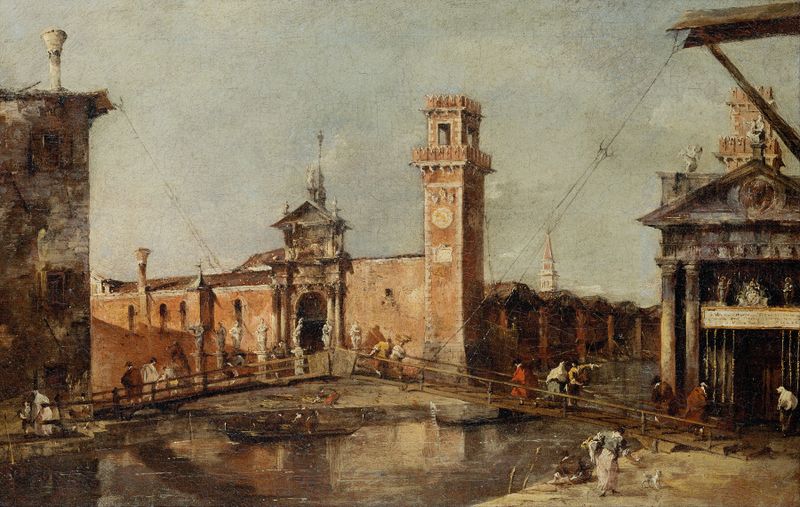
The Entrance to the Arsenal in Venice
Francesco Guardi
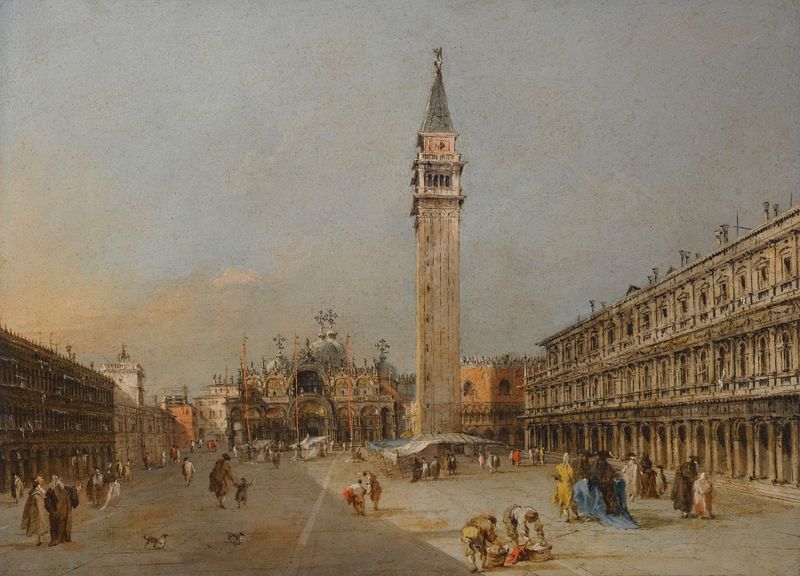
The Piazza San Marco With The Basilica And Campanile
Francesco Guardi
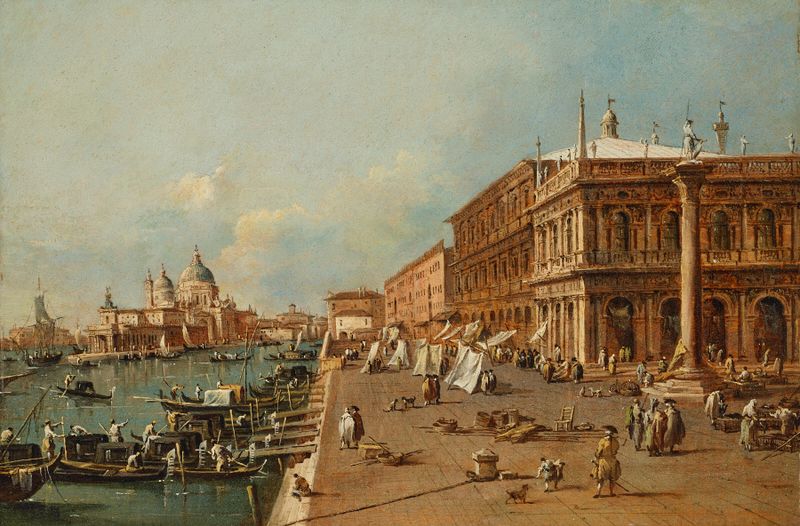
Venice; The Molo with the Libreria, the Punta della Dogana and Santa Maria della Salute
Francesco Guardi
More Architecture Art
Browse all →
The statue of Liberty
Frédéric Auguste Bartholdi

View of Houses in Delft, Known as ‘The Little Street’
Johannes Vermeer

View of Houses in Delft, Known as ‘The Little Street’
Johannes Vermeer

The Cathedral in Rouen. The portal, Grey Weather
Claude Monet

The yellow house
Vincent van Gogh

The Church in Auvers-sur-Oise, View from the Chevet
Vincent van Gogh