
Ansicht von Tivoli — History & Facts
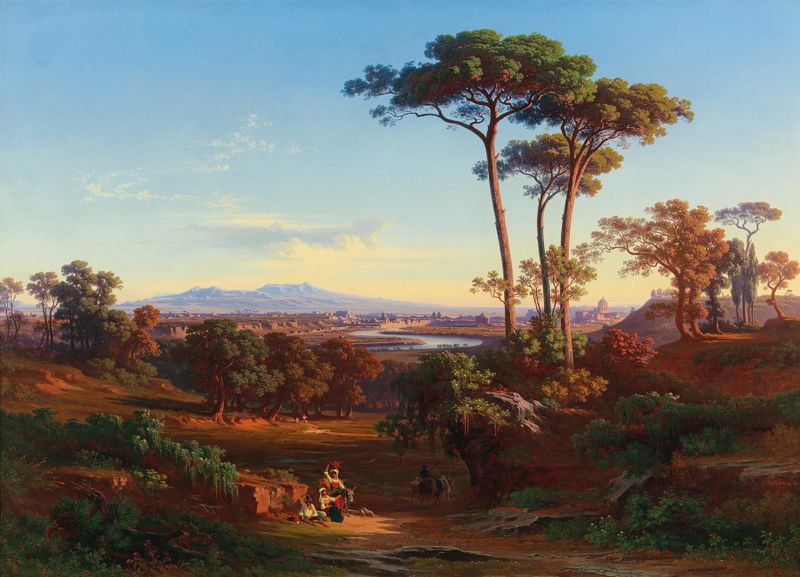
Can paint confess what words never could? In the vivid brushstrokes and quiet palette of Ansicht von Tivoli, a world of yearning unfolds, beckoning the viewer to explore the depths of desire encapsulated in its serene landscape. Focus on the distant cascade of water tumbling from rocky heights, drawing your eyes first to its glistening surface. Notice how the soft greens of the lush hills contrast tenderly with the somber browns of ancient ruins, creating a dialogue between nature's vibrancy and mankind's decay. The gentle gradient of the sky, painted in hues of soft blue transitioning to warm gold, envelops the scene, while wisps of clouds float lazily above, inviting contemplation.
Every stroke reveals Frey's deft hand, capturing the essence of an idyllic retreat where the heart yearns for solace. Delve deeper into the emotional landscape that lies beneath the tranquil surface. The juxtaposition of the soothing water and crumbling architecture hints at a longing for permanence amidst the transience of life. The viewer can sense an interplay of hope and nostalgia, as if the artist is reminding us of the beauty of places and moments that exist beyond our reach.
Each element of the painting whispers a story of desire—be it for nature, connection, or time itself—and urges us to ponder what we seek in the fleeting moments of our own lives. During this period, Frey painted without a specific date, yet it’s believed he was influenced by the burgeoning Romantic movement, which embraced emotion and the sublime in nature. Living in 19th century Europe, he navigated a landscape of shifting artistic ideologies, seeking to capture not just the physical world, but also the profound feelings it inspires. This piece stands as a testament to that ambition, inviting viewers to lose themselves in an echo of their own desires.
More Artworks by Johann Jakob Frey
Browse all →
From The Surroundings Of Rome
Johann Jakob Frey
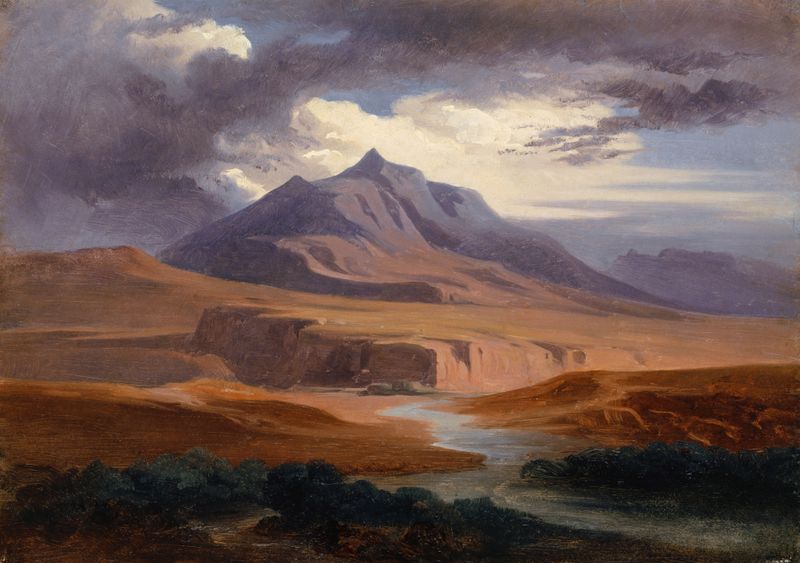
Mountains In The Roman Campagna
Johann Jakob Frey
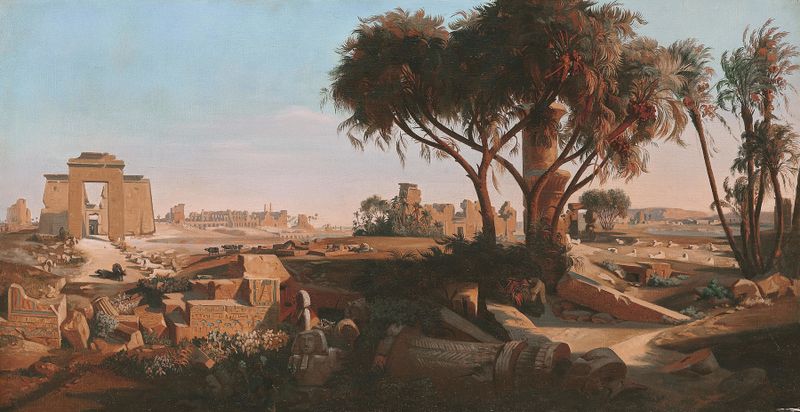
Karnak
Johann Jakob Frey
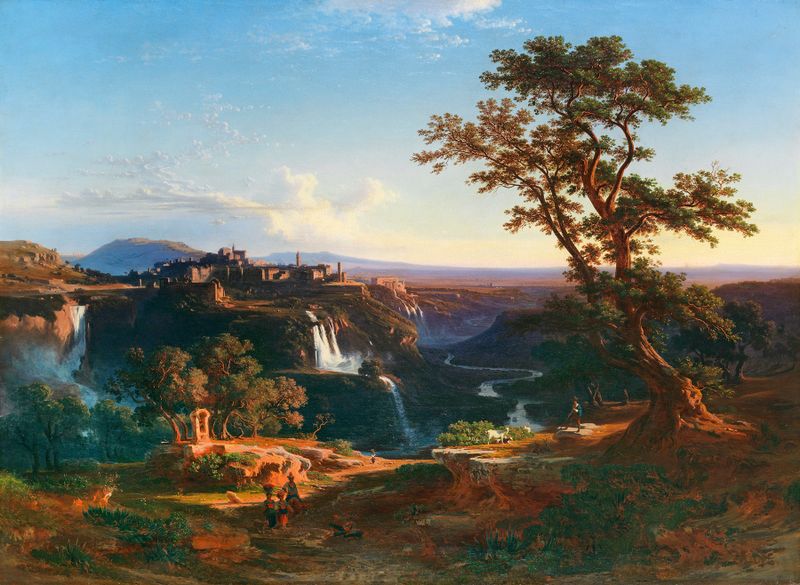
Die Kaskaden von Tivoli in der Abendsonne
Johann Jakob Frey

Forest Landscape in the Roman Mountains
Johann Jakob Frey

Landscape Near Granada
Johann Jakob Frey
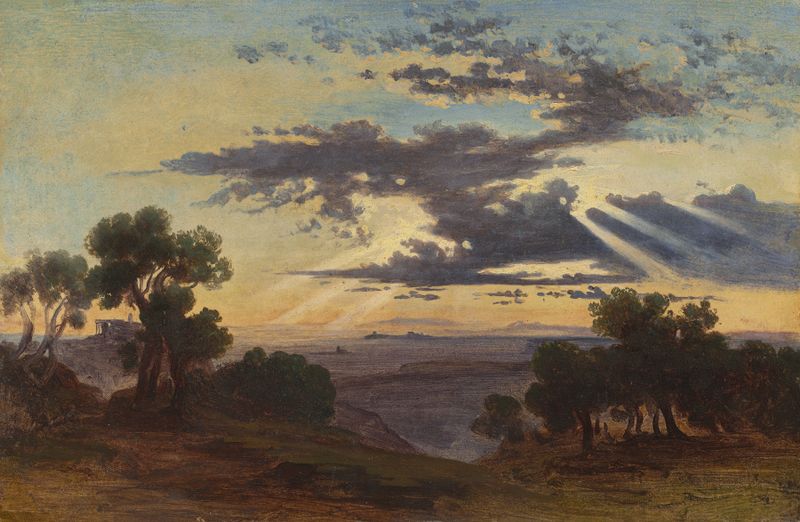
Sun Breaking through Clouds above the Roman Campagna
Johann Jakob Frey
Ansicht von Rom vom Monte Mario
Johann Jakob Frey

A Caravan Surprised By The Samoom In Front Of The Sphinx
Johann Jakob Frey

The Temples At Paestum In The Rain
Johann Jakob Frey





