Apples and Grapes — History & Facts
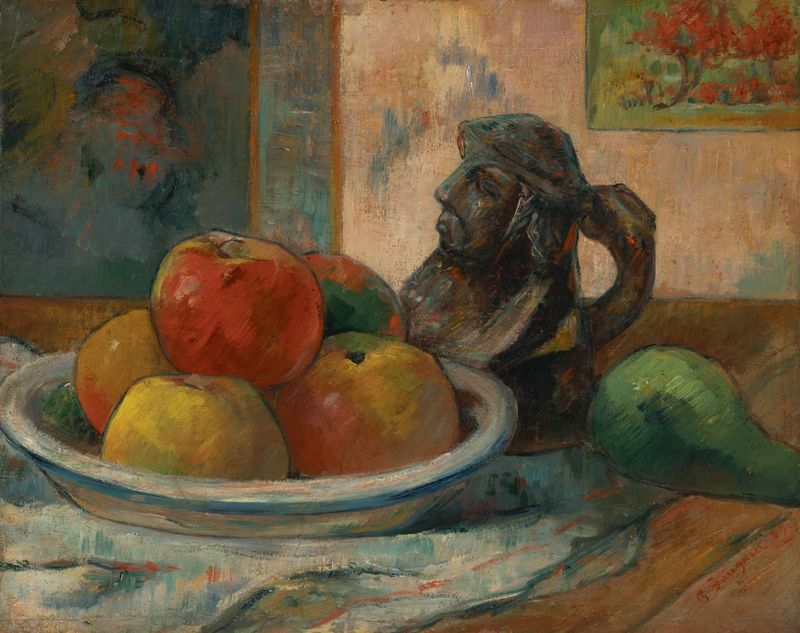
What if silence could speak through light? In Apples and Grapes, the stillness of nature is transformed into a vibrant conversation between colors and forms, inviting the viewer to consider beauty in its simplest and most profound expressions. Look to the center of the canvas, where a luminous arrangement of fruit unfurls before your eyes. The juxtaposition of the glossy apples and the delicate grapes creates a symphony of texture and hue. Monet’s masterful brushstrokes evoke an impression of softness, while dappled light dances across the surface, casting gentle shadows that add depth and intrigue to the composition.
Rich greens and warm reds blend harmoniously, suggesting the ripeness of late summer, capturing a moment teetering between fullness and decay. Delve deeper, and you will find subtle emotional tensions beneath the surface. The vibrant colors speak to life and abundance, yet their stillness evokes a sense of quiet contemplation. Each morsel appears almost weighty with significance; they symbolize both the pleasure and transience of nature, reminding us of the fleeting beauty that life offers.
The poised yet intimate arrangement invites reflection on the relationship between the viewer and the natural world, a pause in the chaos of existence. In 1880, Monet painted this piece in his garden in Argenteuil, a period marked by his growing mastery of light and color within the Impressionist movement. The world around him was rapidly changing, with industrialization encroaching upon the serene landscapes he loved. In the midst of this turmoil, he sought solace in capturing the ephemeral beauty of nature, aiming to evoke feelings of tranquility and wonder through his art.