Après le crachin – Morgat — History & Facts
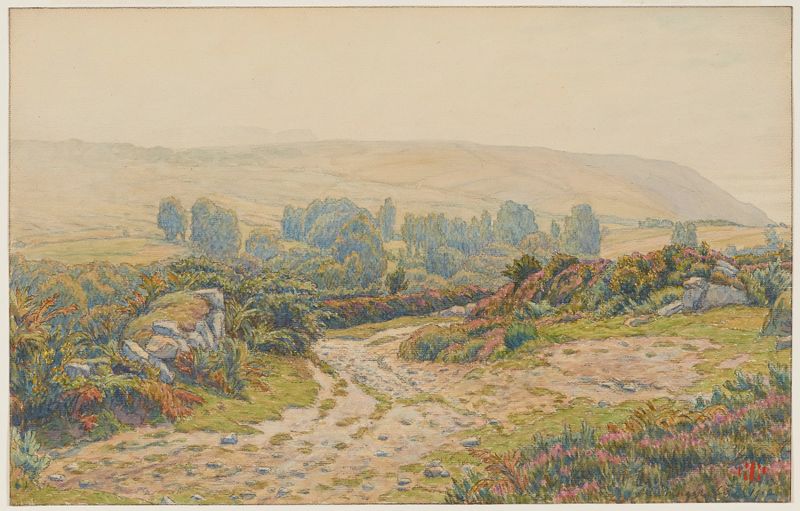
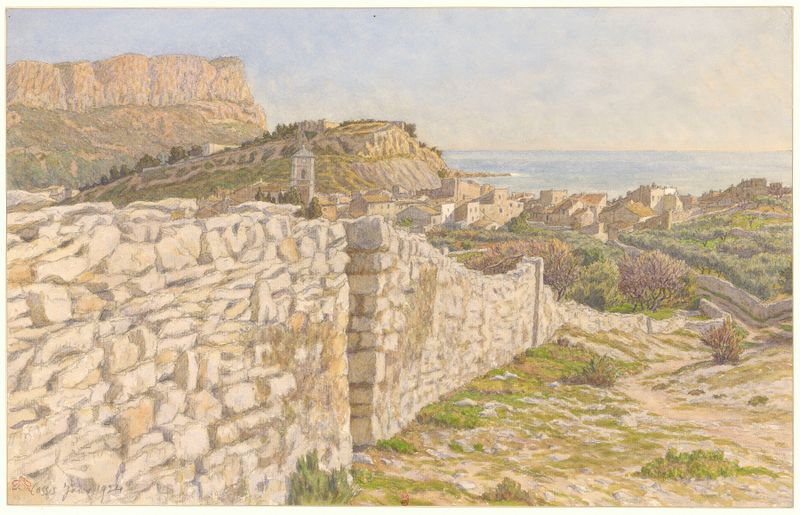
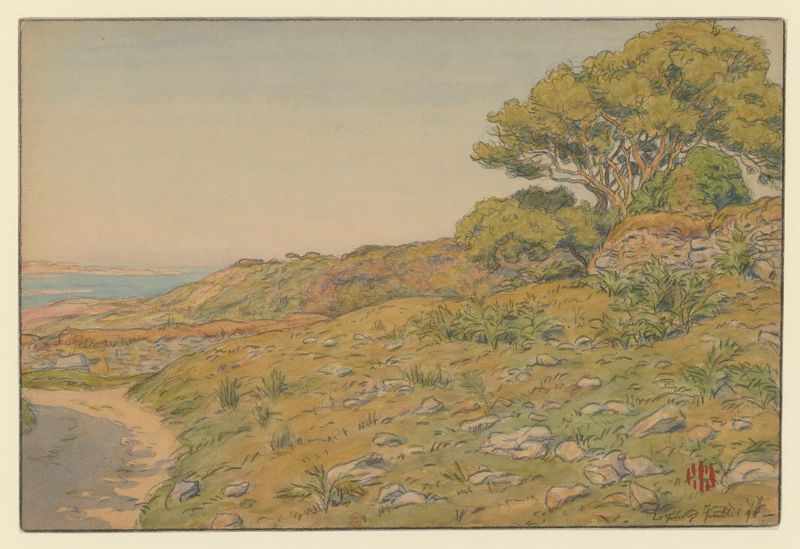
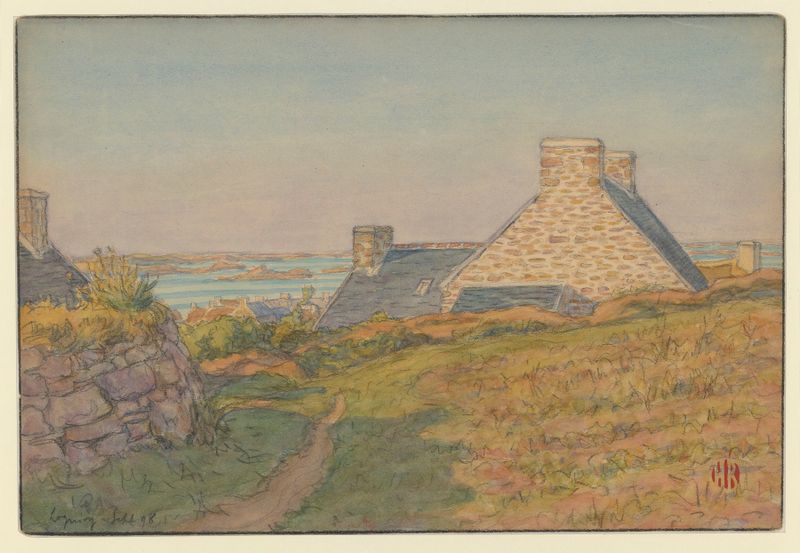
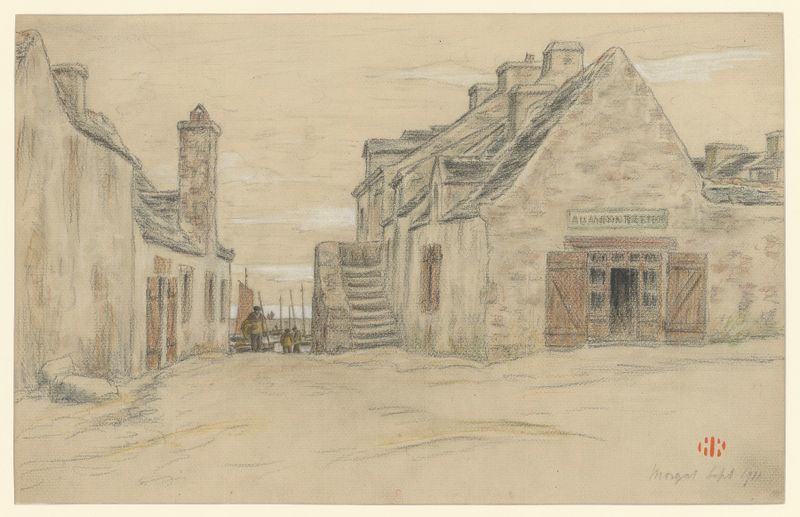
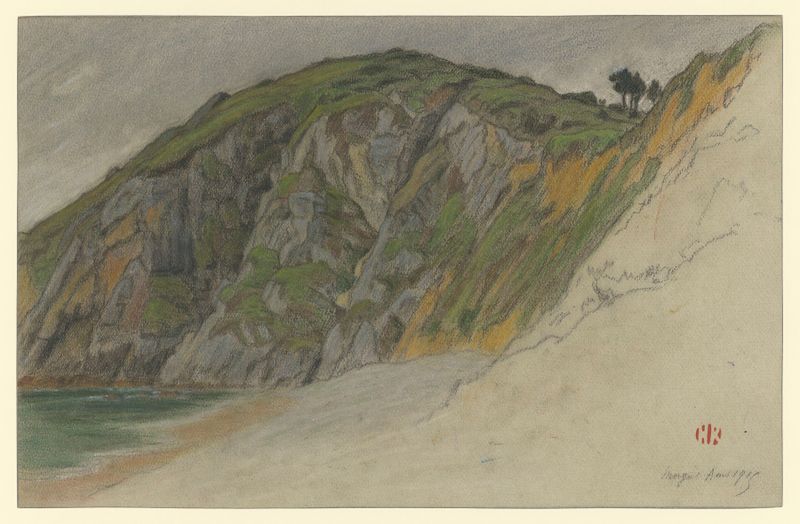
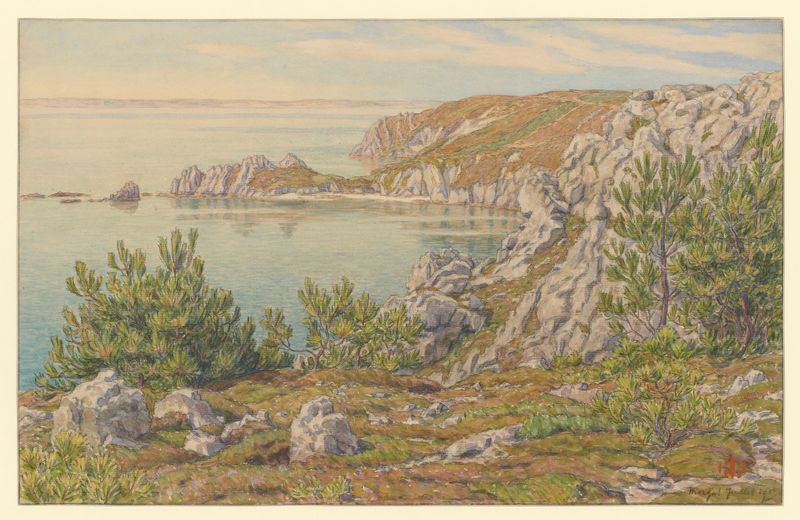
In the silence between raindrops, a world is revealed, shimmering with the promise of transformation. Light dances upon surfaces, inviting deeper contemplation. Look to the soft, muted hues that flow across the canvas, primarily the gentle blues and greys that evoke the sense of a damp, yet vibrant, landscape. Notice how the light, filtered through clouds, creates a subtle glow that caresses the edges of the quaint structures, illuminating the charm of the coastal village.
Rivière's deft brushwork allows for a fluidity that merges the land and sky, effectively blurring boundaries and immersing the viewer in the tranquil aftermath of rain. In this work, the stillness contrasts with the dynamic movement suggested by the brushstrokes, hinting at nature’s duality—calmness amid chaos. The light serves as a metaphor for hope, suggesting that even after the dreariest of storms, there exists beauty and serenity. The unseen rain has left behind a rich tapestry of color that speaks volumes about the transformative power of nature and the solace it provides. Created in 1916, this piece reflects Rivière’s exploration of the natural world during a tumultuous period in Europe.
Living in France and deeply immersed in the artistic movements of his time, he was influenced by both Impressionism and Symbolism. As World War I raged on, artists like him sought refuge in the landscapes around them, capturing fleeting moments of light and peace amidst the surrounding turmoil.