Morgat — History & Facts
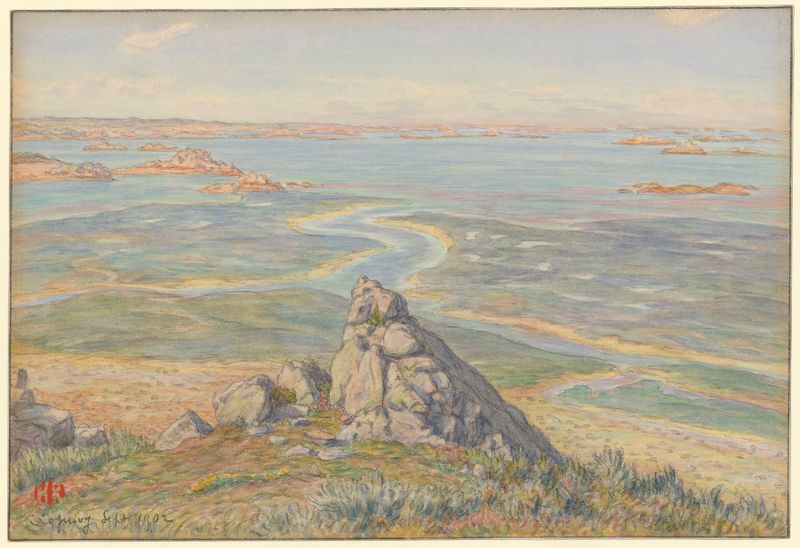
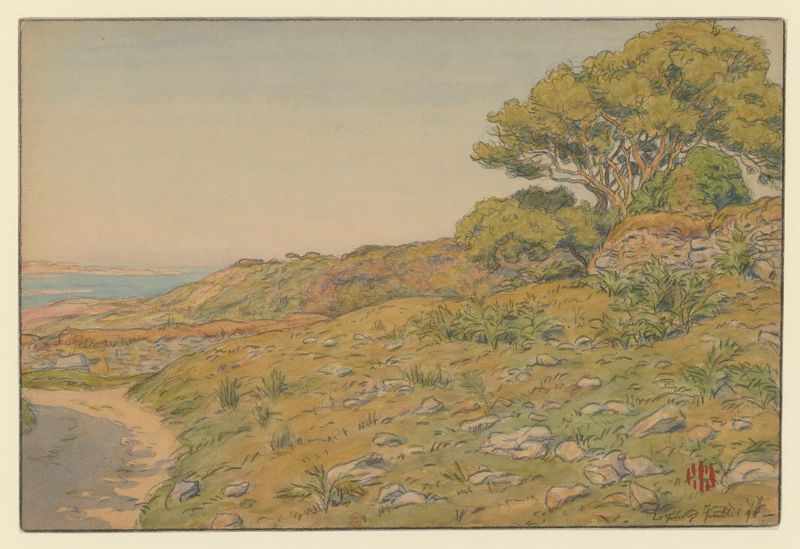
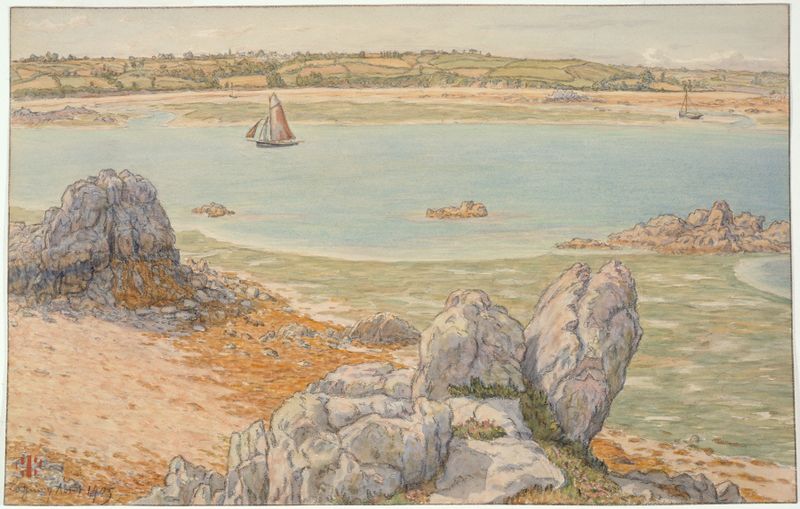
In the delicate interplay between form and light, we confront the fragility of existence, suspended in the moment. Look to the center of the composition where soft brushstrokes conjure the serene shoreline, inviting your gaze to dance along the gentle curve of the waves. Notice how the muted palette of blues and greens invokes the tranquility of the sea, while the flickers of sunlight glaze the water's surface, creating an ethereal glow. The painter’s technique, with its tender strokes and a subtle layering of color, captures a fleeting moment, reminiscent of a whisper carried by the wind. Delve deeper into the scene's inherent contrasts, where the strength of nature's beauty meets the vulnerability of time.
The fleeting waves of the ocean symbolize the transient nature of life, as each crest seems to ebb and flow into eternity, yet is gone in an instant. The almost ghostly presence of the shore serves as a reminder of permanence amidst impermanence, the land forever shaped by the relentless tide. In 1903, this piece emerged from Rivière's exploration of coastal landscapes in France, as he sought to encapsulate the essence of tranquility amid rapid industrial change. At a time when the art world was embracing impressionism, he was particularly drawn to the interplay between light and color, reflecting both the beauty and fragility of his surroundings.
Rivière's work from this period encapsulates a moment of introspection, inviting the viewer to ponder their own place within the ever-shifting landscape.