
Araber zu Pferd 2925 Führermuseum — History & Facts
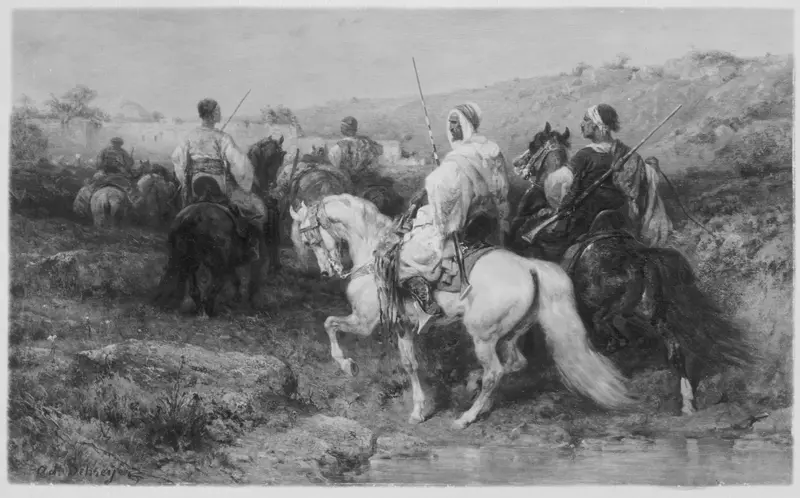
What first seizes the eye in this work is the charged stillness before a city gate, where horses rear and men in flowing robes gather in a moment thick with anticipation. The play of light and shadow draws attention to the central figures: a rider in luminous white, calm and upright on his dark horse, and another whose steed recoils, nostrils flared, as if startled by the crowd or the prospect of what lies beyond the archway. Every gesture is calculated—raised arms, taut reins, the flutter of banners—each one a signal, a challenge, or a greeting, their meanings layered in the dust and tension of the scene.
The palette, dominated by smoky greys and sharp whites, sets a mood of both ceremony and uncertainty, as if the outcome of this encounter is unresolved. Painted in 1853, this scene belongs to a world fascinated by the exotic and the martial, when European artists like Adolf Schreyer turned their gaze to North Africa and the Middle East, blending firsthand observation with the era’s appetite for drama and spectacle. Such works were often collected by those eager to display a taste for the adventurous and the foreign, and they reflect both the curiosity and the prejudices of their time. Today, Araber zu Pferd 2925 Führermuseum resides in the Deutsches Historisches Museum, its precise origins and journey largely unrecorded—history has kept few traces of its early life.
Yet the energy of its figures and the unresolved story it hints at still invite the viewer to step closer and imagine what words or actions might have followed this charged encounter.
More Artworks by Adolf Schreyer
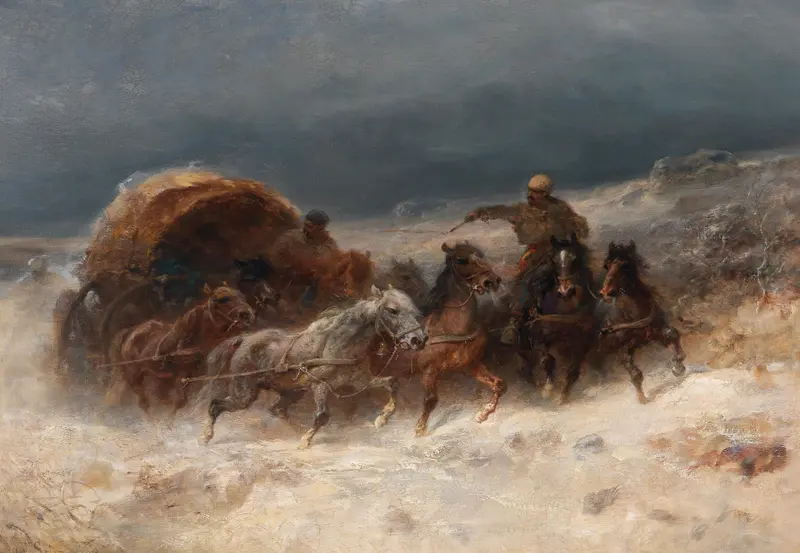
Geldings In A Winter Landscape
Adolf Schreyer
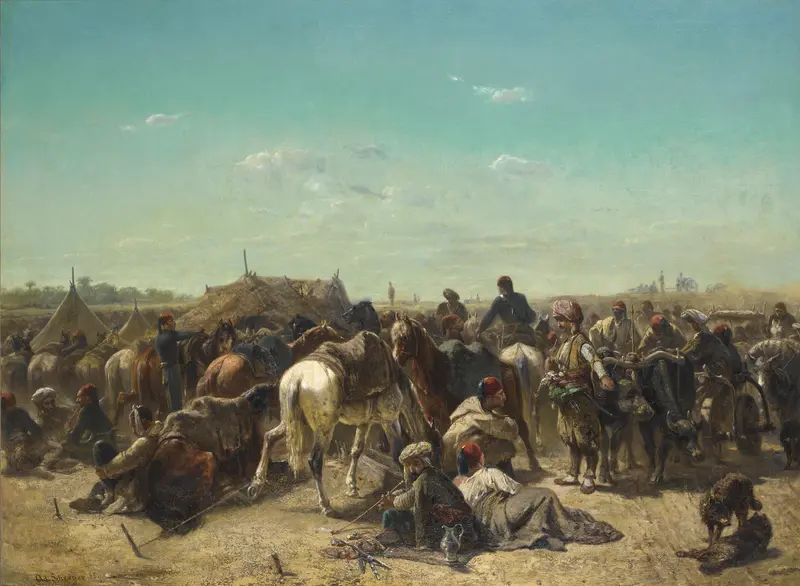
An Ottoman encampment
Adolf Schreyer
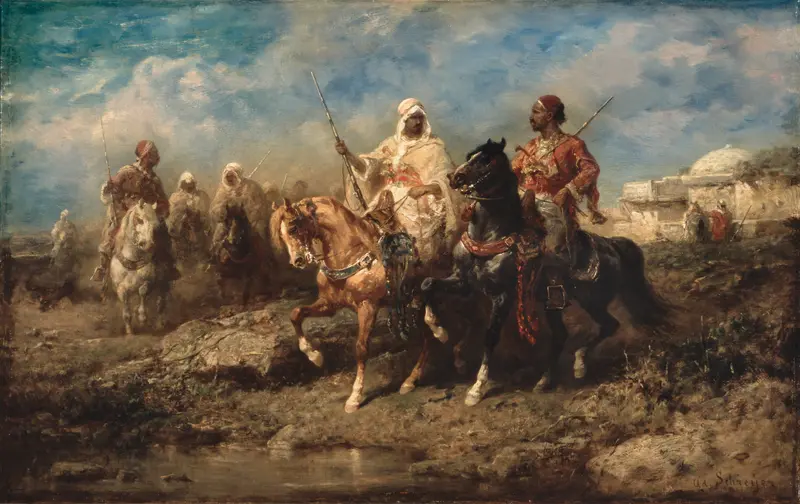
Arabs
Adolf Schreyer
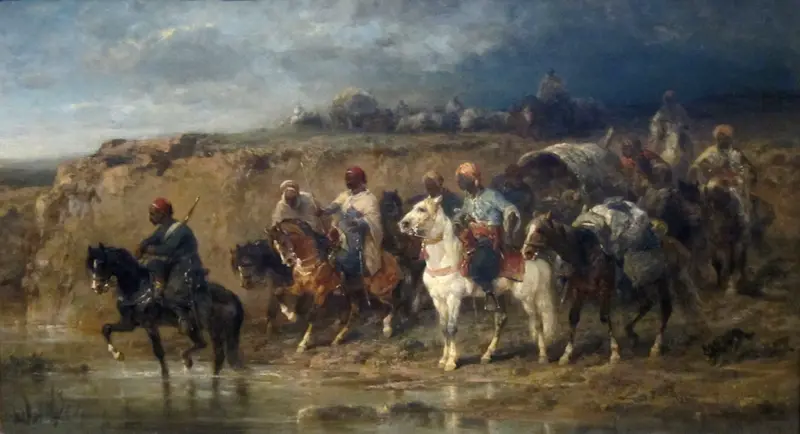
Arab Caravan
Adolf Schreyer
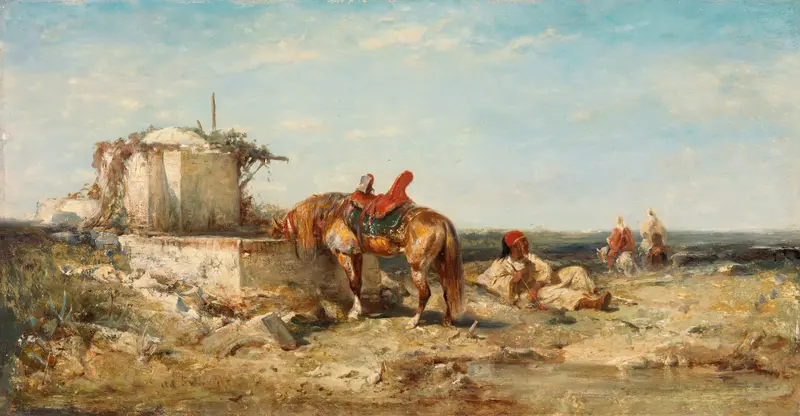
Eastern Soldiers with a Horse Drinking
Adolf Schreyer
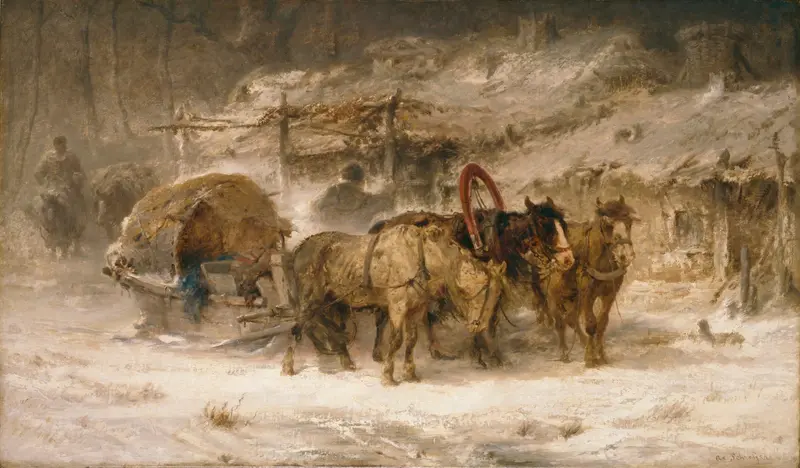
Halt at the Inn
Adolf Schreyer
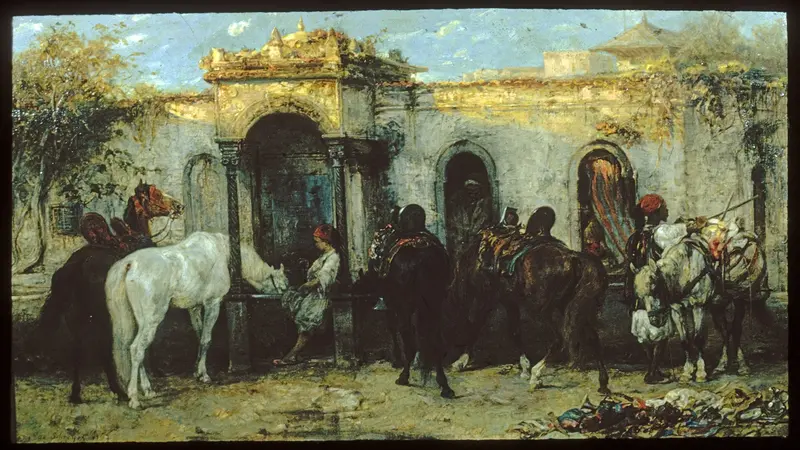
Arabs in Egypt, Sunrise
Adolf Schreyer
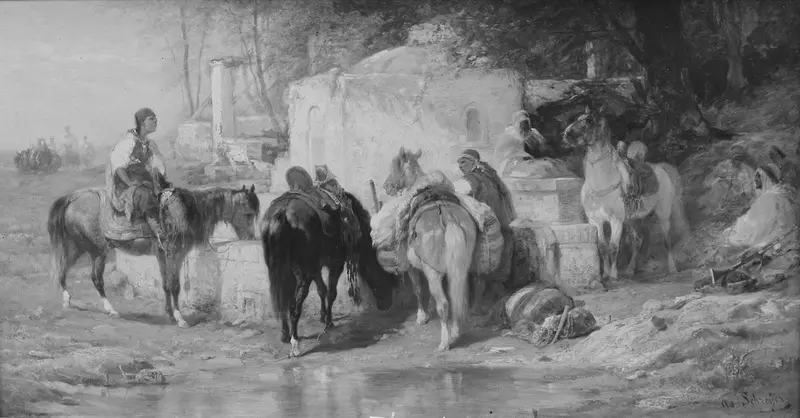
Arab Horsemen Resting at a Fountain
Adolf Schreyer
Arabs on the March
Adolf Schreyer
Charge de l'artillerie de la Garde Impériale à Traktir Orsay RF 440
Adolf Schreyer





