
Arabs on the March — History & Facts
What first catches the eye in Arabs on the March is the restless energy of the horses, their muscles tensed mid-stride, as if the entire caravan is caught between worlds—one foot in the wild, another in the unknown ahead. The riders, wrapped in flowing garments and armed with long rifles, are not simply passing through this landscape; they command it, their posture and the careful choreography of their mounts suggesting alertness and purpose. Light glances off the pale horse in the foreground, drawing us into the scene and setting it apart from the darker, more shadowed figures behind.
The painting’s palette is restrained, almost monochrome, which heightens the sense of unity among the riders and the land, while the rough terrain and distant, low buildings hint at a journey not only through space but through culture and history. Painted between 1848 and 1899, this work belongs to a moment when European artists were fascinated by the so-called “Orient”—a world both near and far, real and imagined. Painters like Adolf Schreyer built their reputations on such scenes, which were collected by a public eager for images of distant lands and peoples, often filtered through the lens of romantic adventure. These works were as much about the European viewer’s desires as about the places depicted, and they often hung in salons or private homes as tokens of worldliness and taste.
Today, Arabs on the March resides in the collection of the Metropolitan Museum of Art, its journey from private commission to public institution echoing the shifting tides of art, empire, and curiosity. Look again at the riders’ faces and the horses’ hooves: each detail is a record, not only of a moment, but of a world watching itself in the mirror of another.
More Artworks by Adolf Schreyer
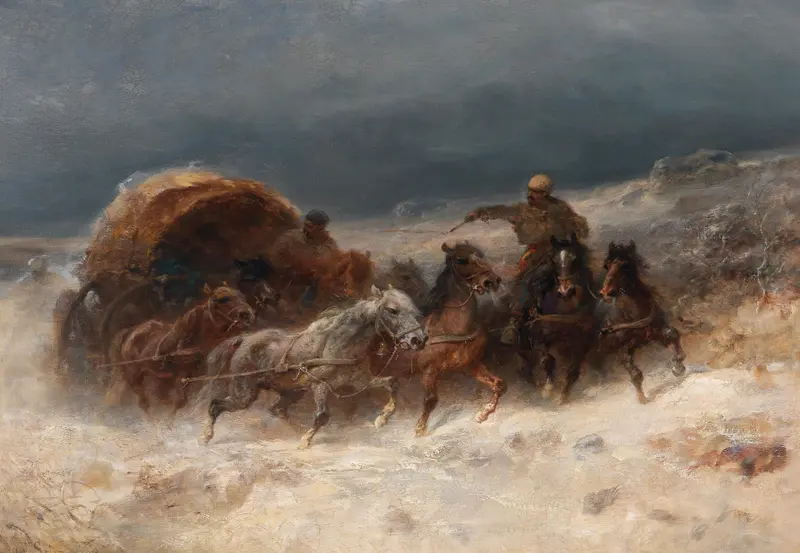
Geldings In A Winter Landscape
Adolf Schreyer
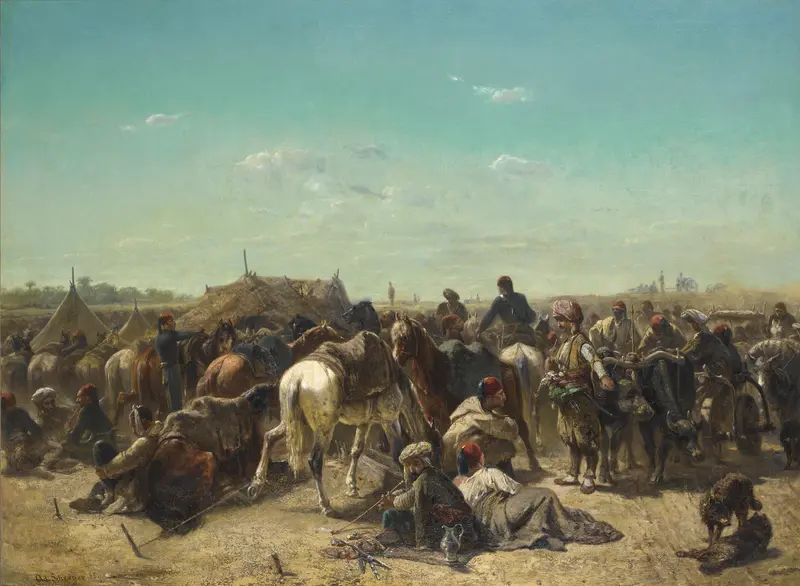
An Ottoman encampment
Adolf Schreyer
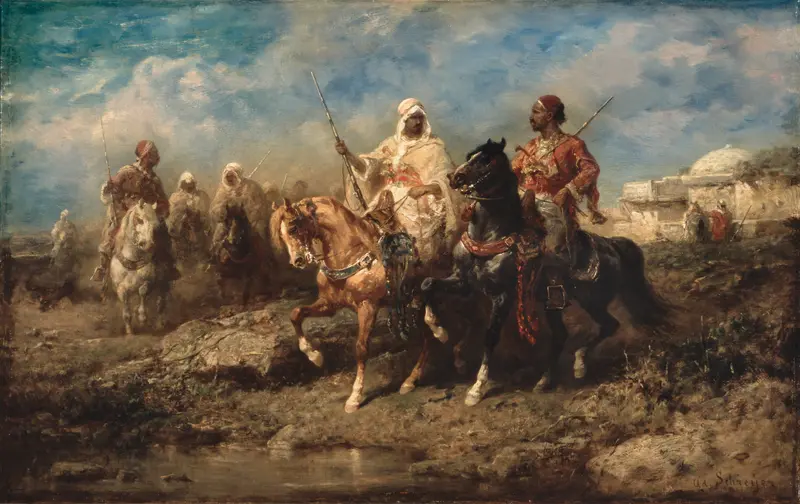
Arabs
Adolf Schreyer
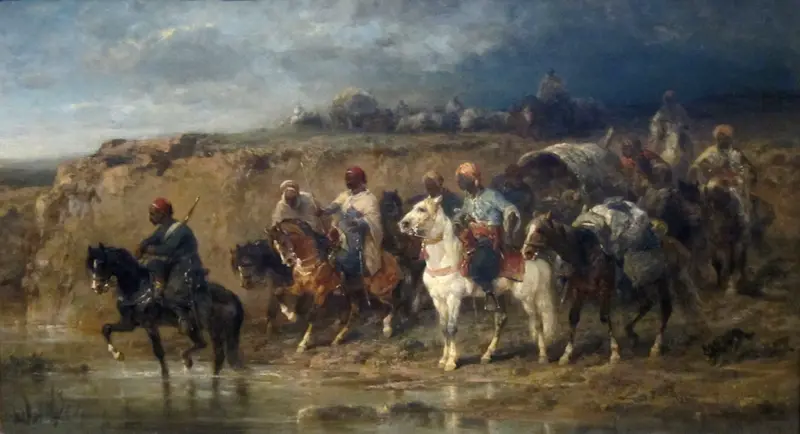
Arab Caravan
Adolf Schreyer
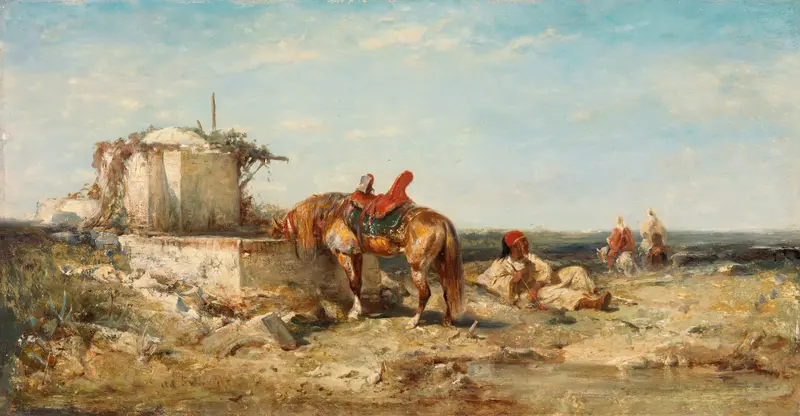
Eastern Soldiers with a Horse Drinking
Adolf Schreyer
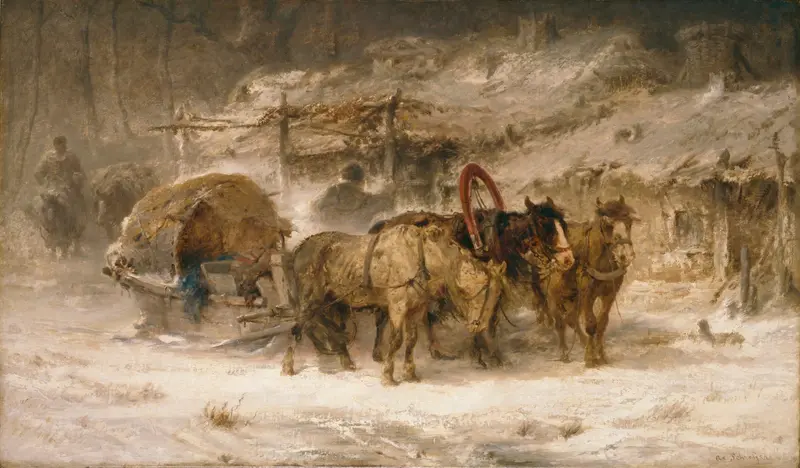
Halt at the Inn
Adolf Schreyer
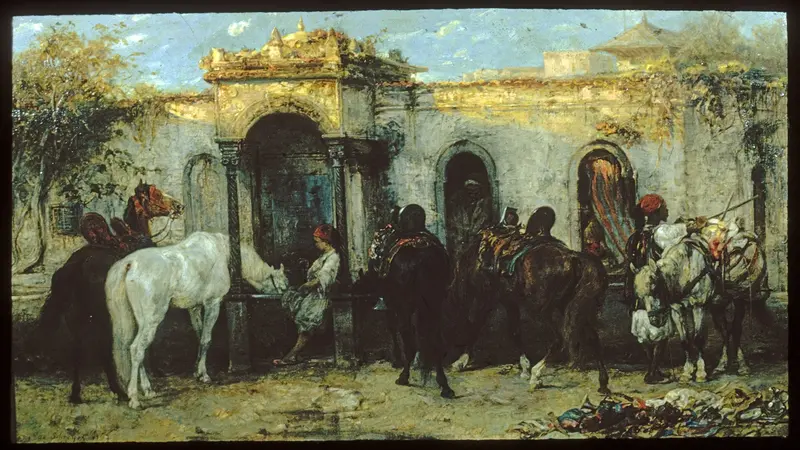
Arabs in Egypt, Sunrise
Adolf Schreyer
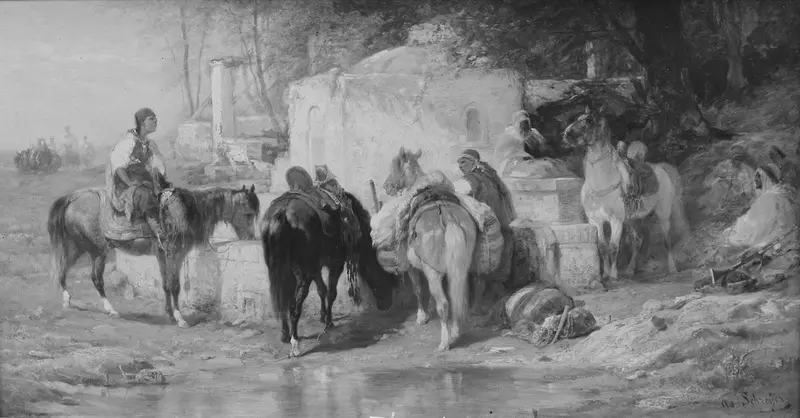
Arab Horsemen Resting at a Fountain
Adolf Schreyer
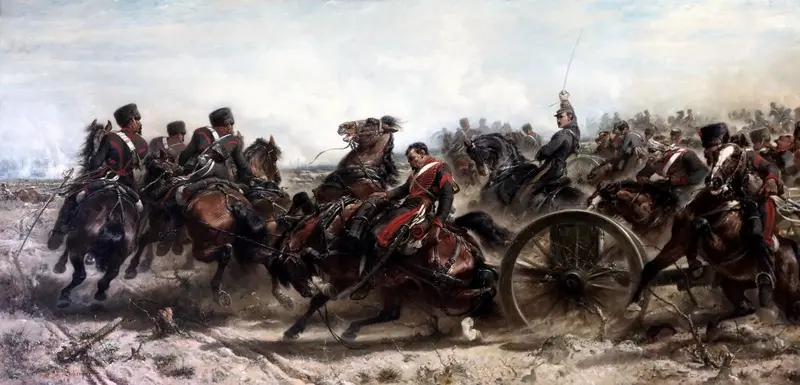
Charge de l'artillerie de la Garde Impériale à Traktir Orsay RF 440
Adolf Schreyer
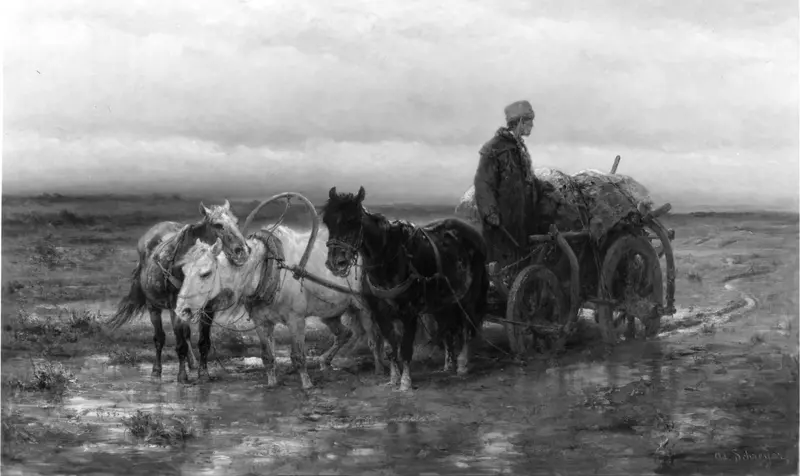
The Plains of Hungary
Adolf Schreyer
More Genre Scene Art

Banquet of the Officers of the St George Civic Guard
Frans Hals

Rembrandt and Saskia in the Scene of the Prodigal Son
Rembrandt van Rijn

Bal du moulin de la Galette
Pierre-Auguste Renoir

Quadrille at the Moulin Rouge
Henri de Toulouse-Lautrec

A Burial at Ornans
Gustave Courbet

When Will You Marry?
Paul Gauguin