
Halt at the Inn — History & Facts
A hush falls over the scene, broken only by the heavy breath of horses and the muffled crunch of snow beneath hooves and wheels. The eye is drawn first to the trio of draft horses, their bodies dusted with frost, standing in uneasy pause before a rustic inn. The wagon, burdened and bowed, hints at a journey through harsh terrain, while the indistinct figures in the background—one nearly lost in the haze—suggest the weary company that travels with them.
Light glances off the horses’ coats and the snow-laden roof, guiding the viewer from the foreground’s raw animal strength to the sheltering promise of the inn, half-swallowed by the winter gloom. The entire palette is subdued, the whites and browns merging into a world where warmth and hardship are locked in quiet struggle. Works like this, painted between 1846 and 1899, belong to a tradition that reveled in the drama of everyday endurance. Adolf Schreyer was known for his ability to animate the lives of travelers and their beasts, often drawing on the realities of Eastern European and Russian rural life.
Such paintings were prized by collectors who longed for the romance and grit of distant frontiers—images that spoke to both the hardship and dignity of rural existence. Today, Halt at the Inn resides in the collection of the Detroit Institute of Arts, a testament to a period when artists sought to capture not only the heroism of battle or myth, but the quiet heroism of survival. The longer you look, the more the cold settles in, and the more you sense the relief promised by that rough-hewn shelter.
More Artworks by Adolf Schreyer
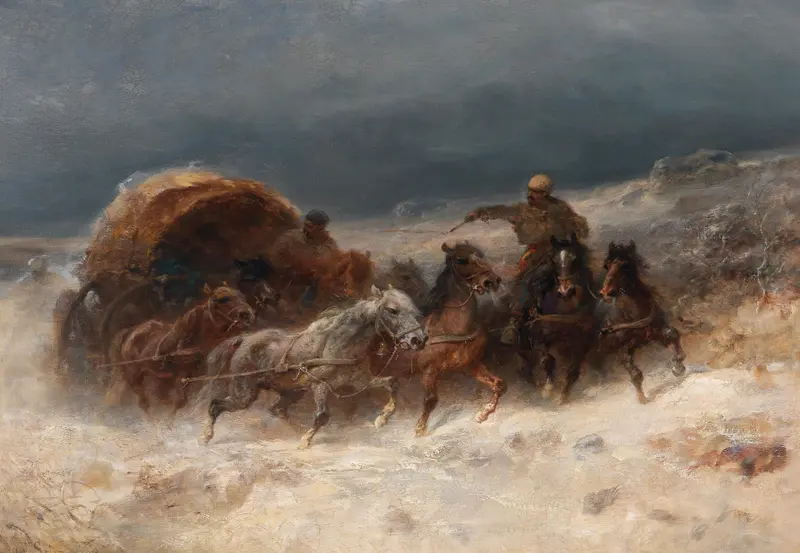
Geldings In A Winter Landscape
Adolf Schreyer
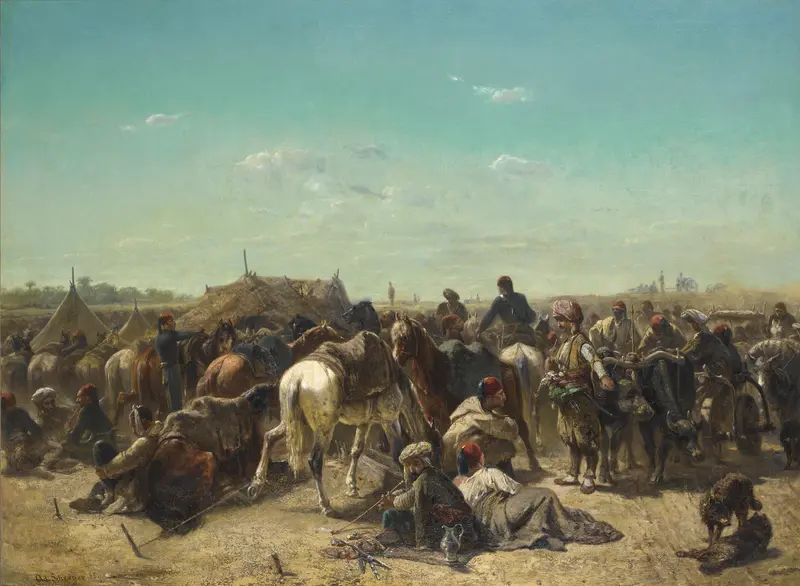
An Ottoman encampment
Adolf Schreyer
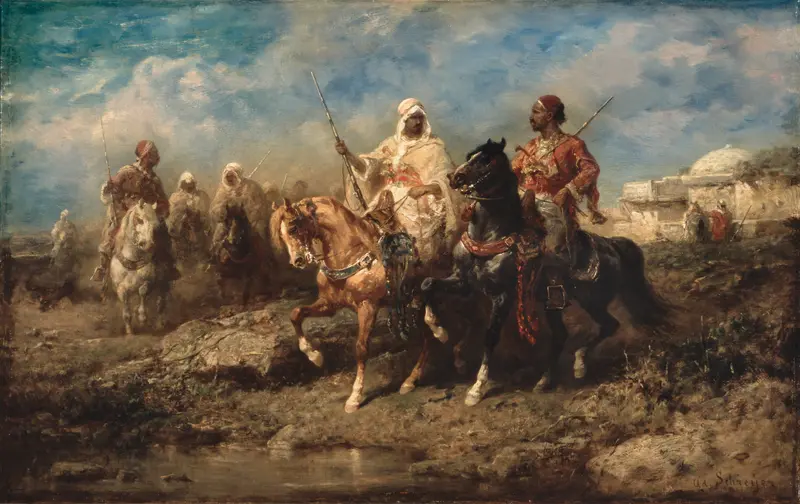
Arabs
Adolf Schreyer
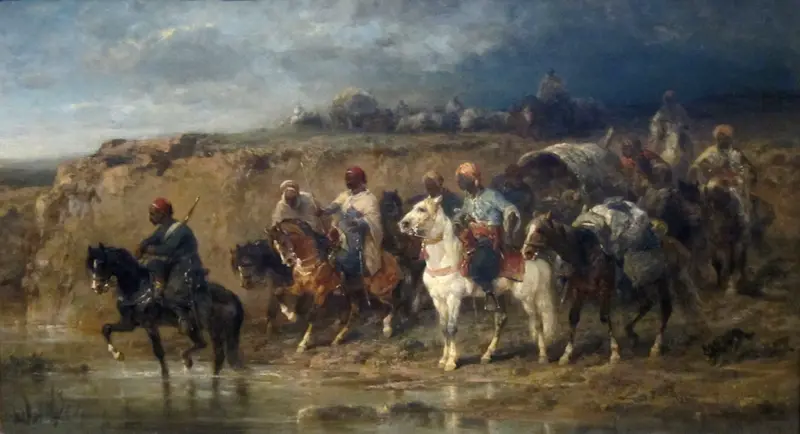
Arab Caravan
Adolf Schreyer
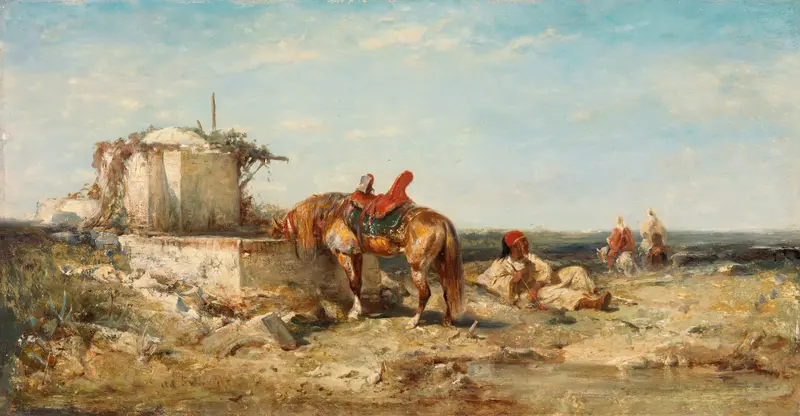
Eastern Soldiers with a Horse Drinking
Adolf Schreyer
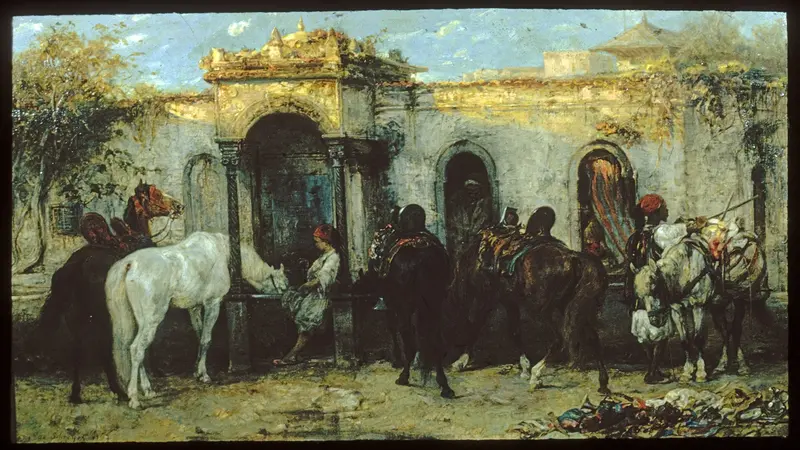
Arabs in Egypt, Sunrise
Adolf Schreyer
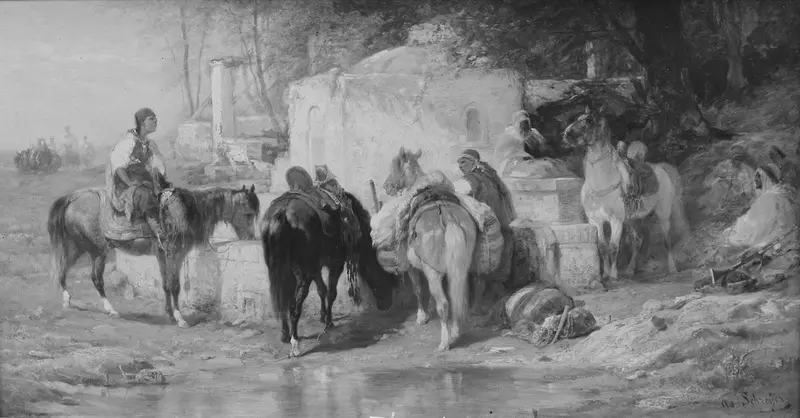
Arab Horsemen Resting at a Fountain
Adolf Schreyer
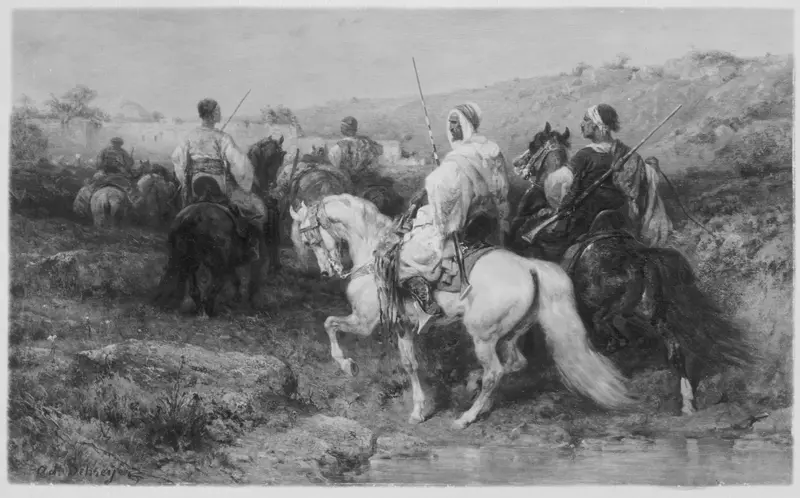
Arabs on the March
Adolf Schreyer
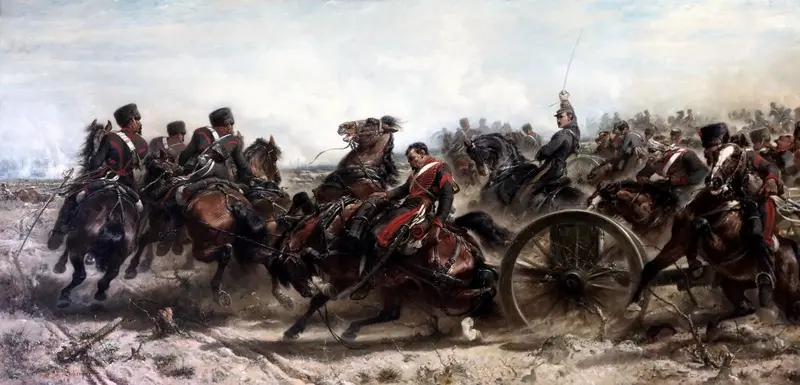
Charge de l'artillerie de la Garde Impériale à Traktir Orsay RF 440
Adolf Schreyer
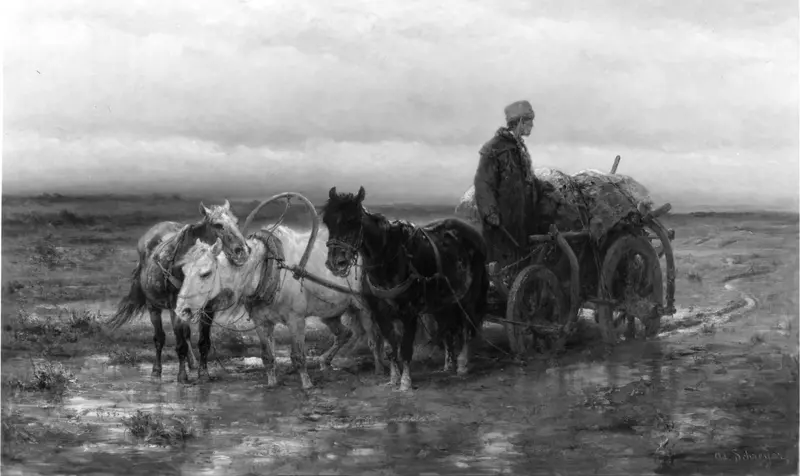
The Plains of Hungary
Adolf Schreyer
More Genre Scene Art

Banquet of the Officers of the St George Civic Guard
Frans Hals

Rembrandt and Saskia in the Scene of the Prodigal Son
Rembrandt van Rijn

Bal du moulin de la Galette
Pierre-Auguste Renoir

Quadrille at the Moulin Rouge
Henri de Toulouse-Lautrec

A Burial at Ornans
Gustave Courbet

When Will You Marry?
Paul Gauguin