
Arab Horsemen Resting at a Fountain — History & Facts
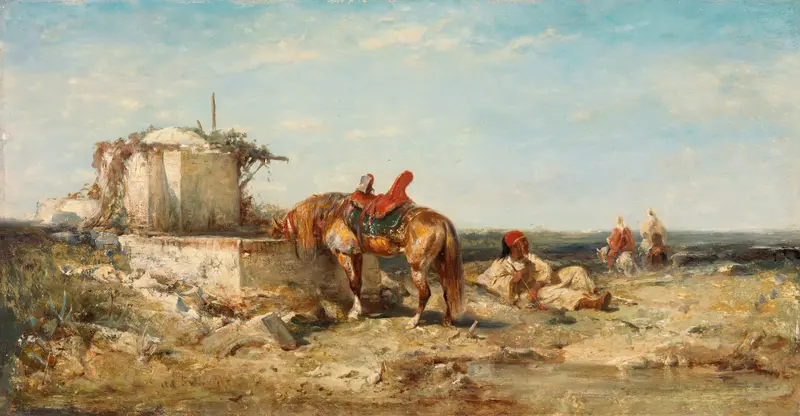
A hush settles over the scene, as if the world itself pauses to watch these riders and their horses drink at the fountain. The eye is drawn first to the central figure, perched side-saddle, alert yet at rest, while his companions tend to their mounts or recline in the shade. The rough-hewn stone of the fountain and the domed structure behind it anchor the composition, their pale surfaces catching the light and guiding us through the tangle of horses, men, and gear.
The horses themselves are rendered with a kind of affectionate precision—their heads lowered, muscles slack, tails flicking—each animal’s posture echoing the mood of its rider. The palette, subdued and earthy, lends a sense of heat and dust, while the soft focus at the edges suggests the vastness of the landscape beyond. Works like Arab Horsemen Resting at a Fountain by Adolf Schreyer belong to a nineteenth-century European fascination with the so-called “Orient”—a world of deserts, horses, and distant cultures, filtered through the eyes of Western artists. Schreyer, a German painter known for his dynamic equestrian scenes, was celebrated for his ability to capture both the energy and the quiet dignity of his subjects.
Paintings of this type were collected by European patrons eager for a glimpse of lands they would never see, their tastes shaped by travel writing, imperial ambitions, and the romantic allure of the unfamiliar. This particular work, now in the collection of the Museum of Fine Arts, Boston, stands as a testament to that era’s blend of curiosity and fantasy. Let your gaze linger on the details—the folds of cloth, the careful harnessing, the interplay of rest and readiness—and consider what stories might have unfolded once the horses moved on.
More Artworks by Adolf Schreyer
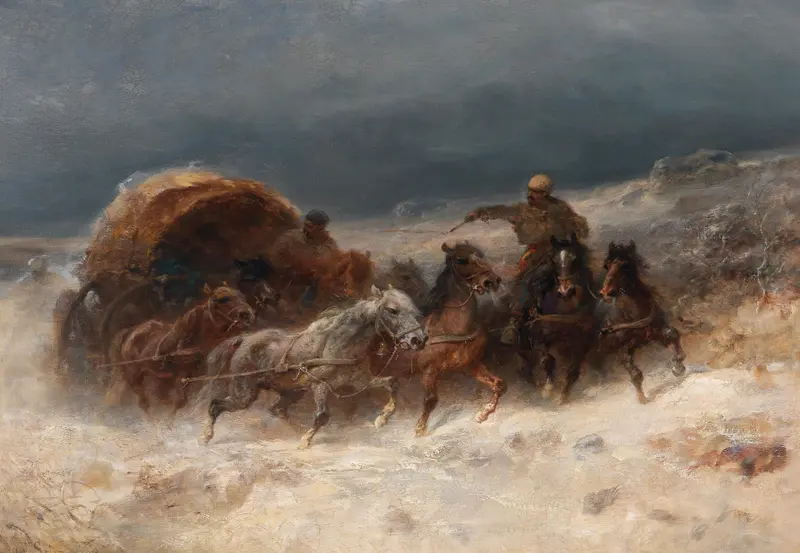
Geldings In A Winter Landscape
Adolf Schreyer
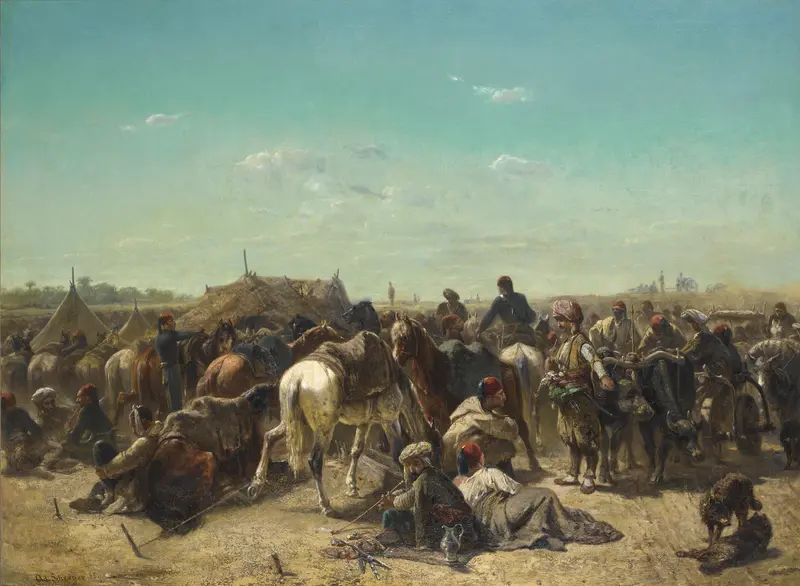
An Ottoman encampment
Adolf Schreyer
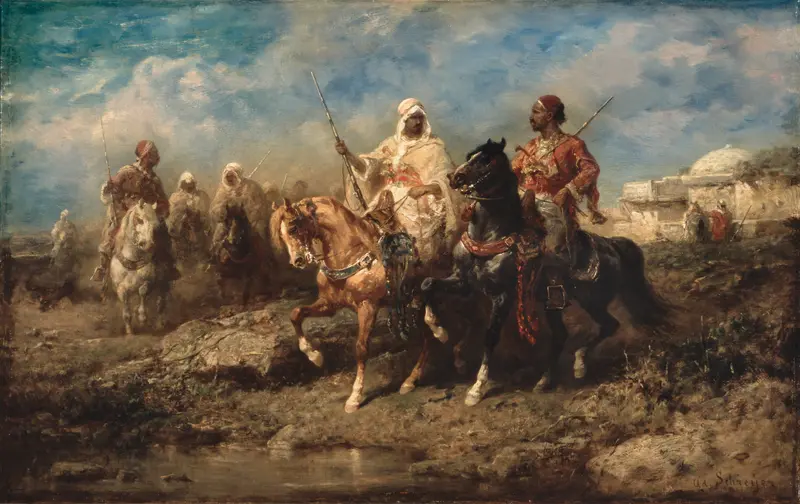
Arabs
Adolf Schreyer
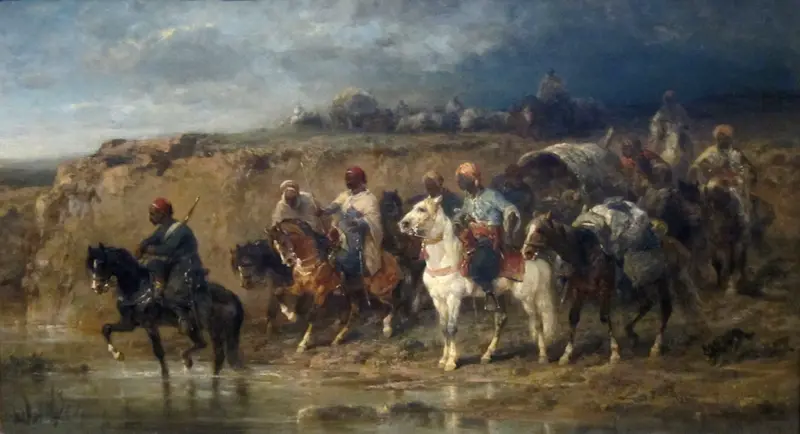
Arab Caravan
Adolf Schreyer
Eastern Soldiers with a Horse Drinking
Adolf Schreyer
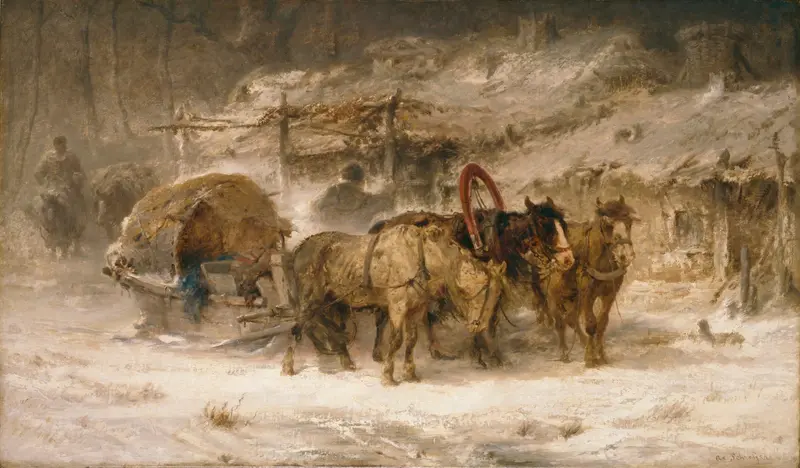
Halt at the Inn
Adolf Schreyer
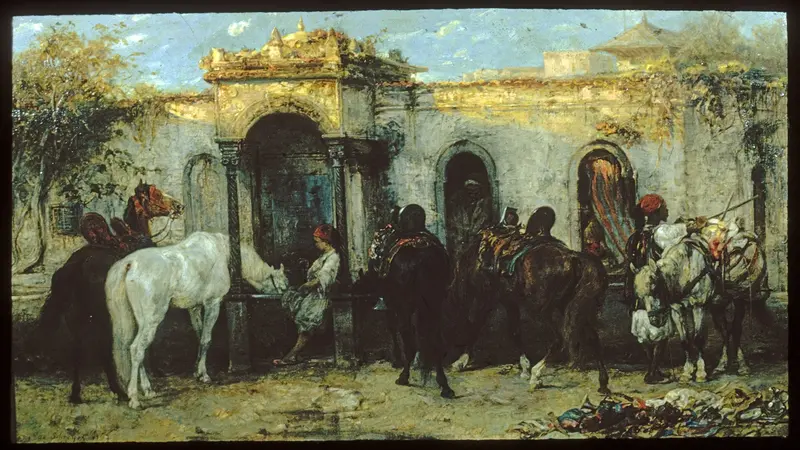
Arabs in Egypt, Sunrise
Adolf Schreyer
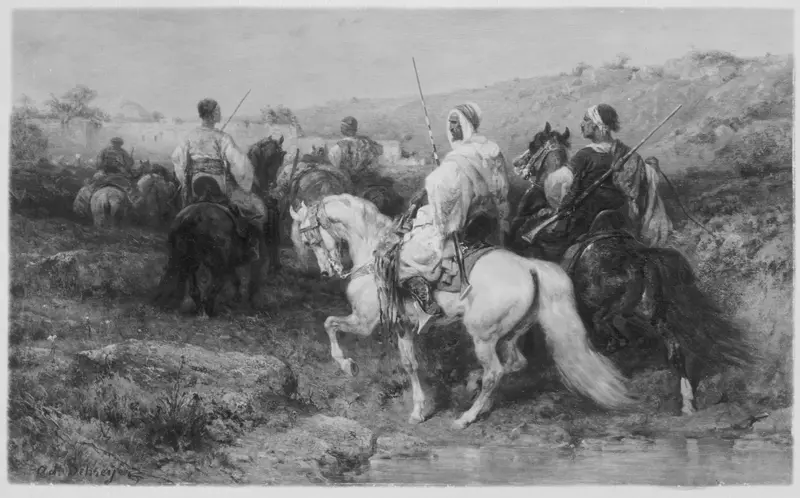
Arabs on the March
Adolf Schreyer
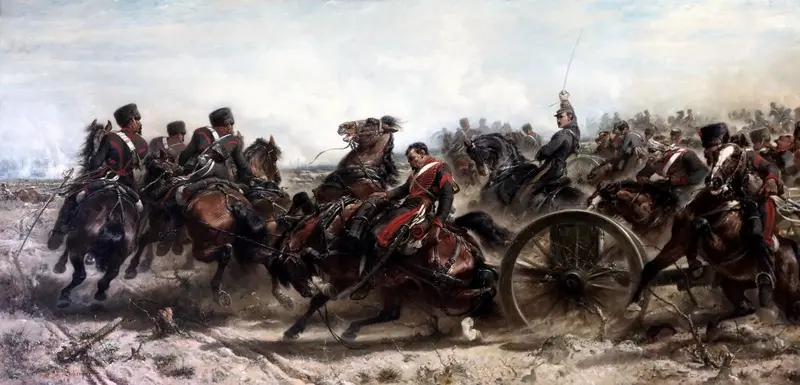
Charge de l'artillerie de la Garde Impériale à Traktir Orsay RF 440
Adolf Schreyer
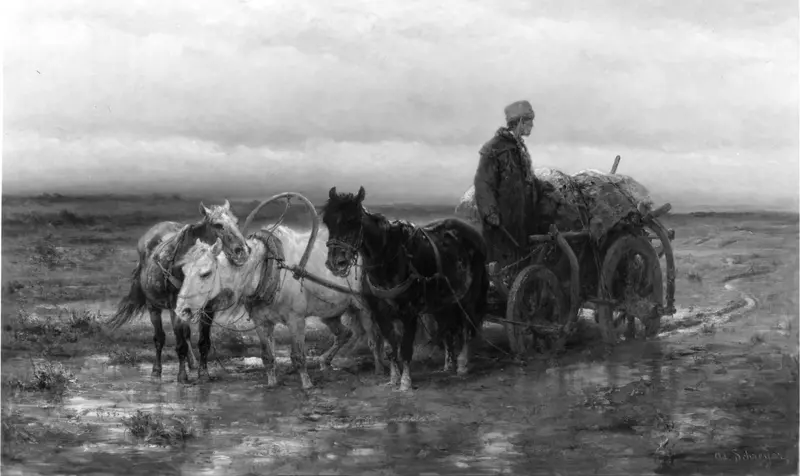
The Plains of Hungary
Adolf Schreyer
More Genre Scene Art

Banquet of the Officers of the St George Civic Guard
Frans Hals

Rembrandt and Saskia in the Scene of the Prodigal Son
Rembrandt van Rijn

Bal du moulin de la Galette
Pierre-Auguste Renoir

Quadrille at the Moulin Rouge
Henri de Toulouse-Lautrec

A Burial at Ornans
Gustave Courbet

When Will You Marry?
Paul Gauguin