
Arabs in Egypt, Sunrise — History & Facts
The first thing that catches the eye in Arabs in Egypt, Sunrise is the hush of anticipation: riders and horses gathered before a sun-washed façade, their forms caught between shadow and the first gold of morning. The horses, restless but tethered by their riders’ calm, draw a line of energy across the foreground, while the architecture behind—crumbling, yet ornate—anchors the scene in a world of layered histories. The artist, Adolf Schreyer, has chosen a moment of pause, not action: a woman sits at the threshold, her posture relaxed but watchful, while figures in the shadows hint at stories unfolding just out of sight.
The palette, all ochres and deep browns with flashes of red and white, sets a mood of warmth and dust, the kind that clings to travelers and buildings alike. Every detail, from the patterned saddlecloths to the striped curtain in the doorway, signals both the specificity of place and the universality of waiting. This painting belongs to a world fascinated by the “Orient”—a term Europeans of the 19th century used for the cultures and landscapes east of the Mediterranean. By 1867, when Schreyer painted this work, artists and collectors were hungry for images that conjured distant lands and unfamiliar customs, often filtered through a lens of romantic adventure.
Schreyer, a German artist who traveled through Egypt and Syria and learned Arabic, brought an unusual depth of observation to the genre, which critics in Paris compared to the likes of Delacroix and Fromentin. Today, Arabs in Egypt, Sunrise resides in the Walters Art Museum, a reminder of how Western eyes once sought—and shaped—the image of the East. Look again at the horses’ attentive ears and the quiet dignity of the figures: this is less a spectacle than a record of presence, of lives lived in the shifting light of a new day.
More Artworks by Adolf Schreyer
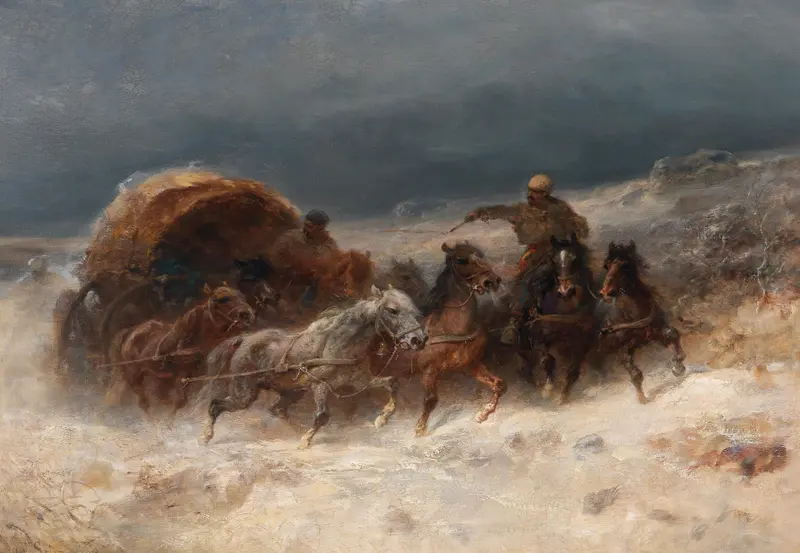
Geldings In A Winter Landscape
Adolf Schreyer
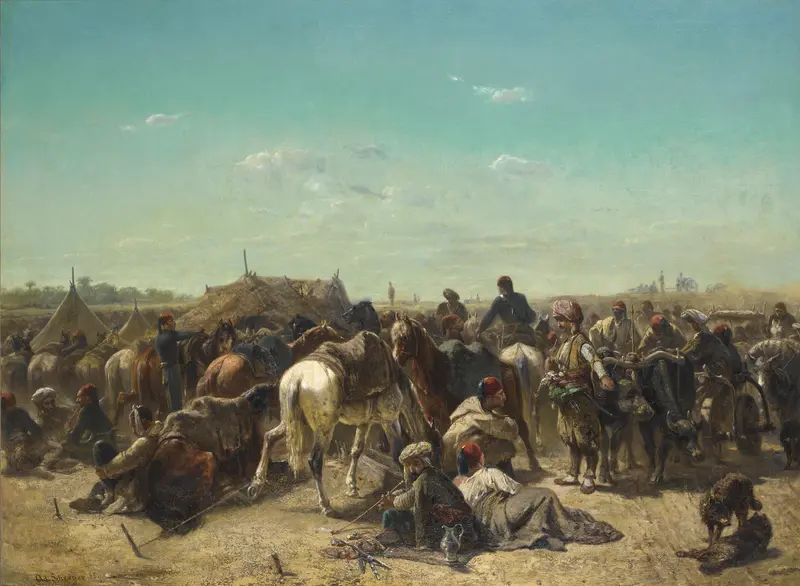
An Ottoman encampment
Adolf Schreyer
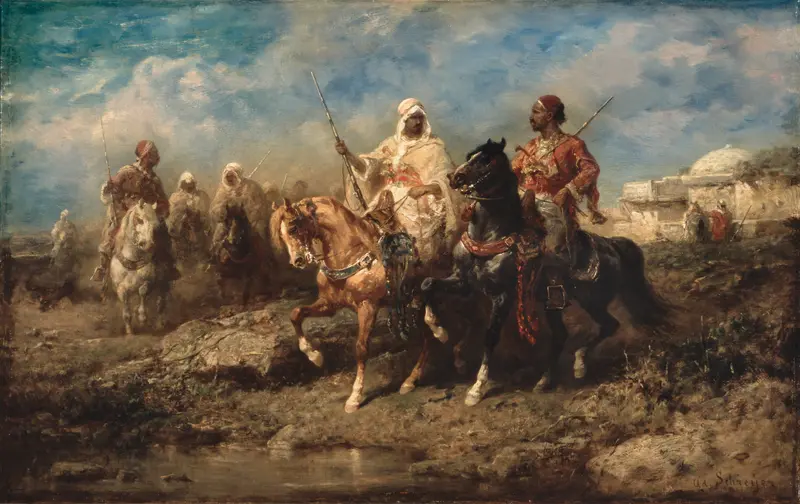
Arabs
Adolf Schreyer
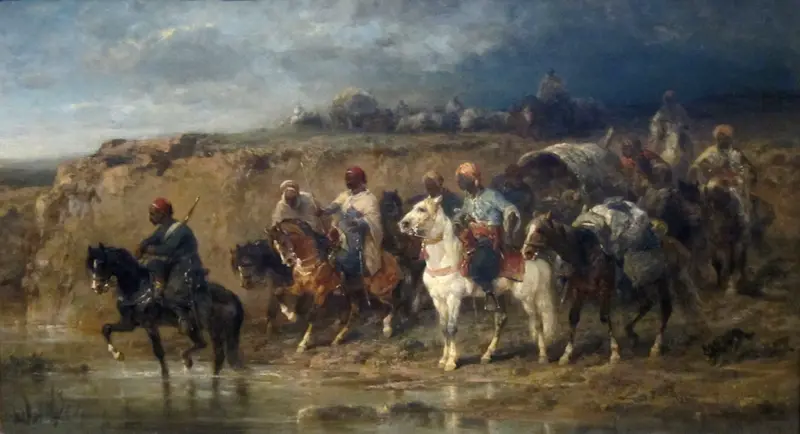
Arab Caravan
Adolf Schreyer
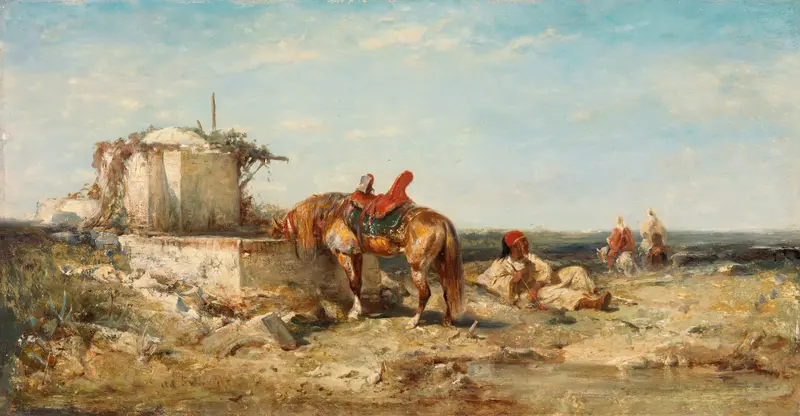
Eastern Soldiers with a Horse Drinking
Adolf Schreyer
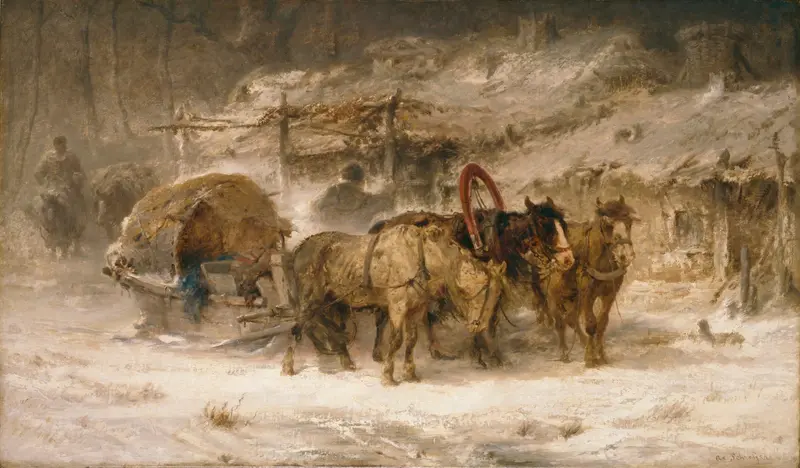
Halt at the Inn
Adolf Schreyer
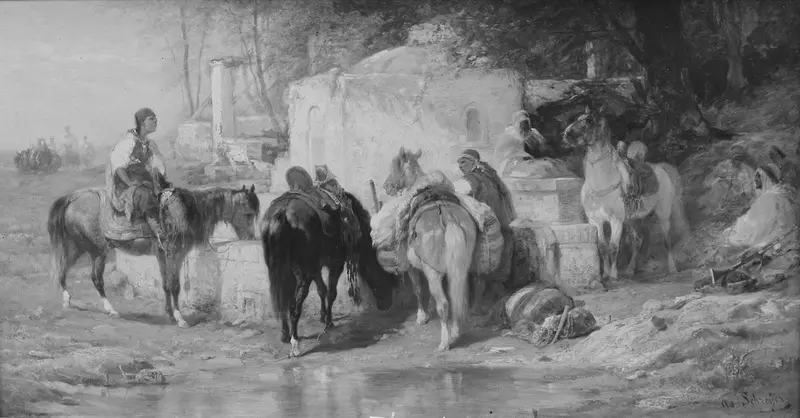
Arab Horsemen Resting at a Fountain
Adolf Schreyer
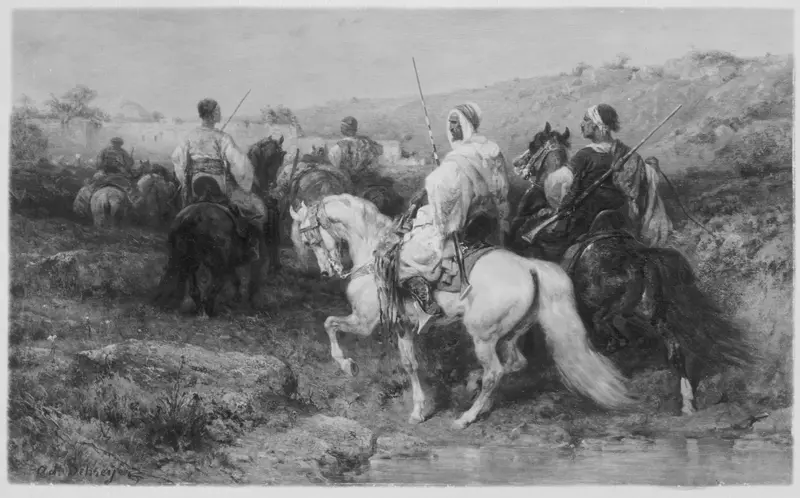
Arabs on the March
Adolf Schreyer
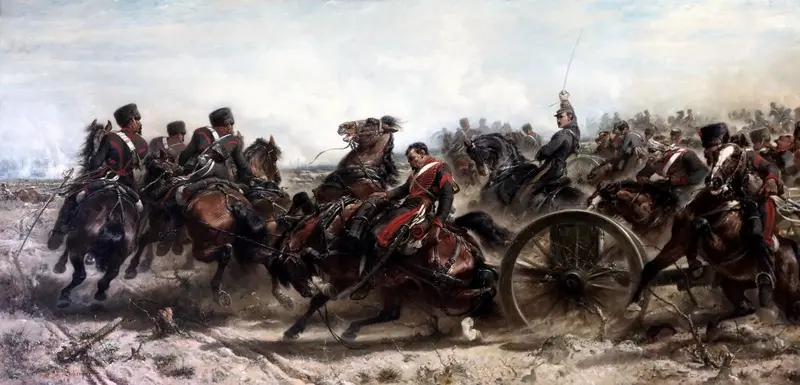
Charge de l'artillerie de la Garde Impériale à Traktir Orsay RF 440
Adolf Schreyer
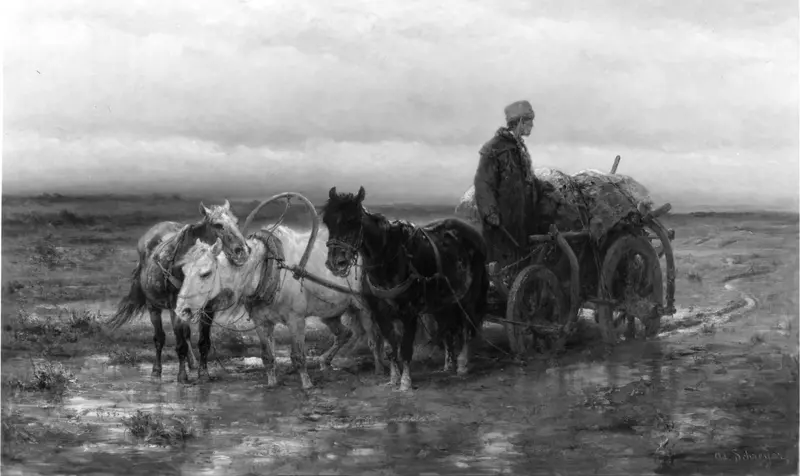
The Plains of Hungary
Adolf Schreyer
More Genre Scene Art

Banquet of the Officers of the St George Civic Guard
Frans Hals

Rembrandt and Saskia in the Scene of the Prodigal Son
Rembrandt van Rijn

Bal du moulin de la Galette
Pierre-Auguste Renoir

Quadrille at the Moulin Rouge
Henri de Toulouse-Lautrec

A Burial at Ornans
Gustave Courbet

When Will You Marry?
Paul Gauguin